
A shipment protected by a substandard barrier seal isn’t really secured; it’s just hope wrapped in metal. I’ve spent fifteen years in industrial security seal manufacturing, and I can say without hesitation that the specific application environment dictates far more of your seal choice than any catalog description ever will. Barrier seals earn their place in high security applications because they resist physical attack through a locking mechanism that is both visible and structurally far stronger than cable or plastic alternatives. This article examines the real operational demands that make barrier seals indispensable, what design and material specifications actually matter in the field, and how procurement professionals can match a seal’s capabilities to a genuine threat profile rather than a marketing summary.
Where High Security Barrier Seals Prove Their Worth
Barrier seals show up wherever a logistics or security manager needs immediate visual confirmation of tampering combined with a physical barrier that cannot be casually cut or bypassed. Cross border freight, high value cargo consolidation, military supply chains, and nuclear material transport all depend on this seal type. The common thread across these uses is not just cargo value; it’s consequence of breach. When a shipment represents a regulatory liability, a national security interest, or an irreplaceable capital asset, the seal must provide a mechanical lock that is visibly defeated if opened.
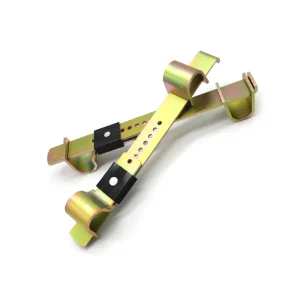
In our own production runs, we see a clear split. Governments and defense contractors ask for barrier seals with non standard locking pin dimensions and custom marking that cannot be duplicated. Customs bonded carriers, on the other hand, prioritize ISO 17712 certification and a clean, fast locking feel that speeds up gate processing. Both groups share the same non negotiable: the seal must leave unequivocal physical evidence when someone attempts to open it. That’s the minimum floor. The competitive procurement difference lies in how the seal body and pin handle environmental stress — road vibration, salt spray, direct sunlight — over the full transit schedule.
What Makes a Barrier Seal Actually High Security
The phrase “high security” gets used loosely, so let me put a manufacturing floor definition on it: a barrier seal achieves high security status when two conditions are met. First, the locking mechanism cannot be released without permanent deformation of the seal body or cutting the pin. Second, the deconstructed state is visually unmistakable and cannot be reassembled to appear intact.
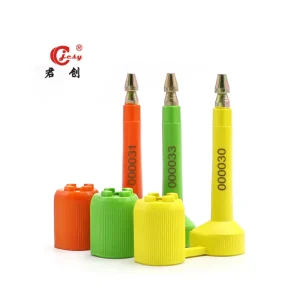
This sounds simple, but it demands tight machining tolerances. The locking ring inside the barrel must engage the pin groove with no more than a fraction of a millimeter of free play. Too loose, and a skilled thief can work the pin out with vibration or leverage; too tight, and the seal jams during installation, causing delays at loading docks. I’ve seen entire container loads held up because a batch of seals had pins that measured 0.2mm oversized—within a supplier’s claimed tolerance but practically useless under field conditions. The difference between a seal that works and one that creates an operational headache is almost always in that machine shop precision, not in the marketing sheet.
Material selection compounds this. Barrier seals commonly use ABS or polycarbonate bodies with steel locking components, but the grade of steel and the UV stabilization of the plastic matter more than the material name itself. For hot, high UV routes through the Middle East and Africa, we specify polycarbonate bodies with added UV inhibitors, and the locking pins are zinc plated or stainless steel. Without that, a seal that looks acceptable from a catalog becomes brittle in six months of field cycling. No procurement team measures that until it’s too late.
Selecting a Barrier Seal That Matches Your Real Threat Profile
Most selection mistakes I observe come from a misalignment between the threat a buyer thinks they face and the threat their cargo actually encounters. Theft is the headline risk, but in practice, the more common failure modes are environmental degradation, operator error during application, and counterfeit duplication of common seal models.
When we work with a new importer, the first thing we ask is not “how much cargo value?” but “what does the transit route look like?” A seal on a container that crosses five borders, sits in a humid port for three weeks, and then travels 800 kilometers by truck needs a different set of design priorities than one going from a factory to a nearby distribution center. The former demands corrosion resistance and a pin/barrel interface that stays stable under thermal expansion; the latter might prioritize speed of application and low cost.
| Selection Factor | Low Security Context | High Security Context |
|---|---|---|
| Locking mechanism | Simple snap lock, pull tight | Multi point locking ring, irreversible |
| Body material | Polypropylene | Glass filled ABS or polycarbonate |
| Pin material | Mild steel | Case hardened steel or stainless |
| Marking requirements | Sequential numbering | Custom logo, barcode, anti counterfeit microtext |
| Certification minimum | None | ISO 17712 High Security certification |
Certification is your baseline, not your differentiator. ISO 17712 sets a minimum; it tells you the seal passed a laboratory test. What we’ve learned on the production floor is that passing the test in controlled conditions and surviving a six month logistics cycle are two different problems. Ask your supplier for batch level hardness test results and dimensional inspection reports, not just the certificate.
Installation Steps That Prevent Seal Failure Before the Journey Starts
A properly specified barrier seal can still fail because of installation. The steps are not complicated, but they must be consistent, and I’ve collected enough warranty claims to know which ones get skipped under pressure.
First, clean the hasp and door rod surfaces. Any grit, paint flake, or corrosion deposit caught between the seal pin and the locking ring increases the force required to seat the pin fully. If the pin does not bottom out into the barrel with an audible click, it is not engaged. Second, pull back on the seal body after locking to verify positive engagement. This takes two seconds; omitting it lets a partially seated pin go undetected. Third, record the seal number on the shipping documentation before the container leaves the yard. I cannot count the number of times a consignee called us to verify a seal number only to find that the exporter logged a different seal or none at all. The whole traceability chain collapses at that point.
Under high vibration rail transport, we recommend a secondary check: an orientation mark on the seal body, painted or laser etched, that lines up with a fixed reference point. If the mark is misaligned upon arrival, the seal has been disturbed even if the pin remains in place. This is a cheap field practice that adds zero cost but dramatically improves inspection reliability.
What to Ask Before You Commit to a Barrier Seal Supplier
The supplier’s own manufacturing controls determine seal performance as much as the design drawings. Over the years, I’ve sorted our factory’s quality system into a few checkpoints that any serious buyer can request without needing to visit the shop floor.
Ask for the dimensional inspection method. We use go/no go gauges on every batch of locking rings and pin grooves, not sampling, because one undersized ring can produce a full shipment of seals that feel fine at first lock but disengage under load. Ask about raw material traceability. The steel pin stock should come from a mill certificate, not a generic market grade, and the polymer resin should have batch level UV resistance data if outdoor exposure is part of the route. Finally, ask whether the supplier performs their own ISO 17712 testing in house or subcontracts it. In house testing means the engineers who build the seal are also the ones watching it fail under tension and shear, and that feedback loop is worth more than any generic certificate.
Most factories will send you a certificate and a product brochure. The ones worth working with will show you a dimensional inspection log and explain what they changed in the tooling after the last batch didn’t meet their own threshold. There is a difference.
Frequently Asked Questions About High Security Barrier Seals
How does a barrier seal differ from a bolt seal in practice?
A barrier seal and a bolt seal share the same fundamental locking principle—a pin inserts into a barrel and locks in place—but barrier seals typically have a broader, flatter body profile that acts as a visual barrier across the container door latch. Bolt seals are often more compact and cylindrical. In field use, a barrier seal’s larger surface area makes tampering more obvious and provides more real estate for custom marking. A bolt seal may be preferred when the hasp clearance is tight; a barrier seal wins when visual deterrence is a primary objective. If your operation requires both high physical strength and unmistakable tamper evidence from a distance, the barrier seal design is the stronger choice.
Can a barrier seal be weatherproof enough for maritime shipping?
Yes, but only if the polymer body and the metal components are specified for a saltwater environment. Standard ABS bodies with uncoated steel pins will corrode within weeks of ocean transit. We supply maritime customers with polycarbonate bodies and stainless steel locking pins that resist pitting. The seal’s IP rating for particulate and water ingress is not typically tested per ISO 20653, so instead we rely on accelerated salt spray testing per ASTM B117 to verify corrosion resistance. If your supplier cannot provide salt spray test results, assume the seal is not maritime grade, no matter what the sales sheet says.
Is custom marking on a barrier seal worth the extra cost?
It’s worth it if counterfeiting is a realistic threat to your supply chain, or if your internal audit requires photographic verification of seal identity at every custody transfer. A sequentially numbered generic seal can be bought and replaced by anyone with access to the same model; a seal with your company logo, a unique serial number scheme, and microtext or a QR code is far harder to subvert. We’ve seen customs authorities treat a properly marked seal as a stronger link in the chain of custody, which can speed clearance. The per unit cost increase is modest at production volume, and the security value scales with the value of the cargo you are protecting.
What is the most common reason for a barrier seal to fail a security inspection?
The most common cause we see in field reports is incomplete pin insertion, not seal material failure. A sealing inspector finds the pin seated but not fully bottomed, meaning the locking ring never engaged the primary groove. This can happen because the hasp was dirty, the operator applied insufficient force, or the seal was the wrong size for the hasp diameter. The fix is both training and seal specification: a seal with a louder tactile and audible click on full engagement reduces the chance of partial locking. The second most common cause is mismatched seal dimensions to hasp clearance, forcing the operator to angle the pin during insertion. Both are avoidable with proper sample testing before bulk order commitment.
What should I do if I suspect a barrier seal has been tampered with even though it appears intact?
Document the seal condition immediately with photographs from multiple angles, including close ups of the locking barrel opening and the pin entry point. Do not remove the seal or alter the container doors. Compare the seal number on the documentation with the physical seal. If the seal body shows faint scratch marks around the locking ring area, or if the pin has rotational marks that suggest it was gripped with a tool, those are physical indicators of attempted disassembly. Contact your supplier with the seal’s batch number so they can pull the production records; sometimes what looks like tampering is actually a manufacturing defect that can be identified from the lot data. If your cargo insurance requires a formal inspection, arrange for inspection before the seal is cut. For any high security application where this risk is recurring, we recommend you send your part number and specific seal dimensions to [email protected] or reach us at +86 13853189290 to discuss a tamper evidence protocol tailored to your logistics profile.
If you’re interested, check out these related articles:
China Security Seal Manufacturers: Strategic Selection Guide – Junchuang Lock
Electronic vs Visual Ear Tags: Optimal Livestock Identification – Junchuang Lock
Security Seals: Preventing Cargo Theft in Global Supply Chains – Junchuang Lock
Security Seal Pricing Guide: Unveiling Factors Affecting Your Investment – Junchuang Lock
Cable Seal OEM & Custom Manufacturing: Your Security Solution – Junchuang Lock