
Mastering Cable Seal OEM & Custom Manufacturing for Supply Chain Security
Cargo security failures cost real money and real headaches. A single compromised shipment can trigger insurance claims, regulatory investigations, and customer trust issues that take months to rebuild. High-security cable seals sit at the intersection of prevention and evidence. They stop casual tampering and document serious attempts. Getting the manufacturing right matters more than most procurement teams realize until something goes wrong.
Cable seals work through a simple principle. A steel cable threads through closure points and locks into a housing that cannot be opened without visible destruction. The security value comes from material strength, housing design, and serialization that creates an unbroken chain of custody documentation. Effective industrial security solutions require seals engineered for specific load conditions and environmental exposures. Our OEM manufacturing approach delivers cable seals matched to actual operating conditions rather than generic specifications.
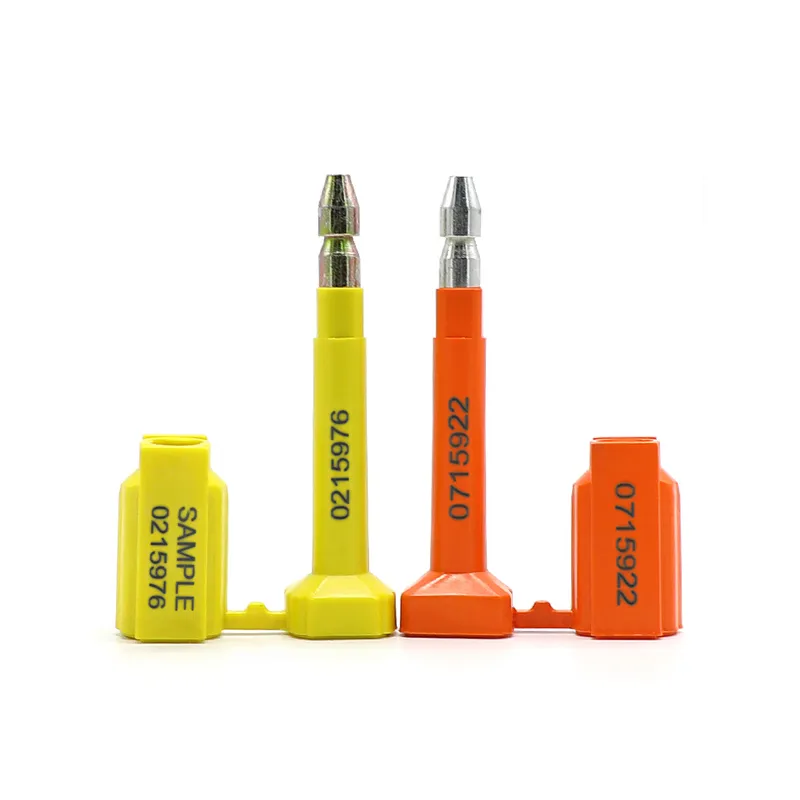
Quality Standards That Actually Protect Cargo
Manufacturing cable seals to international standards requires more than paperwork. ISO 17712 establishes three security classifications for mechanical freight container seals. The high-security designation demands tensile strength exceeding 1000 kg and specific tamper-evident features. Meeting these requirements consistently across production runs requires controlled material sourcing, precision manufacturing equipment, and testing protocols that catch variations before seals ship.
C-TPAT certification adds another layer relevant to international trade. Customs-Trade Partnership Against Terrorism requirements specify tamper-evident characteristics that support supply chain security programs. Each production batch at our facility undergoes seal strength testing and material verification against documented specifications. This quality control process for cable seals catches the subtle manufacturing variations that could compromise security performance in the field.
| Standard | Description | Key Requirement | Application |
|---|---|---|---|
| ISO 17712 | High-security mechanical seals | Tensile strength > 1000 kg | Freight containers |
| C-TPAT | Supply chain security program | Tamper-evident features | International shipping |
| ASTM F88 | Seal strength testing | Consistent breaking force | Various security seals |
Custom Cable Seal Design Solves Specific Problems
Standard cable seals work for standard applications. Real-world logistics operations rarely stay standard. Custom cable seal solutions address the gap between generic products and actual security requirements. Branding options include company logos, unique identifiers, and color coding that supports internal handling procedures. Serial numbering and laser marking create the traceability that insurance companies and regulatory agencies expect.
Cable length requirements vary significantly across applications. Adjustable cable seals accommodate different closure configurations. Fixed-length versions provide tighter security for standardized equipment. Material selection affects both security and durability. Galvanized steel cable seals resist cutting tools effectively. Aluminum versions reduce weight for air freight applications. Plastic-coated cables protect against corrosion while maintaining grip during installation.
Can custom cable seals be designed for specific industry applications?
Different industries face different tampering risks and environmental conditions. Container seals for ocean freight need corrosion resistance and high tensile strength. Truck seals require faster installation and removal for frequent inspections. Railcar seals must handle vibration and temperature cycling across long routes. Utility meter seals need precise sizing and clear tamper evidence for billing dispute resolution. Each application benefits from cable seals engineered for its specific demands rather than adapted from general-purpose designs.
Why OEM Partnerships Make Financial Sense
Manufacturing cable seals in-house rarely makes economic sense for companies outside the security products industry. OEM cable seal manufacturing spreads tooling costs, material purchasing power, and quality control infrastructure across multiple customers. The result is lower per-unit costs without sacrificing specification control.
Consistent supply matters as much as cost. Production disruptions create security gaps that opportunistic theft exploits. Our manufacturing scalability handles demand fluctuations without the lead time surprises that plague smaller suppliers. Clients access ongoing R&D investments in materials and designs without funding that development directly. The partnership model delivers cost-effective security seals while maintaining the quality standards that compliance programs require.
Building Cable Seals That Survive Real Conditions
Laboratory conditions and shipping containers share little in common. Weather-resistant cable seals must perform across temperature ranges from arctic cold to desert heat. The steel cable maintains tensile strength across this range. Housing materials require more careful selection. Some plastics become brittle in cold and soft in heat. Our material specifications account for the full temperature range seals will encounter.
Corrosion attacks cable seals in marine environments, chemical transport applications, and humid storage facilities. Galvanized steel resists rust formation. Specialized coatings add protection for particularly aggressive environments. UV exposure degrades some materials over months of outdoor storage. Our design process considers the full operational lifespan, not just the transit period. Physical stresses from handling, vibration, and accidental impacts test housing integrity throughout that lifespan.
Partner with Shandong Junchuang Lock Industrial Co., Ltd.
Partner with Shandong Junchuang Lock Industrial Co., Ltd. for unparalleled expertise in Cable Seal OEM and Custom Manufacturing. Leverage our integrated design, development, and production capabilities to secure your supply chain with high-security, ISO-compliant solutions. Contact us today for a consultation or to discuss your specific security seal requirements. Mobile: +86 13853189290 | Email: [email protected] | Whatsapp: +86 13853189290
Frequently Asked Questions About Cable Seal Manufacturing
What should procurement teams prioritize when evaluating cable seal manufacturers?
Start with compliance documentation. ISO 17712 certification and C-TPAT compliance indicate manufacturers who take security standards seriously. Beyond paperwork, evaluate customization capabilities and material options. Galvanized steel, aluminum, and plastic-coated versions serve different applications. Ask about quality control processes and testing frequency. A manufacturer like Shandong Junchuang with integrated design and production capabilities can address specification changes faster than companies outsourcing critical steps.
How does OEM production maintain consistency across large orders?
Standardized manufacturing processes establish the baseline. Raw material specifications control input quality. In-process inspections catch variations before they compound through subsequent production steps. Final testing verifies tensile strength and tamper-evident features against documented requirements. Experienced OEM manufacturers maintain statistical process control data that documents consistency over time. This systematic approach ensures each cable seal performs to specification regardless of order size or production timing.
What testing validates high-security cable seal performance?
ISO 17712 compliance requires specific tensile strength testing. Seals must exceed 1000 kg breaking force for high-security classification. Impact resistance testing simulates handling damage. Tamper-evident feature evaluation confirms that breach attempts leave visible evidence. Environmental testing exposes seals to temperature cycling, humidity, and UV radiation. Shandong Junchuang conducts both internal testing and third-party verification to ensure cable seals perform reliably across the conditions they will actually encounter during transit and storage.