
An import manager once told me he could save 15% on per-unit cost by switching to a cheaper pull tight seal supplier. Three months later, a shipment arrived with inconsistent locking tabs — about one seal in fifty wouldn’t engage properly on the first try. The carrier noticed and flagged the container, triggering a full inspection and a delay that cost more than three years of those savings. For any logistics operation where seals serve as the last physical checkpoint before goods leave the warehouse, consistency matters more than the sticker price. This guide breaks down how to evaluate pull tight plastic seals — not by spec sheet highlights, but by the manufacturing details that separate a dependable seal from a risk you don’t see until it’s already on a truck.
What Makes a Pull Tight Seal Actually Function
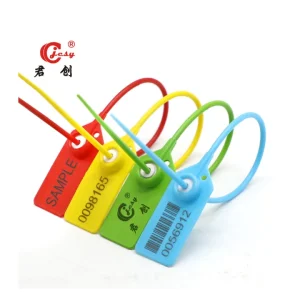
A pull tight seal looks simple — a plastic strap that slides through a one-way locking chamber and can only be removed by cutting. Inside that small head, a metal or plastic spring jaw grips the strap. Two critical points determine whether the seal works every time.
First, the jaw’s tooth profile and spring tension must match the strap’s serration pitch. If the mold cavity for the jaw runs even 0.03 mm too wide, the teeth won’t bite deeply enough under vibration. We run tensile-strength sampling at three points during each production batch — after mold startup, at mid-run, and at final QC — because cavity dimensions drift as the mold stabilizes thermally. Second, the strap material formulation directly affects cold-weather locking. Standard polyethylene becomes brittle below -20°C; a copolymer blend maintains flexibility down to -40°C without sacrificing the jaw’s grip. Buyers in northern Europe or Canada routinely specify cold-flex grades for this reason.
Most procurement documents list “pull tight seal 300 mm” and a color. They rarely specify the jaw type or polymer grade. A supplier who can only repeat your part number back to you won’t catch these gaps. A manufacturer will ask whether the seal faces temperature swings, direct sunlight, or chemical exposure — because those conditions determine resin selection and jaw design.
How the Manufacturing Tolerances Affect Your Operation
Nine out of ten seal complaints we see trace back to two production variables: cavity consistency and strap thickness uniformity.
In multi-cavity molds — the standard for high-volume pull tight seals — all cavities should produce identical components. Without regular cavity-balance testing, one cavity can run 0.05 mm larger than the others while total batch averages still meet specification. The result: seals that pass inspection but fail intermittently in the field. A proper QC protocol weighs and scan-tests samples from each cavity individually, not just a blended batch sample.
The second variable, strap cross-section tolerance, matters more in adjustable-length seals than in fixed-length ones. If the strap varies from 1.8 mm to 2.1 mm across its length, the 1.8 mm section slides past the jaw with noticeably less resistance. That creates a false sense of security — the operator pulls it tight, feels resistance, and assumes it locked. Without a controlled minimum pull-through force test at multiple points along the strap, these seals ship with latent failure risks.
A representative table for comparing supplier QC documentation practices clarifies what to request:
| QC Document | What It Should Include | Red Flag |
|---|---|---|
| In-process inspection report | Cavity-by-cavity weight and dimension checks at startup, mid-run, end-run | Only batch-average data provided |
| Tensile test records | Minimum 10 samples per cavity, values for break force and jaw-slip force | Only “passed” records with no numerical data |
| Lot traceability | Raw resin batch, mold number, production shift, packing date | Generic lot numbers that don’t link to internal records |
| Dimensional SPC | Control charts for strap width, thickness, jaw gap over time | No SPC, only final inspection pass/fail |
Without cavity-level data, you’re buying hope rather than quality control.
Tamper Evidence Isn’t Just a Marketing Term
The phrase “tamper evident” appears on nearly every seal listing. In practice, tamper evidence means the seal cannot be opened and reclosed without leaving clear, irreversible physical damage. For a pull tight seal, that damage must be visible to a driver or warehouse worker under typical lighting — without tools.
The most common bypass method is a heated needle that expands the locking chamber momentarily, releasing the strap without breaking it. A properly designed seal defeats this by including a fragile internal bridge that snaps as soon as the chamber is pried beyond its normal clearance. We call these destruction witnesses. If a seal doesn’t have at least one witness feature designed into the locking head mold, it fails the tamper-evidence test regardless of what the datasheet says.
Another attack vector is superglue injected to re-bond a cut strap. Strap materials with a high surface energy absorb glue more readily, making repairs harder to detect. Specifying a matte or textured finish reduces the risk — the glue line becomes visible because the surface reflectivity changes. This is a detail that costs almost nothing to implement but that very few buying guides mention.
Custom printing adds another layer of security. Sequential numbering and barcoding link each seal to a shipment record, so a thief who attempts a swap must also forge a matching number. We laser-engrave numbers on the locking head because inkjet printing on the strap can be removed with solvent — and we’ve tested that. If your supplier can’t explain how their marking method resists removal, ask for a solvent test video.
Buying Bulk Means You Need Consistency, Not Just a Low Price
When your order runs 100,000 pieces and reorders arrive every quarter, the biggest risk is variability between batches — specifically, the seal’s pull-tight resistance. If batch A requires 8 kg of force to engage and batch B takes 5 kg, operators who are used to the feel of 8 kg will under-tighten batch B. The seal appears secure but can rotate or slide.
The root cause is almost always a change in the resin supplier or regrind ratio without updating the process parameters. Regrind — ground-up runner material fed back into the injection screw — alters melt flow differently depending on the base resin. Our rule internally is that regrind content never exceeds 12% in the strap for pull tight seals. Above that, we start seeing inconsistent serration filling and jaw-slip force shifts, even if tensile break strength stays within spec. This is not a number most buyers think to ask about. But a factory that tracks regrind percentage by lot and adjusts injection pressure accordingly is one you can build a long-term supply relationship with.
If you import from China, container loading adds another stress. Seals packed loosely in cartons can distort if pallets shift during ocean transit, especially in summer when container interior temperatures hit 65°C. We learned this the hard way with a shipment to Durban a decade ago. Since then, we compress-pack pull tight seals in vacuum-sealed polybags inside the carton, which keeps the straps flat and the locking heads from absorbing humidity. Ask any supplier shipping across climate zones how they address transit distortion. A blank stare tells you more than a price list.
How We Approach Pull Tight Seal Production
Our production line for pull tight seals runs with a few non-negotiable rules, not because they’re required by any standard, but because we’ve seen what happens when they aren’t followed.
We start with 100% virgin high-density polyethylene from Sinopec’s Yanshan complex — material that we qualify per batch with melt flow index testing before introducing it into production. The injection machines run with cavity-pressure sensors, so we detect short shots or minor overpacking in real time before the mold opens. After molding, every 500th piece goes through a pull-through test — not a sample from the start and end only, but a running check throughout the shift. The test fixture measures both the maximum force required to pull the strap through the locking chamber and the minimum force at which the jaw slips. These two numbers bracket the seal’s real-world behavior.
For custom orders — logo printing, color matching, barcode sequencing — we generate a pre-production sample that goes through the full battery: tensile, engagement force, UV exposure simulation if specified, and tamper-attempt testing. Only after you sign off on that sample do we proceed to production. This adds 5-7 days to the timeline, but it eliminates the risk of receiving 80,000 seals with a logo that’s 2 mm off-center or a color that doesn’t match your brand spec.
What Vetting Questions Reveal About a Factory’s Capability
The gap between a competent seal supplier and a dangerous one often surfaces within three minutes of a phone call or the first email exchange. Based on auditing dozens of our own incoming component suppliers over the years and also being audited by clients ranging from South African logistics firms to Eastern European utility companies, I’ve found a handful of questions that consistently separate factories with genuine process control from those that assemble product without understanding it.
When you ask “What’s your mold maintenance schedule and what triggers a cavity refurbishment?”, a factory that cannot answer in hours-of-operation or shot-count terms is running molds until they fail visibly. That affects every seal in the batch.
When you ask “Can you run a salt-spray test on the metal jaw inserts and share the results?”, a supplier who says “Our seals don’t need that” or “We’ve never had complaints” is signaling that they don’t test for maritime corrosion. Any seal used in container shipping — which means most pull tight seals — will see salt-laden humidity. If the jaw insert corrodes over six weeks at sea, the locking mechanism weakens.
When you ask “Walk me through how you handle a lot that fails final inspection — what actions trigger, and how do you prevent recurrence?”, the answer reveals whether the factory has a corrective action system or just a reject bin. We log every batch failure with a root cause and a corrective measure tracked to closure. I expect the same rigor from any supplier I’d trust with my own customers’ orders.
Customization That Works: Printing, Color, and Packaging
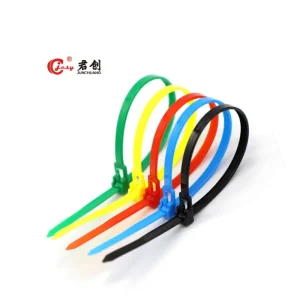
Most pull tight seal cutting tool specifications are standard. What differentiates one order from another — and one supplier from another — is how customization is handled.
Laser marking on the locking head produces the most durable imprint, but not all plastics mark equally. HDPE requires a specific wavelength and pulse frequency to produce dark, contrasting marks without burning through the material. We tune our laser parameters per color because dark blue absorbs differently than yellow, and a setting that works on white creates a barely visible mark on translucent.
For color matching, we use a spectrophotometer to measure the submitted sample and match it to a RAL or Pantone reference. A visual match under factory lighting isn’t sufficient — the color must read correctly under daylight, cool white fluorescent, and the orange-ish high-pressure sodium lights commonly used in distribution yards. We’ve had logistics firms specify bright orange seals specifically so a quick glance from a forklift can confirm the seal is intact, and if the batch doesn’t match across lighting, the visual check fails.
Packaging customization extends beyond the carton. We can pre-sort seals into groups of 500 in tamper-evident polybags with a barcode label for distribution to multiple warehouses. This eliminates the need for the importer to repackage at their receiving dock and ensures traceability from our factory floor to the point of use. Not every buyer needs this level of service, but for those managing seals across a dozen regional hubs, it cuts handling time and reconciliation errors.
A Practical Approach to Ordering Pull Tight Seals
When a pull tight seal fails, the failure is almost never dramatic — it’s a batch where 3% don’t lock cleanly, or a strap that gets brittle in cold storage, or a tampering attempt that leaves a mark so faint the warehouse crew doesn’t notice. Those failures are invisible until they accumulate into a claim. The way to prevent them is to treat the seal as an engineered component rather than a commodity plastic part, and to qualify the manufacturer with the same rigor you’d apply to any other load-bearing component in your logistics chain.
Start with a pre-production sample from any prospective supplier. Run it through engagement-force checks, cold-temperature flex testing if your routes cross northern climates, and a deliberate tamper attempt using a heated probe and solvent. If the supplier can’t provide cavity-level QC data or describe how regrind is controlled, that gap will eventually show up in a shipment. And when it does, the cost isn’t the seal — it’s the delayed container, the inspection fee, and the trust of the customer who received a shipment with a seal that didn’t lock.
For pull tight plastic seals that meet your specifications and arrive consistent from batch to batch, send your part number, quantity, and any special requirements such as cold-flex material or color matching to [email protected]. We’ll prepare a sample set and share the test data you need to verify performance before committing to a production run. You can also reach our team directly at +86 13853189290.
Questions Importers Ask About Pull Tight Seals
What’s the minimum order quantity for custom-printed pull tight seals?
It depends on the complexity of the printing and the base seal size. For standard sizes with single-color laser marking, we typically run production from 10,000 pieces upward. For multicolor pad printing or custom mold modifications — like adding a unique locking chamber geometry — the mold investment amortizes better at 50,000 pieces or more. We can provide a cost breakdown that separates tooling from per-piece cost so you see the crossover point clearly.
Can pull tight seals be reused if they’re not cut?
Reusing a pull tight seal after loosening defeats its entire purpose. The locking mechanism is designed for one-way insertion. In programs we’ve supported, any attempt to back out the strap without cutting leaves permanent deformation in the serrations that prevents proper re-tightening. If your workflow requires temporary access, a plastic padlock seal or a cable seal with a metal locking body that can be opened with a tool is a better choice. We can recommend a type based on your access pattern and security requirements.
How long do colored seals retain their color in direct sunlight?
In our experience with outdoor exposure testing in Shandong, which gets strong UV and temperature swings, color-stabilized seals hold their hue for approximately 18-24 months before noticeable fading begins. Dark colors fade to lighter shades; bright orange shifts toward pale yellow before most users would notice. Adding UV stabilizer masterbatch extends this to about 3 years, though we recommend replacement on a cycle tied to your service interval rather than relying solely on visual color as the single indicator of seal integrity.
What’s the difference between a pull tight seal and a standard fixed-length plastic seal?
The key difference is the adjustable strap. A fixed-length seal requires matching the seal length to the hasp or closure exactly, which means stocking multiple sizes. A pull tight seal adjusts to the closure, so one length can serve multiple applications. However, the adjustable mechanism adds complexity — the locking jaw must grip the strap at any point along its length, not just at a single locking notch. This makes quality control on the serration pitch and jaw spring tension more demanding than on a fixed-length seal. If you’re switching from fixed-length to adjustable, test the specific strap thickness range your application requires with a sample batch first. Send your closure dimensions and we’ll confirm the right strap length and jaw configuration.
If you’re interested, check out these related articles:
Cable Seal OEM & Custom Manufacturing: Your Security Solution – Junchuang Lock
Adjustable Cable Seal Selection: Securing Global Logistics – Junchuang Lock
Weather Resistant Seal Selection: Mastering Environmental Durability – Junchuang Lock