
A plastic security seal is a tamper-evident locking device that shows clear physical evidence when someone opens or interferes with a secured item. These seals do not prevent forced access — they make unauthorized entry impossible to hide. In fifteen years of manufacturing security seals at Shandong Junchuang Lock Industry, I have seen procurement teams focus too much on price while overlooking the material quality and molding precision that determine whether a seal performs in the field. A well-made plastic seal combines a reliable pull-tight locking mechanism with durable polypropylene construction and permanent, traceable marking. This article covers how plastic security seals work, the manufacturing factors that separate dependable seals from failures, and how to select the right type for your application.
How a Plastic Security Seal Works and What Determines Quality
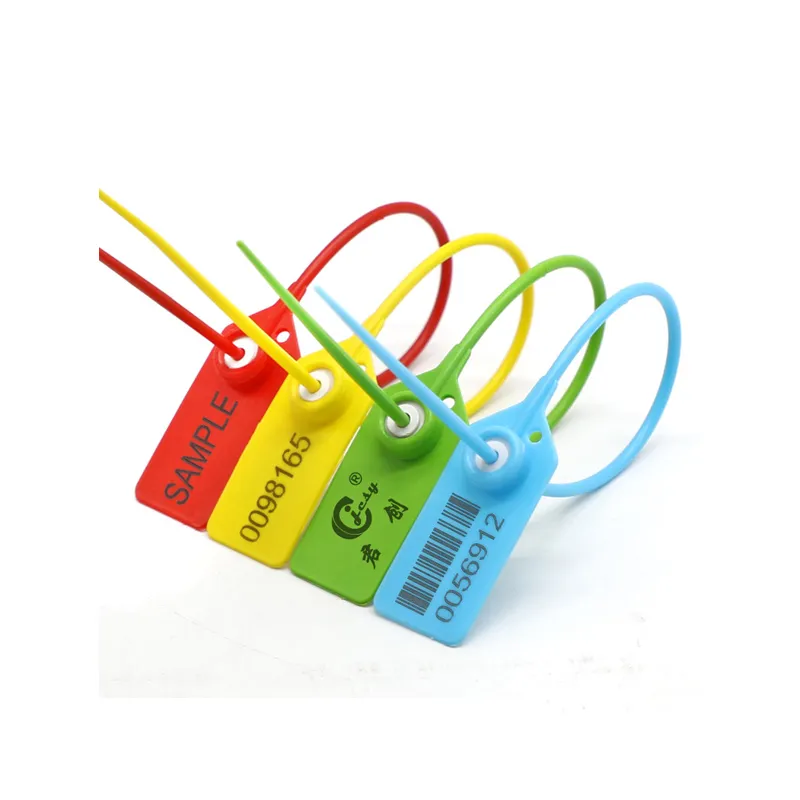
A plastic security seal operates on a straightforward principle: once locked, it cannot be opened without leaving visible damage. The most common design is the pull-tight or adjustable seal, where a plastic strap feeds through a locking chamber and ratchets into place. Inside that chamber, a metal or plastic jaw grips the strap so it can only move in one direction — tighter. To open the seal, you must cut the strap or break the locking body. That destruction is the tamper evidence.
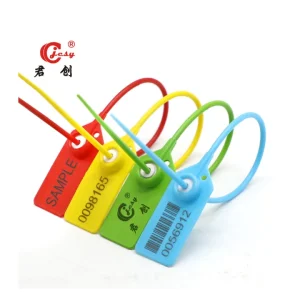
Fixed-length seals work differently. They have a pre-determined locking position and snap shut like a buckle, with the locking tab seating permanently into the body. Both designs serve the same purpose: creating an irreversible closure that documents any interference. What makes the tamper evidence credible is that the damage cannot be concealed. If someone cuts and reattaches a strap, the break point will be visible. If the locking body is pried open, stress marks will show on the plastic. Quality seals are engineered so that the weakest point is the strap itself — any forced opening breaks the seal in an obvious way rather than releasing it silently. In our production testing, we verify this failure pattern on every batch.
Not all plastic security seals perform equally, and the difference usually comes down to material grade and molding precision. Most plastic seals are made from polypropylene because it offers a good balance of strength, flexibility, and cost. But polypropylene quality varies significantly. Virgin-grade material produces consistent tensile strength and predictable break behavior. Recycled or mixed-grade polypropylene can create weak points in the strap, inconsistent locking chamber dimensions, and brittleness in cold conditions.
The injection molding process directly affects seal reliability. In our factory, we maintain tight tolerances on the locking chamber because a jaw that is half a millimeter out of specification may grip inconsistently — some seals will hold, others will slip. That kind of variability is unacceptable in a tamper-evident product. A seal that sometimes releases under tension without visible damage has failed its purpose.
Additives matter as well. UV stabilizers prevent degradation from sunlight exposure, which is critical for seals used on outdoor containers and trailers. Some applications need anti-static properties or specific color concentrates for visual identification systems. These are not cosmetic choices — they affect functional lifespan. I have seen imported seals that looked identical to specification-grade products but became brittle after six months of sun exposure because the manufacturer skipped the UV stabilizer to save cost. The buyer only discovered this when seals started cracking during transport.
Marking quality also depends on manufacturing. Laser marking burns the serial number into the plastic surface and cannot be removed without destroying the marking area. Hot stamp printing sits on top of the plastic and can sometimes be scraped off. For high-security applications, laser marking is the standard. We recommend confirming the marking method before ordering because not every factory defaults to the more durable option.
Types of Plastic Security Seals and Where They Are Used
Plastic security seals come in several configurations, each suited to different closure points and security levels.
| Seal Type | Mechanism | Typical Applications | Key Advantage |
|---|---|---|---|
| Pull-tight adjustable | Ratcheting strap, one-way locking | Truck doors, container hasps, cargo bags | Cinches to exact tightness, fits varied closure points |
| Fixed-length | Pre-set locking position, snap-shut | Meter boxes, fire extinguishers, tote bins | Consistent application speed, no trimming needed |
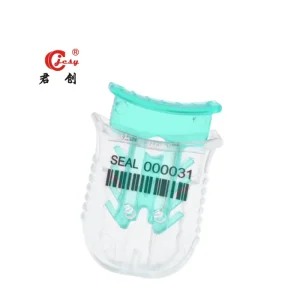
| Padlock-style plastic | Shackle locks into body | Valve locks, utility cabinets, railcar doors | Familiar handling, fits hasps under 6mm |
| Wire-loop seal | Thin wire feeds through and locks | Small meter enclosures, medical carts | Narrowest closure point, minimal interference |
Pull-tight seals dominate logistics applications because of their versatility. A truck driver can secure a rear door hasp, cinch the seal tight, and trim the excess strap in seconds. The serial number is then recorded on the shipping manifest, creating a chain of custody that travels with the cargo. If the receiving warehouse finds a different seal number or visible damage, the discrepancy triggers an inspection.
Fixed-length seals are faster when the closure point is standardized. Utility companies use them on meter boxes because every box has the same hasp diameter, so a fixed-length seal installs in one motion and inspection is quick. The sealed state is obvious — if the seal is missing, the meter has been accessed.
Padlock-style plastic seals bridge the gap between traditional padlocks and disposable seals. They install like a padlock but are single-use and tamper-evident, suiting applications where operators are already familiar with padlock handling and need visual confirmation of tampering without the weight or cost of a metal lock.
Wire-loop seals handle the smallest closure points. A thin metal wire feeds through a hasp as narrow as 1mm, then locks into a plastic body. Medical cabinets, small equipment enclosures, and some meter applications use these where larger seals physically cannot fit.
If your security program involves multiple seal types across different applications, confirming that your supplier can handle all of them under one quality system simplifies procurement and keeps standards consistent. Reach out at [email protected] with your application details.
How to Inspect a Plastic Seal Before and After Use
Seal inspection starts before the seal is ever applied. A quick pre-use check catches manufacturing defects that could cause false tamper alarms later and confirms that the seal markings match your documentation.
Pre-use inspection covers four points. First, check the serial number against your manifest or purchase order — mismatched numbers indicate a handling error or substitution. Second, examine the strap for nicks, thinning, or discoloration that could indicate material defects. Third, verify the locking mechanism engages cleanly by testing it on a single sample seal from the batch; the jaw should grip immediately and not release when pulled. Fourth, confirm the seal body has no cracks or stress marks from improper storage.
After the seal has been in the field, inspection focuses on tamper evidence. The primary question is whether anyone has interfered with the seal since it was applied. Check the strap for cuts, abrasions, or stretching that could indicate an attempt to slide the seal off. Examine the locking body for tool marks, prying damage, or discoloration from heat — heat can be used to soften plastic and release the jaw without breaking the strap. Verify that the serial number is original and unaltered. In our experience supporting logistics clients, the most commonly missed tamper sign is partial cutting on the underside of the strap where it is less visible during a quick visual check.
Record the seal condition on your receiving documentation even when everything looks normal. If a problem is found, photograph the seal from multiple angles before removing it. The seal itself is evidence, and an intact chain of documentation supports cargo claims and insurance processes.
Choosing the Right Seal for Your Operation
Selecting a plastic security seal requires matching the seal to the actual closure point, the operating environment, and your documentation workflow. The best seal is not necessarily the strongest one — it is the one that fits correctly, installs consistently, and makes tampering obvious in your specific application.
Start with the closure point dimensions. Measure the hasp diameter or the opening the seal must pass through. A pull-tight seal strap that is too wide will not fit. One that is too narrow may have insufficient breaking strength for the application. For most truck and container doors, a strap width of 3mm to 5mm with a breaking strength over 100kg is adequate. For lighter applications like tote bins or meter boxes, narrower straps work fine.
Next, consider the environment. Outdoor use requires UV-stabilized material and a temperature rating that covers your climate range. Standard polypropylene seals perform well from about -20°C to 60°C, but extreme cold can make the material brittle. If your cargo routes go through regions with severe winters, specify cold-rated material at the ordering stage.
Documentation needs should guide your marking requirements. If you track seals by serial number in your logistics system, confirm the numbering format and whether you need sequential, random, or customer-specific numbering. Barcode compatibility adds scanning efficiency. We produce seals with laser-marked barcodes that integrate directly into warehouse management systems — the scanner reads the seal number at receiving and automatically checks it against the expected manifest entry.
Finally, consider your volume and supplier capability. A competent manufacturer should supply batch-level quality certificates, maintain consistent numbering across orders, and offer sampling before bulk production. When evaluating suppliers, ask how they control material quality and whether they perform tensile testing on finished seals. Price matters, but a seal that fails in the field costs far more than the purchase savings.
Finding the Right Plastic Security Seal for Your Program
The difference between a security seal program that works and one that creates paperwork without protection is often in the details that are easy to overlook during purchasing. The closure point dimensions, the environmental exposure, the marking system, and the supplier’s quality controls all contribute to whether a seal provides genuine tamper evidence or just the appearance of it.
If your operation uses plastic seals across multiple routes, facilities, or compliance frameworks, confirming that your seal specification matches each application is worth the effort before placing the next order. A mismatch between seal type and closure point is one of the most common problems we resolve for clients — and it is preventable with a review of your actual usage conditions.
For technical questions about material grades, sizing, or marking options, contact our team at [email protected] or call +86 13853189290. Share your closure point specifications and operating environment details, and we will recommend a seal matched to your requirements.
Common Questions About Plastic Security Seals
Can plastic security seals be reused?
No. Plastic security seals are single-use devices by design. The locking mechanism permanently engages on first closure, and removing the seal requires cutting the strap or breaking the body. That destruction is the tamper evidence. If a seal could be opened and reused without visible damage, it would not serve its purpose. Some operations mistakenly reapply an intact seal they found loose, assuming it is still functional — but a seal that has been opened is compromised even if it looks unbroken. Always use a new seal with a fresh serial number for each closure.
Are plastic seals and cable seals interchangeable?
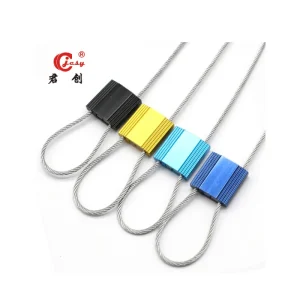
A common misconception is that plastic seals and cable seals are interchangeable. Plastic seals use a flat polypropylene strap with a pull-tight locking mechanism, while cable seals use a steel cable with a locking body. Cable seals provide higher breaking strength — typically over 200kg compared to 100kg to 150kg for heavy-duty plastic seals — and are used on container doors and high-value cargo. Plastic seals are lighter, more cost-effective, and widely used on truck doors, meter boxes, and bulk cargo where the security requirement is tamper evidence rather than physical resistance. The choice depends on your risk profile and compliance standards.
Are plastic seals suitable for outdoor use?
They can be, if the material is properly specified. Standard polypropylene degrades under prolonged UV exposure and can become brittle in cold conditions. Outdoor-rated plastic seals use UV stabilizers and cold-impact modifiers that significantly extend their functional life. When ordering for outdoor applications, specify UV-stabilized material and confirm the operating temperature range with your supplier. In our production, outdoor-grade seals maintain flexibility and legibility for at least twelve months of continuous sun exposure, which covers most shipping and logistics cycles.
How do I choose between fixed-length and adjustable plastic seals?
In programs we have supported, the choice between fixed-length and adjustable seals comes down to closure point consistency and operational speed. If every closure point is the same size, fixed-length seals install faster with no adjustment or trimming step. If closure points vary, adjustable pull-tight seals cinch each seal to the right tightness. For mixed operations, adjustable seals reduce the need to stock multiple sizes. When order volumes are high, confirm the per-unit price difference with your supplier because fixed-length seals can be slightly less expensive in large quantities. Share your closure point measurements with our team at [email protected] and we will recommend the best configuration for your program.
If you’re interested, check out these related articles:
Heavy Duty Cable Tie Applications: Industrial Fastening Solutions – Junchuang Lock
What is an Animal Ear Tag: Essential Livestock Identification Systems – Junchuang Lock
Heavy Duty Cable Seal Manufacturer Guide: Global Security Standards – Junchuang Lock