
For procurement managers and logistics supervisors, a mixed container yard with dozens of identical-looking seals is a daily source of friction. Sorting through pallets of unmarked padlock seals to find the right model slows down loading teams and increases the chance of applying the wrong seal to a sensitive cargo door. Plastic padlock seal color coding removes that friction directly. When seals are manufactured in distinct colors tied to a specific application, department, or security level, visual sorting becomes instantaneous. In the fifteen years I have managed production lines at Shandong Junchuang Lock Industry, I have seen this one feature—planned color assignment—cut handling errors by a measurable margin for clients who previously relied on stamping alone. It is a simple, durable identification layer that costs almost nothing to add during manufacturing but pays out every time a seal is handled.
A color identity also eliminates language barriers on multilingual work sites. A red seal means “high-value cargo hold” in any port, regardless of whether the handler reads the stamp. We produce millions of plastic padlock seals each year, and the shift toward color-coded programs has been the most consistent request from fleet operators upgrading their security protocols. The logic is straightforward: a color catches the eye before a number does.
Why Color Choices Go Beyond Branding
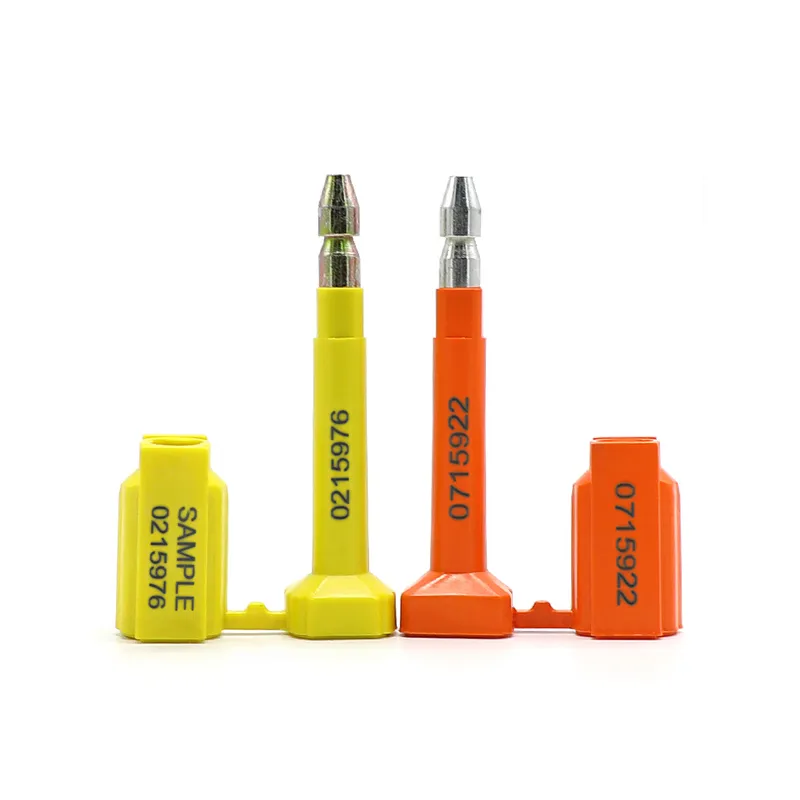
Most buyers first think of color as a brand element—matching corporate orange or printing a logo on a yellow body. That is valid, but experienced security managers take it further. They use color to encode operational rules. A common setup we manufacture involves a heat-resistant polypropylene body in blue for freezer compartments and in yellow for dry van trailers. The color itself becomes the instruction: if a seal inspector sees a blue seal on a non-refrigerated door, the mismatch is obvious.
Polypropylene holds pigment differently than ABS. Over long UV exposure, some bright reds will shift toward orange, which can compromise the coding system if not accounted for during specification. We counsel buyers to test outdoor samples before committing to a full production run. A seal that spends three months on a container traveling across the equator will fade differently than one used inside a warehouse. This is not a material defect; it is a design parameter that must be specified correctly. Manufacturers who understand polymer behavior will recommend stabilizers or specific pigment concentrations to extend color integrity under harsh conditions.
Common Color-Coding Schemes That Actually Work
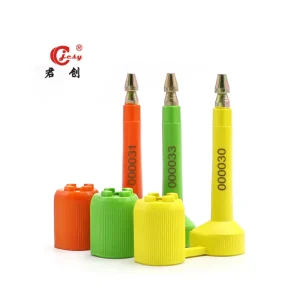
After supplying padlock seals to logistics companies, utility operators, and cash-handling services, I have settled on a few categorization methods that survive daily operation:
| Coding Method | Example | Best For |
|---|---|---|
| Threat level | Red = high security, Yellow = medium, Green = visual check only | Multi-tier cargo screening |
| Department assignment | Blue = maintenance, White = inventory, Orange = export | Internal audit and accountability |
| Route or destination | Green = domestic, Black = export hazardous | Cross-border compliance |
| Shift or inspector ID | Rotating quarterly colors | Fraud prevention in high-volume facilities |
The threat-level method is the most frequently specified. A security supervisor can walk a line of sealed trucks and instantly confirm that all high-value loads carry a red seal, even from fifty meters away. This type of at-a-glance verification is not possible with serial numbers alone. However, for this to work reliably, the color must be molded into the plastic body, not applied as a surface coating that can scrape off. We injection-mold the pigment throughout the entire part so that even if the seal is cut or abraded, the color remains legible.
Route-based coding is particularly useful for companies that ship through multiple ports. A single shipping line might assign white seals to loads bound for European customs, where documentation requirements are heavy, and blue seals for intra-Asia shipments with lighter inspection. The color tells the dispatcher which paperwork stack to pull before the container number is even checked.
Pairing Color with Marking Without Creating Confusion
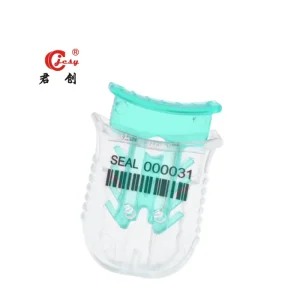
A frequent mistake is overlapping identification systems in a way that undermines both. If you laser-engrave a serial number, print a barcode, and assign a color, each of these layers must have a distinct purpose or they will be ignored by handlers. In practice, the color should carry the broadest category (department, route, security grade), while the serial number and barcode handle traceability at the individual seal level.
I tell our buyers to treat color as the first filter. A handler checks the color and already knows which procedure to follow. Then they scan the barcode or read the number for the specific record. When every seal is the same color, the handler must read the number first, which adds seconds per seal and creates errors under time pressure. The color solves the sorting step; the number solves the recording step.
Custom padlock seal printing further reinforces the color code. For example, a red seal body with white printed text “EXPORT ONLY” removes any ambiguity. The color signals the broad action, and the text confirms it. This redundancy is cheap to produce and valuable during audits.
What to Confirm With Your Manufacturer Before Committing to a Color Program
Color consistency across batches is a real production discipline, not a marketing claim. A buyer who orders 100,000 yellow seals in January and another 100,000 in June should get the same yellow both times. We achieve this by maintaining masterbatch records for each pigment formulation and retaining physical color plaques from every production run. If a buyer asks for a match to a previous batch, we pull the plaque and test the new mix under standardized lighting.
I recommend asking your supplier these three questions before placing a color-coded order:
Do you provide color stability samples for outdoor exposure? A responsible manufacturer will run accelerated UV testing and share the delta-E values, so you know how much drift to expect over the seal’s service life.
Is the pigment added at the resin level or surface-applied? Only body-pigmented seals maintain code integrity through handling; surface coatings peel and create debris that can contaminate sensitive cargo areas.
What is the minimum order quantity for a custom color? For small pilot programs, some factories will hand-mix small batches, but expect a minimum of 10,000 to 20,000 pieces for a dedicated color run at competitive pricing.
Confirming these details early prevents the operational confusion that arises when seals arrive looking different from what was approved on a screen. A realistic expectation, backed by a manufacturer’s documentation, is always more reliable than a vivid photograph.
Color Coding as Part of a Tamper-Evidence Strategy
Tamper evidence relies on the inspector knowing what the seal should look like before touching it. A color-coded seal gives the inspector a baseline expectation immediately. If a white seal is standard for a particular tanker valve and the inspector finds a red seal, the discrepancy is flagged before physical examination begins. This pre-visual check is the fastest tamper screen available and costs nothing beyond the initial color specification.
In high-theft corridors, some operators rotate colors quarterly without announcing the rotation schedule externally. A tampered seal replaced by an unauthorized party will almost certainly show the wrong color if the replacement is sourced from a prior batch. This rotation method, combined with serial auditing, creates a low-cost layer of deception resistance that is difficult for thieves to predict.
For companies managing sealed inventories across multiple warehouses, color also helps local staff who may not have access to serial number databases. A shift supervisor can confirm that all seals on a rack match the expected color for that month without logging into a system. This local, low-tech check is often the first line of defense before a formal audit begins.
Practical Questions About Padlock Seal Color Coding
How durable is the color on a plastic padlock seal exposed to full sun?
The answer depends on the base resin and the pigment system. Polypropylene with UV stabilizers and high-quality masterbatch pigment typically shows acceptable color retention for one to two years outdoors. ABS without stabilizers can fade noticeably within six months. Request accelerated weathering data from your manufacturer and test samples on your actual operating routes before finalizing the purchase.
Can I match a specific Pantone color for my seals?
Yes, within the limitations of plastic pigmentation. A precise Pantone match in plastic is always an approximation because the surface texture and resin base affect light reflection. But a skilled compounder can get close enough that the visual difference is negligible under normal lighting. Expect a small matching fee and a lead time of two to three weeks for color development.
Will the color affect the seal’s strength or locking performance?
Negligibly, as long as the pigment loading stays within recommended ratios. Overloading pigment can make the plastic slightly more brittle, which is why responsible manufacturers control the masterbatch percentage by weight. For standard padlock seals, the color additive is typically under 2% of the total compound weight, so the mechanical properties remain essentially unchanged from natural resin.
What happens if we need to change the color scheme later without retooling?
Since padlock seals are injection-molded, a color change requires purging the machine barrel, which involves a short production pause and waste of transitional material. The best practice is to plan color runs in large batches and sequence them from light to dark to minimize purging. Talk to your manufacturer about dedicating a specific press to your program if you anticipate frequent color rotations.
How much does custom color coding add to the unit cost?
For most standard padlock seal designs, adding a custom color increases the per-unit cost by roughly 3% to 7% over natural or standard color options, assuming order quantities above 50,000 pieces. The premium covers pigment cost, machine cleaning, and color-matching labor. For smaller volumes under 20,000 pieces, the cost impact is higher because the setup time is amortized over fewer parts. We always recommend a direct inquiry with your annual quantity forecast so the factory can quote accurately. Share your target volume and color specifications at [email protected] or call +86 13853189290, and we will provide a price breakdown within one working day.
If you’re interested, check out these related articles:
Security Seals: How They Work to Protect Your Assets – Junchuang Lock
Bulk Cable Seal Purchase Guide: Strategic Procurement & Security – Junchuang Lock
Bolt Seals for Containers: Enhancing Global Cargo Security – Junchuang Lock
Cable Seal Versus Bolt Seal: Definitive Guide to Cargo Security – Junchuang Lock