
Security seals do one job exceptionally well: they tell you when something has been opened that shouldn’t have been. I’ve watched logistics managers dismiss them as “just plastic tags” until a single broken seal saved them from accepting a compromised shipment worth six figures. These devices aren’t locks—they’re witnesses. They record interference through their own destruction, and that simple principle underpins billions of dollars in global trade security every year.
What Security Seals Actually Do
Security seals are physical devices engineered to reveal unauthorized access. Their value lies not in preventing entry but in making tampering impossible to hide. A broken seal, an altered serial number, a heat-warped edge—each signals that someone has interfered with what was supposed to remain closed.
The global market for these devices is projected to exceed $1.5 billion by 2027. That growth reflects something real: supply chains have become longer, more complex, and more vulnerable. Companies need proof that goods arrived the way they left. Security seals provide that proof through visible, irreversible evidence of breach.
Every seal carries unique identification—serial numbers, barcodes, sometimes embedded RFID chips. This serialization creates an unbroken chain of accountability. When a seal is applied, it forms a closure that cannot be reopened without permanent physical change. You cannot reseal what has been broken, and that’s precisely the point.
The Working Principle Behind Tamper Evidence
Security seals operate on a straightforward mechanical principle: create a closure that self-destructs when forced open. The seal’s physical state changes permanently upon removal, leaving evidence that cannot be erased or reversed.
Manufacturers build specific tamper indicators into each design. Some seals fracture along predetermined stress lines. Others reveal hidden text or patterns when stretched. Metal seals may show tool marks or deformation. The common thread is irreversibility—once compromised, the seal cannot return to its original appearance.
Serialization adds another layer. Each unit carries a unique identifier that gets recorded at the point of application. When the seal reaches its destination, that number must match the documentation. A missing seal or mismatched serial number triggers immediate investigation. Studies indicate that over 60% of supply chain breaches are detected through physical security measures like seals, which speaks to their practical effectiveness in real-world conditions.
How Security Seals Prevent Tampering and Theft
Security seals deter theft through visibility and traceability. A sealed container announces that its contents are monitored and that any interference will be documented. Potential thieves face not just the physical barrier but the certainty of leaving evidence behind.
The unique serial number on each seal makes substitution difficult. Replacing a broken seal with a new one requires matching the exact number recorded in shipping documents—a near-impossible task without inside access to the documentation system. Materials used in quality seals resist common tampering methods like cutting, heating, or chemical dissolution. When these methods are attempted, they leave marks that trained inspectors recognize immediately.
This combination of deterrence and detection creates practical security. The seal doesn’t need to be unbreakable; it needs to make tampering visible and traceable.
Seal Types and Where They Get Used
Different security challenges require different seal designs. The market has evolved to offer specialized solutions for specific applications and threat levels.
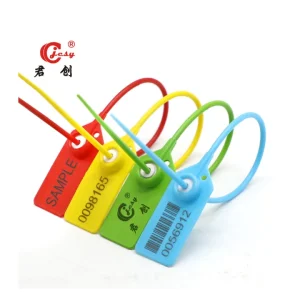
Plastic Seals handle general-purpose applications where visible tamper evidence matters more than brute-force resistance. You’ll find them on airline meal carts, fire extinguisher cabinets, and tote boxes in retail distribution. They’re economical, easy to apply, and clearly show when they’ve been cut or broken.
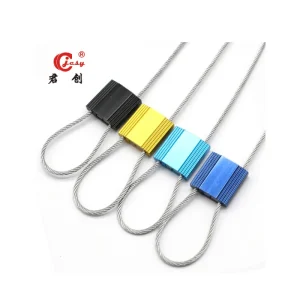
Cable Seals offer adjustable length and significant tensile strength. Their flexibility makes them useful for securing truck doors, rail car hatches, and bulk containers where fixed-length seals won’t work. Quality cable seals can withstand several hundred kilograms of pull force before failing.
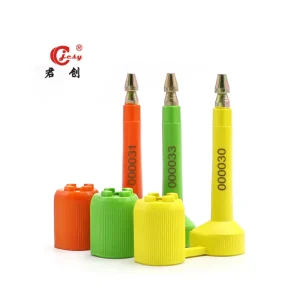
Bolt Seals represent the highest tier of physical security. These heavy-duty devices require specialized tools to remove and meet the strictest international standards. International shipping containers almost universally use bolt seals for cross-border transit.
Meter Seals protect utility measurement devices from tampering. Their small size and intricate design make them suitable for electricity, gas, and water meters where space is limited but security remains critical.
Lead seals represent the traditional approach, using soft metal compressed around sealing wire. They remain common in applications where basic tamper evidence suffices and cost sensitivity is high.
Matching Seal Types to Applications
The right seal depends on what you’re protecting and how determined your adversaries might be. A pharmaceutical shipment crossing international borders needs different protection than a pallet of office supplies moving between warehouses.
Bolt Seals dominate intermodal shipping because they combine high breaking strength with ISO 17712 certification. Customs authorities worldwide recognize and require them for containerized freight.
Cable Seals fill the gap between heavy-duty bolt seals and lightweight plastic options. Their adjustable length makes them practical for non-standard applications—securing valve handles, tanker hatches, or equipment access panels.
Plastic Seals work well for high-volume, lower-risk applications where the primary goal is documenting chain of custody rather than resisting determined attack. Their low cost allows single-use application without significant expense.
Meter Seals address the specific challenge of utility theft, where small devices must fit tight spaces while still providing clear evidence of tampering.
Lead seals continue serving traditional applications, particularly where existing procedures specify their use or where their distinctive appearance provides recognized authenticity.
| Seal Type | Security Level | Common Applications | Key Feature |
|---|---|---|---|
| Bolt Seals | High | Shipping containers, rail cars | High breaking strength |
| Cable Seals | High | Truck doors, valves, bulk containers | Adjustable length, versatile |
| Plastic Seals | Indicative | Tote boxes, airline carts, utility meters | Visible tamper evidence |
| Meter Seals | Indicative | Electricity, gas, water meters | Small, intricate design |
| Lead Seals | Indicative | Utility meters, drums, bags | Traditional, uses wire |
| Metal Strap Seal | Medium | Trailer doors, chemical drums | Stronger than plastic |
Article Recommendation: If you’re interested in learning more about the specific requirements and benefits of seals for utility and measurement devices, we recommend reading our detailed article on 《Meter Lead Seals: Essential Security for Utility and Measurement Devices》.
Standards That Govern Security Seal Performance
International standards exist because security seals need to perform consistently regardless of where they’re manufactured or used. Without standardization, a “high security” seal from one supplier might offer dramatically different protection than the same label from another.
The ISO 17712 High Security Seal standard defines mechanical strength and tamper-evident characteristics for seals used in international container shipping. Seals meeting this standard must withstand specified tensile forces and demonstrate clear evidence when tampered with. The “H” designation indicates high security classification.
Customs programs like C-TPAT (Customs-Trade Partnership Against Terrorism) incorporate ISO 17712 requirements into their security protocols. Shippers participating in these programs must use compliant seals to maintain their trusted status and expedited clearance privileges.
For manufacturers like Shandong Junchuang Lock Industrial Co., Ltd, meeting these standards isn’t optional—it’s fundamental to serving international markets. Non-compliant seals can result in shipment delays, customs penalties, and insurance complications that far exceed the cost of proper certification.
What Standards Apply to High Security Seals
ISO 17712 remains the primary international standard for high-security seals. It establishes testing protocols for tensile strength, impact resistance, and tamper evidence that seals must pass to earn certification.
The standard categorizes seals into three levels: indicative (I), security (S), and high security (H). Only H-rated seals meet the requirements for international container shipping under most customs regimes. These seals must resist specific force levels and demonstrate visible evidence of any tampering attempt.
Regional customs authorities often reference ISO 17712 in their own regulations. The result is a relatively harmonized global standard that allows shippers to use the same seal types across multiple jurisdictions without compatibility concerns.
Selecting the Right Seal for Your Application
Choosing security seals requires matching protection level to actual risk. Over-specification wastes money; under-specification creates vulnerability. The goal is appropriate security, not maximum security.
Start with the asset’s value and the consequences of compromise. High-value pharmaceuticals crossing international borders justify the cost of ISO 17712 bolt seals. Internal warehouse transfers of low-value goods might need only basic plastic seals for chain-of-custody documentation.
Consider the transit environment. Seals exposed to extreme temperatures, chemicals, or physical stress need materials that can withstand those conditions without degrading. A seal that becomes brittle in cold weather or softens in heat provides unreliable tamper evidence.
Identification requirements matter too. Some applications need only sequential serial numbers. Others require barcodes for automated scanning, company logos for brand identification, or custom printing for specific security protocols.
Research suggests that misuse or incorrect selection of security seals accounts for roughly 15% of security vulnerabilities in logistics operations. Taking time to assess requirements properly pays dividends in reduced losses and improved compliance.
Selection Checklist
- Security Level: Match the seal classification to your threat assessment. High-value international shipments need H-rated seals; internal transfers may need only indicative seals.
- Application Environment: Account for temperature extremes, chemical exposure, UV degradation, and physical handling stress.
- Material Durability: Metal seals resist cutting better than plastic; plastic seals cost less and show tampering clearly through fracture patterns.
- Identification Needs: Determine whether you need serial numbers only, barcodes for scanning, RFID for electronic tracking, or custom printing.
- Ease of Application: Seals that are difficult to apply correctly get applied incorrectly. Choose designs that work with your operational reality.
- Compliance: Verify that selected seals meet applicable standards before committing to large purchases.
Where Security Seal Technology Is Heading
The integration of digital technology into physical security seals represents the most significant development in this field in decades. Traditional seals provide evidence after the fact—you discover tampering when you inspect the seal. Smart seals can report tampering as it happens.
RFID and NFC integration is growing at approximately 10% annually. These technologies allow seals to transmit data about their status, location, and integrity to monitoring systems. A seal equipped with sensors can detect when it’s been cut, heated, or subjected to unusual stress, then broadcast that information immediately.
This shift from passive to active security changes the economics of supply chain protection. Instead of discovering losses at the destination, shippers can respond to breaches in transit. Insurance claims become easier to document. Theft investigations start sooner, while evidence remains fresh.
The technology isn’t universally practical yet. Smart seals cost more than traditional options, and the infrastructure for monitoring them requires investment. But for high-value shipments where losses justify the expense, digital security seals already provide meaningful advantages over purely mechanical alternatives.
Secure Your Assets with Junchuang Lock Industrial
Ensure the integrity of your supply chain and protect your valuable assets. Contact Shandong Junchuang Lock Industry Co., Ltd. today for expert consultation on selecting high-quality, compliant security seals tailored to your specific industrial needs. Explore our range of lead seals, Plastic Seals, Cable Seals, and high security bolt seals for unparalleled protection. Reach out via mobile: +86 13853189290 or email: [email protected].
Frequently Asked Questions About Security Seals
What is the primary purpose of a security seal?
A security seal exists to provide tamper evidence. It shows whether someone has accessed a sealed item without authorization. The seal doesn’t prevent entry—it documents interference. This documentation supports insurance claims, criminal investigations, and quality control processes. When a seal arrives intact, you have reasonable confidence that the contents remain as shipped.
How can I verify if a security seal has been tampered with?
Inspect the seal for physical damage first. Look for cuts, breaks, heat marks, chemical discoloration, or unusual wear patterns. Check that the serial number matches your shipping documentation exactly. Examine the locking mechanism for signs of forced entry or manipulation. Quality seals often include secondary tamper indicators—hidden text revealed by stretching, color changes from heat exposure, or fracture patterns that differ from clean cuts. Any discrepancy warrants treating the shipment as potentially compromised.
Are all security seals considered high security?
No. Security seals fall into distinct categories based on their strength and tamper resistance. Indicative seals provide basic tamper evidence but minimal physical resistance. Security seals offer moderate strength. High security seals meet ISO 17712 standards for international container shipping, requiring specific tensile strength and tamper-evident characteristics. The right category depends on your application—using high security seals for low-risk applications wastes money, while using indicative seals for high-value shipments creates unnecessary vulnerability.