
Procurement managers tell me the same story again and again: an entire container shipment held at customs because the padlock seals failed a basic tamper check, or a truckload of cargo rejected because the seals showed no sign of forced entry yet the trailer was visibly broken into. When a plastic padlock seal fails in the field, it usually is not because the design was wrong. It fails because a manufacturing step was cut short, a material was under-specified, or a quality check was never performed. This article explains the specific production and quality markers that separate a genuine high security padlock seal manufacturer from a factory assembling components without a meaningful quality system, based on fifteen years of making these products.
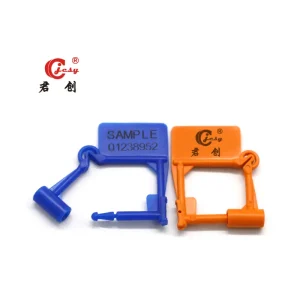
Critical Security Features of a High Security Padlock Seal
A padlock seal earns the high security label not through marketing but through its ability to resist surreptitious opening and to leave unmistakable evidence if someone tries. The locking mechanism is the most important part. A well-designed lock body uses a one-way locking jaw that seats the hasp permanently, with a breakaway pin that must snap cleanly when the seal is opened correctly. Any design that allows the hasp to be retracted with a thin tool under the locking jaw is not high security, regardless of what a datasheet says.
Materials matter just as much. I have seen seals molded from off-spec recycled ABS that cracked during winter transport because the material lost impact strength below freezing. Reliable manufacturers specify virgin injection-grade materials with UV stabilizers and impact modifiers, then batch-test every incoming resin lot. For padlock seals used outdoors on trucks or containers, standard polypropylene lacks the rigidity to prevent the lock body from flexing under attack; a PC-ABS blend or high-impact ABS is a minimum.
ISO 17712 provides a useful framework. The standard defines three security levels: indicative, security, and high security, with the latter requiring physical strength tests and tamper evidence verification by an accredited lab. A manufacturer claiming high security status without showing the Clause 6.4 test report for the actual seal model is a red flag. Certifications apply to specific products, not factory-wide.
Manufacturing Processes Reliable High Security Padlock Seal Manufacturers Use
The difference between a padlock seal that works and one that fails on a truck at 2 a.m. is often determined inside a 200-ton injection molding press. Mold temperature, injection pressure, and cooling time directly control the lock body’s dimensional stability and internal stress. If the cycle time is shortened to raise output, the part may look identical but will have micro-cracks around the hinge or locking jaw. I have pulled samples from lots produced on an aggressive cycle that broke at half the rated force because the gate area was insufficiently packed.
Heat-staking the lock body closed is another control point. Multi-point heat-staking with calibrated temperature and dwell time creates a permanent closure that cannot be reopened without destroying the seal. A single-point stake can fail, leaving a seam that can be pried open with a knife and reclosed without a trace. Ask a potential supplier to explain their heat-stake process and show you cross-sectioned samples. A serious manufacturer will have these documented.
Serialization also originates on the production floor. Laser marking heads integrate directly on the assembly line, printing sequential numbers, barcodes, and logos on the seal body as it passes from molding to assembly. The marking must withstand abrasion and chemical exposure without fading. Painted or pad-printed markings rarely survive the life of a seal exposed to road grime and diesel fumes. Laser marking depth and contrast testing should be part of the manufacturer’s in-process quality plan.
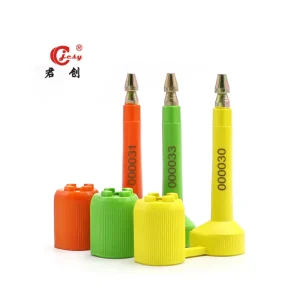
Production Capability Verification Methods
Evaluating a factory goes beyond checking an ISO certificate on a wall. Visit the facility or request a live video walkthrough focusing on the injection molding shop. Look at the presses: a range of clamping forces from 120 to 380 tons indicates experience with different seal sizes. Ask about maintenance logs. A machine with a history of nozzle blockages or temperature controller faults will produce inconsistent parts, and the factory floor manager should know the mean time between failures for each press.
Raw material handling tells you even more. Are resin batches segregated and labeled with dates and supplier details? Does the factory pre-dry hygroscopic materials before molding? If they cannot show you a material dryer with dew-point monitoring, assume the seals will have moisture-related brittleness. In our plant, every resin lot is tested for melt flow index and impact strength before it reaches a hopper.
Assembly and inspection stations should have documented checklists and defined reject criteria. For padlock seals, a simple pull test on a sample from every production hour is standard. If a manufacturer claims to do 100% inspection, ask them to demonstrate the fixture and record-keeping method. Most cannot perform 100% because production volumes are too high; honest quality managers will tell you their AQL sampling plan instead.
Customization and Compliance with a Padlock Seal Manufacturer
Customization goes well beyond printing a logo. A manufacturer with in-house design capability can modify the hasp length, lock jaw geometry, and body color to match your application. I have produced seals with dual-color overmolding for brand identification, RFID inserts for automated gate access systems, and sequential barcodes that integrate directly into a client’s warehouse management system. The key is the engineering team’s ability to modify tooling or produce new molds within four to six weeks.
Compliance documentation is non-negotiable for cross-border shipments. A high security padlock seal intended for container use should come with an ISO 17712 certificate from an independent laboratory, listing the model tested and the achieved security level. Ask whether the test report is current and whether the production batch matches the tested design exactly. Some manufacturers test one model and then produce a lower-cost version, and that version is not certified.
Long-term supply stability depends on the manufacturer’s raw material sourcing strategy. If they buy resin on the spot market, you may see quality drift between orders. A preferred supplier arrangement with material producers combined with annual stock agreements protects you from that drift. Inquire about their supplier qualification process for polymers, pigments, and locking components.
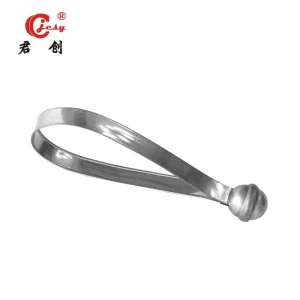
Common Procurement Pitfalls in Sourcing Padlock Seals
Ordering seals based on the lowest quoted price almost always results in problems that surface months later. I have received complaint calls from importers who discovered that a batch of cheap padlock seals from an unnamed supplier became so brittle after three months of UV exposure that the lock body shattered when the driver tried to remove them. The supplier had omitted UV stabilizers entirely to save a few dollars per thousand units. The cost of the seals was a fraction of the claim they faced from the cargo owner.
Another recurring mistake is accepting seal samples that were hand-picked and finished with extra care but do not represent the production line’s actual output. Demand that samples be drawn from a live production run, not from a sample room. If the supplier resists, they are hiding a gap between their capability and their production reality.
Paying for certificates is another trap. Some trading companies buy certifications for a reference sample and then ship seals produced in un-audited workshops. Verify the certificate directly with the issuing laboratory or ask to see the factory audit report that accompanies the certificate. A legitimate manufacturer will have no issue providing these.
Finally, do not neglect your own inbound inspection. Design a simple pull-test fixture and a cycling test that simulates your operating temperature range. The few hundred dollars this costs will save you far more in rejected loads and insurance claims.
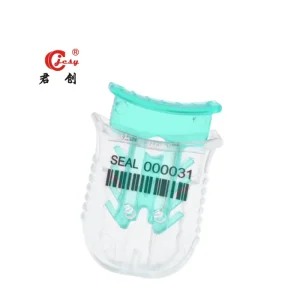
What Procurement Teams Ask About Padlock Seal Manufacturers
Can I get a free sample before committing to a bulk order?
Every established manufacturer offers samples, but the terms differ widely. From our side, we ship sample kits without charge, covering freight after client details are confirmed. The important thing is what you do with the sample. Do not just look at it. Test the seal on your actual equipment, expose it to the temperatures and handling it will face in service, and then compare the broken seal to the intact one. A sample that looks perfect on a desk tells you almost nothing.
Is it necessary to visit the factory in person?
In-person visits deliver the deepest insight, but a structured video walkthrough guided by a quality engineer can substitute when travel is not an option. Ask the camera operator to stop at specific machines, read the maintenance tags aloud, and show you the current production batch’s in-process test records. A factory that cannot arrange this within two days is either disorganized or has something to hide.
What raw material certifications should be provided?
Insist on certificates of analysis for each resin lot used in your order, showing melt flow rate, tensile strength, and impact strength per ASTM D638 and D256. If the seal body contains UV stabilizers, request the stabilizer type and concentration from the resin supplier’s technical data sheet, not just a verbal assurance.
How much do custom padlock seals cost compared to stock models?
Customization adds tooling amortization and possibly a mold modification charge, but on volumes above 100,000 units the per-piece premium often drops below 15%. The main cost driver is the mold change, which might range from a few thousand dollars for a logo insert modification to over ten thousand for a completely new lock body geometry. A responsible manufacturer will break these costs down transparently before production.
Are there recommended storage conditions for padlock seals?
Yes. Store seals in original sealed packaging in a dry area below 40°C and away from direct sunlight before use. Prolonged UV exposure before application can accelerate polymer degradation, negating months of outdoor service life. The standard shelf life of properly stored polycarbonate-ABS seals is two years from manufacture. If your shipments involve extreme climates, share your conditions ahead of time so the manufacturer can recommend the right material grade.
If your procurement cycle involves sealing cargo subject to specific national customs or insurer requirements, sending your compliance checklist to the manufacturer before sourcing a full container is a sensible early step. Reach our production team at [email protected] or via WhatsApp at +86 13853189290 with your part numbers and annual volume estimates for a factory representative to provide a specification-matched quote and sample dispatch.
If you’re interested, check out these related articles:
Bolt Seal vs Cable Seal: Strategic Security Differences – Junchuang Lock
Anti-Tamper Meter Seal Explained: A Technical Guide to Security – Junchuang Lock
Security Seal Mistakes: Preventing Tamper, Ensuring Compliance – Junchuang Lock