
Securing cargo with tamper-evident padlock seals is standard practice, but the sourcing decision behind those seals can make or break a shipment’s integrity. Sourcing padlock seals factory direct from a Chinese manufacturer can cut your per-unit cost by 20-40% compared to trading company quotes, yet many importers still end up with inconsistent quality or delayed shipments. The difference usually comes down to how thoroughly they evaluated the factory before placing the order. This article walks through the practical steps for vetting a padlock seal factory’s production capability and quality systems, drawn from 15 years of manufacturing experience, so you can build a direct supply relationship that holds up under real logistics pressure.
Why Buy Padlock Seals Direct from a Factory?
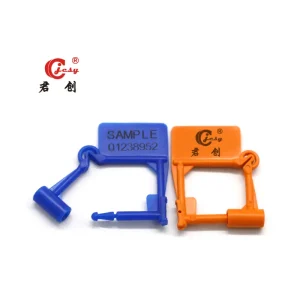
Buying factory direct eliminates the markup that trading companies add for sourcing, inspection, and logistics coordination. More importantly, it gives you a straight line to the people who control material selection, molding, and quality testing. When a quality issue arises—a seal that doesn’t lock cleanly, for example—a factory can trace it to a specific mold cavity or production shift. A trading company can only forward your complaint. The table below summarizes the key differences.
| Factor | Factory Direct | Trading Company |
|---|---|---|
| Price per unit | 20-40% lower, no middleman margin | Higher due to markup |
| Quality control visibility | Direct access to QC data and production line | Limited to supplier-provided reports |
| Customization lead time | Faster; factory controls mold and print scheduling | Longer; relayed through third party |
| Minimum order quantity | Often negotiable directly | Set by supplier; less room to negotiate |
| After-sales support | Direct technical response | Mediated; resolution time depends on supplier responsiveness |
How Can You Tell a True Manufacturer from a Trading Company?
A factory floor tells you in ten minutes what a polished website never can. Ask for a live video walkthrough of the padlock seal production line—not a recorded promotional video. Look for injection molding machines, pad printing stations, and a dedicated quality inspection area with tensile testers. I’ve visited factories that claimed to produce seals in-house only to find they were outsourcing injection molding and merely adding printed labels. That’s a trading company in disguise. At our own padlock seal production facility, visitors can watch raw polypropylene pellets enter the hopper and emerge as finished, serialized seals minutes later. No legitimate manufacturer will refuse to show you the production floor, even if you are thousands of miles away.
What Production Capabilities Should a Reliable Padlock Seal Factory Have?
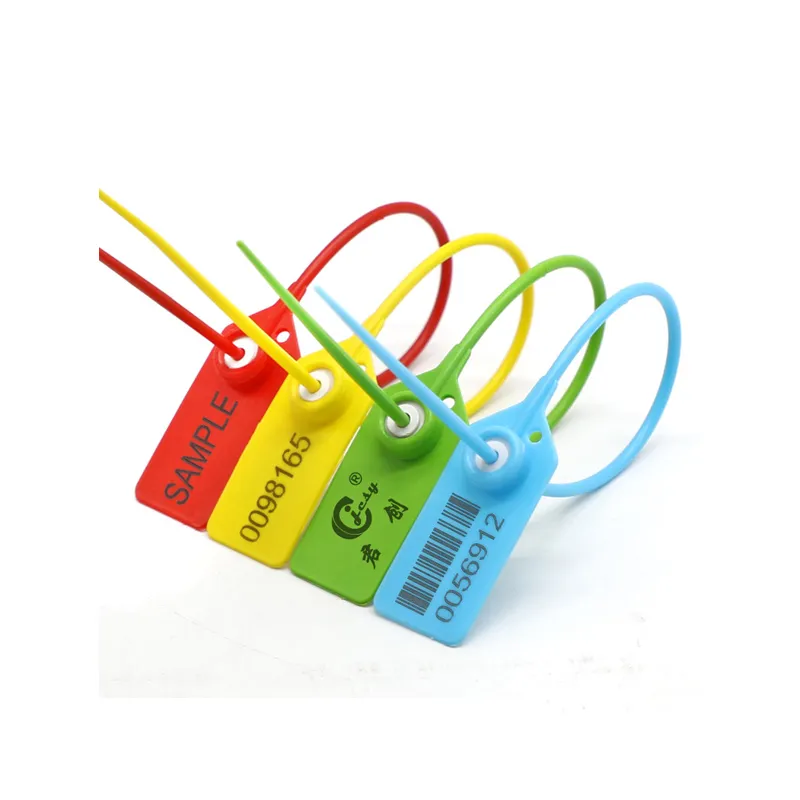
A padlock seal factory that supplies international logistics markets needs more than a few molding machines. The production line should include in-line inspection for dimensional accuracy, automated serial number engraving or laser marking, and a pull-force testing station. For ISO 17712 compliance, the factory must be able to document tensile testing per batch. We run standardized tensile tests on every production run and retain batch records for audit. When evaluating a potential supplier, request sample test reports alongside physical samples—if the factory cannot provide batch-level QC data, treat that as a warning sign. The seal’s locking mechanism is the most failure-prone part, so confirm that the factory performs locking/unlocking cycle tests during production, not just on prototype samples.
If you are sourcing for high-volume logistics operations where consistent seal strength matters, it is worth confirming the factory’s internal testing protocols before finalizing your vendor list. A quick video walkthrough of their QC lab can save you from a container full of questionable seals. Reach out at [email protected] to discuss what to ask for.
How Does Customization and OEM Work for Padlock Seals?
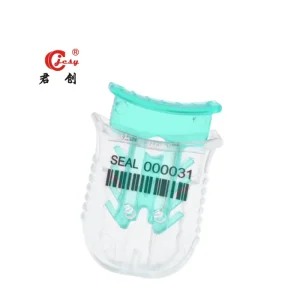
A factory-direct partnership unlocks customization options that are impractical through a distributor. Padlock seals can be custom colored for cargo type segregation, hot-stamped with your company logo, sequentially numbered for traceability, and even laser-etched with barcodes that integrate into your warehouse management system. The main tooling requirement is a mold insert for the seal body; after that, printing and numbering are straightforward if the factory runs in-house pad printing or laser engraving. Minimum order quantities for custom seals vary by factory but typically start around 5,000 to 10,000 units. Be explicit in your specification about font, character placement, and durability expectations. A factory that asks detailed questions about your operating environment—temperature ranges, handling frequency, exposure to chemicals—is showing you they understand the application, not just the production.
How Do You Negotiate a Factory-Direct Order?
Start by requesting pre-production samples that match your exact specification, not off-the-shelf stock seals. Compare the sample’s material feel, locking action, and print durability against your application needs. Once satisfied, negotiate based on the full order quantity, not just the per-unit price. Key discussion points should include lead time, payment terms (T/T with a performance deposit is common), and quality acceptance criteria. I always recommend writing a one-page quality specification sheet into the purchase order—covering material grade, seal strength, color tolerance, and marking durability—so that both sides share a single standard for acceptance. A factory that is comfortable with clear quality documentation is far less likely to produce surprises at delivery.
Common Questions About Sourcing Padlock Seals from China
What is the minimum order quantity for factory-direct padlock seals?
For standard padlock seals without customization, many factories accept orders as low as 2,000 pieces. Customized seals, due to mold setup and printing, typically start at 5,000 to 10,000 pieces. The MOQ is not a fixed wall; it reflects production efficiency. A factory may reduce the MOQ if you accept a slightly longer lead time. When your annual volume justifies higher tooling investment, MOQ can drop significantly for repeat orders.
How can I get free samples before placing a bulk order?
Most manufacturers offer a set of free stock samples for evaluation, while you cover the courier charge. Custom-printed samples usually carry a small tooling or setup fee, which can be credited against a future bulk order. In programs we have supported, sending samples with a simple evaluation checklist—lock/unlock cycles, print adhesion, pull force—helps both sides align on expectations early.
What certifications should a padlock seal factory have?
ISO 17712:2013 certification is the baseline for security seals used in cross-border shipping, verifying the seal meets mechanical strength and tamper-evidence standards. Additionally, a factory should hold ISO 9001 for general quality management. For hazardous material transport or food-grade applications, check for relevant sector certifications. In China, the business license and export registration are basic legal requirements—request copies before any payment.
How do I confirm the seals will hold up in outdoor shipping conditions?
Ask for data on UV resistance, cold-brittle temperature, and corrosion testing if metal components are used. A factory that supplies logistics companies usually has accelerated aging test results. If your shipping routes involve extreme cold or frequent handling, share those details so the factory can recommend the right material grade—polypropylene with UV stabilizers, for example, or stainless steel locking inserts for saltwater exposure.
Sourcing padlock seals factory direct is a process that rewards thoroughness, not shortcuts. The most reliable supply relationships start with a clear verification of the factory floor and a shared understanding of quality expectations. If you are evaluating suppliers for your next order, send your specifications and quantity requirement to [email protected] or call +86 13853189290. We will walk you through our production process and provide the documentation you need to make a confident decision.
If you’re interested, check out these related articles:
Security Seal Materials: Selection for Tamper Evidence – Junchuang Lock
Bulk Cable Seal Purchase Guide: Strategic Procurement & Security – Junchuang Lock
UV Resistant Security Seals: Protecting Assets from Sun Degradation – Junchuang Lock