
UV radiation quietly destroys security seals long before anyone notices the damage. I’ve seen seals that looked fine from a distance but crumbled the moment someone tried to verify them—weeks of exposure had turned the plastic brittle and the tamper-evident features useless. The real problem isn’t dramatic failure; it’s the slow, invisible weakening that makes a seal unreliable exactly when you need to trust it. Shandong Junchuang Lock Industrial Co., Ltd engineers UV resistant security seals specifically to handle prolonged outdoor exposure, maintaining both physical integrity and tamper evidence over extended periods.
Why UV Resistance Determines Seal Reliability Outdoors
Environmental degradation causes more seal failures than most procurement teams realize. When security seals sit in direct sunlight—on shipping containers, utility meters, or outdoor storage—UV radiation attacks the material continuously. The seal doesn’t need to be tampered with to fail; the sun does the work gradually.
A compromised seal on a shipping container can mean theft goes undetected or, equally problematic, triggers false alarms when inspectors mistake UV damage for tampering. Either scenario costs money and erodes trust in the security system. Industry data suggests environmental degradation accounts for a significant portion of premature seal failures, particularly in logistics and utility applications where outdoor security seals face months of exposure.
Weather-resistant seals aren’t a premium feature—they’re baseline requirements for any application involving sunlight. Long-term seal performance depends entirely on whether the material can resist photodegradation under UV exposure.
The Mechanism Behind UV Damage to Security Seals
Plastic and polymer security seals absorb UV photons, and those photons carry enough energy to break molecular bonds. This triggers photodegradation—a chain reaction of oxidation that progressively weakens the material’s structure.
The visible signs appear gradually. Colors fade. The surface develops a chalky texture. Hairline cracks form. But the structural damage happens before any of this becomes obvious. Tensile strength drops. Flexibility disappears. A seal rated to withstand 50 kilograms of pulling force might fail at 20 kilograms after a few months of sun exposure.
This creates two distinct problems for tamper evidence. First, a seal that’s genuinely been compromised might look similar to one that’s simply UV-damaged, making verification unreliable. Second, a seal that appears intact might actually be so weakened that it provides no real security. Preventing seal failure requires selecting materials with inherent UV resistance and understanding how material properties change under prolonged exposure.
Engineering UV Resistant Security Seals Through Material Selection
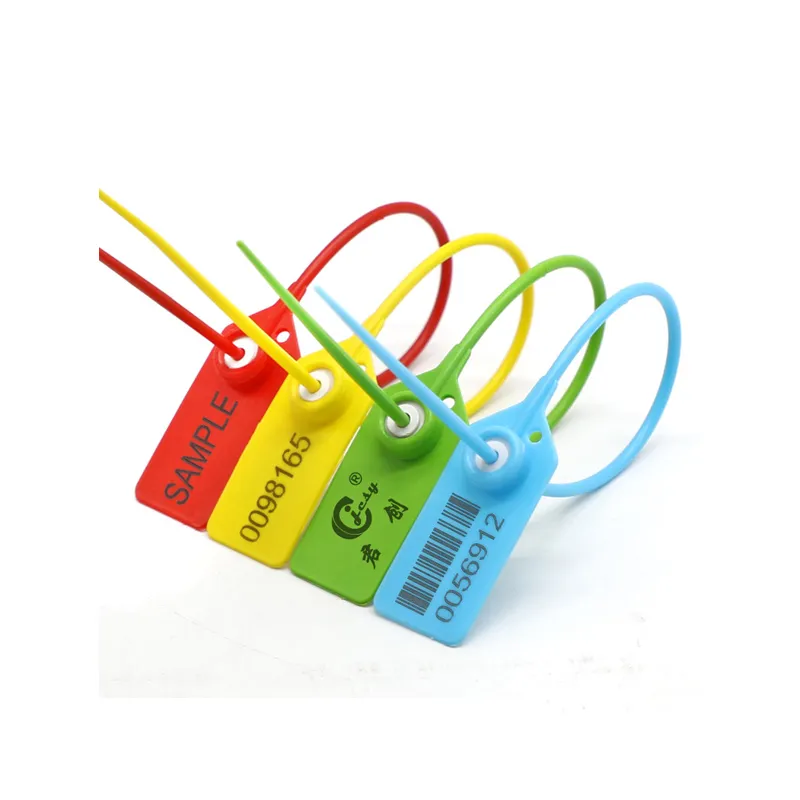
Durable UV resistant security seals start with polymer selection and additive formulation. The base materials—UV-stabilized polypropylene, nylon, and HDPE—each offer different performance characteristics, but all require enhancement to achieve meaningful UV resistance.
Hindered Amine Light Stabilizers (HALS) work by intercepting the free radicals that form during photodegradation. They don’t prevent UV absorption; they stop the chain reaction that follows. UV absorbers take a different approach, converting harmful radiation into heat before it can damage the polymer structure.
The manufacturing process matters as much as the formulation. Additives must be distributed uniformly throughout the material, not just concentrated at the surface. Accelerated weathering tests confirm whether the material choice for seals delivers consistent protection across the entire seal structure.
| Material Type | Primary UV Resistance Mechanism | Typical Applications | UV Lifespan (Estimated) |
|---|---|---|---|
| Polypropylene | HALS, UV Absorbers | Plastic Seals | 2-5 years |
| Nylon | HALS, Pigmentation | Cable Seals | 3-6 years |
| HDPE | UV Absorbers, Carbon Black | Barrier Seals | 4-7 years |
What materials are best for UV resistant security seals?
UV-stabilized polypropylene, nylon, and high-density polyethylene (HDPE) perform best for UV resistant security seals. Polypropylene with HALS additives balances cost and durability for general applications. Nylon delivers higher tensile strength and abrasion resistance when seals face mechanical stress alongside UV exposure. HDPE, particularly when formulated with carbon black, provides the longest UV protection and resists chemical exposure. The right security seal material depends on how long the seal must remain intact and what environmental conditions it will face.
Where UV Resistant Security Seals Are Non-Negotiable
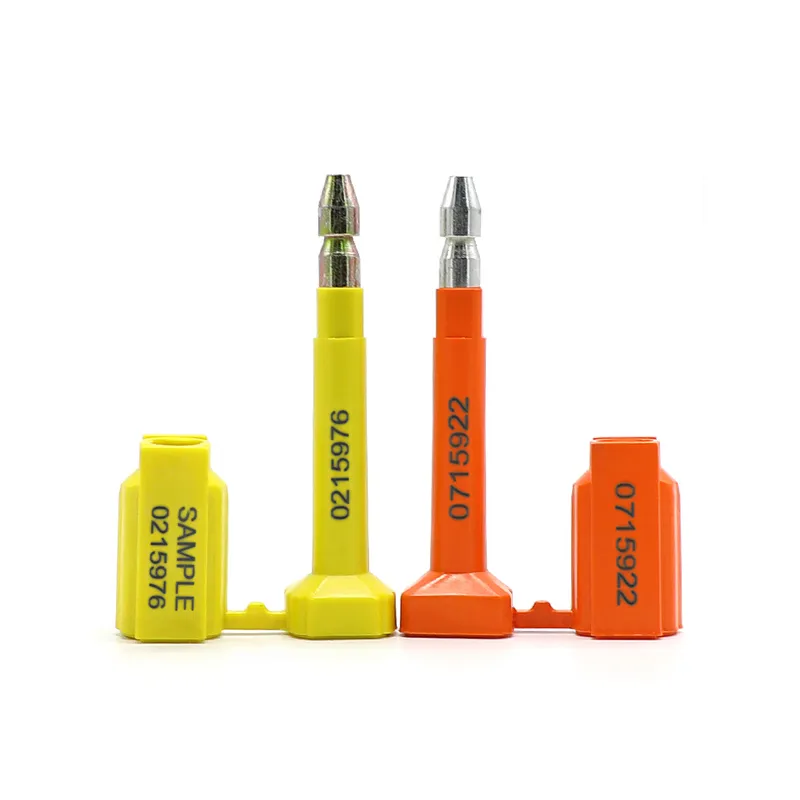
Some applications simply cannot tolerate UV-related seal failure. Shipping containers cross oceans and sit in port yards under intense sun for weeks. A Cargo Container Bolt Seal on a container traveling from Asia to Europe might experience more cumulative UV exposure in a single journey than a warehouse seal sees in years.
Utility meter seals face a different challenge—they need to remain tamper-evident for years, not weeks. Meters installed on building exteriors receive constant UV exposure, and replacement cycles are measured in years rather than months. Industrial security seals protecting outdoor equipment or storage facilities face similar demands.
Transport security seals and asset protection seals in these environments fail at significantly higher rates when UV resistance isn’t built into the material. Field data shows failure rates up to 30% higher for standard seals compared to UV-resistant counterparts in outdoor applications. We manufacture Plastic Security Seal and Cable Security Seal specifically for these demanding conditions.
Testing Standards That Validate UV Stability Claims
Claims about UV resistance mean nothing without testing data to support them. ISO and ASTM standards provide the framework for validating seal integrity under sun conditions through accelerated weathering tests.
These tests compress years of outdoor exposure into weeks or months using intense UV lamps, controlled temperature cycles, and humidity variations. The goal is predicting long-term seal performance before deploying seals in the field, not discovering problems after failures occur.
ISO 4892 uses filtered xenon-arc radiation to simulate natural sunlight across the full spectrum. ASTM G154 and ASTM D4329 use fluorescent UV lamps to accelerate degradation specifically in the UV range most damaging to polymers. Both approaches reveal how materials will behave over extended outdoor deployment.
Quality control security seals requires testing against these standards, not just claiming compliance. We validate our seals through accelerated weathering protocols to ensure they perform as specified in real-world conditions.
| Standard Body | Test Method (Example) | Purpose | Applicable Materials (Example) |
|---|---|---|---|
| ISO | ISO 4892 | Artificial weathering using filtered xenon-arc radiation | Plastics, Coatings |
| ASTM | ASTM G154 | Fluorescent UV exposure of nonmetallic materials | Polymers, Textiles |
| ASTM | ASTM D4329 | Fluorescent UV exposure of plastics | Plastic Seals |
Why is UV resistance crucial for outdoor security seals?
UV radiation breaks down standard plastics through photodegradation, causing brittleness, cracking, and reduced tensile strength. These changes compromise tamper-evident features and can cause seals to fail without any actual tampering. For outdoor security seals, UV resistance determines whether the seal maintains its security function throughout its intended service life. The cost-benefit calculation favors UV-resistant seals in any outdoor application—premature failures create security vulnerabilities and replacement costs that exceed the initial price difference.
Evaluating UV Resistant Seals for Procurement Decisions
Selecting the right UV resistant security seals requires matching material capabilities to actual deployment conditions. Start with the environment: average UV intensity, temperature range, and whether seals will face direct or indirect sunlight. A seal on a south-facing utility meter in Arizona faces different conditions than one on a shipping container moving through northern European ports.
Required service life drives material selection. Applications needing a few weeks of integrity can use different formulations than those requiring multi-year performance. The cost-benefit UV resistant seals provide becomes clearer when you calculate the total cost of seal failures—replacement labor, security investigations, potential losses from undetected tampering.
Request accelerated weathering test data from suppliers, not just material specifications. Ask about manufacturing processes and quality control protocols. A supplier’s track record with similar applications provides better guidance than generic claims about UV resistance. This approach ensures you choose the right security seal for specific operational requirements.
Partner with Junchuang for Reliable Security Solutions
For security seals that stand up to the toughest environments, trust Shandong Junchuang Lock Industrial Co., Ltd. We design, develop, and produce a wide range of high-quality seals, including Plastic Seals, cable seal, Meter Seal, and high security bolt seals. Our commitment to quality and long-term cooperation ensures your assets remain secure.
Contact us today to discuss your specific security sealing requirements.
Mobile: +86 13853189290
Email: [email protected]
Whatsapp: +86 13853189290