
Plastic padlock seal manufacturer reliability determines whether your cargo security holds or fails at a critical moment. Over fifteen years managing injection molding production for security seals, I have seen inconsistent manufacturing directly cause tamper evidence failures. Choosing a manufacturer is not about chasing the lowest price. It is about verifying injection molding precision, serial number integrity, and defect inspection discipline before you commit to an order. This guide shows you the specific quality controls that separate a dependable plastic padlock seal manufacturer from one that will put your supply chain at risk.
Why Manufacturing Quality Controls Cargo Security
A plastic padlock seal is not a simple plastic lock. It is a tamper evident device that must hold under transit vibration, resist cutting attempts, and show clear evidence if someone tries to bypass it. When a manufacturer cuts corners on material or molding consistency, the seal may crack during normal handling or fail to lock securely. In logistics and trucking operations, a broken seal means lost time, rejected deliveries, and cargo theft investigations.
The core function of a padlock seal is to provide a one time use, uniquely numbered barrier that cannot be resealed without visible damage. That function breaks down completely if the locking mechanism is poorly molded. Injection molding parameters such as mold temperature, injection pressure, and cooling time must be tightly controlled for every single seal. A plastic padlock seal manufacturer that cannot explain its molding process in detail is effectively leaving your cargo security to chance.
Key Indicators of a Reliable Plastic Padlock Seal Manufacturer
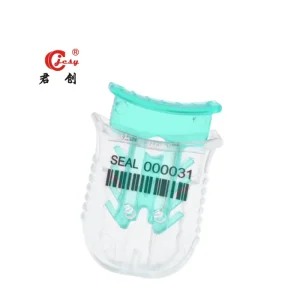
Engineers and procurement managers should look beyond glossy catalogs. The manufacturing floor tells the real story. Three indicators separate manufacturers that deliver consistent seal quality from those that only talk about it.
Injection Molding Precision and Material Consistency
Padlock seals are typically made from nylon or polypropylene. Both materials are common, but their performance varies dramatically with the grade and the molding process. I have inspected seals from low cost suppliers where the plastic was brittle because recycled content was mixed in. Those seals shattered during truck loading.
A manufacturer that controls material quality will use virgin grade resin, maintain documented mold temperature logs, and run regular tensile strength tests on production samples. Ask how frequently they test and whether they can share process control records. If they hesitate, you are likely dealing with a trading company that subcontracts production to the cheapest available workshop.
| Quality Factor | What to Ask | Red Flag |
|---|---|---|
| Material Source | “Can you provide resin certification?” | No documented supplier or vague answer |
| Mold Maintenance | “How often are molds cleaned and checked?” | No scheduled maintenance plan |
| Tensile Testing | “What is your minimum tensile strength and how often do you test?” | No test data available |
| Dimensional Tolerance | “What is the tolerance on the locking diameter?” | No tolerance spec or “it’s fine” |
How Serial Number Traceability Works
Every plastic padlock seal must carry a unique serial number. Without unique numbering, you cannot prove which seal was applied to which container, and you cannot detect swap outs. The best manufacturers laser mark serial numbers onto each seal during production, not after. Laser marking during inline production guarantees that no two seals share the same number and that the mark is permanent.
We have seen cases where imported seals arrived with duplicate numbers because a manual numbering process failed. In one program we supported, a logistics provider lost an entire audit trail because the seals were numbered by hand and several batches contained repeated sequences. That kind of failure is entirely avoidable if the plastic padlock seal manufacturer uses automated laser marking integrated with its production line.
Verifying Custom Printing and Serial Number Traceability
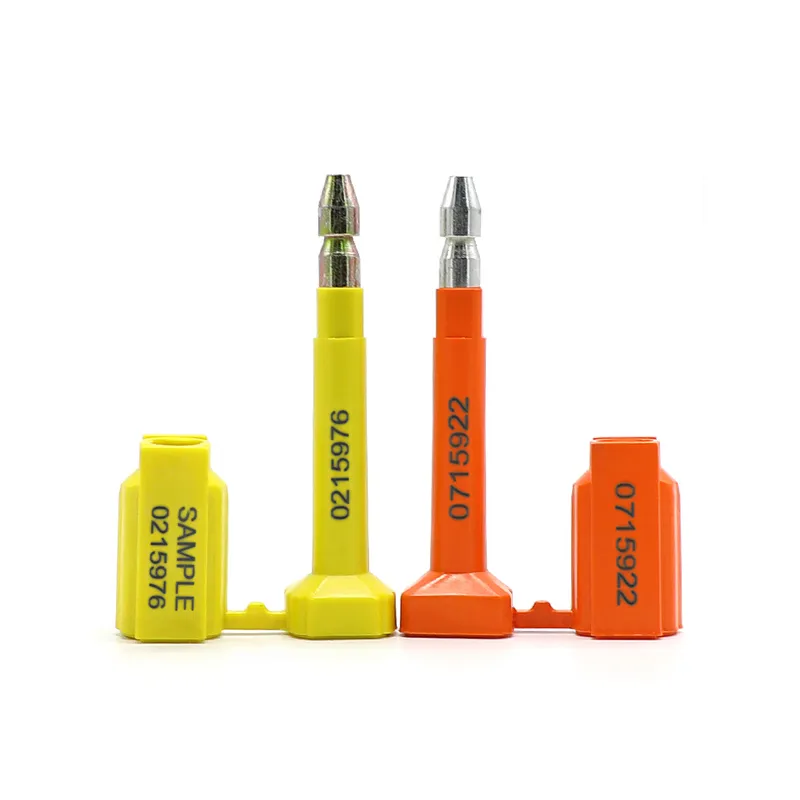
Custom printing and numbering make padlock seals useful for your specific operation, but they also create points where quality can break down. I recommend verifying three things during your supplier evaluation.
Verifying Unique Serial Number Sequences
Request a sample batch of at least twenty seals from the production line that will handle your order. Count the serial numbers yourself. Check for duplicates, missing digits, or misaligned laser marks. If one seal in twenty shows a defect, that rate will translate into hundreds of problem seals in a full container order.
Also confirm that the manufacturer can hold the laser marking tolerance you need. For example, some logistics programs require barcode scannability. If the laser dot pitch is too coarse, barcode readers will fail. Your plastic padlock seal manufacturer should be able to show you a barcode verification report from a recent production run.
Custom Printing: What to Confirm with the Manufacturer
Custom pad printing or hot stamping adds your logo, color, or company code. The key is adhesion. If the print wears off after a few days of handling, the seal loses identification. Ask for abrasion test results or request sample seals and rub them yourself against a rough surface. A quality manufacturer will use UV cured inks that bond properly to the seal material.
If you require specific color coding for different routes or cargo types, confirm that the manufacturer uses masterbatch coloring, not surface painting. Paint chips and flakes. Masterbatch produces a consistent, fade resistant color throughout the plastic. Miscommunication at this stage often leads to batches that look correct at first but degrade quickly in outdoor conditions.
Assessing Production Capacity and Lead Times
Production capacity matters more than the list of machines on a website. I have visited factories that claimed monthly capacities of millions of seals but could not fulfill a standard container order on time because their mold inventory was tied up with other low margin work. The real test is their ability to dedicate a production line to your order for its full duration.
How to Evaluate a Factory’s Real Output
Ask directly how many injection molding machines are dedicated to padlock seal production and what their cycle time per cavity is. For a standard door seal model, a single cavity mold cycle time is around 15 to 30 seconds depending on part weight and cooling. With a multi cavity mold, output multiplies. A manufacturer that cannot share cavity count and cycle time data likely does not control its own production scheduling.
Lead times for custom padlock seals depend on mold fabrication if you need a new design. Standard off the shelf padlock seals without custom tooling can ship within two weeks of order confirmation. Custom mold development adds two to four weeks depending on mold complexity. I have found that manufacturers who quote significantly shorter lead times on custom tooling are often rushing the mold polishing stage, which can cause mounting burrs and inconsistent locking later.
Questions to Ask Before Partnering with a Padlock Seal Manufacturer
Before finalizing a supplier agreement, I suggest running through these five questions with any factory under consideration. The answers reveal their actual level of process control.
1. Can you provide a first article inspection report for our seal design?
A first article inspection report confirms that the initial production sample meets all dimensional, material, and performance specifications. If the manufacturer is not willing to provide this, their outgoing quality check is informal at best.
2. What defect rate do you guarantee, and how do you handle rejected batches?
Acceptable defect rates for plastic padlock seals are below one percent for visual defects and zero percent for functional failures such as locking mechanism defects. Confirm who pays for rejected goods and how returns are handled.
3. Do you test every batch for locking force and tamper evidence performance?
Batch testing should include a pull test on the locking mechanism and a visual check after forced opening to confirm that tamper evidence is clear. Ask for sample reports.
If your program involves multi country distribution and customs clearance requirements, it is worth confirming the manufacturer’s certification status and ability to maintain serial number traceability across batch shipments before finalizing your purchasing list — reach out at [email protected].
4. How do you manage mold maintenance and replacement?
Molds wear. A worn mold cavity produces seals with flash or dimensional drift. The manufacturer should have a documented mold maintenance schedule and a plan for cavity replacement after a certain number of cycles.
5. Can you provide references from clients with similar shipment volumes?
A factory that serves other industrial logistics or utility clients can demonstrate proven capacity. Ask for contactable references, not just written testimonials.
Partnering with a Plastic Padlock Seal Manufacturer That Delivers Consistency
A plastic padlock seal order is not a commodity transaction. The difference between a manufacturer that runs tight process controls and one that accepts high defect rates is the difference between cargo that arrives sealed and cargo that arrives with a gap in the audit trail. I have seen procurement teams make decisions based entirely on piece price, only to spend more on investigation hours and rejected shipments later.
If you need a padlock seal supplier that operates its own injection molding, laser marking, and assembly lines in house, we welcome you to reach out. At Shandong Junchuang Lock, we produce plastic padlock seals, high security bolt seals, cable seals, and related security products under direct quality control from raw material testing to final shipping. Contact us at [email protected] or call +86 13853189290 with your required quantity and seal specifications, and we will confirm production lead time and provide a sample batch for your evaluation.
Common Questions About Plastic Padlock Seals and Manufacturing
What material should high quality plastic padlock seals use?
Nylon and polypropylene are the most common, and both can perform well when virgin grade resin is used. Nylon offers higher tensile strength and better wear resistance, making it suitable for heavy duty applications. Polypropylene is lower cost and works well for moderate security requirements. The key is not the material name but whether the manufacturer can certify the resin grade and maintain consistent processing. Recycled content introduces brittleness and unpredictable locking force.
How much do custom padlock seals typically cost?
Cost varies with order quantity, material, printing complexity, and any custom mold requirements. Standard padlock seals without custom printing cost less, while laser marking and pad printing add per piece cost. The biggest factor is often mold amortization for custom designs. You get better unit pricing on container loads, but always request a price breakdown that separates mold cost from per piece cost so you understand total investment.
What is the typical MOQ for padlock seals?
Most factories set minimum order quantities around 5,000 to 10,000 pieces for standard models. Custom printed orders usually start at 20,000 pieces because setup involves laser programming and ink preparation. The exact MOQ depends on whether the seal uses an existing mold or requires new tooling. Be careful with suppliers offering very low MOQs without a clear explanation. They may be trading companies buying residual stock.
Can I get samples before placing a bulk order?
Yes, and you should insist on it. A reliable plastic padlock seal manufacturer will provide free samples of standard models and, for custom orders, charge a small tooling sample fee that is refundable against the production order. Test samples under your actual working conditions: apply them to your containers, expose them to sunlight and moisture if needed, and verify that serial numbers scan correctly.
How long does padlock seal manufacturing take?
Standard off the shelf padlock seals can ship within two weeks from production confirmation. Custom printed seals with existing molds add about one week for printing setup and testing. Orders requiring new mold fabrication typically take three to four weeks total including mold trial and sample approval. Lead time extends during peak shipping seasons, so build that into your planning. If your operation has specific serial number ranges or printing requirements, contact us at [email protected] to confirm that our production scheduling aligns with your delivery timeline.
If you’re interested, check out these related articles:
Stainless Steel Cable Tie Guide: Selection for Industrial Security – Junchuang Lock
Selecting Security Seals: A Strategic Guide for Asset Protection – Junchuang Lock
Heavy Duty Cable Seal Manufacturer Guide: Global Security Standards – Junchuang Lock
Bolt Seal OEM Manufacturing Process: A Technical Deep Dive – Junchuang Lock
Finding Reliable Bolt Seal Exporters: A Strategic Procurement Guide – Junchuang Lock