
Securing global supply chains demands solutions that actually hold up under real-world conditions. Bolt seal OEM manufacturing sits at the center of this challenge, producing high-security seals that protect cargo from tampering and theft. What follows breaks down the full production process, covering material choices, quality checkpoints, and the technical standards that separate reliable seals from inadequate ones. The goal is straightforward: seals that meet international requirements and work the way they’re supposed to.
Precision Engineering and Material Selection for Bolt Seals
Precision engineering and careful material selection determine whether a bolt seal performs or fails. Design principles focus on creating seals that resist tampering while showing clear evidence when someone tries. Materials matter more than most people realize.
The pin and barrel, the core components, use robust steel alloys. This provides resistance against cutting tools and blunt force. The outer casing typically comes from high-grade ABS plastic, which serves two purposes: it shows visible damage from tampering attempts and accepts custom printing well. Getting these material combinations right is what makes ISO 17712 compliance possible rather than aspirational.
Critical Quality Control Stages in Bolt Seal OEM Manufacturing
Quality control runs through every phase of production, not just at the end. Raw material inspection comes first, checking steel and plastic components against specifications before anything gets assembled. Dimensional checks during production verify that parts fall within engineering tolerances. Tamper-evidence testing puts seals through simulated attacks to confirm they’ll show interference. Tensile strength evaluation measures breaking force, ensuring seals handle significant stress without failing prematurely. Visual inspection catches cosmetic and functional defects before packaging.
These stages aren’t optional extras. They’re what separates dependable tamper-proof seals from products that look similar but perform differently.
| Material Type | Key Property | Benefit for Bolt Seals | ISO 17712 Relevance |
|---|---|---|---|
| Steel Alloy | High Tensile Strength | Resists cutting and force | Essential for ‘H’ (High Security) rating |
| ABS Plastic | Impact Resistance, Tamper-evident | Casing integrity, visible tampering | Supports tamper-detection features |
| Galvanized Coating | Corrosion Resistance | Durability in harsh environments | Extends lifespan, maintains integrity |
| Polycarbonate | Transparency, Durability | Enhanced visual inspection | Used in specialized transparent seals |
Advanced Production Techniques for High Security Bolt Seals
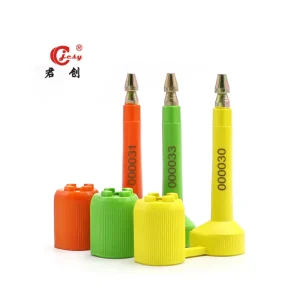
Manufacturing high security bolt seals that meet industry demands requires production methods that minimize variability. Automated assembly lines maintain consistent quality while reducing human error. Precision injection molding produces ABS plastic casings with exact specifications, which matters for tamper-evident design where small dimensional variations can compromise function.
Laser marking applies serial numbers, barcodes, and logos with permanent clarity. These marks resist removal attempts and support traceability throughout the supply chain. Robotic systems handle repetitive tasks, improving both efficiency and accuracy across production floors. The combination of these methods contributes to the reliability of OEM security seal technology. Each ISO 17712 High Security Seal needs to perform under challenging conditions, and production consistency makes that possible.
ISO 17712 Certification and Compliance in OEM Production
ISO 17712 certification represents adherence to international standards for mechanical security seals used on freight containers. The standard specifies requirements for strength and tamper-resistance, covering tensile strength, shear strength, and impact resistance testing.
Manufacturing processes designed around these specifications produce Container Seal Lock products that qualify as “H” (High Security) seals. Regular audits of production lines and materials maintain certification status and provide clients with certified, reliable container security seals. ISO 17712 compliance also supports broader supply chain security initiatives like C-TPAT, which matters for companies moving goods across borders.
If you’re interested, check 《Meter Lead Seals: Essential Security for Utility and Measurement Devices》.
Customization and Branding for OEM Bolt Seal Solutions
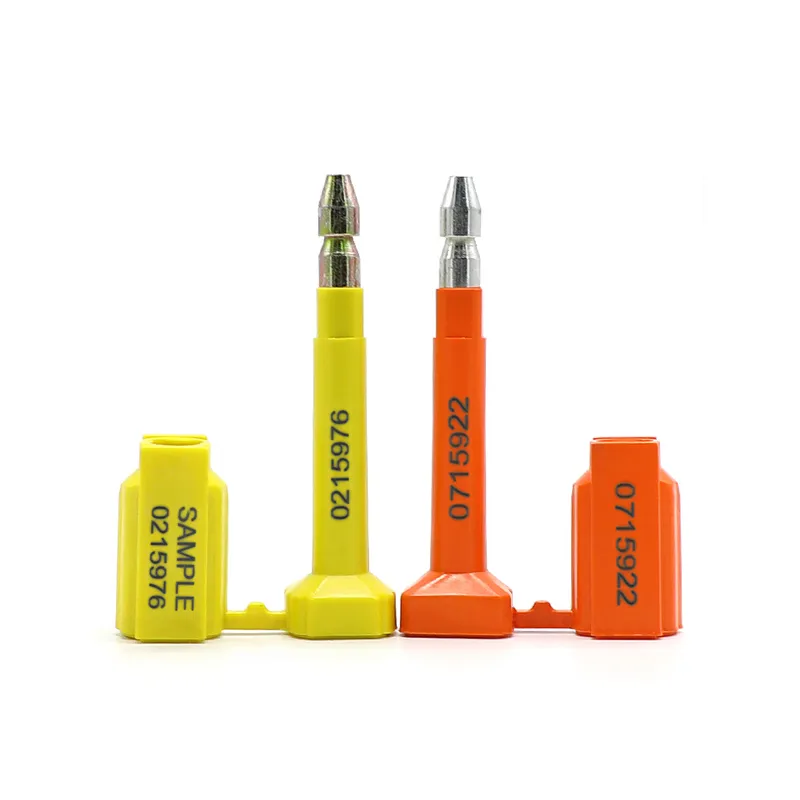
Customization options allow clients to integrate security into their operations in ways that make practical sense. Sequential numbering and barcodes improve traceability. Company logos on seals reinforce brand identity while serving as visual deterrents against unauthorized access.
Color coding helps different departments, routes, or product types stay organized, which speeds up logistics and visual identification. Specialized shaft lengths or diameters accommodate diverse applications where standard dimensions don’t fit. These personalized features turn branded security seals into tools that serve both security and operational efficiency.
| Customization Feature | Description | Benefit | Application Example |
|---|---|---|---|
| Custom Numbering | Unique sequential numbers | Enhanced traceability, fraud prevention | Shipping containers, rail cars |
| Company Logo | Client’s brand mark | Brand reinforcement, visual deterrent | Corporate logistics, branded goods |
| Color Coding | Different colors for identification | Operational efficiency, quick sorting | Inventory management, route differentiation |
| Barcoding | Scannable data | Automated tracking, data capture | Warehouse management, customs clearance |
| Shaft Length/Diameter | Tailored dimensions | Fit specific locking mechanisms | Specialized containers, unique equipment |
Supply Chain Integration and Global Distribution of Bolt Seals
Managing the full process from design through delivery requires coordination across multiple stages. A robust logistics network ensures high security bolt seals arrive on time and in proper condition. Working closely with clients to understand their specific requirements allows for flexible shipping solutions that match their operations.
A global security seal suppliers network maintains consistent product availability and supports rapid response times. This approach to OEM distribution network management means industrial security solutions can support uninterrupted supply chain security rather than creating bottlenecks.
Partner with Shandong Junchuang Lock Industrial for Bolt Seal OEM Expertise
Shandong Junchuang Lock Industrial Co., Ltd. provides high security bolt seal OEM manufacturing with customized and compliant solutions. Contact us to discuss your specific requirements and receive a tailored proposal.
Mobile: +86 13853189290
Email: [email protected]
Whatsapp: +86 13853189290
Frequently Asked Questions About Bolt Seal OEM Manufacturing
What are the critical quality control stages in bolt seal OEM manufacturing?
Quality control in bolt seal OEM manufacturing includes raw material inspection, in-process dimensional checks, tamper-evidence testing, tensile strength evaluation, and final visual inspection. Following ISO 17712 standards at each stage ensures the integrity and reliability of high security bolt seals, preventing unauthorized access and maintaining supply chain security.
How does ISO 17712 certification impact bolt seal OEM production?
ISO 17712 certification shapes bolt seal OEM production by requiring specific design, material, and testing protocols for high security seals. Products must meet international standards for strength and tamper resistance, which matters for Container Seal Lock applications. OEM manufacturers integrate these protocols throughout their processes to achieve and maintain compliance, giving clients certified, reliable security solutions.
What customization options are available for OEM bolt seals?
OEM bolt seals offer customization including custom numbering and barcoding, company logos, color coding for branding or identification, and specialized shaft lengths or diameters. These features strengthen security protocols and streamline logistics, making custom bolt seals part of an effective supply chain security strategy.
Why is material selection crucial for high security bolt seal manufacturing?
Material selection determines how well a seal resists tampering and environmental conditions. Robust steel alloys for the pin and barrel, combined with durable ABS plastic for the casing, ensure bolt seals for shipping containers withstand extreme force and harsh conditions. Strategic material choices are fundamental for achieving ISO 17712 compliance and guaranteeing container security seal integrity.
How do advanced production techniques enhance bolt seal reliability?
Automated assembly, precision injection molding, and laser marking improve bolt seal reliability by ensuring consistent quality, minimizing human error, and creating clear, tamper-evident markings that resist replication. This level of production sophistication in bolt seal OEM manufacturing results in high security bolt seals that offer strong protection against tampering and fraud.