
Purchasing cable seals for cargo security is a decision made on trust, and that trust is built on a seal’s ability to perform when it matters. Many buyers rely on a quick visual check—looking for cracks or missing markings—and call it a day. But as someone who has spent fifteen years on the factory floor managing the production of millions of security seals, I can tell you that the real determinants of cable seal quality are invisible to a casual glance. A seal that looks perfect can fail at the crimp point, snap under unexpected tension, or lose its markings within weeks of exposure. This guide explains exactly what to inspect, which manufacturing defects cause field failures, and how to verify that the cable seals you are ordering will actually secure your cargo.
The Hidden Weak Point in Every Cable Seal
Cable seals are deceptively simple. They consist of a galvanized steel cable, a locking body made from zinc alloy or aluminum, and a crimping insert that secures the cable inside the body. The functional promise is straightforward: once the cable is pushed through the lock body, it cannot be pulled back without destroying the seal. The reality is more complicated.
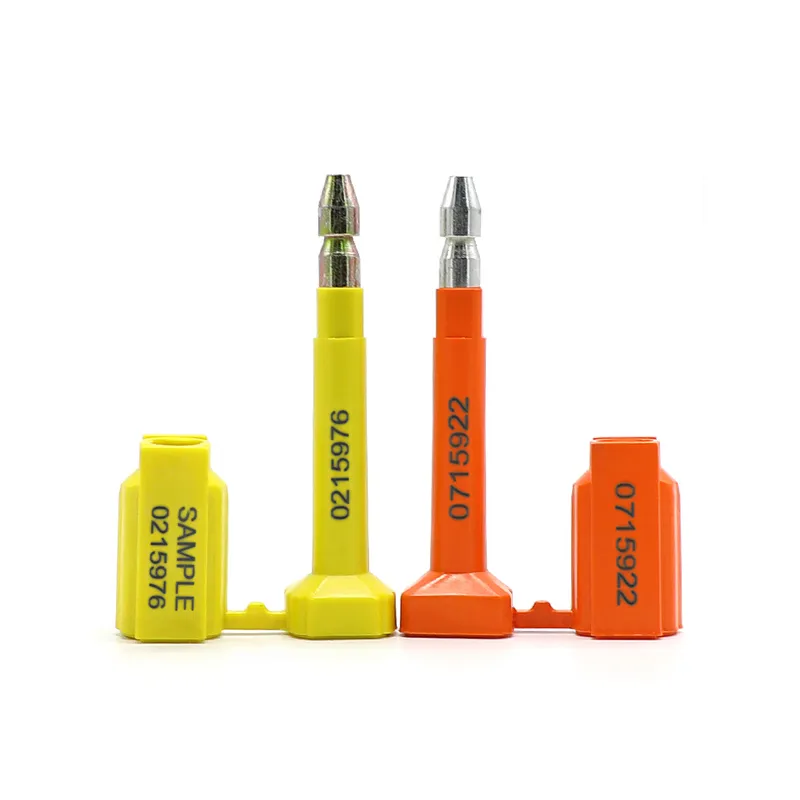
The most common failure I see in returns from the field is not a broken lock body. It is a seemingly intact seal where the cable can be extracted with a firm twist. When we cut open these locks in the QC lab, we find the crimping insert has deformed, the cable has been seated on a polished surface instead of a serrated one, or the zinc alloy has micro-cracks that allowed the insert to loosen over time. These defects are invisible from the outside. That is why a meaningful quality inspection must target the manufacturing process behind the seal, not just the finished look.
If your procurement process treats security seals as a commodity on a spec sheet, you will miss the differences that separate a reliable supplier from a risky one. A Security Seal Tensile Strength Testing certification number means nothing if the manufacturer cannot replicate that result across every unit in a batch.
Material Integrity: The Foundation of Seal Quality
The lock body of a cable seal is normally die-cast from a zinc alloy or, in lower-cost productions, from a recycled zinc material with impurities. The difference shows up fast. Pure zinc alloy flows evenly into the mold, fills every corner of the crimp chamber, and holds its structural integrity under tension and temperature changes. Impure material leaves tiny voids, which become stress concentrators that crack when the cable is pulled hard or the seal sits in a hot container for a week.
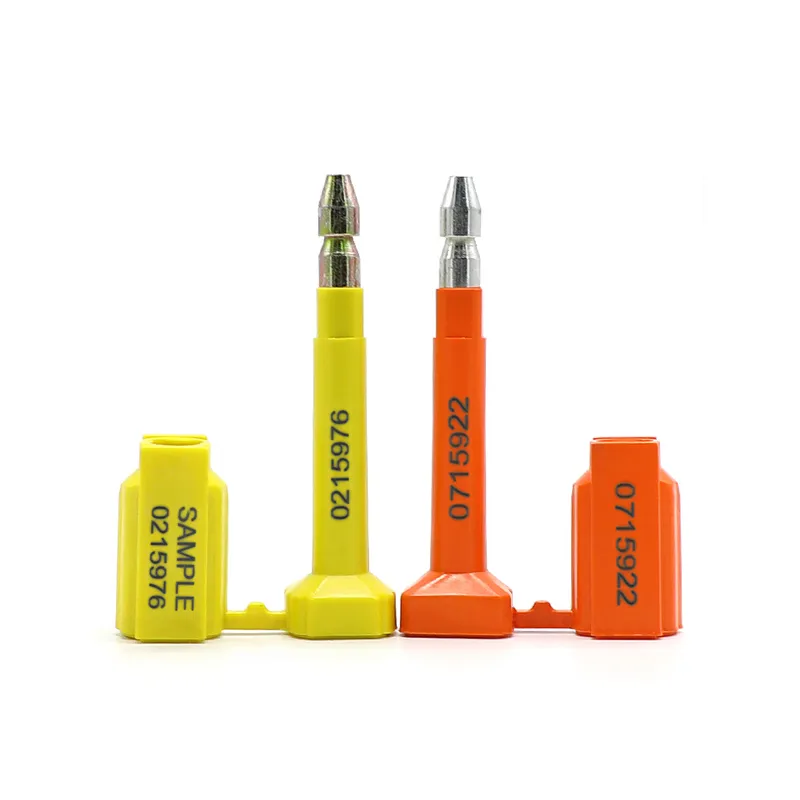
When I walk through our material receipt area, I look at the ingots before they ever touch the furnace. A dull, grainy surface on a zinc ingot tells me there are contaminants in the mix. A clean, smooth ingot with a consistent color indicates a controlled alloy. You cannot perform that check from a photograph in a supplier’s catalog. You can, however, ask your supplier to share their material certification for the batch your order will come from. If they hesitate, or if the certificate is a generic document with no batch number, that is a signal you are dealing with a supplier who does not control their material source.
How to Detect Substandard Metal Without a Lab
You do not need a spectrometer to spot material concerns. Three practical checks work with a small sample:
- Weight check. A zinc alloy lock body on a standard cable seal should feel substantial, not hollow. Weigh a few samples from the same batch. If the weight varies by more than 5%, the casting process is inconsistent, and voids are likely.
- Surface inspection under magnification. Ask for a macro photo of the lock body surface. Look for pitting, small dark spots, or a rough texture. These indicate either oxidation or a recycled material feed that did not fully homogenize.
- Drop test. Drop a sealed cable seal onto concrete from about two meters, lock body down. A sound casting will not crack. Cracks, even hairline ones, are failing points. This is a destructive test on a sample, but it is cheap and immediate.
I have seen importers order ten thousand units, inspect a carton visually, and approve the shipment, only to have five percent of the seals fail a pull test months later. That failure rate traces back to material slips that no visual box check catches.
Cable Crimping and Locking Mechanism: Where Most Failures Occur
The physical grip of a cable seal comes from a crimping insert—usually a spring steel or hardened metal ring with internal teeth—that bites into the cable when the lock body is compressed during assembly. When this crimp is done correctly, the teeth dig into the galvanized steel strands and the insert itself deforms slightly to create a mechanical wedge. Any cable extraction attempt results in further tightening.
The problem starts when a factory pushes production speed over crimp consistency. A crimp that is applied with too little force leaves the teeth resting on the cable surface. A crimp that is applied with too much force can crack the insert, which then loosens later. The difference between a secure crimp and a failing one is often measured in tenths of a millimeter in insertion depth.
Testing Pull Strength at Receiving
Most buyers rely on the manufacturer’s stated tensile strength, which for a heavy-duty cable seal might be 1,000 kg or more. But that figure is from a laboratory test under ideal conditions. Your receiving inspection should sample from every lot and apply a practical pull test.
Use a basic hydraulic pull tester with a fixture that grips the cable and the lock body. Pull steadily until failure and record both the force at failure and the failure mode. A seal where the cable breaks at its rated load is working correctly. A seal where the cable slips out of the lock body at a fraction of the rated load indicates a crimping failure. The failure mode matters more than the number.
Bear in mind that ISO 17712 compliance for high-security seals requires testing to specific standards, but an ISO 17712 Cable Seal certificate can be valid even if the daily production does not match the tested sample. That is why ongoing batch inspection is not optional—it is the only way to confirm that what was certified is what is actually being shipped.
Marking and Traceability Checks for Long-Term Accountability
A cable seal without legible, durable marking is just a piece of hardware. The serial number, barcode, or laser-etched logo is the accountability layer that connects a seal to a shipment record, an audit trail, or a tamper investigation. If that marking fades, scratches off, or is misprinted, the security value collapses.
I have tested markings by rubbing them with a coarse cloth after exposing the seals to salt spray for a day. Laser-etched markings on zinc alloy typically survive this. Hot-stamped ink markings do not. The rule is simple: if the marking is on a painted or anodized surface, ask for a UV exposure test report. If the supplier cannot provide one, assume the marking will fade within six months of outdoor use.
What to Check on Every Sample
- Number sequence. Are the serial numbers sequential without gaps or duplications? A batch with random gaps suggests repackaged or mixed inventory.
- Barcode scannability. Use a standard handheld barcode scanner. A poorly etched barcode with low contrast will fail inventory scans at warehouses.
- Marking depth. On a laser-marked seal, run a fingernail over the characters. If they feel flush and smooth, the etching depth is insufficient for long-term legibility.
Traceability matters directly in your operation. If a sealed container arrives at port with a broken seal and the replacement seal has a new number, your chain-of-custody documentation needs the original seal number to confirm tampering. A Plastic Security Seal with Barcode that is unreadable when you need it is a failed seal, even if the lock holds.
Batch Consistency: How to Verify Before Placing Large Orders
A supplier who delivers five perfect samples and then ships twenty thousand units from a different production run is a real risk in security seal procurement. Batch consistency is where manufacturing discipline separates professional seal factories from intermediaries who source from multiple workshops.
The best defense is a phased approach. Order a small pre-production sample from the actual production line that will handle your bulk order, not a specially prepared “sample set.” When that sample arrives, measure and photograph key dimensions: lock body outer diameter, cable diameter, cable length, and the insertion depth of the crimp. Repeat these measurements on the bulk delivery, and compare. A deviation of more than 0.5 mm on critical dimensions like the lock body bore is a sign that the production tooling has changed or a different mold was used.
At our factory, every master carton shipped includes a QC inspection sheet with the actual measured values for that batch, not just the nominal specification. We do this because importers who perform receiving inspections can immediately spot drift. If your supplier cannot provide batch-level inspection data, you are effectively performing final quality control yourself, which adds cost and time that a reliable factory should absorb.
For buyers considering long-term partnerships, it is worth understanding the Cable Seal OEM & Custom Manufacturing process. A factory that controls its own die-casting, crimping, and marking stations under one roof has fewer consistency gaps than a network of subcontractors, and that matters when you reorder six months later and expect the same seal.
Beyond Inspection: Choosing a Manufacturer That Delivers Consistent Quality
No inspection protocol, no matter how thorough, replaces the value of working with a manufacturer whose entire production system is oriented toward reliability. When our team in Shandong produces a batch of cable seals for an export order, the inspection you conduct at your warehouse becomes a confirmation of what we have already verified three times during production: at material receipt, after crimping, and before packaging.
Experienced importers eventually recognize that the lowest per-unit price rarely delivers the lowest total cost. Rework, rejected shipments, and the reputational damage of a failed seal in transit carry costs that far outweigh the initial savings. So the question to ask a potential supplier is not just “Can you meet this spec?” but “Can you show me your in-process QC data and your batch records?” A transparent factory will share them. A reseller will deflect.
If your program involves procuring Customized [Cable Security Seal](https://jcsealsfactory.com/product/cable-security-seals-factory/)s with specific cable lengths, marking requirements, or material certifications, it is worth confirming the supplier’s in-house testing capability before committing. Share your inspection criteria early, and ask for a factory qualification report that includes the tensile tester calibration certificate, the marking durability test conditions, and the mold lifecycle tracking sheet.
Common Questions About Cable Seal Quality Inspection
Can I test a cable seal’s strength without destroying it?
No, a non-destructive test cannot give you a meaningful strength reading. The pull test requires applying force until the cable breaks or the lock body fails. You must sacrifice a sample. That is why sampling plans like AQL (Acceptable Quality Limit) exist—you test a statistically valid number of units from each batch without destroying the entire shipment. We recommend sampling at a 0.65 or 1.0 AQL level for high-security seals.
How does ISO 17712 ensure cable seal quality?
ISO 17712:2013 sets uniform testing procedures for mechanical seals, including a classification system for “I” (Indicative), “S” (Security), and “H” (High Security) seals. For high-security cable seals, the standard mandates a specific tensile test, a shear test, and a bending test, all performed by an accredited third-party lab. The certification proves the seal design meets the standard in a lab setting. It does not guarantee every production unit meets the same bar unless the manufacturer maintains a quality management system that replicates those test conditions at the production line.
What is the difference between a cable seal for a container and one for a tanker truck?
The main difference is cable diameter and length. Container seals typically use 3 mm to 4 mm diameter cables of about 300 mm length, designed to pass through standard container door handles. Tanker truck seals, particularly for chemical or fuel tankers, often require 5 mm or thicker cables with lengths up to 500 mm to accommodate larger valve handles and hatches. The locking mechanism may be identical, but the cable thickness directly affects the seal strength rating. Always match the cable diameter to the maximum gap on your asset, and then verify the pull strength requirement.
How often should I replace a security seal in service?
A cable seal is a single-use, disposable device. It is designed to be cut off after each trip and replaced with a new, uniquely numbered seal. Reusing a cable seal—even if it looks intact—defeats its purpose because the tamper evidence function cannot be reset. The one exception is reusable adjustable seals used in internal warehouse rotation, but these are not cable seals and are not suitable for transit security. In all logistics applications, new trip, new seal.
If your operation requires high-volume purchases of High Quality Cable Security Seals with rapid turnaround, our team can confirm current production lead times and provide sampling for your own inspection protocol. Send your part number and quantity requirements to [email protected] or call +86 13853189290, and we will arrange a pre-production sample and batch QC documentation before your main order ships.
If you’re interested, check out these related articles:
ISO 17712 Certified Seal Manufacturers: Your Guide to Selection – Junchuang Lock
Security Seals: Types, Applications, and Tamper Prevention – Junchuang Lock
Custom Security Seal Manufacturing: A Comprehensive Industry Guide – Junchuang Lock
ISO 17712 Bolt Seal Manufacturer Comparison Guide – Junchuang Lock