
Meter seal manufacturer selection fails most often not on unit price but on tamper evidence and traceability details that only surface after deployment. Over fifteen years in security seal production, I have watched procurement teams approve samples that looked identical and then face field failures because the locking mechanism, marking durability, or batch records did not match the utility inspection process. This article sets out five checks that separate a dependable meter seal supplier from a converter that only assembles parts.
Meter Seal Manufacturer Selection Starts With Tamper Evidence
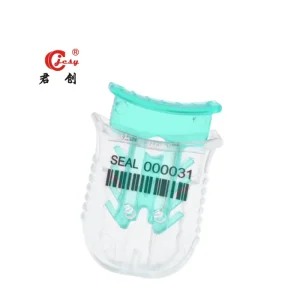
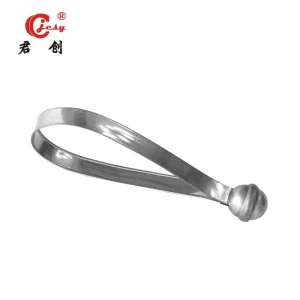
A meter seal has one job: make unauthorized opening visible before it becomes a billing loss. Meter seal manufacturer selection should therefore start with the tamper evidence mechanism, not the part price. A pull-tight plastic seal, a wire and lead seal, a metal strap seal, and a plastic padlock seal all work differently. They are not interchangeable in the field.
For utility meters, the inspector usually needs one-hand installation and a clear breakaway or deformation signal. We recommend a seal with an irreversible locking geometry. That means the tail cannot be withdrawn without cutting or fracturing a visible part. Weak tamper evidence creates a false sense of control. I have seen meter boxes where a low-grade seal tail could be pulled free, reversed, and reinserted without leaving a mark that the utility would catch during a routine walk by.
We test each locking design by installing it, pulling the tail to the rated load, and then recording whether removal leaves a permanent mark. If the mark is only a slight scratch, the design fails. The locking channel must either snap cleanly or expose a second color core when tampered.
Material and Molding Quality to Inspect Before Sampling
Material choice decides outdoor life. A meter seal on a rooftop meter box or a coastal utility pole faces UV, temperature swings, and occasional contact with cleaning agents. Polypropylene is common for pull-tight seals because it is inexpensive and holds a locking jaw shape. ABS gives harder housing parts for padlock-style seals. Nylon combines toughness with flexibility but costs more. Lead wire seals remain in use where utilities require a soft metal crimp record.
The table below shows what I look for before approving any material sample.
| Material | Typical meter seal use | Failure mode if uncontrolled |
|---|---|---|
| Polypropylene | Pull-tight body and tail | Brittle notch failure at the locking jaw |
| ABS | Padlock-style covers | Cracking at snap-fit points |
| Nylon | Adjustable ties and wire seals | Softening under high UV without stabilizer |
| Lead wire | Utility crimping seals | Cold flow loosening the crimp over time |
Before sampling, inspect the molding at the gate and along the parting line. Burrs inside the locking channel are the most common rejection reason we catch in our own production. A burr can make a seal feel locked when the jaw has not fully engaged. We run each batch through a pull test at the locking point, not just on the raw material, because the molded geometry controls the actual strength. We also check sink marks near thick sections. A deep sink mark usually means the holding pressure or cooling time was off, and it can hide a thin wall that snaps later.
Custom Marking and Serial Number Control for Utilities
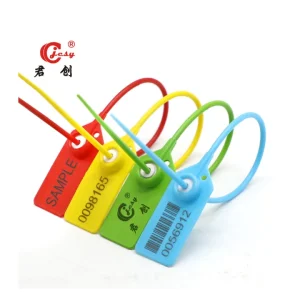
Utility meter seal programs usually need more than a logo. They need sequential serial numbers, barcodes, color coding by route or district, and sometimes QR data that links to the billing system. Meter seal manufacturer selection should go beyond the sample look and into how the supplier controls marking consistency.
We use pad printing for solid logos, laser marking for high-contrast serials on ABS and polypropylene, and UV-cured ink when the seal must stay legible after years outdoors. A customer returned meter seals after six months because the pad-printed serial numbers wore off in direct sunlight. We traced it to ink without a protective overcoat. The correction was a UV-cured clear layer over the printed area plus a change to laser marking for the serial sequence. The replacement batch passed tape adhesion and 500-hour accelerated weather exposure checks.
Numbering control matters just as much as print quality. The supplier should run a camera check or a conveyor counter that rejects duplicate sequences before packing. Manual marking is where we see gaps. In our production, serial numbers are generated through a lockout system that blocks repeat numbers within the same order. We record the first and last number in each carton label so the utility can check the count quickly.
If your utility program involves pre-printed serial sequences tied to billing or inspection software, confirm barcode durability, camera-readable marking, and sequential supply before finalizing the BOM. Contact [email protected] with your numbering rule and annual volume, and we will confirm the marking method and production lead time.
Factory Audit Questions and Cost Drivers That Expose Real Control
When choosing a meter seal manufacturer, a factory audit should focus on process control rather than the sales presentation. Ask these questions directly. Who sets the tensile test pass mark for each lot? What visual inspection AQL applies to locking channels and marking? How does the production line prevent consecutive duplicate serial numbers? What is the maximum regrind ratio in molding, and where is regrind excluded? The answers separate a controlled factory from a trading company that arranges production without owning the process.
Cost drivers are usually hidden in the material grade and marking complexity, not in the unit price quote. A lower quote often comes from higher regrind content, thinner walls, or a simpler marking method. We set the regrind limit lower than what some commodity plastic parts allow because a meter seal is a security component, not a packaging clip. Tooling cost also changes with the number of cavities and whether the mold needs side actions for complex locking features. For custom utility programs, one tool can produce millions of parts, so the upfront investment should be spread across the actual order volume before comparing unit prices.
Packaging affects both cost and field performance. If cartons are packed without first-number and last-number labels, utilities spend more time reconciling stock. If the seals touch during transport without separation, marking can scuff. We pack meter seals by sequence bands and include a range label on each inner bag. That adds a small cost and removes a much larger inspection burden at the utility warehouse.
Meter Seal Manufacturer Selection Ends With a Confirmed Specification
Meter seal manufacturer selection closes when the specification is confirmed against the production process, not when the sample box arrives. The failure most buyers describe later is simple. A sample looked correct, but the production run did not match the utility inspection, marking, or packaging requirements. That gap appears when the supplier cannot connect the drawing to the process controls that repeat the result.
Our factory approach is to lock three points before mass production: sealed samples approved by the utility, a pre-production batch check on marking and locking force, and a sequential marking record for the full order. If your order involves a specific seal type, pre-printed serial sequence, barcode, color coding, or destination-specific packaging, send the part number, quantity, and marking layout to [email protected] or call +86 13853189290. State your inspection standard and delivery window, and we will respond with tooling status, available material, and a production timeline. That makes it easier to compare the factory actual capability against your field requirements before committing to a full order.
Common Questions About Meter Seal Manufacturer Selection
Are lead meter seals still acceptable for utility meters?
Lead wire seals remain in use where the utility requires a crimped metal record and cannot change the inspector workflow. Lead is not a plastic resin. It is chosen for a soft metal that takes a crimp impression. The concern is not the material itself but the quality of the wire and the crimp die. We supply lead meter seals with a uniform wire diameter and a controlled crimp cavity. If your region restricts lead, we move the same tamper-evident function to plastic or metal strap designs.
What is the difference between a pull-tight plastic meter seal and a padlock-style meter seal?
A pull-tight seal is a one-piece body with a flexible tail that locks into a jaw after insertion. A padlock-style seal uses a separate locking insert and a rigid body, which makes it easier to inspect at a distance but costs more. Utilities choose pull-tight seals when volume is high and installation speed matters. They choose padlock-style seals when the meter panel needs a visible, durable barrier that reads clearly from a few meters away.
How can I confirm that serial numbers will not overlap across orders?
The manufacturer should issue sequences from a controlled database and mark each carton with the first and last number. We block duplicate sequences within the same order and record the range on the packing label. For a utility that requires no overlap across years, we reserve the sequence range so the next order starts after the previous final number. Ask for a numbering control procedure, not a promise.
How do we verify that a meter seal sample will match future production runs?
Ask for a production validation batch, not the hand-finished sample. A hand-finished sample proves the tool can make the design, but it does not prove the plant can repeat the same locking force, marking quality, and packaging. We run a pre-production batch with the same material lot, cavity configuration, and marking line that the full order will use. The utility tests that batch. If the batch must change, the change is recorded and approved. Share your part number, marking layout, and inspection standard, and we will confirm whether we can match the sample in production before you commit to the full order.
If you’re interested, check out these related articles:
Reliable Plastic Seal Exporters: Essential Vetting Guide – Junchuang Lock
Supply Chain Security: The Critical Role of Industrial Seals – Junchuang Lock
Bolt Seal Quality Inspection: Safeguarding Cargo & Compliance – Junchuang Lock
Wholesale Cable Seals for Logistics: Enhancing Supply Chain Security – Junchuang Lock
Nylon Cable Tie Selection: A Strategic Guide for Industrial Procurement – Junchuang Lock