
Cargo security seals for aviation do a narrow job: they show whether a closed container, ULD, or cargo bag has been opened after a known sealing point. The buying decision gets harder because a seal that passes a laboratory tensile test can still fail on the ramp when locking surfaces do not match how ground handlers move cargo. I look for three qualities before specification: tamper evidence that survives vibration and weather, legible sequential marking, and a manufacturer that can prove control over raw material and process. This article follows that selection path through the checks we apply before shipping seals to aviation and freight customers.
What Makes a Security Seal Suitable for Aviation Cargo?
Aviation cargo moves through more hands than most freight. A shipment can be sealed at a forwarder warehouse, transferred to a ground handler, consolidated into a ULD, opened for screening, then resealed. Each transfer resets the chain of custody, and the seal is often the only visible record unless the air waybill number matches the marking. This changes the job of the seal. It is not always the strongest seal in the catalog; it is the one that fails in a way that leaves evidence and can be checked under ramp lighting.
I separate aviation suitability into three decisions. The locking mechanism must survive repeated handling without snapping. A plastic tab that holds under load can still crack when a loader pushes one ULD against another. Marking must survive strap abrasion and rain. We laser mark polypropylene bodies before assembly because hot stamping can distort the locking cavity. The seal body should also show a clear break or permanent deformation on removal, not a faint color change that disappears under yellow ramp light.
How Do ISO 17712 and Supplier Documentation Work Together?
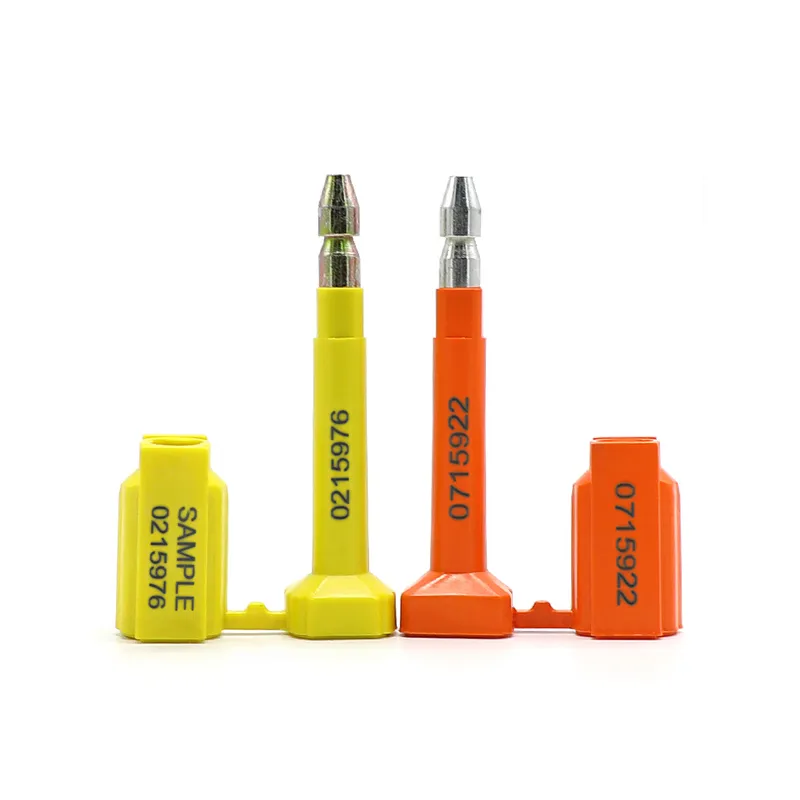
ISO 17712:2013 gives cargo teams a common language for mechanical seals, but the certificate becomes useful only when it is tied to production records. The standard separates seals into indicative, security, and high security classes and sets tensile and shear test requirements for the higher levels. Buyers often stop at the certificate. I ask them to look at what sits behind it.
For ISO 17712 high security seals, the manufacturer should retain lot-level records that connect each numbering range to the steel wire or rod batch, the molding or heading machine, the operator shift, and the test sample. If a seal fails in the field, that record lets us trace the failure to a material lot or process window instead of guessing. Supplier documentation should therefore include three parts: an accredited test certificate, a material certificate for the locking component, and a declaration that the lot records are available for audit. A supplier that cannot produce these after shipment will not be able to answer a customs or airline query months later.
Where Do Aviation Cargo Seals Fail in Ground Handling?
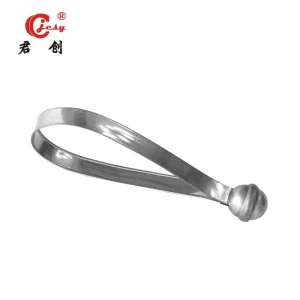
Most airport seal failures happen after application, and the cause is usually mechanical rather than criminal. Repeated cases from customer feedback fall into a small number of patterns. Plastic pull-tight seals crack at the locking tab when the tail is bent sharply during ULD netting. Cable seals with exposed steel cores fail where the cable rubs a metal latch; individual wires fatigue one by one until the remaining strands snap under normal load. Metal strap seals lose marking readability when deicing fluid or rain wicks under the coating.
Temperature adds a second failure path. Polypropylene becomes brittle at low temperatures. A seal that performs well in a Shanghai summer can snap on a European apron in winter. We specify cold-weather grades for aviation customers and check subzero performance before shipment. A final pattern is less obvious: the seal number is correct in the warehouse but unreadable after ramp exposure because the marking was printed rather than laser etched. This is why I treat marking method as part of the material decision, not a cosmetic add-on.
If your program involves cold-weather airport operations or ULD doors with uneven latch points, it is worth confirming the seal body grade and cable core construction before finalizing your specification. Send your closure type and temperature range to [email protected] and we will return a material recommendation.
How Should Cargo Teams Inspect Seals at Transfer Points?
At transfer points, I train cargo teams to run three checks in the same order: compare the seal number against the air waybill, pull the seal firmly in the direction of travel, and inspect the locking area under angled light. The comparison step catches misapplied seals before the shipment leaves the dock. The pull test exposes a partially engaged locking tab or fatigued cable strands. The angled-light check reveals stress marks, a scratched locking tab, or a cut that has been resealed. If any check fails, the shipment is re-screened before the next leg.
Replacement procedures matter as much as the checks. If a seal is cut for screening or customs examination, the old number must be recorded, the new number noted on the air waybill, and the old seal retained until custody transfers. Without that paper trail, a clear tamper event and a routine security opening look identical.
Which Seal Type Fits Different Air Freight Closures?
Aviation cargo covers different closures, from security bags to ULD doors to pallet netting, and no single seal fits all. The table below matches seal types to common airport uses.
| Seal type | Typical aviation cargo application | Tamper evidence | Main limitation |
|---|---|---|---|
| Bolt seal | Loaded air containers and high-security export pallets under customs security programs | Must be cut with a tool, leaves an obvious break | Adds handling steps; overkill for screened ULDs that are opened repeatedly |
| Cable seal | ULD doors, irregular latch points, and cargo trolley doors | Adjustable grip, multi-strand break evidence | Exposed steel core can fatigue at rub points |
| Plastic pull-tight seal | Cargo straps, security bags, and lower-screened boxes | Visible tail break if lock separates | Lower force; can crack at subzero temperatures |
| Metal strap seal | Palletized freight, engine stands, and consolidated break-bulk | Rigid strap shows permanent deformation | Marking can fade if coating is poor |
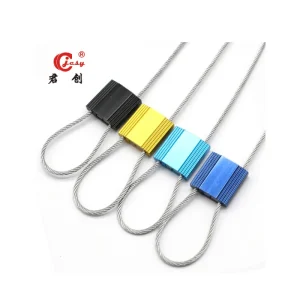
For air freight consolidation, I usually recommend a cable seal for ULD doors and a pull-tight seal for internal boxes or bags. A high security bolt seal makes sense when the cargo moves unopened through a customs security program or when the container is sealed outside an airport secure zone and remains closed to destination. If the airline opens every ULD for screening, a bolt seal adds labor without adding much risk reduction.
If you are specifying seals for airport cargo and do not want to discover that a low-cost material cracks in winter or a marking wears off after three ramp turns, send your closure type, operating temperature range, and annual quantity to [email protected] or WhatsApp +86 13853189290. We will confirm material grades, marking method, and lot traceability documentation before you commit a purchase order.
What Do Cargo Teams Ask About Aviation Cargo Security Seals?
Do airport cargo seals have to be ISO 17712 high security?
No, not always. ISO 17712 high security seals are required for certain customs security programs and high-value export containers, but many airport transfers operate with indicative or security-class tamper-evident seals. The choice depends on the closure point and who will inspect it. High security bolt seals add cost and tooling; if the airline reopens and reseals every ULD, a pull-tight or cable seal may be more practical. I ask buyers to confirm the airline’s ground handling procedure first, then select the seal class.
Will a stronger seal always improve aviation cargo security?
A common assumption is that a stronger seal always means better cargo security. That misses how seals fail in ground handling. A high-tensile bolt seal resists cutting, but if it is too rigid for a ULD latch that flexes in turbulence, the locking point can become the weak link. More relevant is predictable tamper evidence. A lighter pull-tight seal that breaks visibly may be more useful for a screened tote than a bolt seal that survives but hides an opening attempt.
When should I use a bolt seal instead of a cable seal at an airport?
It depends on whether the cargo is screened and resealed after the seal is applied. If the forwarder seals the load and it moves unopened through a secure chain, a numbered high security or security-class seal gives meaningful chain-of-custody evidence. If ground handlers cut the seal for security screening and apply a new one, the original seal’s value is mostly administrative. In that case, put your specification effort into the reseal procedure and new number documentation rather than the highest tensile rating.
What is the most common problem with aviation seal markings?
In airport programs we have supplied, the biggest operational problem was not seal strength but legibility of sequential numbers after ramp exposure. Laser-marked polypropylene held up better than printed coatings, and seal numbers that matched the air waybill format reduced check-in time at transfer points. When we changed to a taller font and increased stroke width, cargo crews reported fewer misread numbers under low light. Share your part requirements and we will confirm compliance documentation availability.
If you’re interested, check out these related articles:
Finding Reliable Bolt Seal Exporters: A Strategic Procurement Guide – Junchuang Lock
Security Seals: Disposable vs. Reusable for Supply Chain Integrity – Junchuang Lock
Custom Livestock Ear Tags: A Strategic Guide for Farm Efficiency – Junchuang Lock
Ear Tags for Cattle and Sheep: Optimizing Livestock Traceability – Junchuang Lock
Wire Seal Use in Utility Meters: Securing Revenue & Integrity – Junchuang Lock