
Customs seal requirements are not one global standard but a set of border agency expectations that decide whether an arriving container moves through inspection cleanly. A seal that lacks the right marking, strength class, or record trail can trigger a physical examination even when the cargo is compliant. I tell procurement teams to treat seal selection as part of the customs file, not a last minute door accessory. The fastest path is an ISO 17712 high security bolt seal or cable seal with legible serial numbers, recorded on the shipping documents before the container leaves the loading point.
What Do Customs Seal Requirements Actually Cover?
Customs seal requirements vary by country, but the common thread is continuity. The seal must remain whole from the point of loading through the port of arrival, and the number on the seal must match the number on the bill of lading, packing list, or customs declaration. Border agencies do not inspect every seal; they check high risk shipments and select seals for physical verification when records conflict. A missing seal or a mismatched number usually moves the container to a secondary examination area before clearance can resume.
From a manufacturing perspective, this means the seal body, locking mechanism, and marking must survive normal door handling and weather exposure. A pull tight plastic seal can indicate theft, but many customs regimes require an ISO 17712 high security seal for cross border container traffic. The seal class is not interchangeable, and the agency’s expectations depend on the supply chain security program the importer operates under.
What records do customs officers check at the seal?
They check the seal number against the shipping documents, the condition of the seal, and whether the marking can be read without removing the seal. The seal should be recorded before the container doors close. In our production, we print serial numbers with high contrast laser or hot stamping so the code stays readable after salt spray and rough handling. If the number rubs off, the seal becomes a liability even when the locking mechanism is still intact.
Which ISO 17712 Seal Grades Do Customs Authorities Accept?
Most customs programs recognize ISO 17712 as the reference standard for mechanical container seals. The standard separates seals into three classes. An I class seal is indicative, which means it shows whether it has been opened but offers only limited resistance. An S class seal is a security seal with a stronger body, and an H class seal is a high security seal designed to require tools for removal and to leave clear evidence of attack. Cross border programs such as C-TPAT (Customs Trade Partnership Against Terrorism) and AEO (Authorized Economic Operator) often expect H class seals for containerized cargo.
Marking is part of the standard. The seal must show a unique serial number and a manufacturer identification mark. Some programs also expect the buyer’s logo or a high visibility color for quick identification at the dock. That marking has to remain legible after the seal has been exposed to rain, salt air, and cargo handling. We test marking durability by running sample seals through salt spray and abrasion checks before approving a new batch.
What does the H class test actually require?
High security seals must meet defined tensile and shear test thresholds and show clear evidence of tampering after attack. The test is performed by an independent laboratory, not by the factory itself. When I review supplier documentation, I look for the test report that names the exact seal model and the standard edition. A plant audit certificate is not a substitute for a seal specific test report.
Are cable seals accepted under ISO 17712?
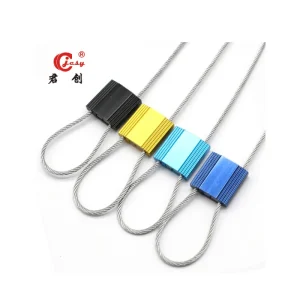
Yes, cable seals can be certified to the standard. The cable diameter, locking insert, and body design matter more than the label. A cable seal with a thin wire and a soft body may not reach the H class threshold even if the catalog calls it a cable seal. Buyers should confirm the certified model rather than the product family.
How Do Bolt Seals and Cable Seals Handle Customs Sealing?
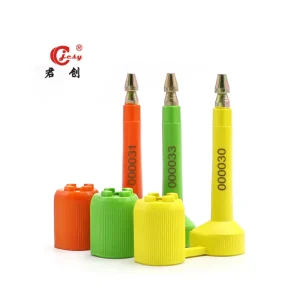
Bolt seals and cable seals are the two most common H class options, and each one suits a different closure. A bolt seal locks a standard container door hasp with a steel pin and barrel. It is fast to apply and fast to show tampering. A cable seal threads through irregular closures, such as tanker valves or rail car latches, where a rigid bolt cannot reach. Both can carry laser engraved serial numbers and company markings, but the physical attack path is different.
| Factor | Bolt Seal | Cable Seal |
|---|---|---|
| Sealing force | Rigid pin and barrel | Adjustable cable loop |
| Best use | Container door hasps | Tankers, valves, irregular closures |
| Tamper evidence | Fracture or deformation | Cut cable or damaged insert |
| Marking surface | Bolt head and barrel | Body, ferrule, or cable end |
For most ocean containers I lean toward a bolt seal because the fixed pin removes guessing about whether the seal is fully locked. Cable seals earn their place when the closure cannot accept a rigid bolt. The decision should follow the route, the closure type, and the importer’s security program, not habit.
If your route involves a customs program that names a specific seal class, confirm the exact model before the purchase order is released. Send the program requirements and annual seal volume to [email protected] or call +86 13853189290, and we can match the model to the applicable test report.
What Gets Seal Shipments Rejected at Customs?
Most customs delays involving seals do not come from a broken lock. They come from paperwork gaps. The seal number on the customs declaration does not match the physical seal, the number is unreadable after weather exposure, or the driver removed and replaced a seal without updating the manifest. In a secondary inspection, the officer cannot verify continuity of custody, and the delay becomes a time problem even when the cargo is fine.
Another failure is using a lower class seal where a high security seal is required. A shipment may operate under an importer’s AEO or C-TPAT profile that specifies H class seals, but the warehouse applies whatever seal is on hand. The border agency sees nonconformance, not intent. That is why seal selection has to be tied to the purchase order and the shipment route, not left to the loading crew.
Why does seal marking matter during inspection?
The marking is the link between the physical seal and the shipping record. If the officer cannot read the serial number, the seal cannot be verified against the manifest. In our production, we keep the marking depth and contrast consistent across the run so that the number survives handling, rain, and salt air. A seal with a faint or shallow number may pass at the factory gate and still fail at the border.
Why Verify a Customs Seal Before the Container Is Loaded?
When a shipment is stopped at the border, the cost is not the seal. The cost is the inspection fee, missed connection, and the phone calls that follow. Most of that risk is preventable by confirming three points before loading. The seal class meets the importer’s program, the serial number is marked legibly on both the seal and the documents, and the model has a test report that matches the exact product. If you are not certain which seal your route calls for, send the shipment route, program name, and annual quantity to [email protected] or call +86 13853189290. We will check the seal model against the applicable requirements and confirm stock before you commit.
What Questions Do Procurement Teams Ask About Customs Seal Requirements?
Do all customs agencies require ISO 17712 high security seals?
Most do not require it for every shipment, but many high security programs do. C-TPAT members and AEO operators often run under a profile that calls for H class seals on containerized cargo, especially on routes with raised risk levels. A standard commercial shipment may clear with a numbered indicative seal. The importer’s security filing and the destination country’s rules decide the requirement, so the seal class has to be checked before loading rather than guessed at the port.
Can a plastic seal meet customs seal requirements?
Many buyers assume a plastic seal is enough because it is numbered. Numbering alone is not the issue. A plastic pull tight seal or padlock seal can be a good tamper indicator for short domestic runs, utility meters, or warehouse closure, but it generally does not meet H class container seal requirements. If the route calls for an indicative seal only, a well marked plastic seal may work. If the importer’s program names ISO 17712 H class, the seal body and locking mechanism must be built to that standard, and a plastic pull tight design will not pass the required tensile and shear tests.
What should I do if a seal number changes at the warehouse?
It depends on when the change happens and who makes it. If the original seal breaks during loading or the warehouse replaces it before departure, record the new seal number on the shipping documents and advise the importer immediately. If the seal changes after departure, the shipment has a custody gap, and that is exactly what customs officers look for. The safest rule is to treat the recorded seal number as fixed after the doors close. Any later change needs a written correction before the container reaches the border, or the cargo may be selected for inspection.
How do I verify a supplier’s ISO 17712 claim before ordering?
In our production review, I start with the test report, not the certificate. Ask the supplier for the laboratory report that names the exact seal model, the standard edition, and the tested tensile and shear values. Then match that model to the marking and material shown in the preproduction sample. A supplier that can only offer a plant audit or a generic certificate has not shown that the specific seal passed the standard. If you want a second set of eyes on the documents, send the seal model and your route requirements to [email protected]. We can confirm the test report position before you place the order.
If you’re interested, check out these related articles:
Preserving Security Seal Integrity: A Storage Best Practices Guide – Junchuang Lock
ISO 17712 Bolt Seal Manufacturer Comparison Guide – Junchuang Lock
Cable Seal Versus Bolt Seal: Definitive Guide to Cargo Security – Junchuang Lock