
Cargo theft is a constant pressure point in logistics, and the security seal is the first visible line of defense on any container or trailer door. A properly designed seal doesn’t physically stop a break-in, but it makes tampering immediately visible and forces a thief to leave evidence. I’ve seen too many supply chains treat the seal as a formality, using the cheapest option without considering whether it actually provides meaningful protection. The real question isn’t whether you use a seal, but whether the seal you choose can withstand the handling conditions of a real transit route while still communicating tampering clearly. This is where material quality, manufacturing consistency, and a clear understanding of seal function matter more than most procurement checklists admit.
How Do Cargo Security Seals Prevent Theft?
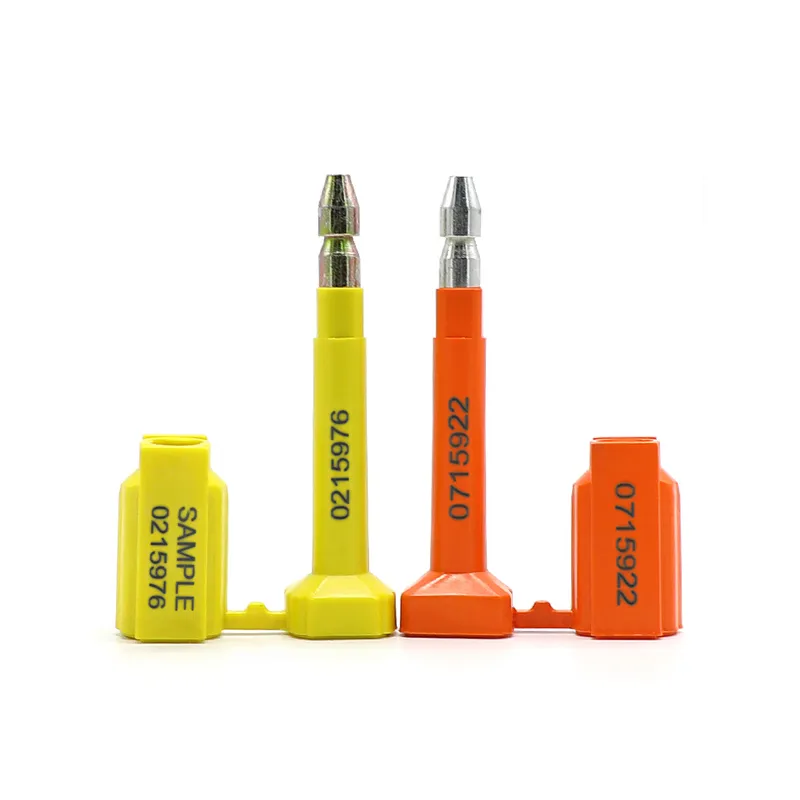
The mechanism is straightforward: a security seal creates a closure that cannot be opened without destroying, cutting, or visibly deforming the seal itself. When a driver, consignee, or border inspector checks the seal number and condition against the shipping manifest, any break or substitution is immediately apparent. This visible chain of verification is the primary deterrent.
At the manufacturing level, we focus on two weak points that thieves exploit: the locking mechanism and the material’s resistance to surreptitious entry. A pull-tight plastic seal with poor internal locking teeth can be forced open with a thin tool and re-inserted without obvious external damage if the plastic deformation isn’t distinct. Similarly, a bolt seal with inconsistent barrel machining allows enough play for a determined tamperer to work the bolt partially out and re-seat it. These are not theoretical concerns. In our production quality checks, I have seen seals fail internal pinch-and-pull tests because the locking insert was molded a fraction of a millimeter too wide or the bolt diameter was at the lower tolerance limit. In the field, those small tolerances become the difference between a seal that holds and one that silently fails.
What Makes a Seal Truly Tamper-Evident?
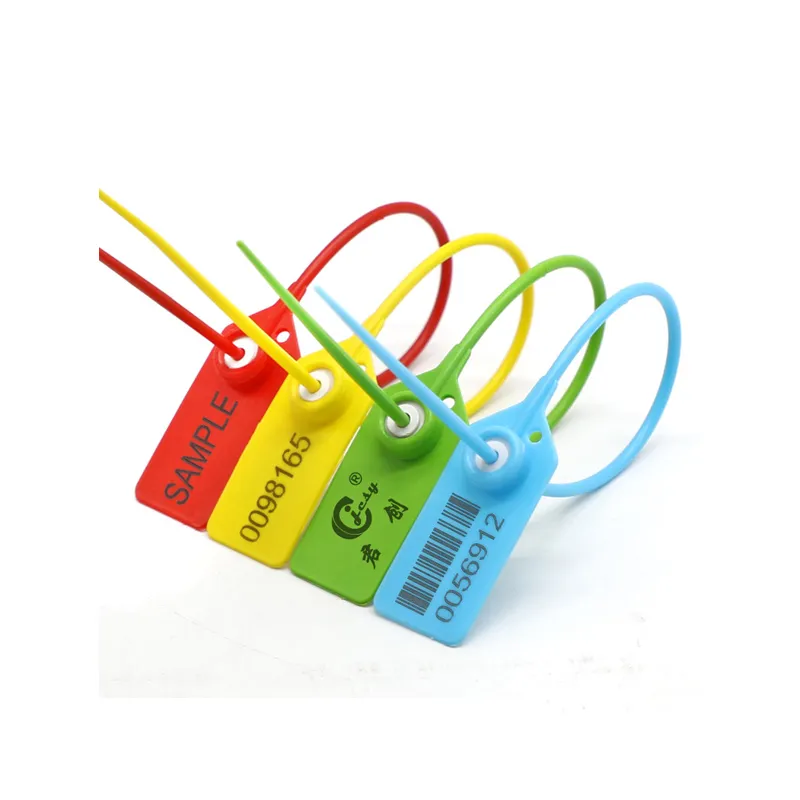
Tamper evidence is not a single feature; it is a system of design elements that work together. The most effective seals combine several features: irreversible locking, material that stretches or discolors under stress, and surface markings that make modification obvious.
For plastic seals, we look for stress whitening in the strap when pulled beyond its design limit. For cable seals, the locking body must grip the cable without allowing it to be rotated back out. Bolt seals rely on a ball-lock or collet mechanism that locks permanently once the bolt is pushed home. Any seal that relies on friction alone without a positive mechanical lock is vulnerable.
Our incoming raw material checks include hardness testing and tensile pull-to-failure on sample batches. A batch of polypropylene that comes in slightly softer than specification might still form a seal that clicks shut, but the locking force will be lower, and a quick twist-and-pull motion with pliers could defeat it. That’s why we log material lot numbers and trace every batch—because the difference between a seal that looks strong and one that actually meets its breaking force rating often comes down to a few points on the durometer scale.
If your cargo program involves high-value goods crossing multiple borders, the mid-point of a long-haul route is exactly where seal integrity gets tested. Before finalizing your BOM, it is worth confirming the exact locking mechanism and material grade with your supplier to ensure the seal matches the route risk—reach out at [email protected] if you’d like to discuss specific application requirements.
Which Seal Type Best Protects Your Cargo?
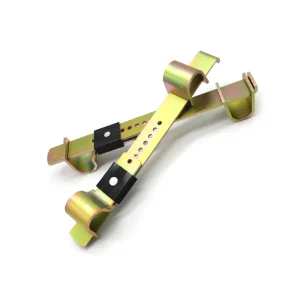
The choice of seal type depends on the container or closure you are securing, the threat level on the route, and how the seal will be checked. The three main categories cover most transport needs: bolt seals, cable seals, and plastic indicative seals.
| Seal Type | Typical Application | Tamper Evidence | Typical Breaking Strength | ISO 17712 Classification |
|---|---|---|---|---|
| Bolt Seal | Ocean containers, intermodal shipping | Permanent lock, must be cut; visible break | 10,000+ N | High security (H) |
| Cable Seal | Tanker hatches, rail cars, truck doors requiring variable length | Cutting leaves frayed ends; locking body marks | 7,000–15,000 N | High security (H) |
| Plastic Seal (pull-tight) | Distribution trucks, tote boxes, airline catering trolleys | Stress marks on pull; irreversible ratchet | 200–1,500 N | Indicative (I) |
Bolt seals provide the highest physical barrier because they require a bolt cutter for removal, but they only fit fixed-diameter hasps. Cable seals offer the flexibility of adjustable length while maintaining high break strength, making them the most versatile across multiple vehicle types. Plastic seals sacrifice absolute strength for low cost and quick application, which makes sense on inner-city distribution legs where the seal is checked at every handover and the primary need is a clear chain of custody rather than brute force resistance. For export cargo that will pass through multiple customs checks and yard staging areas where delays are common, I have consistently recommended bolt or cable seals because the physical evidence of tampering survives handling better than plastic deformation marks alone.
Our article on Bulk Bolt Seal Orders provides a deeper look at the cost considerations for high-volume requirements.
How Can You Guarantee Seal Integrity in Transit?
Seal integrity does not end with the seal itself. How the seal is installed, handled, and checked along the route determines whether it fulfills its protective role. We regularly advise clients on three operational factors that most failures trace back to: installation tension, recording accuracy, and inspection consistency.
First, a seal that is not pulled tight or a bolt that is not pushed fully home leaves room for manipulation. The seal should be snug enough that any attempt to manipulate the locking body will stretch or mark the material. Second, the serial number must be recorded correctly on shipping documents. A single digit transposition makes a valid seal appear tampered or a compromised seal appear valid, and both outcomes break the traceability chain. Third, every driver handover and border checkpoint should include a quick physical check—not just a visual glance—pulling and twisting the seal body to test for looseness or wear. In one instance, we traced a reported seal failure back to a warehouse team that was storing seals in direct sunlight for weeks, causing pre-installation embrittlement in a plastic body that then cracked during the route’s first temperature swing. Proper storage is part of integrity.
Our separate Security Seal Storage Best Practices Guide walks through environmental factors in more detail.
What Defines a Reliable Security Seal Manufacturer?
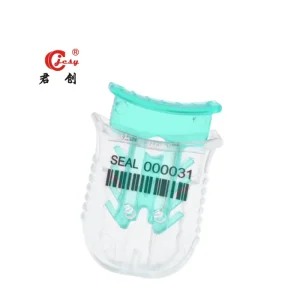
The factory you source from determines whether the seal that arrives at your warehouse performs the same as the sample that passed your initial evaluation. Over years of managing production at our plant, I have identified four non-negotiable operational capabilities that separate consistent suppliers from transactional ones.
The first is in-house tooling. Seals are small parts, but the molds that produce them require tight tolerances. When tooling is outsourced, any quality deviation becomes a back-and-forth between a mold shop that has never seen your cargo application and a production line that cannot adjust quickly. The second is lot-level traceability. From raw resin batch to finished seal spool, every production run should be traceable to its material certificate and machine operator log. The third is destructive testing on a per-batch schedule. We pull samples from every production run and break them—recording failure mode, force, and deformation pattern. That data feeds back into mold maintenance schedules and material ordering. The fourth is direct communication with the person who oversees the line. In a factory where the technical manager can discuss sealing force curves and material elongation values with your quality team, procurement decisions become more precise and lead times more predictable.
For a deeper analysis of what to look for during supplier evaluation, see Plastic Seal Manufacturer Selection: A Strategic Procurement Guide.
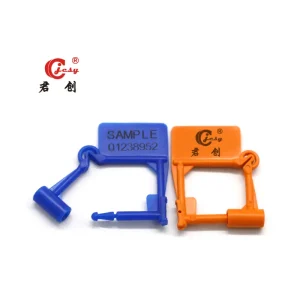
If your supply chain relies on seals that must work every time—across temperature swings, manual handling, and multiple inspections—the manufacturing source is the single largest variable in whether the seal holds. At Shandong Junchuang Lock Industry, our production quality system ties raw material traceability, in-process dimension checks, and batch-level break testing into one documented loop. For a direct discussion about matching seal specifications to your specific cargo protection requirements, send your current seal type and expected monthly volume to [email protected], or reach us at +86 13853189290 (WhatsApp available).
Understanding Cargo Security Seals
Are security seals meant to physically stop cargo theft?
Security seals are designed primarily as tamper-evident devices, not physical barriers. Their job is to make any unauthorized access immediately visible so that accountability can be assigned and intervention can occur at the next checkpoint. In high-risk applications, combining a high-security bolt seal with a secondary cable seal and consistent inspection procedures significantly raises the effort required to tamper undetected. For routes known for cargo theft, bolt seals meeting ISO 17712 high-security classification are the baseline recommendation.
Can a plastic seal be as secure as a metal seal?
It depends on the security objective. Plastic seals provide excellent tamper evidence because they deform, stretch, or whiten under stress, leaving a clear visual record of attempted entry. They do not offer physical resistance comparable to a metal bolt or cable seal. If your primary need is a chain-of-custody record on a distribution route with multiple stops, a quality pull-tight plastic seal with serialization is sufficient. If physical attack is a credible threat, opt for a cable or bolt seal.
Does ISO 17712 certification guarantee a seal is tamper-proof?
No. ISO 17712 sets requirements for mechanical strength and tamper evidence, but certification alone does not cover manufacturing consistency, material quality, or supply chain control of the seals themselves. A certified seal from a factory with poor quality management can still fail in the field due to batch variances. Always verify that the manufacturer performs batch-level destructive testing and maintains material traceability beyond the certificate paperwork.
How often should seals be inspected during a long-haul transport?
Inspection should happen at every custody transfer point: driver pickup, border crossings, warehouse yard checks, and final delivery. Each checkpoint should record the seal number and check for visible deformation, cuts, or loose fit. The driver should also perform a quick pull-and-twist check at rest stops if the route passes through known high-theft corridors. Establishing a simple checklist prevents the most common failure: assuming a seal is intact because no one reported a problem.
What information should I share with a seal manufacturer before ordering?
Share your container or door type, expected route conditions (temperature, humidity, number of stops), required breaking strength, and any specific markings or barcoding needs. The more precise the application description, the more targeted the recommendation. If you are managing a diverse fleet, sending photos of the exact closure points helps the factory confirm seal sizing and installation fit the first time. Share your cargo protection requirements at [email protected] and we can confirm the best configuration for your operation.
If you’re interested, check out these related articles:
Bolt Seal Manufacturer Selection Guide for Supply Chain Security – Junchuang Lock
Security Seal Materials: Selection for Tamper Evidence – Junchuang Lock
UV Resistant Security Seals: Protecting Assets from Sun Degradation – Junchuang Lock
Comprehensive Meter Seal Installation Guide for Industrial Security – Junchuang Lock