
Selecting the right plastic seal manufacturer determines whether your security measures actually work or just look like they do. I’ve seen procurement teams spend months evaluating options only to end up with seals that crack in cold storage or fade beyond readability within weeks. The difference between a reliable supplier and a problematic one often comes down to details that don’t show up in catalogs.
What Your Application Actually Demands
Before reaching out to any plastic seal manufacturer, you need a clear picture of what your seals will face. The operating environment shapes everything. Seals destined for refrigerated transport need different material formulations than those securing outdoor utility meters exposed to UV radiation year-round. Chemical exposure in industrial settings can degrade certain polymers within months.
Security requirements vary dramatically across applications. A seal on an internal inventory bag serves a different purpose than one securing an international shipping container. For the latter, ISO 17712 compliance isn’t optional—it’s a regulatory requirement that affects your ability to move goods across borders.
| Plastic Seal Type | Primary Application | Security Level | Key Features |
|---|---|---|---|
| Pull-Tight Seals | Bags, drums, meters | Low to Medium | Adjustable length, easy application |
| Fixed-Length Seals | Truck doors, containers | Medium | Quick application, clear tamper evidence |
| Padlock Seals | Valves, cabinets | Low to Medium | Compact, often numbered |
| Indicative Seals | General security | Low | Visible break upon tampering |
We manufacture a range of plastic seal types, including Customized Plastic Seal configurations, to address these varied operational demands.
What Makes High-Security Plastic Seals Different
High-security plastic seals incorporate engineering features that basic seals lack. The material composition resists cutting, prying, and chemical attacks that would compromise standard seals. Tensile strength matters here because a seal that snaps under moderate force provides no real security.
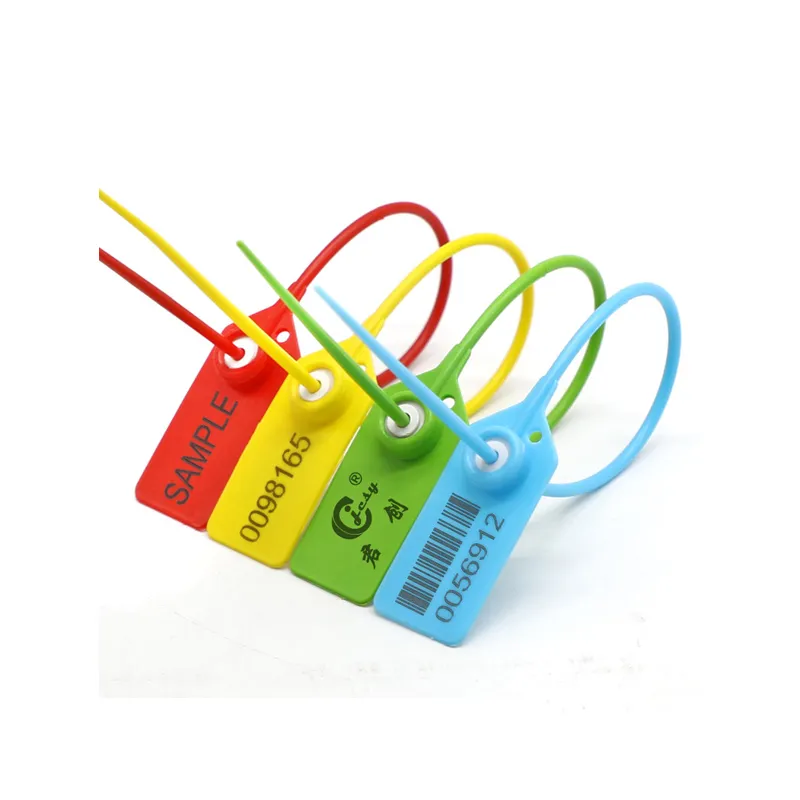
Unique serial numbers and barcoding aren’t just administrative conveniences. They create an audit trail that makes unauthorized access detectable and traceable. When a seal’s number doesn’t match the shipping manifest, you know something happened in transit.
Evaluating Plastic Seal Manufacturers
A plastic seal manufacturer’s reputation reflects years of accumulated performance data. Look beyond marketing materials to actual delivery records, defect rates, and how they handle problems when they arise. Quality control processes should cover incoming raw materials, production line monitoring, and finished product testing.
Certifications tell you whether independent auditors have verified the manufacturer’s claims. ISO 9001 indicates systematic quality management. Production capacity matters because a supplier who can’t scale with your needs becomes a bottleneck during peak seasons.
Which Certifications Actually Matter
ISO 9001 certification confirms that a plastic seal manufacturer maintains documented quality systems and pursues continuous improvement. This isn’t just paperwork. It means someone external has verified that processes exist to catch defects before products ship.
For supply chain security applications, C-TPAT compliance demonstrates adherence to customs security standards. ISO 17712 applies specifically to mechanical freight container seals and establishes testing requirements for strength and tamper evidence. These certifications reduce your risk exposure and often simplify customs clearance.
Quality Control That Protects Your Operations
Effective quality assurance in plastic seal production starts with material verification. The polymer grade, colorants, and additives all affect how the finished seal performs under stress. We test incoming materials against specifications before they enter production.
Tamper-evident features require precise manufacturing tolerances. A locking mechanism that’s slightly out of spec might still close but fail to show evidence of tampering. Serial number legibility depends on consistent printing or laser marking parameters maintained across production runs.
Traceability systems connect each seal to its production batch, material lot, and quality test results. When you need to investigate an incident, this documentation lets you determine whether the seal failed or was defeated. This systematic approach ensures plastic seal durability and supports broader supply chain security objectives.
Calculating True Costs
The purchase price of plastic seals represents only part of your actual expense. A cost-benefit analysis should account for application time, failure rates, and the consequences of security breaches. Cheap seals that break during application waste labor and create disposal costs.
Bulk plastic seal orders reduce per-unit costs, but only if the seals actually meet your specifications. A 20% discount means nothing if 5% of the seals arrive defective or fail prematurely in the field.
| Feature Category | Low-Cost Option | Mid-Range Option | Premium Option |
|---|---|---|---|
| Material Quality | Basic PP | Enhanced PP/Nylon | Specialized Composites |
| Security Level | Indicative | Tamper-Evident | High-Security |
| Customization | Limited | Basic Branding | Full Branding, Barcoding |
| Durability | Standard | Improved | Extreme |
| Lead Time | Standard | Standard | Expedited |
Service level agreements and post-sales support factor into long-term value. A manufacturer who resolves quality issues quickly costs less over time than one who disputes every claim.
Building a Supplier Relationship That Lasts
A plastic seal manufacturer relationship should evolve as your operations change. Customer support responsiveness matters most when you have an urgent problem, not during routine orders. Technical assistance helps when you’re evaluating new applications or troubleshooting field issues.
Plastic seal customization options let you adapt seals to new requirements without switching suppliers. Branding, numbering sequences, and color coding can all change as your security protocols develop.
Manufacturers investing in R&D bring innovative security seals to market before you know you need them. Shandong Junchuang Lock Industrial Co., Ltd integrates design, development, and production capabilities specifically to address evolving client requirements across diverse applications.
Why Manufacturer Certifications Reduce Your Risk
Certifications from recognized bodies provide independent verification that a plastic seal manufacturer operates according to established standards. ISO 9001 confirms quality management systems are in place and functioning. For security-critical applications, C-TPAT and ISO 17712 compliance indicates the manufacturer understands and meets international security benchmarks.
These certifications shift some verification burden from your procurement team to professional auditors who specialize in manufacturing assessment. An audited seal manufacturer has already demonstrated capabilities that you would otherwise need to verify through site visits and testing programs.
Work with Junchuang Lock Industrial Co., Ltd
Junchuang Lock Industrial Co., Ltd manufactures lead, plastic, cable, meter, and high-security bolt seals with integrated design and production capabilities. Contact us at +86 13853189290 or [email protected] to discuss your specific plastic seal requirements.
Frequently Asked Questions About Plastic Seal Procurement
How do I verify the quality and reliability of a plastic seal supplier?
Start with certification verification. Request ISO 9001 documentation and any industry-specific certifications relevant to your application. Ask for material data sheets that specify polymer grades and additives. Client references from companies with similar applications provide real-world performance data. If possible, conduct a site visit or arrange a third-party audit to observe quality control processes firsthand.
What are the common pitfalls to avoid when selecting a plastic seal manufacturer?
Focusing exclusively on unit price leads to problems. Manufacturers cutting costs often compromise material quality or quality control rigor. Skipping certification verification means trusting marketing claims without independent confirmation. Overlooking customization capabilities creates problems when your requirements change. Failing to assess customer support responsiveness leaves you without recourse when issues arise. Shandong Junchuang Lock Industrial Co., Ltd addresses these concerns through comprehensive service and transparent manufacturing practices.
Can plastic seal manufacturers provide custom branding and numbering options?
Reputable manufacturers offer extensive customization. Shandong Junchuang Lock Industrial Co., Ltd provides custom branding, logo printing, sequential serial numbering, barcode integration, and color matching. These options support both security protocols and brand visibility requirements. Discuss your specifications early in the procurement process to confirm capabilities and lead times.