
Cargo theft remains a persistent threat across global supply chains, and the reliability of a single seal often determines whether a shipment arrives intact or becomes a claim. Selecting a barrier seal manufacturer is not a routine vendor decision. It is a security assessment that must begin with factory production standards, not a price list. After more than fifteen years managing security seal manufacturing, I have seen how small compromises in material or process can undermine a seal’s tamper evidence completely. This article examines the manufacturing and quality control factors that separate a dependable barrier seal supplier from one that introduces risk into your logistics operation.
What to Look for in a Barrier Seal Manufacturer
A high-security barrier seal’s value depends on its physical integrity. The locking mechanism, material composition, and dimensional precision must work together to resist forceful entry and show clear signs of tampering.
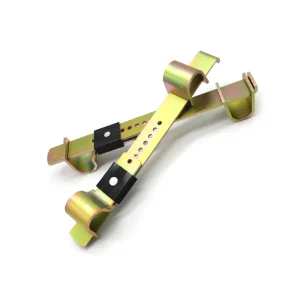
The body of a barrier seal is typically made from high-grade zinc alloy or hardened steel. A manufacturer that prioritizes tensile strength will specify the exact alloy and reject batches that do not meet that standard before production begins. In our own factory, for instance, incoming metal alloy shipments are checked against a minimum tensile strength threshold and sent back if they fall below it.
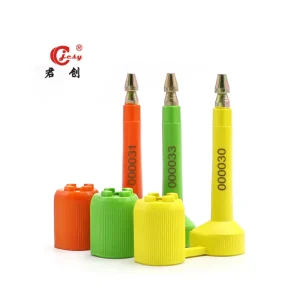
Beyond materials, the barrel and bolt interlock design matters. A loose tolerance between these components creates leverage points that can be exploited. The best manufacturers maintain tight dimensional control through precision die-casting and machining, and they test randomly selected seals from every production run for insertion force and pull-out resistance.
Look for a manufacturer that discusses its testing methods openly. If a supplier cannot explain how it verifies pull strength or tamper indication, that lack of transparency is a warning sign. A serious barrier seal manufacturer treats testing as a non-negotiable part of daily operations, not a sales talking point.
ISO 17712 and the Certifications a Barrier Seal Manufacturer Must Hold
For international cargo security, ISO 17712 certification is the baseline requirement. The standard defines three security levels — indicative, security, and high security — and barrier seals fall into the high security category. Compliance requires independent laboratory testing that confirms the seal meets specific tensile, bending, and tamper-evidence criteria.
However, holding a certificate is not enough. Ask whether the manufacturer’s production samples are re-tested at a recognized third-party laboratory on a regular cycle, not just once during initial certification. A manufacturer that merely reprints an old certificate is not maintaining the standard.
ISO 9001 quality management system certification provides an additional layer of assurance. It means the factory has documented procedures for raw material inspection, in-process checks, final inspection, and non-conforming product handling. While not specific to seals, it demonstrates operational discipline — the kind that prevents batch-level failures.
When evaluating a barrier seal manufacturer, request the current certification documents and verify them with the issuing body. Any reluctance to share certification records should end the conversation.
Inside the Factory: How a Barrier Seal Manufacturer Ensures Quality
Understanding a factory’s internal quality control process is the most reliable way to predict future seal performance. Production tours are ideal, but a well-prepared supplier can walk you through the same points with photos, videos, and documented inspection reports.
Where Tensile Strength and Tamper Evidence Are Verified
In a properly equipped barrier seal factory, quality control is not a single checkpoint at the end of the line. It is embedded in multiple stages. Incoming raw alloy is tested with a spectrometer to confirm chemical composition. Die-cast components are measured for dimensional accuracy before assembly. After assembly, every batch undergoes sample tensile testing using calibrated equipment.
At our facility, we use a digital tensile tester that pulls assembled seals to failure and records the breaking force automatically. The test is destructive, and the data is retained for traceability. If a sample fails below the rated strength threshold, the entire batch is quarantined for root cause analysis. This is the kind of discipline that prevents substandard seals from ever reaching a shipping container.
Why Supplier Transparency Is a Quality Indicator
A manufacturer that controls its own production line can provide immediate answers about lead times, raw material inventory, and order status. Trading companies acting as intermediaries often lack this visibility. When you ask about the production schedule for a specific lot, a factory-direct partner can give you a real answer. An intermediary gives you a promise.
Tamper evidence is another area where factory ownership matters. A manufacturer that designs its own molds and tooling can integrate unique tamper-indication features. In our experience, the most reliable tamper evidence comes not from add-on components but from deliberate design choices in the locking barrel shape and fracture points that show visible deformation under forced entry.
Why Direct Barrier Seal Factory Sourcing Lowers Risk
Many buyers first encounter security seals through trading companies or online marketplaces. This path can work for basic plastic seals, but for high-security barrier seals used on containers crossing borders, the risk of counterfeit or low-quality product is too high.
Factory-direct sourcing solves several structural problems at once. Quality traceability is clearer because you communicate directly with the people making the product. Customization — such as company logo engraving, sequential serial numbering, and color coding — can be managed without miscommunication passing through a middleman. And pricing reflects actual production cost rather than a chain of markups.
When we work directly with an importer, we can submit a sample from the exact production run scheduled for their order, not a generic sample that was manufactured months earlier. This pre-shipment sample verification reduces the chance of receiving seals that differ from what was approved. If your current supplier cannot offer this step, you are accepting unnecessary exposure.
MOQ, Custom Printing, and Barrier Seal Ordering Essentials
Barrier seal orders involve a different set of commercial variables than standard shipping supplies. Understanding these early prevents delays and budget surprises.
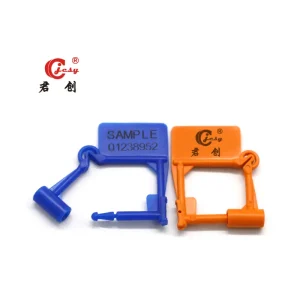
The minimum order quantity varies by factory setup. High-automation lines may require larger MOQs to run efficiently, while flexible production lines can accommodate smaller batches. For a typical custom barrier seal order with logo and serial numbers, expect an MOQ in the range of several thousand units. If you need a smaller quantity for a pilot program, ask the manufacturer whether they can run a partial batch and what the cost adjustment looks like. A reasonable manufacturer will be clear about the trade-off rather than insisting on an inflexible number.
Customization options include laser engraving, hot stamping, and sequential numbering. The marking method must remain legible after the seal has been exposed to weather, handling, and vibration during transit. Request sample markings that have been subjected to a salt spray or abrasion test to confirm durability.
Pricing is driven by material costs, order volume, and customization complexity. Share your full specification — dimensions, tensile requirement, marking detail, packaging — in one request and compare proposals on a like-for-like basis. The lowest quote that leaves out a critical test requirement is not cheaper; it is incomplete.
Building a Dependable Partnership with Your Barrier Seal Supplier
The real cost of a barrier seal is not its unit price but what it costs you if it fails. A seal that breaks in transit and goes unnoticed can trigger cargo inspection delays, insurance disputes, and loss of customer trust.
After you have verified certifications, tested samples, and placed your first order, the evaluation is not over. Consistent performance over multiple shipments is the only meaningful proof of manufacturing stability. Establish a periodic sampling process where you pull seals from incoming shipments and subject them to basic tensile and tamper checks yourself. A supplier that does not support this practice may have something to hide.
Long-term cooperation also opens the door to process improvements. When a manufacturer understands your logistics routes, container types, and security risk profile, they can recommend seal configurations that work better for your specific operation — perhaps a shorter barrel length for tanker hatches or a higher-strength alloy for long-haul rail. That kind of applied knowledge comes from partnership, not a one-time transaction.
Cargo Security Demands Oversight That Goes Beyond a Quote
Price comparisons alone cannot identify a barrier seal manufacturer that will protect your shipments year after year. The evaluation must reach into the factory floor — raw material verification, tensile testing protocol, production traceability, and the willingness to stand behind every batch with independent certification.
If you are evaluating barrier seal suppliers for containerized cargo, cross-border shipments, or high-value logistics, request a sample from the production run that would fulfill your order. Send your specifications, including required tensile strength, marking details, and target quantity, to [email protected] or contact us via WhatsApp at +86 13853189290. We will provide a detailed proposal, production samples, and certification documents so you can verify quality before committing to a volume order.
Practical Questions Asked by Barrier Seal Buyers
What is the difference between a barrier seal and a bolt seal?
Both are high-security seals with a metal bolt that inserts into a locking barrel. A barrier seal is typically a larger, heavier-duty variant designed for extended exposure or high-risk routes. The barrier seal’s interlocking mechanism and thicker body provide extra resistance against cutting and prying. In applications where a standard bolt seal meets ISO 17712 high-security requirements, a barrier seal is chosen when additional physical protection is warranted, such as for cross-border rail or high-value pharmaceutical shipments.
Can I get custom laser engraving and sequential numbers on barrier seals?
Yes, a manufacturer with in-house marking equipment can engrave your company logo, a unique serial number, and barcode directly onto the seal body. The engraving depth must be sufficient to remain readable after extended weather exposure. We recommend requesting a marked sample and subjecting it to an abrasion or weathering test before approving the full order. Confirm that the numbering system is sequential without gaps so that every seal in your shipment can be tracked individually in your logistics management system.
How can I verify that a barrier seal meets ISO 17712 before placing a large order?
Request a copy of the current ISO 17712 compliance certificate and check the issuing laboratory’s name. Then ask the manufacturer whether production samples from your specific batch will be submitted for periodic testing. A manufacturer that offers to send you sample seals from the run scheduled for your order and allow you to test them independently is operating transparently. We encourage customers to pull samples from incoming shipments and verify tensile strength and tamper evidence themselves — it is the only way to confirm that what was certified is what was delivered.
What should I know about barrier seal pricing if I need a small test order first?
Factory-direct pricing is sensitive to order volume, but a reasonable manufacturer will accommodate smaller pilot quantities — often at a slightly higher unit cost — to demonstrate product quality and build a relationship. Ask for a quotation that separates the unit price for the pilot order from the pricing at full production volumes so you can make an informed decision. If your application involves non-standard specifications, such as a custom barrel length, share those details early because they can affect both tooling and per-unit cost. Send your drawing or specification to [email protected], and we will provide a pilot order proposal with a clear path to volume pricing.
If you’re interested, check out these related articles:
Bulk Cable Seal Purchase Guide: Strategic Procurement & Security – Junchuang Lock
Bulk Plastic Seal Orders: Strategic Pricing & Supply Chain Security – Junchuang Lock
Selecting a Security Seal Manufacturer for Supply Chain Integrity – Junchuang Lock
Electronic vs Visual Ear Tags: Optimal Livestock Identification – Junchuang Lock
Supply Chain Security: The Critical Role of Industrial Seals – Junchuang Lock