
Custom padlock seal manufacturing is a specialized process that directly impacts cargo security and supply chain traceability. For importers and procurement managers sourcing these tamper-evident devices, understanding how customization works, from material selection to printing, reduces supply delays and strengthens security protocols. I’ve managed padlock seal production lines at Junchuang Lock Industrial for over fifteen years, and the most successful orders share a common thread: precise upfront specification. This article explains what manufacturers need to get the job done right and where buyers should focus during sourcing.
Why Custom Padlock Seals Matter for Logistics Security
Padlock seals are a cornerstone of tamper evidence for truck doors, shipping containers, and utility meters. Off-the-shelf seals can work for general applications, but many logistics operations require custom numbering, company logos, barcodes, or specific material performance characteristics. A generic seal fails when it cannot integrate with your tracking system or withstand the environmental conditions of the route.
In our production lines, we have seen procurement teams lose weeks because a standard seal could not be laser-marked with sequential barcodes their warehouse scanners could read. Custom manufacturing solves that by aligning the seal exactly with your operational data flow. The seal becomes more than a physical barrier; it is a data point in your chain of custody.
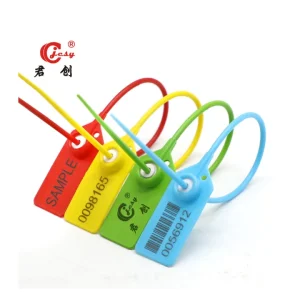
Defining Your Padlock Seal Specifications
A clear specification sheet is the single most valuable tool an importer can bring to the table. Before contacting a factory, you need to nail down five elements.
Material composition comes first. Most padlock seals use ABS or polypropylene, each with different impact resistance and temperature tolerance. ABS performs better in cold storage, while polypropylene holds up under repeated flexing. The locking mechanism type, a ball-and-socket or a ratchet pawl, dictates both security level and one-handed usability.
Operating environment dictates material choice more than cost. For pharmaceutical cold chain shipments, ABS is necessary; for desert region trucking, polypropylene with UV inhibitors is a safer bet. Printing requirements follow. Laser marking gives permanent, scannable codes, while hot stamping is more cost-effective for simple logos and alphanumeric sequences.
| Material | Tensile Strength | Temperature Range | Typical Application |
|---|---|---|---|
| ABS | High | -20°C to 80°C | Cold chain, export containers |
| Polypropylene | Medium | -10°C to 100°C | Trucking, meter boxes |
| UV-Stabilized PP | Medium | -10°C to 100°C | Outdoor, long-duration transit |
| Nylon Hybrid | Very High | -30°C to 120°C | Heavy industry, offshore |
Serial numbering format needs to be defined: how many digits, alpha or numeric, sequential or randomized, and whether you need a prefix or suffix to denote facility or year. Barcode symbology (Code 128, QR, Data Matrix) must be compatible with your scanning infrastructure.
If you are uncertain about material selection for your operating conditions, send your route profile and temperature data to [email protected] before finalizing the BOM. A quick material consultation avoids a container of seals that crack on arrival.
The Factory Customization Process
Once specifications are locked, the manufacturing workflow moves through tooling, molding, printing, and assembly. The mold is the first major investment. For custom designs that incorporate a specific logo or structural feature, a new injection mold is required. We have completed mold fabrication in as little as ten working days for a standard padlock seal profile, though complex multi-cavity molds take longer.
Injection molding runs use the specified polymer, with color masterbatch added according to the buyer’s branding. Color consistency across batches is a detail that separates experienced manufacturers from generalists. We retain physical color plaques for each client so that reorders match the original spec within delta E 2.0.
Printing and marking follow molding. Laser engraving provides the highest scan reliability for barcodes, while hot stamping produces a clean, raised foil finish for company names. Both methods should be tested on a small batch before full production, especially when integrating variable data.
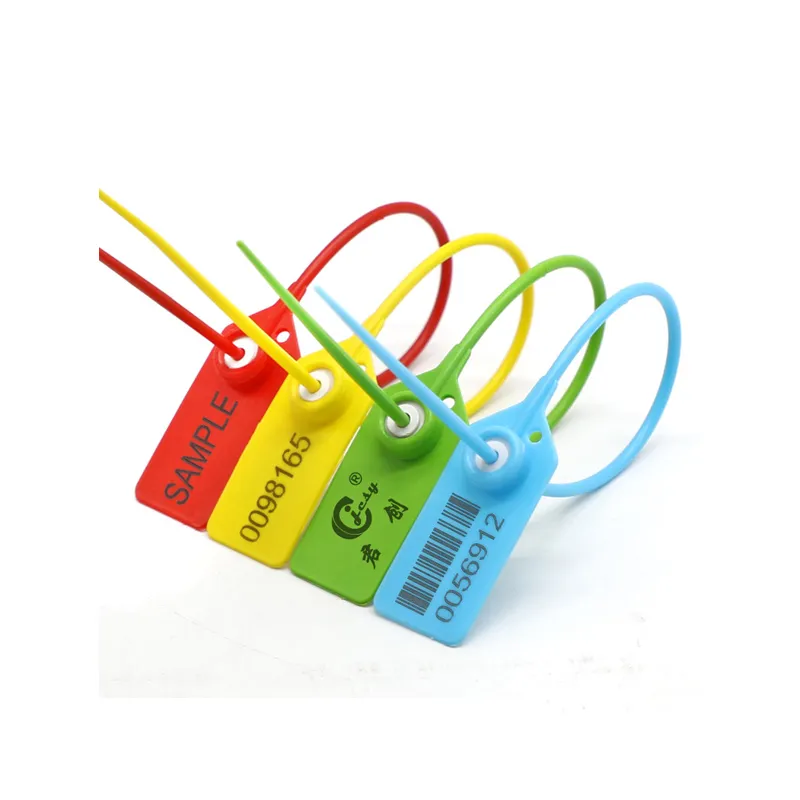
Assembly involves inserting the locking mechanism, testing engagement force, and fitting any additional features such as tear-off stubs or document pouches. Throughout this phase, random sampling for pull-out force and tamper evidence testing is standard.
Quality Verification at the Source
The strength of a padlock seal is only as reliable as the factory’s quality discipline. Independent third-party audits are useful, but several practical checks can be done directly by a buyer or a sourcing agent.
Pull-out resistance is the first benchmark. For a standard plastic padlock seal, we target a minimum 18 kg pull-out force. The sample is locked, then a tensile tester applies increasing load until the locking tab separates or the strap breaks. The failure mode matters: the seal should break in a way that leaves visible tamper evidence, not slip out cleanly.
Barcode scan rates should exceed 99.5% on a sample of 200 pieces using a standard warehouse scanner. We perform this on every order that includes barcodes. Color and print adhesion tests include a cross-hatch tape test and a 24-hour UV exposure cycle. These are simple, repeatable, and reveal surface bonding issues before shipment.
Environmental cycling is the deeper test. Seals held at minus 20 for four hours then immediately tensile-tested should retain at least 80% of room-temperature strength. For extreme-weather applications, we add a damp heat cycle to confirm polymer stability.
Integrating Custom Seals into Your Supply Chain
The final step is not about the product; it is about how the product fits into your loading, scanning, and exception-handling processes. Custom padlock seals generate data when they carry unique serial numbers. Integration means the seal number is recorded at the point of loading, transmitted in the shipping manifest, and verified at the destination.
I have observed that importers who treat seals as consumables often miss the traceability value. When a seal number appears in the receiving report, it provides an independent verification that the container was not opened between the factory and the warehouse. This makes the seal a key part of your supplier audit trail, not just a closure device.
Ordering intervals should account for mold maintenance cycles and seasonal production loading. We advise clients to place reorders when inventory drops to a 60-day consumption level, which allows for manufacturing time and sea freight without forcing air shipments.
Common Questions About Custom Padlock Seal Orders
How long does custom mold fabrication take?
A standard single-cavity mold for a padlock seal body typically requires two to three weeks from drawing approval. Complex molds with multiple slides or textured surfaces take longer. We provide a mold timeline schedule during the quotation stage so that production milestones are visible from the start.
What is the minimum order quantity for custom printing?
Most padlock seal orders with custom laser marking or hot stamping begin at 10,000 pieces per design. Lower volumes are possible but may incur a setup charge. Larger quantities spread the tooling cost across more units, lowering the per-seal price.
Can I get samples before production begins?
Yes, we produce pre-production samples using production-grade material and the actual mold, not a prototype mold. These samples are sent for testing and approval before mass production starts. The sample order also serves as a dry run for export documentation and shipping logistics.
How do you ensure color consistency between batches?
Color consistency is maintained by retaining physical color chips for each client and testing every incoming batch of color masterbatch against the reference before production. We use a spectrophotometer to verify delta E values stay below 2.0 from the approved standard.
What happens if a seal fails during transport?
If a seal fails due to material or manufacturing defect, the factory should replace the affected batch. We also investigate the root cause, whether it is a mold wear issue, a bad lot of polymer, or an assembly error. Documenting the batch number and failure condition enables the RMA process. Share your sealing requirements and serial numbering format with our team at [email protected] to receive a specification sheet and quotation.
If you’re interested, check out these related articles:
Plastic Seal Manufacturer Selection: A Strategic Procurement Guide – Junchuang Lock
Comprehensive Quality Inspection Checklist for Security Seals – Junchuang Lock