
A padlock seal that snaps under pressure or loses its serial number after a month isn’t just a product failure—it’s a supply chain incident that can cost you a customer audit. In fifteen years of manufacturing security seals, I’ve seen import buyers repeat the same mistake: they choose a padlock seal supplier based on a low price and a polished catalog, without ever looking behind that curtain at the factory floor that actually determines reliability. The real gap isn’t in the seal design, it’s in production discipline, material consistency, and quality control systems that only an experienced factory operator would know to check. This guide gives you five specific areas to assess so you can separate a capable padlock seal manufacturer from one that simply ships plastic.
Assess the Manufacturer’s Production Capability
A padlock seal isn’t a generic plastic component. It’s a tamper-evident device that must work exactly the same way every time: the locking mechanism must engage cleanly, the marking must be readable after thousands of miles in transit, and the plastic body must resist snapping during routine handling. All of that starts with the production line.
Walk your supplier through their injection molding setup—virtually or in person. Ask what machine tonnage they run, whether mold maintenance is scheduled and documented, and how they control cycle time consistency. I’ve toured factories where half the machines were idle with rust on the platens and the operators couldn’t tell me the melt temperature they were running that morning. Those shops ship padlock seals with inconsistent wall thickness and locking tabs that break during insertion. The factories you want have a steady rhythm: machines running continuously, spare molds stored off the floor, and production logs that go back months.
Another signal: look at their in-house capacity versus outsourced steps. A manufacturer that controls molding, assembly, marking, and packaging under one roof can catch quality issues before they leave the building. If they farm out pad printing or laser marking to a third party, ask how they track batch integrity across that handoff.
Examine Quality Control and Material Standards
The difference between a padlock seal that lasts two years in a logistics yard and one that cracks in six months is largely material selection and quality control. Most plastic padlock seals are made from polypropylene (PP) or polyethylene (PE), but the raw material grade—virgin vs. recycled content—directly impacts UV resistance, brittleness at low temperatures, and locking force.
A serious supplier can show you incoming material certifications and batch-test records for tensile strength and impact resistance. Ask how often they test seals to failure across different temperature ranges and whether they archive sample seals from each production run for future traceability. Serial number integrity is another checkpoint: the marking method—laser, hot stamp, or thermal print—must survive outdoor exposure without fading. I’ve seen laser-etched serials on cheap padlock seals become illegible within weeks because the factory used low-grade resin that oxidized rapidly.
Factory-floor discipline matters here too. During production of our own plastic padlock seals, we sample every batch for locking force consistency and body integrity, pulling units off the line at regular intervals. That kind of in-process inspection isn’t expensive, but it requires a quality system the factory actually follows, not just a certificate on the wall.
Review Customization and Printing Options
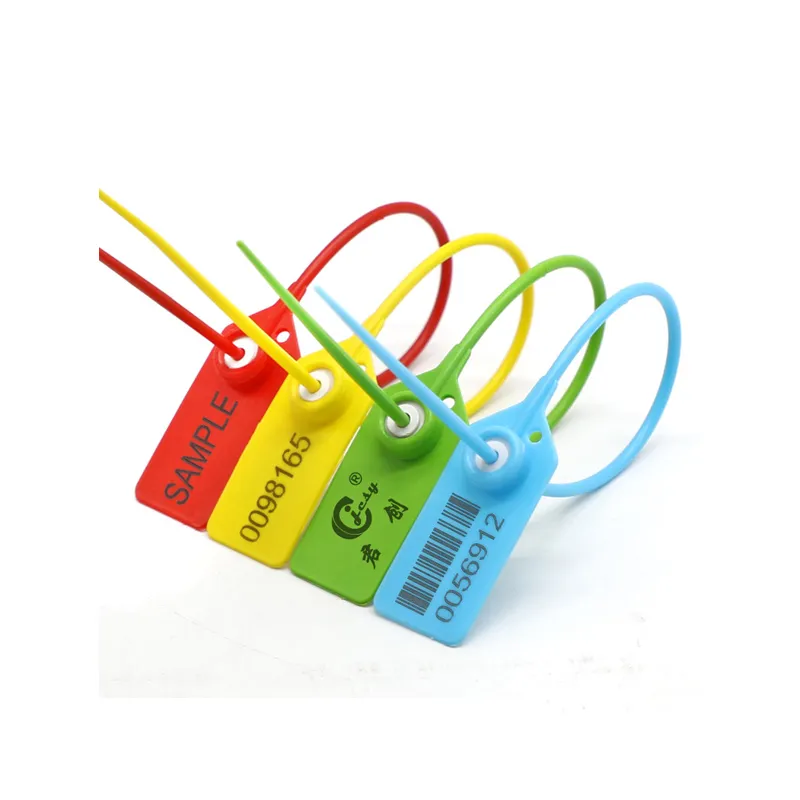
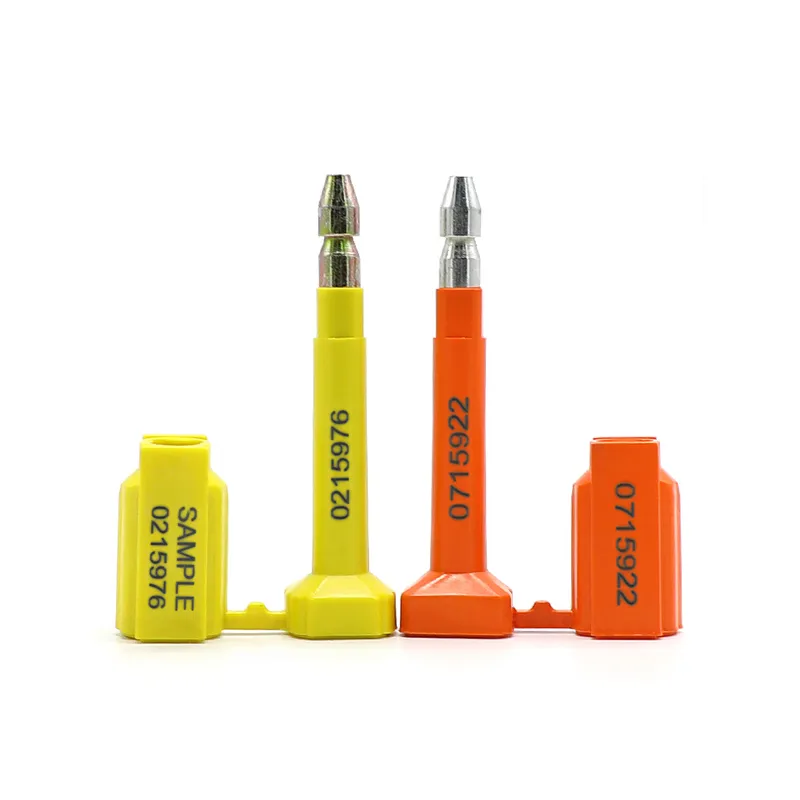
Most padlock seal buyers don’t just need a generic yellow seal—they need their company name, a sequential serial number, and sometimes a barcode on the body. That turns a commodity item into a traceable security device, and the supplier’s ability to deliver that without errors tells you a lot about their internal systems.
What to confirm: the marking method they use for your required data, whether the artwork stays sharp after repeated handling, and how they manage serial number progression across multiple production batches. A manufacturer that relies on manual stamping and handwritten serial logs will eventually ship duplicate numbers. A shop with automated laser engraving and digital serial tracking won’t.
If you need custom colors or body shapes, ask about mold modification lead time and whether they maintain dedicated molds for long-term clients. The supplier should also be prepared to produce pre-production samples with your full customization applied, so you can inspect the result before mass production begins. This is a point where the conversation itself is revealing: if a factory hesitates to commit to a sample run with exact serialization, they’re telling you their process can’t guarantee repeatability.
If your program requires specific tamper-evident features, custom color combinations, or serial number formats that must integrate with your existing tracking system, it’s worth discussing those details directly with a manufacturer before finalizing your shortlist. Reach out to us at [email protected]—we’ll confirm feasibility and turnaround for your exact requirements.
Understand Minimum Order Quantities and Lead Times
MOQ and lead time numbers look simple on a quote sheet, but the real question is whether the supplier can honor them when your order size shifts unexpectedly. A factory that quotes a 10,000-unit MOQ with a 15-day lead time and then delays it to 30 days on your first repeat order is costing you more than the seal price difference ever saved.
Ask for maximum monthly capacity and how it changes during their peak season. A padlock seal manufacturer that runs 24-hour shifts and maintains buffer stock of common raw materials can absorb a surge order. One that starts sourcing resin after you place the order cannot.
Here’s a practical view of what typical padlock seal order parameters look like from a direct manufacturer:
| Order Parameter | Standard Product | Custom Product |
|---|---|---|
| Typical MOQ | 5,000–10,000 pcs | 20,000–50,000 pcs |
| Lead Time (standard) | 7–10 days | 15–20 days |
| Custom Marking Setup | 2–3 days | 5–7 days |
| Bulk Pricing Discount | From 50,000 pcs | From 100,000 pcs |
These figures assume the manufacturer molds in-house and maintains tooling ready. If lead times stretch far beyond this, there’s likely a subcontracting step in the chain.
Build a Long-Term Procurement Partnership
One shipment of padlock seals that arrives on time with correct serial numbers is a transaction. Three years of consistent deliveries with zero quality deviations and a production team that remembers your packaging spec without being reminded—that’s a supply partnership. The value of that reliability compounds every quarter you avoid a cargo inspection delay or a customer compliance flag.
I’ve built my career around this idea: a seal manufacturer’s real product is not just the plastic piece but the certainty that your supply chain security will function the same way every time. That comes from a factory culture that documents everything, trains operators continuously, and treats a customer’s specification as a fixed requirement—not something that can be “close enough.”
When you’re evaluating suppliers for a long-term arrangement, look beyond the unit price. How quickly does the factory respond to inquiries? Do they proactively alert you to mold maintenance windows that might affect your schedule? Do they maintain an archive of your previous serial number ranges so you never get a duplicate batch? These are the signals that separate a manufacturer who views you as a recurring order from one who views you as a partner.
Bringing It All Together
The padlock seals you buy today will be hanging on truck doors and container latches months from now, in rain, heat, and rough handling. A supplier selection process built around the five areas above—production capability, quality control, customization accuracy, realistic lead times, and long-term partnership reliability—gives you a much stronger decision framework than comparing per-unit prices alone.
Our team at Shandong Junchuang Lock Industry Co., Ltd has spent over fifteen years refining plastic padlock seal production, from compound selection through final laser marking. We manufacture in-house, maintain documented quality control on every batch, and work directly with procurement teams to get the customization details right.
Send your part number, quantity, and customization requirements to [email protected], or reach us on WhatsApp at +86 13853189290. We’ll provide a detailed quotation and a pre-production sample for your evaluation within 48 hours.
Common Questions About Padlock Seal Supplier Selection
What’s the typical MOQ for custom padlock seals?
It depends on whether the manufacturer uses existing molds or needs new tooling. For standard body designs with custom laser marking, MOQs generally range from 5,000 to 10,000 pieces from a direct factory. If you need a unique body shape or size that requires a new mold, expect an initial order minimum of 20,000 to 50,000 pieces to absorb the tooling investment. A reliable manufacturer will split the mold cost across multiple orders if you commit to a long-term supply agreement.
How can I verify a padlock seal manufacturer’s quality before committing to a bulk order?
Start with a factory audit that includes a walkthrough of the injection molding area and final assembly line. Look at their in-process inspection records and ask for batch-test certificates for tensile strength and temperature cycling on the specific plastic compound you’ll be using. After that, always request a pre-production sample run with your exact customization—serial numbers, color, logo—and physically test those samples in your own logistics environment before releasing the full order.
What materials should I expect for outdoor-grade padlock seals?
High-quality padlock seals for outdoor logistics are typically molded from virgin polypropylene or polyethylene with UV stabilizers added. These compounds retain their locking force and marking legibility after prolonged sun exposure. Lower-cost manufacturers sometimes substitute recycled resin, which becomes brittle faster and can cause the locking tab to fracture during normal use. Ask the supplier specifically whether they use virgin material and what UV resistance testing they perform.
Can a manufacturer laser-engrave sequential serial numbers without duplication across separate production runs?
Yes, but only if they use a digital serial management system linked to their laser engraving equipment, not a manual logbook. A manufacturer with the right setup tracks each serial range per client, confirms that the next batch picks up exactly after the last serial from the previous order, and verifies no gaps or overlaps before starting the run. This is one of the simplest but most revealing questions to ask during supplier evaluation—if they can’t explain their serial control process clearly, the risk of duplicate numbers arriving in your warehouse is real.
Share your serial number format, quantity, and delivery timeline with us, and we’ll confirm the production window and send a sample with your exact numbering scheme before shipment begins.
If you’re interested, check out these related articles:
Security Seal Tensile Strength Testing: Ensuring Supply Chain Integrity – Junchuang Lock
Bolt Seal Quality Inspection: Safeguarding Cargo & Compliance – Junchuang Lock