
Most importers evaluate padlock seals by looking at a product photo and a price list, then make a sourcing decision that determines the security of thousands of shipments over the next twelve months. That approach skips the factor that matters most: what happens on the factory floor before the seals are packed into cartons. After fifteen years managing production lines for security seals, I have seen buyers who verify manufacturing quality before placing bulk orders receive consistent products shipment after shipment, while those who do not frequently end up managing rejects, delays, and seal failures at destination. This guide explains what to check at the factory level so your bulk padlock seal purchase delivers the reliability your logistics operations need.
The Quality Indicators Most Buyers Overlook in Padlock Seal Sourcing
When procurement teams evaluate plastic padlock seals from a new supplier, the inquiry usually follows a predictable script. They request the product catalog, compare prices, ask for the MOQ, and maybe request free samples. If the sample looks right and the price fits the budget, the purchase order goes out.
The problem with this sequence is that a single sample tells you almost nothing about production consistency. A factory can produce ten good samples from a controlled batch while the main production line runs with different material ratios, worn molds, or relaxed QC checkpoints. I have walked production floors where the sample-making station operated under conditions that the main lines did not match. The seals looked identical in photos. The difference only showed up after three months in the field when the locking mechanism started failing at an unacceptable rate.
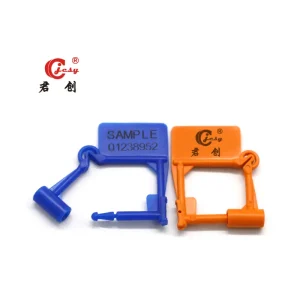
What skilled buyers look for instead is evidence of standardized production. Ask the supplier how they maintain consistency across runs, specifically about their material traceability records, mold maintenance schedules, and in-process inspection checkpoints. A factory that cannot produce those records quickly is one where consistency depends on whoever is running the shift that day.
Why Sample Quality Alone Is Not a Reliable Indicator
Samples represent the factory capability under ideal conditions. Bulk production represents their capability under real conditions. The gap between the two is where procurement risk lives. In our facility, every production batch runs through the same injection molding parameters, the same cooling cycle timing, and the same pull-test sampling rate, whether the order is 5,000 seals or 500,000. Check whether your potential supplier can describe their batch-to-batch consistency controls in similar concrete terms.
The Three Documents to Request Before Ordering
Before committing to a bulk padlock seal purchase, request three things: a material certificate showing the resin type and grade used for the seal body, a production QC checklist template showing what gets inspected at each stage, and a batch traceability record from a recent production run. Suppliers who push back on providing these are not necessarily hiding anything, but they are signaling that their production documentation is not systematic, and that means your order quality will be less predictable.
Padlock Seal Materials and Their Real-World Performance
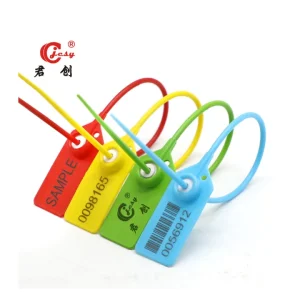
The material choice for a plastic padlock seal body directly determines how the seal behaves across temperature extremes, UV exposure, and physical tampering attempts. Most product listings describe the material with one word, plastic or ABS, without explaining what that means for field performance.
| Material | Tensile Strength | Temperature Range | UV Resistance | Best Application |
|---|---|---|---|---|
| ABS | Moderate (30-45 MPa) | -20°C to 80°C | Moderate (requires UV stabilizer) | General logistics, moderate climates |
| Polypropylene (PP) | Lower (25-35 MPa) | -10°C to 100°C | Poor without additive | Budget-sensitive, indoor use |
| Polycarbonate (PC) | High (55-70 MPa) | -40°C to 120°C | Good (inherent) | High-security, extreme environments |
| Nylon (PA) | High (50-80 MPa) | -30°C to 100°C | Moderate | Heavy-duty applications |
Material selection is not just a spec sheet detail. It determines whether your seals survive a summer in a Middle Eastern port or crack during a northern European winter. When I review bulk padlock seal inquiries, the first question I ask is about the operating environment, because a material that works perfectly in temperate China may fail completely on a container sitting in direct sun in Jeddah.
How to Confirm the Material Is What the Supplier Claims
Material substitution is one of the most common cost-cutting moves in security seal manufacturing. A factory quotes ABS but runs polypropylene, or worse, recycled material blended with virgin resin at an unknown ratio. The seals look the same coming out of the mold, but their performance diverges sharply over time. Request a material test certificate from an accredited laboratory for the specific resin lot used in your order. If the minimum order quantity justifies it, specify third-party material verification as a condition of the contract. For large-volume bulk purchases, this step pays for itself many times over by preventing field failures and returns.
Factory Floor Indicators to Verify Before Ordering
Product catalogs and trade show displays are designed to impress. The factory floor tells the truth. A thirty-minute walk through a production facility reveals more about a supplier reliability than weeks of email correspondence.
Start with mold condition. Padlock seal molds that are poorly maintained produce seals with flash, excess material around the parting line, or inconsistent wall thickness that creates weak points. On a well-run injection molding floor, molds are cleaned and inspected on a documented cycle, and the maintenance log is available for review. If operators are manually trimming flash from finished seals, that is not attention to detail. That is a sign the molds should have been serviced and were not.
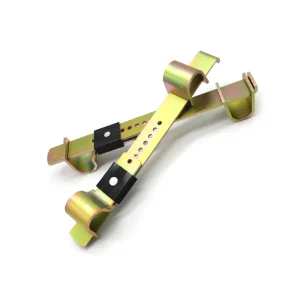
The second indicator is the QC testing station. Every padlock seal production line should have a defined pull-test sampling frequency, for example, testing the locking mechanism tensile strength on five seals per hour of production. Check whether the testing equipment is calibrated and whether test results are recorded in real time versus filled in after the fact. In a factory I audited last year, the QC logbook showed perfect test results for every shift over a three-month period. Statistically impossible in real production. The data had been fabricated.
If your program involves padlock seals used across multiple climate zones or in customs-supervised cargo, verifying factory QC documentation before finalizing your purchase order prevents problems that sample inspection alone cannot catch. Reach out at [email protected] to discuss your specific verification requirements.
Production Scheduling and Your Order Priority
How a factory schedules production tells you where your order fits in their priority structure. A supplier running multiple product lines on shared equipment may push smaller bulk orders into gaps between larger runs, which means variable lead times. Ask how your order will be scheduled: dedicated production block or fill-in slot. For ongoing bulk procurement programs, agree on a lead time range in writing and include a delivery reliability clause in the supply agreement. The least reliable factories are not necessarily the ones with the worst equipment. They are the ones with the most unpredictable scheduling.
Customization Methods That Preserve Padlock Seal Integrity
Custom printing, color coding, and sequential numbering are standard requirements for organized logistics programs. But each customization step introduces a potential quality risk if the production process is not designed around it.
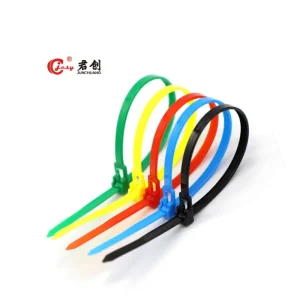
Laser marking and hot stamping are the two most common customization methods for plastic padlock seals. Laser marking produces a permanent, high-contrast mark without adding mechanical stress to the seal body. Hot stamping, when done correctly with properly maintained dies and consistent temperature control, also produces durable results. The risk with hot stamping is excess pressure or temperature that weakens the seal body around the marking area. I have examined seals where the hot stamp created a micro-fracture that became the failure point during pull testing. The seal looked perfect visually but broke at half its rated strength.
Before approving a custom bulk padlock seal order, request pre-production samples that include your custom markings applied using the same method and equipment that will run the full batch. Test those samples to destruction. If the failure point shifts from the locking mechanism to the printed area, the customization process needs adjustment. Do not accept the full order until this verification is complete.
Numbering Systems and Batch Traceability
Sequential numbering is not just about inventory tracking. It is your first line of defense when a seal-related issue appears in the field. Work with the manufacturer to define the numbering format before production begins: total digits, prefix or suffix codes, and whether numbers repeat across batches or run continuously. A well-designed numbering system allows you to trace any single seal back to its production batch, inspection record, and material lot. This traceability becomes critical when you need to determine whether a field failure is an isolated incident or a batch-wide problem.
Pricing, MOQ, and Lead Time Realities for Bulk Orders
Bulk padlock seal pricing follows a logic that experienced importers understand but first-time buyers often misjudge. The unit price drops as quantity rises, but the curve flattens at a point determined by material cost, production efficiency, and the supplier operating margin. Past a certain volume, typically around 200,000 to 500,000 pieces for standard plastic padlock seals, further discounts are marginal because you have already captured the economies of scale in setup, material purchasing, and production run efficiency.
Minimum order quantities vary significantly. A factory running dedicated padlock seal production may quote an MOQ of 5,000 to 10,000 pieces. A trading company sourcing from multiple factories will typically quote a higher MOQ or accept a lower one with a price premium, because they are aggregating smaller orders across buyers. If your bulk requirements start small and scale over time, work with a manufacturer who can accommodate that trajectory rather than one who treats every order as a one-off transaction.
Lead Time Factors You Can Control
Standard production lead times for bulk padlock seal orders range from 15 to 30 days, depending on customization complexity and current production loading. Two factors within your control can reduce this: providing complete artwork and numbering specifications with the initial inquiry, and confirming your order before the factory peak season. Chinese manufacturing has predictable busy periods, typically the months before major trade shows and the run-up to the Lunar New Year shutdown. Placing orders outside these windows often results in shorter lead times and more attentive production handling.
For mid-sized buyers who cannot always meet high MOQs, partial container consolidation with complementary security seal products is a practical option. A bulk cable seal purchase follows similar procurement logic, and combining padlock seals with cable seals or bolt seals in one shipment can optimize logistics costs while maintaining supplier accountability.
Common Questions From Padlock Seal Buyers
What separates a reliable padlock seal from one that will fail in the field?
The locking mechanism design and the consistency of the injection molding process. A reliable padlock seal has a locking insert that engages fully and irreversibly. Once the hasp clicks into the body, it stays locked. The failure we see most often in low-quality seals is partial engagement: the hasp appears locked but can be pulled free with moderate force because the internal locking tab was molded slightly undersized. This is a mold precision issue, not a material issue, and it only gets caught with systematic pull testing on production samples, not from examining a single sample by hand.
Should I buy from a trading company or directly from the factory?
If your annual padlock seal volume exceeds 100,000 pieces and you have the internal capability to manage supplier communication, quality verification, and logistics coordination, factory direct is usually the right path. It gives you pricing advantages and production visibility that a trading company cannot match. For volumes under 50,000 pieces per year spread across multiple seal types, a China plastic security seal factory sourcing approach through a reputable trading partner can reduce your management overhead. The tradeoff is not just price, it is control. Factory direct buyers can influence production scheduling, material selection, and QC procedures directly. Trading company buyers rely on the intermediary relationship with the factory to enforce those standards.
Are ISO 17712 certified padlock seals worth the extra cost?
This depends entirely on your operating requirements. ISO 17712 certification applies to high-security seals used for containerized cargo under customs supervision. For padlock seals used in domestic trucking, warehouse security, or internal logistics, the certification adds cost without adding practical value. Your real requirement is tamper evidence, which does not require ISO certification. However, if your padlock seals are used on export containers that cross customs borders, the certification provides a standardized benchmark that customs authorities recognize. ISO 17712 certified seal manufacturers follow documented testing protocols that make their product claims independently verifiable.
How do I know if the color will fade after months of outdoor exposure?
Request accelerated UV aging test data for the specific color formulation, not just the base material. A red padlock seal made from ABS with a standard colorant will fade noticeably within six months of direct sun exposure. The same red in ABS with a UV-stabilized color masterbatch will hold its color for two to three years. The difference in additive cost is small. The difference in field perception is significant. Faded seals look old, and old-looking seals invite tampering. When color coding is part of your security protocol, specify UV-stabilized colorants and verify the test reports before production begins.
What should I do if I receive a batch of padlock seals that do not meet specifications?
Document the non-conformity immediately with photographs and pull-test results from a statistically valid sample of the received batch, typically 20 to 50 seals drawn from different cartons. Send this documentation to the supplier along with a clear statement of what the specification required and what you received. The supplier response to a quality claim tells you as much about their reliability as the initial order. Manufacturers who stand behind their production will arrange replacement or credit, and more importantly, they will investigate and tell you what went wrong. Those are the suppliers worth building long-term cooperation with. Tamper evident seal standards provide a useful reference framework for evaluating what adequate performance looks like. Share your specifications and quantity requirements with us at [email protected] or call +86 13853189290, and we will confirm production feasibility and current lead times for your program.
If you’re interested, check out these related articles:
ISO 17712 Certified Seal Manufacturers: Your Guide to Selection – Junchuang Lock
Heavy Duty Cable Seal Selection Guide for Industrial Security – Junchuang Lock