
Wholesale plastic padlock seals represent one of the most widely used tamper-evident security products in logistics, trucking, and cargo transport, but not all plastic padlock seals perform the same way in the field. After fifteen years of manufacturing security seals, I can say that the difference between a reliable seal and one that fails during transport almost always traces back to two things: the quality of the injection molding process and the consistency of the raw materials used. Procurement managers who understand what to look for in manufacturing quality before placing bulk orders avoid costly rejections, shipment delays, and security failures at the receiving dock.
What Makes a Quality Plastic Padlock Seal
The performance of a plastic padlock seal begins on the injection molding floor, not in the shipping lane. A quality seal must do three things consistently: lock securely on first insertion, show clear evidence if tampered with, and survive the physical demands of transport without cracking or loosening. Each of these depends on manufacturing decisions made before the first unit comes off the line.
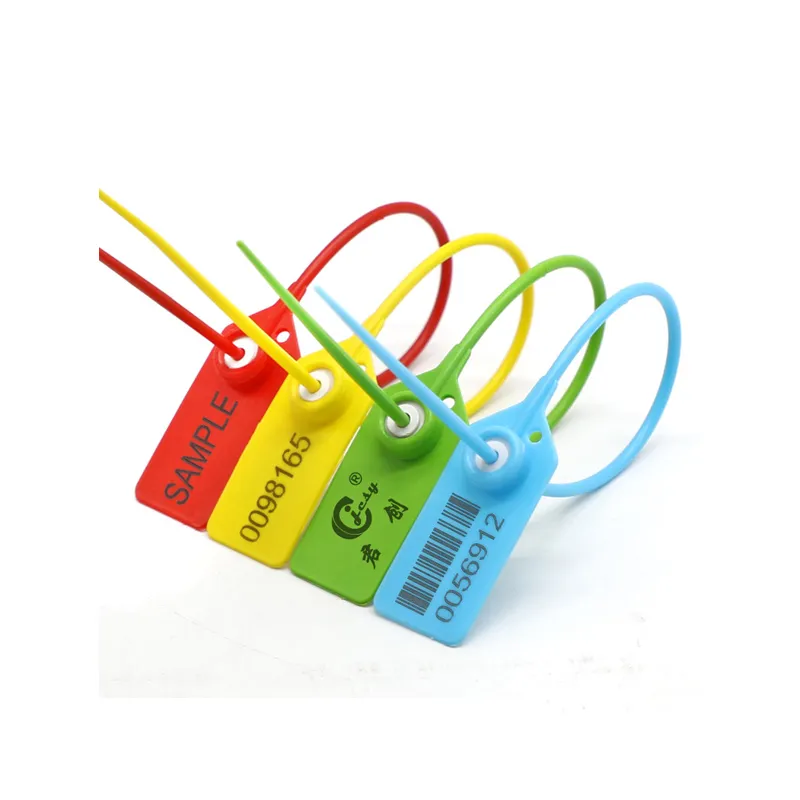
Material selection is the foundation. Most plastic padlock seals use either ABS or polypropylene. ABS offers higher impact resistance and holds its shape better under temperature swings, which matters for truck trailers crossing climate zones. Polypropylene costs less and provides adequate performance for short-haul, low-risk applications. The table below summarizes the key differences:
| Property | ABS | Polypropylene |
|---|---|---|
| Impact resistance | High | Moderate |
| Temperature range | -20°C to 80°C | -10°C to 60°C |
| Tamper evidence clarity | High (brittle fracture) | Moderate (stretches before breaking) |
| Unit cost | Higher | Lower |
| Best application | Long-haul, high-value cargo | Short-haul, utility use |
Beyond material, the injection molding parameters determine whether a seal locks reliably. Mold temperature, injection pressure, and cooling time must stay within tight tolerances. A seal molded too quickly may have internal stress points that only become visible when the locking tab snaps under tension. We test every production batch for lock engagement force and pull-out resistance before shipping. These are not cosmetic checks; they directly predict whether a seal will hold in the field.
The tamper evidence mechanism deserves particular attention. A plastic padlock seal should break in a way that is immediately obvious, with fractured surfaces that cannot be concealed. The locking mechanism itself must resist attempts to depress the retaining tab from outside. I have seen imported seals where a thin metal shim could release the lock without leaving marks. Good mold design prevents this by placing the locking tab deep within the body, inaccessible from any angle without destroying the seal.
How to Evaluate a Plastic Padlock Seal Manufacturer
Evaluating a manufacturer from another continent is not easy, but a few specific checks separate factories that deliver consistent quality from those that do not.
First, ask for batch production records, not just a sample. A factory can hand-select five perfect seals from a run of ten thousand. Batch records showing injection pressure, mold temperature, and cycle time for the entire production lot tell you whether quality is consistent or accidental. If a manufacturer is reluctant to share process data, it usually means process control is not tight enough to share.
Second, request a factory audit video call focused on the mold room. Look at mold maintenance logs and storage conditions. Molds kept clean, dry, and on scheduled maintenance cycles produce seals with consistent dimensions batch after batch. Molds stored haphazardly or showing visible wear produce seals with increasing dimensional drift. A well-maintained mold set for plastic padlock seals should produce over 100,000 cycles before requiring major refurbishment. In our production facility, every mold has a cycle counter and maintenance log physically attached to the storage rack. When a mold approaches its service interval, the production schedule accounts for the downtime before the mold degrades enough to affect product quality.
Third, verify the QC station setup on the production line. A proper quality checkpoint for plastic padlock seals includes a calibrated force gauge for pull-testing, a go/no-go dimensional fixture, and a visual inspection station under adequate lighting. If the production video shows workers visually inspecting seals without measurement tools, assume that dimensional consistency is not being controlled.
Understanding Wholesale Pricing and MOQ
Wholesale pricing for plastic padlock seals follows a straightforward logic: material cost plus molding cost plus QC cost equals factory price. Traders add their margin on top. Factory-direct purchasing removes that markup, which on large volume orders can represent 15 to 30 percent of the landed cost.
MOQ varies by manufacturer but typically ranges from 5,000 to 20,000 units per order for standard plastic padlock seals. Customized seals with laser marking, serial numbering, or specific color requirements may have higher minimums, usually starting around 10,000 units. These numbers are not arbitrary. Setting up a production run requires purging the injection barrel of previous material, heating the mold to operating temperature, and running test shots until parameters stabilize. The first few hundred units of any run are scrap. Smaller orders mean the scrap rate represents a larger percentage of the total, which pushes up the per-unit cost unsustainably.
If your program involves specific tensile strength requirements or compliance documentation beyond standard commercial specifications, it is worth confirming these parameters before finalizing your BOM. Reach out at [email protected] with your performance requirements and we can verify whether the standard product meets them or a material-grade adjustment is needed.
Customization Options for Bulk Orders
Bulk wholesale orders open up customization that is not available for small-quantity purchases. The three most common requests we handle in production are serial numbering, color coding, and logo embossing.
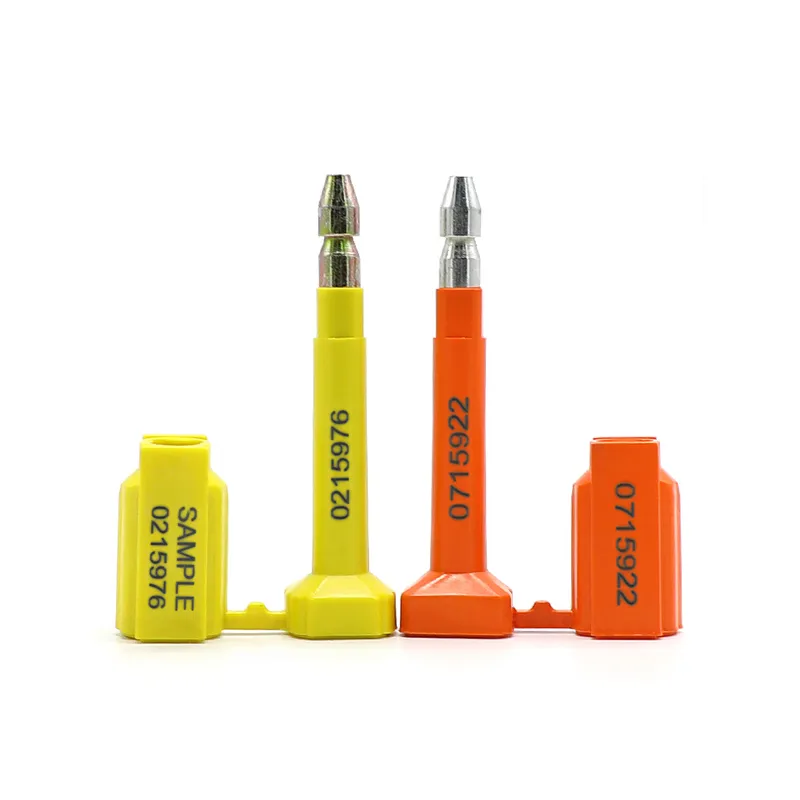
Laser-marked serial numbers on each seal body provide traceability from the warehouse to the delivery point. For logistics companies managing multiple routes or clients, serialized seals create an audit trail that identifies exactly where a seal was applied and by whom. Production line laser marking equipment must be calibrated to mark consistently on curved plastic surfaces without burning through the material. We use fiber laser systems with rotary fixtures designed for cylindrical and irregularly shaped seal bodies.
Color coding by shipment type or route is straightforward with ABS material, which accepts masterbatch pigment evenly during compounding. Polypropylene can be colored but may show slight shade variations between batches. For procurement managers who need exact color matching across multiple orders, ABS is the more reliable choice.
Custom logo embossing requires a dedicated mold insert, which adds a one-time tooling cost but no ongoing per-unit cost. The mold insert is machined once and used for the life of the mold. For companies placing regular bulk orders, this tooling cost amortizes quickly and eliminates the need for separate labeling or printing steps in the logistics chain.
Common Pitfalls When Sourcing Plastic Padlock Seals
The most expensive mistake I see procurement managers make is selecting on price alone. A plastic padlock seal that costs 30 percent less per unit but fails on 2 percent of shipments costs far more in cargo claims, insurance disputes, and customer distrust than any upfront savings. I have seen importers absorb five-figure container inspection costs because a failed seal triggered a customs security review, all to save a few hundred dollars on the seal order itself.
Another common error is overlooking installation conditions. A seal that performs perfectly in a temperate warehouse may become brittle in sub-zero trucking routes or soften in desert heat. Match the material to the actual transport conditions the seals will face, not the conditions in the buyer’s office. When in doubt, specify ABS for any route that crosses climate zones.
Skipping the sample-to-bulk verification step is the third pitfall. A pre-production sample approved six months ago may not match what the factory ships today if materials, operators, or mold conditions have changed. Request a random pull from the current production batch before shipment and compare it against the approved sample. If the factory cannot or will not do this, consider it a red flag that deserves a deeper investigation before releasing payment.
Moving Forward with a Wholesale Plastic Padlock Seal Order
Sourcing plastic padlock seals in bulk means committing to a product that carries responsibility for cargo security from origin to destination. The seals themselves are low-cost items, but the consequences of seal failure are not. A procurement decision based on manufacturing quality, supplier transparency, and documented process control produces seals that protect cargo and reinforce supply chain integrity.
Getting the right product starts with specifying your requirements clearly: the application environment, the security level needed, and any customization requirements. Send your part number, quantity, and performance needs to [email protected], or reach our production team directly at +86 13853189290 to discuss technical requirements. We can confirm material compatibility, provide current wholesale pricing, and arrange pre-production samples for your evaluation before any order commitment.
Common Questions About Plastic Padlock Seals
What is the typical MOQ for wholesale plastic padlock seals?
Standard plastic padlock seals typically carry an MOQ of 5,000 to 20,000 units. The lower end applies to stock items with no customization. Orders with serial numbering, color matching, or logo embossing usually start at 10,000 units. These quantities reflect the practical economics of injection molding production, where setup time and material purging are fixed costs that must be spread across the run. Smaller runs are possible for repeat customers with flexible scheduling, but the per-unit cost rises accordingly.
How do plastic padlock seals compare to metal bolt seals?
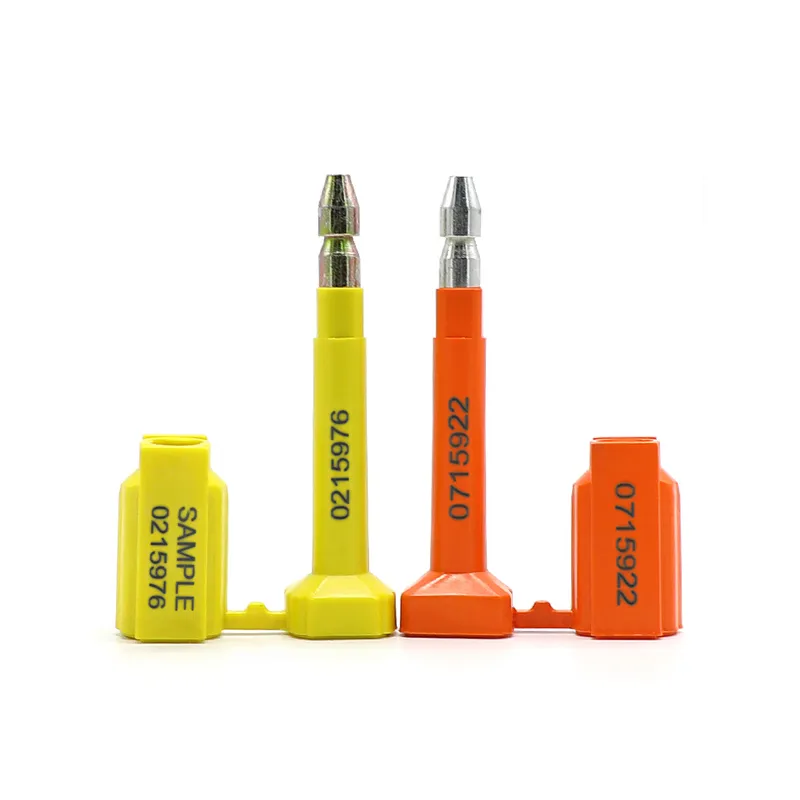
Plastic padlock seals and metal bolt seals serve different security tiers. Bolt seals provide high security with a hardened steel locking pin and require bolt cutters for removal; they meet ISO 17712 high security seal standards. Plastic padlock seals offer a lower-cost tamper-evident solution suitable for general cargo, truck trailers, and applications where visual tamper evidence is the primary requirement rather than forced-entry resistance. The choice depends on cargo value, regulatory requirements, and the level of forced entry risk in the transport route.
Are plastic padlock seals reusable?
No. Plastic padlock seals are single-use tamper-evident devices. Once the locking tab engages, the only way to open the seal is by cutting or breaking it, which destroys the seal body. Reusability would defeat the tamper evidence function. Each seal carries a unique serial number that should be recorded at application and verified at the receiving point. If reusability is a requirement for your operation, consider a different type of locking device rather than a security seal.
What material should plastic padlock seals be made from?
ABS plastic is the preferred material for most security applications. It provides better impact resistance, holds dimensions across a wider temperature range, and fractures cleanly when tampered with, leaving unmistakable evidence. Polypropylene works for budget-sensitive, low-risk applications but stretches before breaking, which can mask tampering attempts in some cases. Some specialty applications use UV-stabilized ABS for extended outdoor exposure. The material choice should be driven by the actual transport and storage conditions the seals will face, not by unit cost alone.
How can I verify plastic padlock seal quality before placing a bulk order?
Request a random production sample pulled from a current batch, not a pre-selected marketing sample. Test it yourself: insert and lock the seal, then try to defeat it with hand tools a cargo thief would carry. Record the force needed to break the locking mechanism. Compare the sample against any previous approved reference and check that dimensional measurements match the specification sheet. If you need production samples with corresponding batch QC data, share your requirements at [email protected] and we can provide current samples for your evaluation.
If you’re interested, check out these related articles:
Security Seal Tensile Strength Testing: Ensuring Supply Chain Integrity – Junchuang Lock
Heavy Duty Cable Seal Selection Guide for Industrial Security – Junchuang Lock