
Cable seal problems in the field—loose locking, unexpected corrosion, or seals that fail a basic pull test—are frustrating for any logistics team. After fifteen years on the production side of industrial security seals, I can say most of these failures are not random. They trace back to specific manufacturing decisions made before the seal ever left the factory: the material grade chosen for the cable, the precision of the locking insert assembly, and whether each batch actually went through a tensile test or just paperwork. This article walks through the common cable seal failures we hear about from procurement managers and supply chain security teams, then connects each one to what happens on the production line—so you know what to look for when evaluating a manufacturer, not just what to blame on handling.
How Cable Seal Problems Show Up in the Field
When a cable seal fails, it usually falls into one of three patterns. First, the locking mechanism does not hold—the cable slides back through the body under tension, sometimes with only moderate hand pressure. Second, the cable itself breaks or frays, often near the ferrule or at a kink point created during installation. Third, the seal shows corrosion or material degradation after exposure to weather, salt spray, or temperature swings during transit.
Each of these looks like a handling issue at first glance. Someone pulled too hard. Someone installed it wrong. But when we receive a complaint like “the seal came loose somewhere between Ningbo and Rotterdam,” the first thing our QC team does is pull the retained samples from that production batch and run them through the same pull-test protocol again. More often than not, the retained sample shows the same weakness. That tells us the problem was built in, not caused by handling.
Manufacturing Root Causes of Cable Seal Failures
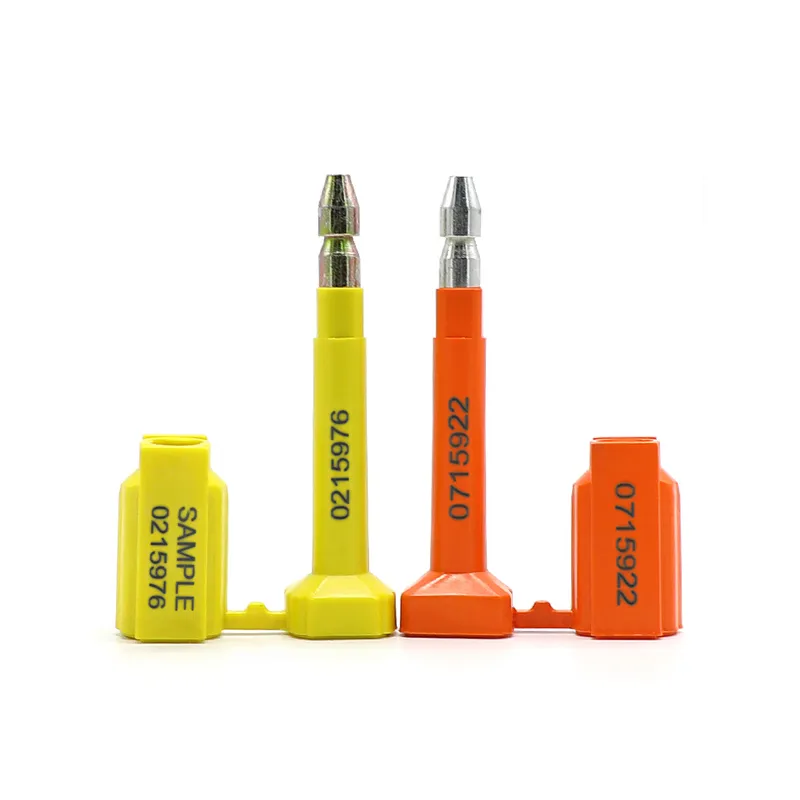
The locking mechanism inside a cable seal relies on a simple principle: a spring-loaded jaw or ball-bearing wedge grips the cable and prevents reverse movement. If the jaw is machined even slightly undersized, or if the spring tension is inconsistent across units, the grip force drops below the rated specification. We have detected this kind of variance during in-house batch audits using a digital force gauge, and the difference between a properly assembled unit and one that barely meets the minimum is often a fraction of a millimeter in jaw travel.
How Assembly Tolerance Creates Locking Failures
Precision matters most where you cannot see it. In a cable seal assembly, the locking insert sits inside a die-cast or machined body. If the cavity that holds the insert is oversized by 0.1 mm, the insert can shift under load and lose its grip angle. I have stood on the production floor and watched operators spot-check assemblies after each mold change precisely because this variance is invisible without measurement. A seal that looks perfect on the outside can still slide open at 40% of its rated tensile strength because of an internal tolerance that nobody checked.
Why Inconsistent Batch Quality Leads to Field Problems
Not every unit in a production run is the same. That sounds obvious, but it surprises buyers who assume ISO 17712 certification means every seal off the line is identical. Certification testing is performed on samples under controlled conditions. The day-to-day consistency comes from process discipline: how often the operator checks the mold temperature, whether the spring supplier changed their wire gauge between shipments, and whether the assembly line runs the same speed on Friday afternoon as Monday morning. When a buyer tells us their last shipment had some seals that worked perfectly and others that pulled open, inconsistent batch control is usually the answer.
Material Selection and Its Impact on Seal Reliability
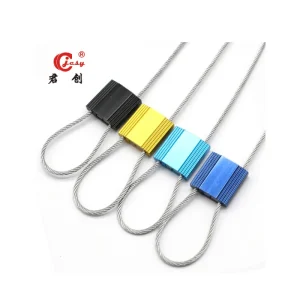
Not all cable seals use the same cable, and the differences in material choice directly determine which environmental conditions a seal can survive. The two most common cable types we produce are galvanized steel wire rope and bare steel, each with distinct trade-offs that affect field reliability.
| Material Type | Corrosion Resistance | Tensile Strength | Typical Application |
|---|---|---|---|
| Galvanized Steel Cable | Moderate—resists moisture and light salt exposure | Up to 10 kN depending on diameter | General container shipping, land transport |
| Bare Steel Cable | Low—rusts quickly in humid or coastal conditions | Same as galvanized at equal diameter | Short-haul, indoor, or budget-sensitive applications |
| Stainless Steel Cable | High—withstands marine and chemical exposure | Slightly lower than carbon steel at equal diameter | Tanker transport, offshore, long-duration outdoor storage |
Galvanized cable handles most container shipping routes without issue, but in salt-heavy environments like Southeast Asian ports or ocean crossings with extended deck storage, we have seen the zinc coating break down within weeks. For those programs, stainless steel cable is the right call, but it costs more and procurement teams sometimes discover the specification was never confirmed at the order stage. The manufacturer should be asking about your exposure conditions, not just quoting a price per thousand.
When Galvanized Coating Is Not Enough
Some buyers assume “galvanized” means rust-proof. It does not. Galvanized cable has a zinc layer that corrodes sacrificially—it protects the steel underneath by corroding first. In continuous salt spray, that zinc layer depletes faster than most people expect. We have run side-by-side outdoor exposure tests on our own products here in Shandong, and the difference between a standard galvanized cable and a heavy-coated one becomes visible in under two months.
What Quality Verification Should Catch Before Shipment
A manufacturer that takes cable seal problems seriously runs verification at three points: incoming material inspection, in-process assembly check, and finished product batch testing. Skipping any of these shifts the burden of defect detection onto the buyer—which means the defect gets discovered in a customs inspection or at the receiving dock.
Incoming inspection should verify cable diameter, coating thickness, and tensile strength of the raw wire before it enters the assembly line. In-process checks verify the locking mechanism engagement force, and we typically sample every two hours during a production run. Finished product testing pulls a statistically valid sample from each batch and runs it to the rated pull-out force. If any unit in the sample fails below the rated specification, the entire batch gets quarantined for 100% re-inspection.
That last step is where corners get cut. Some factories test a handful of units per thousand and ship the rest regardless. When a buyer tells us they received seals mixed between good and bad in the same carton, the most likely explanation is that the factory ran a minimal sample test and did not act on the results.
Choosing a Manufacturer That Prevents These Problems
If your procurement process evaluates cable seal suppliers primarily on unit price and delivery time, you are likely buying from manufacturers who treat quality verification as optional. The factories that produce reliable seals invest in four things you can ask about directly: in-house tensile testing equipment with calibrated records, documented incoming material inspection procedures, batch traceability from raw material lot to finished seal serial range, and a written non-conformance handling process that describes what happens when a batch fails testing.
Ask for pull-test data from your specific order before it ships. Ask how many units per batch the manufacturer tests. Ask whether the locking insert supplier has changed in the last twelve months—because a change in insert source without re-validation of the assembly is a common root cause of suddenly inconsistent lot quality. These questions take five minutes to ask and tell you more about real-world seal reliability than any certification document alone.
Common Questions About Cable Seal Reliability
What is the most frequent cause of cable seal locking failure?
In our production data, the most frequent cause is inconsistent jaw engagement depth. When the locking insert sits slightly too deep or too shallow in the body cavity, the grip on the cable changes even though the assembly looks identical from the outside. This is caught by force-gauge sampling during production, but only if the factory runs those checks at regular intervals.
How can I tell if a cable seal has manufacturing defects before using it?
You cannot catch internal locking defects by looking at a finished seal, and that is exactly the point. Visual inspection will spot obvious issues like a frayed cable end or a cracked body, but a locking mechanism that engages at 60% of rated force looks perfectly normal. The only pre-use verification that matters is requesting the manufacturer’s batch tensile test records for your specific order.
Does a higher tensile strength rating mean the seal is more reliable?
Not necessarily. A seal rated at 10 kN that consistently holds at 10 kN is more reliable than one rated at 15 kN that sometimes slips at 12 kN. The number on the datasheet means nothing without the production consistency behind it. I would rather have a lower-rated seal from a factory that tests every batch to failure than a higher-rated seal from one that tests a few units and hopes for the best.
What environmental conditions cause the most cable seal problems?
Extended exposure to salt spray and wide temperature cycling are the two biggest environmental threats. Salt spray accelerates corrosion on galvanized and bare steel cables. Temperature cycling—hot days and cold nights inside a container on deck—can cause the metal body and cable to expand and contract at different rates, which over time loosens the locking grip in poorly designed assemblies. If your cargo route crosses multiple climate zones, specify your conditions to the manufacturer before they begin production.
Should I worry about cable seal problems if my supplier is ISO 17712 certified?
ISO 17712 certification confirms the seal design was tested by an accredited lab to meet certain mechanical and tamper-evidence standards. It does not confirm that every production batch leaving the factory meets the same standard. Certification says the seal design is capable. Consistent manufacturing says the seal you actually receive performs as designed. Both matter, but only the second one protects your cargo. If your program involves high-value shipments or routes with known theft risk, share your requirements with us at [email protected] or call +86 13853189290, and we will confirm the right cable seal specification and provide batch test documentation before your order ships.
If you’re interested, check out these related articles:
Custom Livestock Ear Tags: A Strategic Guide for Farm Efficiency – Junchuang Lock
Security Seals: Types, Applications, and Tamper Prevention – Junchuang Lock
Cable Seal Manufacturer Selection: Strategic Vetting for Security – Junchuang Lock
Heavy Duty Cable Tie Applications: Industrial Fastening Solutions – Junchuang Lock