
Securing tanker access points with cable seals isn’t as straightforward as locking a container door. The curved hatches, narrow valve loops, and vibration during liquid transport demand a specific cable seal design that standard container seals can’t reliably cover. After years of manufacturing and supplying security seals, our team has found that choosing at least a 3/16 inch steel cable with a corrosion-resistant locking body is the minimum standard for tanker transport. This guide walks through selection, installation, and inspection steps to help logistics buyers get the right cable seal for tankers without overspending on unnecessary features.
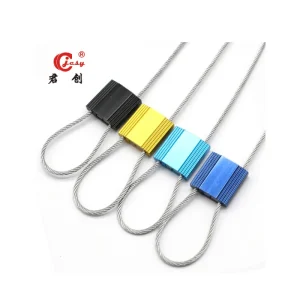
Why Choose Cable Seals for Tanker Transport?
Tanker vehicles and railcars carry fuels, chemicals, edible oils, and other liquid cargo that must be protected from unauthorized access and contamination. The access points — manhole covers, top loading hatches, vapor recovery valves, and discharge outlets — often have irregular shapes or tight openings that bolt seals cannot accommodate. Cable seals are adjustable, allowing the cable to thread through narrow loops and around curved surfaces, and when locked properly they provide a high‑security barrier.
We’ve seen many tanker operators switch from bolt seals after discovering that bolt seals can’t loop through tight valve handles or small hatch eyes. A cable seal’s flexible steel core can be routed through multiple locking points before cinching down, creating a tamper‑evident assembly that must be cut to be removed. This makes it far more practical for the tanker environment while still meeting the security requirements of ISO 17712 when the correct classification is used.
What Should You Check When Buying a Cable Seal for Tankers?
Selecting a cable seal for tanker transport requires more than picking a standard product out of a catalog. Three parameters matter most: cable diameter, cable material/coating, and the locking body design.
Cable diameter directly determines the seal’s resistance to manual cutting and prying. A 3/32‑inch or 1/8‑inch cable may be sufficient for lightweight plastic seals, but on a tanker carrying hazardous material, it is too thin. We recommend a minimum 3/16‑inch steel cable for tanker applications. The extra thickness slows bolt cutter attempts and provides a stronger loop around irregular anchor points.
| Cable Diameter | Typical Breaking Strength | Suitable Tanker Use |
|---|---|---|
| 3/32 inch | ≤400 kg | Light‑duty vapor return connection, non‑hazardous |
| 1/8 inch | 600–700 kg | General hatch sealing, tanker with low risk |
| 3/16 inch | ≥800 kg | Hazardous cargo, long‑haul, high‑theft routes |
| 1/4 inch | ≥1200 kg | High‑security, cross‑border, sensitive chemicals |
Cable material and coating need to withstand exposure to diesel, gasoline, chemical splash, and weather. Galvanized steel cable with a clear PVC coating resists corrosion and also prevents the cable from scratching painted tanker surfaces. If the tanker carries aggressive chemicals, stainless steel cable is the safer option, though it costs more. The locking body should be made of zinc alloy or stainless steel, and must not corrode in a way that could weaken the locking mechanism.
Locking body design matters because tanker vibration can loosen inferior locks. A quality cable seal uses a one‑way roller or ball‑bearing mechanism inside the body that grips the cable irreversibly. At Junchuang Lock, we test locking bodies on a vibration table to confirm they hold under conditions that simulate road transport. If your tanker’s hatch eye has an unusual diameter, standard cable seals may not thread correctly — reach out to us for a custom length and diameter combination.
How Do You Properly Install a Cable Seal on a Tanker?
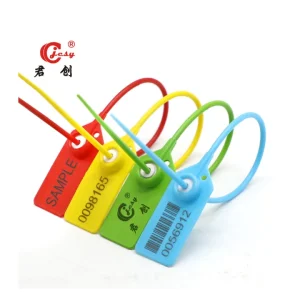
Proper installation is what turns a correct specification into actual security. A rushed or careless locking leads to seals that either fail prematurely or show false tamper evidence.
- Select the correct length. Measure the distance from the first anchor point through all intended locking points and add 3–4 inches for the locking body insertion. A cable that is too short will be difficult to cinch, while one that is far too long creates a loop that can be grabbed by a would‑be thief.
- Thread the cable through all access points. Route the cable through the tanker’s hatch lever, vapor recovery flange, or valve handle. Always include the primary cargo compartment seal point. If the tanker has multiple compartments, use a separate cable seal for each independent compartment.
- Insert the loose end into the locking body. Push the cable into the body as far as it will go. A partial insertion can slip under vibration and is a common installation error.
- Pull the cable tight. Use firm hand force to cinch the seal until the loop is snug against all anchor points. Do not use pliers to pull the cable; over‑tensioning can leave stress marks that are mistaken for tampering later.
- Record the seal number. Immediately record the embossed or laser‑marked serial number on the seal in the shipping manifest. This is the only way to verify that the seal on the tanker at the receiving end is the same seal applied at the loading point.
If the locking body does not grip the cable firmly on the first pull, discard the seal and apply a new one. A seal that slips is not providing any security. We provide installation guides and sample verification to help tanker operators train their loading teams.
How Can You Tell if a Cable Seal Has Been Tampered With?
Inspecting a cable seal on a tanker after transport is straightforward if you know what to look for. An intact seal should show no cuts, stretched sections, bent cable, or discoloration around the locking body.
- Cable cuts or partial saw marks. Even shallow cuts indicate a tamper attempt. A cut-through cable that has been re‑threaded through the locking body will show a fresh cut edge that catches a fingernail.
- Stretched cable. If the cable diameter narrows at one point, it has been stretched by a pry tool. This is common on thinner cables.
- Locking body damage. Dents, scratches, or corrosion around the entry hole suggest someone tried to force the cable out.
- Serial number mismatch. Verify the number on the seal matches the one recorded at loading. A substituted seal is the simplest way to hide tampering.
- Abnormal slack. A seal that was tight at loading but loose at delivery may have been removed and re‑applied.
I advise buyers to train drivers and receiving personnel to photograph both sides of the seal immediately upon arrival. This creates a record and makes tampering harder to conceal.
What ISO 17712 Standards Apply to Tanker Cable Seals?
ISO 17712 classifies freight security seals into three categories: “I” (Indicative), “S” (Security), and “H” (High Security). For tanker transport of hazardous materials or high‑value liquid cargo, the “H” classification is the standard. An “H” seal must pass tensile strength tests and meet specific tamper‑evidence criteria that prevent the seal from being opened and re‑locked without leaving visible signs.
Most tanker operators in international shipping fall under regulations that require at least an ISO 17712 “S” seal, but customs authorities in many countries now expect “H” seals on tankers crossing borders. A cable seal with a 3/16‑inch steel cable and a roller‑type locking body typically qualifies for “H” when manufactured under a certified quality management system.
At Junchuang Lock, we hold ISO 17712 certification for our high‑security cable seals and make the test reports available to buyers before they place an order. If your tanker operation needs to demonstrate compliance to a third‑party auditor, request the certification documents when you inquire about a custom seal run.
Common Questions About Cable Seals on Tankers
Can cable seals be reused on tankers?
No. Cable seals are single‑use and must be cut to be removed. Reusing a cable seal would defeat the tamper‑evidence function, and any attempt to disguise a previously cut seal leaves marks that are easy to spot under inspection. Always apply a new seal for each loaded trip.
What if my tanker hatch eye is too small for a 3/16‑inch cable?
This is a common issue with older tankers or small‑diameter valve handles. In these cases, a 1/8‑inch cable with a high‑tensile steel core and a robust locking body can still provide adequate security, but it should be paired with additional documentation and inspection protocols. We can produce custom cable seals in 1/8‑inch diameter with the same locking integrity as our standard 3/16‑inch models. Share your application requirements and we’ll confirm the right configuration.
Is a cable seal better than a bolt seal for tankers?
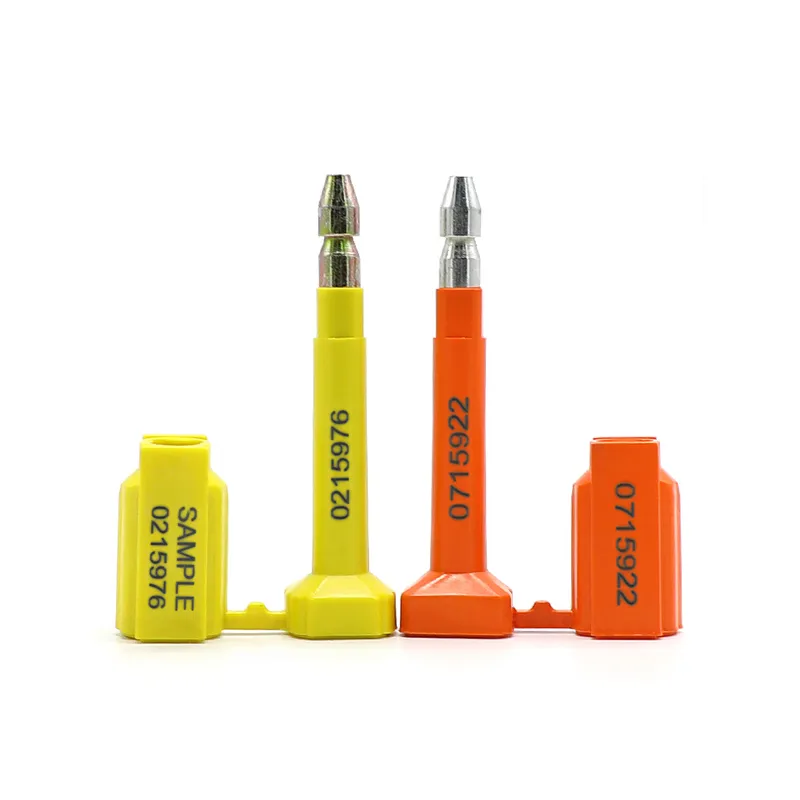
It depends on the access points. Bolt seals are appropriate for container doors with standard hasp dimensions, but tankers have far more varied and smaller attachment points. A cable seal is adjustable and can be threaded through multiple loops, while a bolt seal works only where the hasp is wide enough to accept the bolt shaft. For tankers, we generally recommend cable seals unless the tanker design explicitly accommodates a bolt seal on the main cargo hatch.
Do I need a high‑security seal for non‑hazardous tanker loads?
Not always by law, but in practice, many insurance policies and shipping contracts for liquid cargo require “H”‑rated seals regardless of the cargo type. Using the same higher‑grade seal across your fleet simplifies training and inventory, and it eliminates the risk of downgrading the seal by mistake. We help buyers balance cost and compliance by offering “H” seals in bulk at the same unit price as “S” seals when the order quantity meets a certain threshold.
How long should a cable seal last in transport?
A properly installed cable seal will remain intact for the entire truck or rail journey — days or weeks — without failure due to vibration or weather. However, if the tanker is exposed to extreme salt spray or chemical drips, we recommend inspecting the seal at every intermediate transfer point. Our stainless‑steel cable seals have held up for more than six months in marine environments, but a visual check at critical waypoints gives an extra layer of confidence. For consistent performance across tanker fleets, share your application details and we’ll verify the best seal configuration — send us an email at [email protected].
For tanker cable seals with a reliable locking mechanism and precise cable lengths, send your specifications to [email protected] or call +86 13853189290. We’ll recommend the right seal for your tanker transport needs.
If you’re interested, check out these related articles:
How to Choose High Security Bolt Seals: Key Criteria for Supply Chain Safety – Junchuang Lock
Comprehensive Meter Seal Installation Guide for Industrial Security – Junchuang Lock