
Industrial security doesn’t start with a lock or a camera. It starts with the smallest intentional detail: a cable seal that tells you instantly whether a container, valve, or warehouse door has been opened after closure. Cable seals are one of the most widely deployed tamper-evident devices in logistics, utilities, and heavy industry. But a cable seal’s real security value isn’t in its wire—it’s in the manufacturing discipline behind its locking insert, the material consistency of its steel, and the process controls that ensure every seal performs identically. In over fifteen years of producing security seals, I’ve watched organizations rely on seals that were never designed for the environments they face. A manufacturing weakness in a 2-cent stamping becomes a supply chain risk worth thousands of dollars. This article walks through choosing, applying, inspecting, and sourcing cable seals so that industrial security isn’t a hope—it’s a repeatable process.
How Cable Seals Secure Industrial Assets
A cable seal does one job: it passes a steel cable through a closure point, locks irreversibly, and gives any tampering attempt a visible, permanent mark. The core security mechanism is the combination of a hardened steel body and a precisely engineered locking insert that grips the cable with enough force that any withdrawal effort either snaps the cable or leaves deformation marks on the insert. That’s why the tamper evidence is not an add-on printed label but an inherent physical consequence of opening the seal.
In industrial applications, cable seals are used to secure container doors, tanker hatches, warehouse rolling gates, electrical meter boxes, and even valve handles on oil and gas equipment. The common thread is the need for reliable, documented closure that can be verified by on-site personnel and upstream audit teams. Unlike bolt seals, which demand a bolt cutter for removal, cable seals are typically removed with heavy-duty cable cutters, but they can be designed to resist a specific pull force threshold—some models reaching tensile strengths above 2,000 kgf before the cable fractures. Industrial environments with vibration, weather exposure, and repeated handling require cable seals that maintain locking grip and readable numbering across the seal’s full service life.
Selecting the Right Cable Seal for Industrial Security Demands
Not all industrial cable seals are the same, and the biggest mistake I’ve seen in procurement is choosing a seal based solely on price and diameter. The cable seal selection process must match three operational parameters: security level, environmental exposure, and traceability requirements.
Cable diameter and strength. The cable itself is typically steel wire rope in diameters ranging from 1.5 mm to 5.0 mm. A thicker cable increases cut resistance, but it also requires a larger locking cavity and may not fit through small hasps or valve openings. For securing standard ISO containers, a 3.0 mm or 4.0 mm aircraft-grade galvanized steel cable is common. For tanker truck valves that require frequent opening and resealing, a lighter 2.5 mm cable may suffice. The critical factor isn’t just the diameter but the construction—braided multi-strand cables resist side-cutters better than solid single-strand wire.
Locking mechanism design. The best cable seals use a tapered locking collet that bites progressively as the cable is tensioned. I’ve tested seals where the insert was a simple stamped clip; they could be wiggled loose with pliers in under a minute. For industrial high-value cargo, always insist on a multi-jaw locking mechanism that provides 360° grip on the cable circumference. This design prevents the seal from rotating and being walked off the cable slowly.
Environmental durability. In petrochemical plants or coastal port environments, standard carbon steel cable coatings can degrade within months. Galvanized and PVC-coated cables resist corrosion, but the locking body material matters equally. Aluminum alloy bodies with anodized coatings hold up in salt spray far better than zinc alloy bodies. If your seals will sit on outdoor containers in monsoon season, the UV resistance of the plastic cable jacket and the integrity of laser marking on the body become non-negotiable.
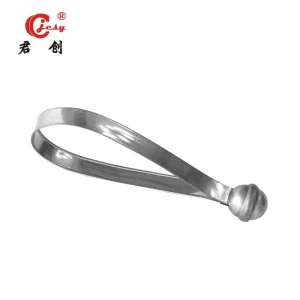
Traceability features. Industrial security relies on chain of custody. Each cable seal should carry a unique sequential number and, when needed, a barcode or QR code. At our factory, we laser-engrave the seal body and print matching barcode labels that survive outdoor exposure without fading. This allows a warehouse supervisor to scan and log seals at departure and arrival, creating a digital audit trail that sidesteps manual logbook errors.
If your industrial program involves mixed cargo types with different closure sizes, verifying the maximum jaw opening and cable length against your equipment dimensions is essential before placing a bulk order. This is where a direct conversation with the manufacturer can save procurement delays.
Proper Installation Techniques for Tamper Evidence
A cable seal is only as secure as its installation. The most expensive locking mechanism can’t compensate for a seal left loose or installed backward.
Begin by feeding the cable end through the closure points—usually door handle loops, valve stems, or hasp staples. Pull the cable through until all slack is taken up, then insert the protruding end into the locking body and pull firmly. The locking insert engages immediately, but a second firm pull ensures the jaws are seated into the cable strands. Do not leave any excess cable length that could be cut and the seal removed without evidence; the seal should be tight enough that no tool can be inserted under the cable loop.
A common field error is installing the seal with the numbering facing inward or downward, where it’s hard to read. The seal body should be oriented so the number is visible without manipulation, ideally photographed during installation. This speeds inspection and deters substitution—a worker can quickly verify that the seal photographed at origin matches the seal on the receptacle.
After installation, record the seal number and location on a seal log. In many industrial facilities, seals are treated as consumables with no documentation, but that undermines the entire security function. The seal log becomes evidence in an insurance claim or a theft investigation.
Field Inspection and Maintenance That Sustain Security
Cable seals don’t need routine maintenance, but they do need consistent inspection. A seal log that only contains the seal number at departure is incomplete. Arrival inspection must include these checks:
- Does the seal number match the shipping manifest and departure photo?
- Is the cable under tension with no slack?
- Are there any scratch marks, deformation, or glossy surfaces on the locking body that suggest tool engagement?
- Has the cable coating been abraded in a way that might conceal tampering?
- Is the seal body cracked or discolored, indicating heat or chemical exposure?
One pattern I’ve observed in field reports: tampered seals often show a slight rotational movement of the locking insert relative to the body—a sign that someone attempted to retract the cable. Train inspection staff to look for rotational marks, not just cuts. If any anomaly is found, the seal must be retained as evidence and the incident documented with time-stamped photos before the container is opened.
In busy warehouse operations, seals on rolling stock should be visually checked daily. For stationary containers in laydown yards, weekly inspection is normally sufficient unless weather events demand post-storm verification.
The Manufacturing Quality Behind Reliable Cable Seal Performance
What separates a cable seal that holds up in a tropical port for six months from one that fails in three weeks is not the marketing spec sheet. It’s the invisible manufacturing quality: the hardness of the locking insert steel, the consistency of cable galvanization, and the precision of the crimping station that assembles the body.
At our production facility, cable seals undergo a destructive pull test on every production batch—not just sample lots. The cable is loaded into a tensile tester and pulled to failure; the breaking force must meet or exceed the rated tensile strength within a defined tolerance band. Locking inserts are hardness-checked using a Rockwell tester, and any shift in raw material batch requires recalibration of the assembly machine’s pressing force. These aren’t optional steps; they’re the difference between a seal that delivers 2,000 kgf of break strength and one that separates at 1,200 kgf without warning.
I’ve also seen procurement teams focus exclusively on ISO 17712 certification without reading the test report. The standard requires a minimum tensile strength of 227 kgf for “high security” seals, but that’s a floor, not a ceiling. Industrial applications demanding cutter-resistant seals often require 10 times that value. Ask your manufacturer for the actual test data, not just the certificate number.
Customization is another factor that can enhance security but can also become a weakness if poorly executed. Hot-stamping or pad printing on the seal body with low-grade ink that fades means the traceability element is lost. Laser engraving and anodizing the marking provide permanent readability that survives chemical washdowns and UV exposure. If you’re ordering custom seals with company logos and sequential numbering, request a pre-production sample and test it in your actual environment before approving the full run.
Partnering with a Manufacturer That Understands Industrial Security
The reality of industrial security is that no seal is unbreakable. A determined attacker with an angle grinder can defeat any cable seal. The goal is to make tampering immediately detectable and to build a system where seals are tracked, verified, and replaced on a disciplined schedule.
Choosing a manufacturer that considers your operational context—rather than just shipping a catalog product—makes a measurable difference in reliability. Whether you need seals for oil tanker valves, cross-border freight containers, or warehouse inventory cages, the starting point is a conversation about cable diameter, locking mechanism design, environmental exposure, and traceability integration.
If you’re developing a security protocol that involves cable seals and need to confirm tensile ratings, corrosion resistance, or customization options for a specific industrial environment, send your requirements along with cable diameter preference and quantity to [email protected] or call +86 13853189290. We’ll review your application and provide test data and samples so you can validate performance before deployment.
Common Questions About Cable Seals in Industrial Applications
Can cable seals be reused in industrial settings?
No, by design cable seals are single-use. The locking insert permanently deforms the cable and the internal gripping jaw so that any removal attempt leaves marks that cannot be reset. Attempting to reuse a cable seal would mean the locking mechanism cannot grip reliably a second time, so the tamper evidence function is lost. In industrial logistics, using disposable seals with unique numbers is the foundation of a verifiable chain of custody.
How do cable seals compare to bolt seals for container security?
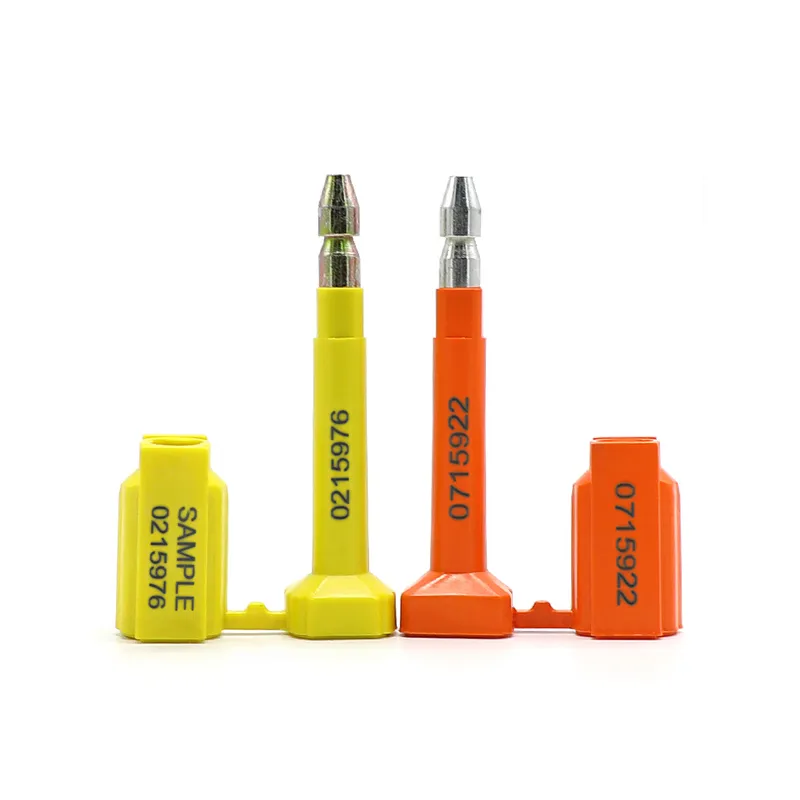
Bolt seals provide a solid steel locking pin that requires bolt cutters for removal and typically offers higher shear resistance. Cable seals, on the other hand, are adjustable and can fit a wider range of hasp sizes and irregular closure points. For ISO shipping containers under customs seal programs, bolt seals are often required because of their higher physical barrier. For industrial valve sealing, warehouse doors, and tankers where flexibility and traceability matter more than brute force, cable seals are more practical.
What makes a cable seal ISO 17712 compliant?
Compliance means the seal has passed independent laboratory testing for tensile strength (minimum 227 kgf for high security), shear resistance, bending, and tamper-evidence characteristics as defined by the standard. Additionally, the manufacturing facility must maintain quality control documentation and marking traceability. True compliance is auditable: the seal body carries the manufacturer’s identifier and the certificate number links to a specific test report.
Does extreme weather affect cable seal performance?
Yes, over time weather can degrade the cable coating and locking body if the wrong materials are chosen. Galvanized steel cables with PVC coating resist rust and moisture ingress, while aluminum alloy lock bodies with anodized finish hold up in salt fog. In subzero temperatures, plastic components can become brittle, so metal-bodied seals with stainless steel locking inserts are preferred for cold-chain logistics or arctic operations.
Should I order custom cable seals with company branding for industrial use?
Customization adds a layer of security because a seal with your logo and sequencing is harder to counterfeit on short notice. But it only works if the marking is permanent. Laser engraving and anodizing are more durable than pad printing or inkjet, especially in outdoor or chemical environments. If you are ordering custom seals, ask the manufacturer for a few pre-production samples and leave them exposed to your actual operating conditions before approving the batch. For guidance on selecting durable custom cable seals that match your industrial application, share your requirements and we’ll discuss material options and marking methods.
If you’re interested, check out these related articles:
Wholesale Plastic Seals for Trucking: Secure Your Fleet – Junchuang Lock
Cable Seal Factory Direct Pricing: Strategic Procurement Guide – Junchuang Lock
Optimizing Bolt Seal Storage: A Guide to Secure Handling – Junchuang Lock
China Plastic Security Seal Factory: Sourcing Guide & Solutions – Junchuang Lock