
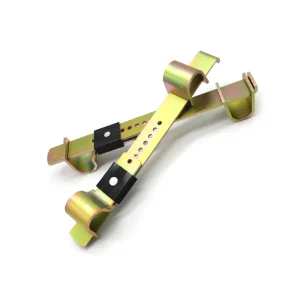
What Qualifies a Barrier Seal as High Security?
A high security barrier seal must meet specific tamper resistance and strength requirements that go beyond what a standard seal offers. The industry benchmark is ISO 17712, which classifies seals into three categories: indicative, security, and high security. To earn the high security rating, a barrier seal must pass rigorous tests for tensile strength, shear strength, and bending resistance. In practice, the locking mechanism plays a decisive role. Barrier seals use a snap-in ball-lock design—once the tail is inserted into the body, the steel balls lock irreversibly, making extraction without visible damage nearly impossible.
Material selection matters just as much as the locking design. The body is typically constructed from heavy-duty ABS or polycarbonate, while the locking insert is hardened steel. On the production floor, I require that every batch of raw ABS material arrives with a certification sheet; if the impact resistance rating falls even 5 percent below specification, we send it back. That discipline is what separates a seal that holds during a rough ocean crossing from one that cracks under minor impact.
How Can You Verify a Barrier Seal Manufacturer’s Quality Controls?
Reliability starts on the factory floor, not in the marketing brochure. When I walk a buyer through our production line, I point to three specific checkpoints: incoming material inspection, in-process pull testing, and final random audit sampling. An ISO 17712 certificate alone is not enough—plenty of factories hold a certificate but fail to maintain consistent quality. You need to ask whether the manufacturer performs tensile testing on every production batch and whether they keep serialized batch records that you can trace back to a specific shift and machine.
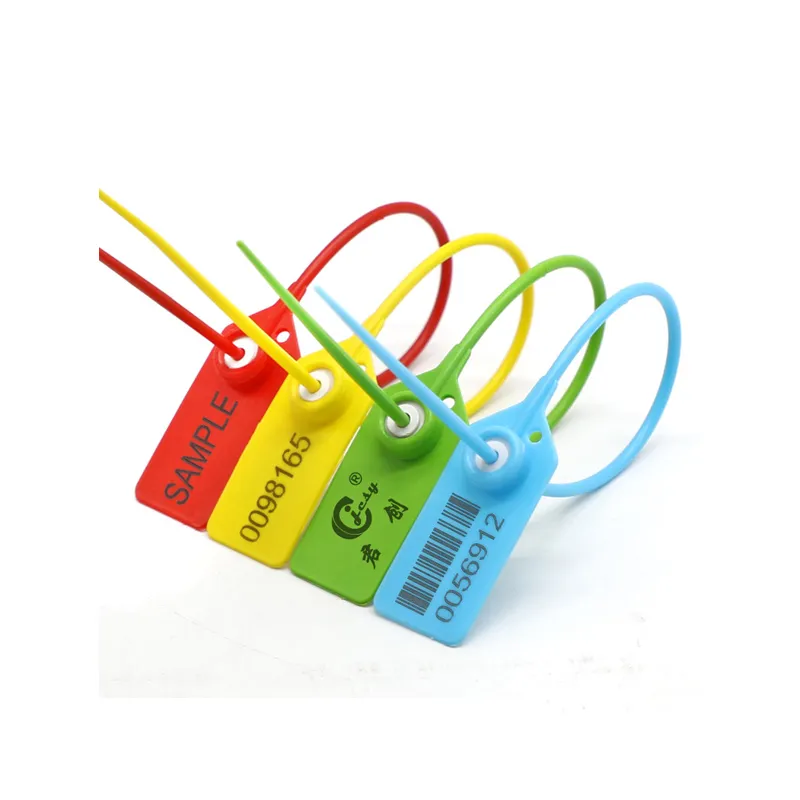
What Certifications Should a Manufacturer Have?
At minimum, the factory should hold an ISO 9001 quality management system certification, and if they claim high security seals, they must produce an independent lab report confirming ISO 17712 compliance for the specific model you’re buying. Check the lab’s accreditation—reports from uncertified local test houses carry little weight. I recommend requesting a copy of the most recent third-party test certificate, not a generic one from five years ago. If the supplier hesitates, that’s a red flag.
How to Assess Production Consistency
Consistency is the harder metric. A factory may produce a perfect sample batch but start cutting corners when a large order comes in. On my own lines, we run a tensile test on every 500 pieces and log the results. If the breaking point starts trending downward even slightly, we stop and recalibrate the molds before shipping. When evaluating a supplier, ask to see these trend logs. If they don’t exist, you are gambling on a promise.
What Customization Options Matter for Wholesale Barrier Seal Orders?
Customization often becomes a cost trap if you don’t define your needs clearly upfront. The two high-value customization areas are marking and serial numbering. Laser engraving or hot stamping your company name, logo, and a unique sequential number on each seal improves traceability dramatically. Many buyers also request custom colors for quick visual identification of cargo routes or security levels. However, color additives can slightly affect the plastic’s mechanical properties, so any custom color should be tested in a sample batch before full production.
Standard Marking vs Custom Printing
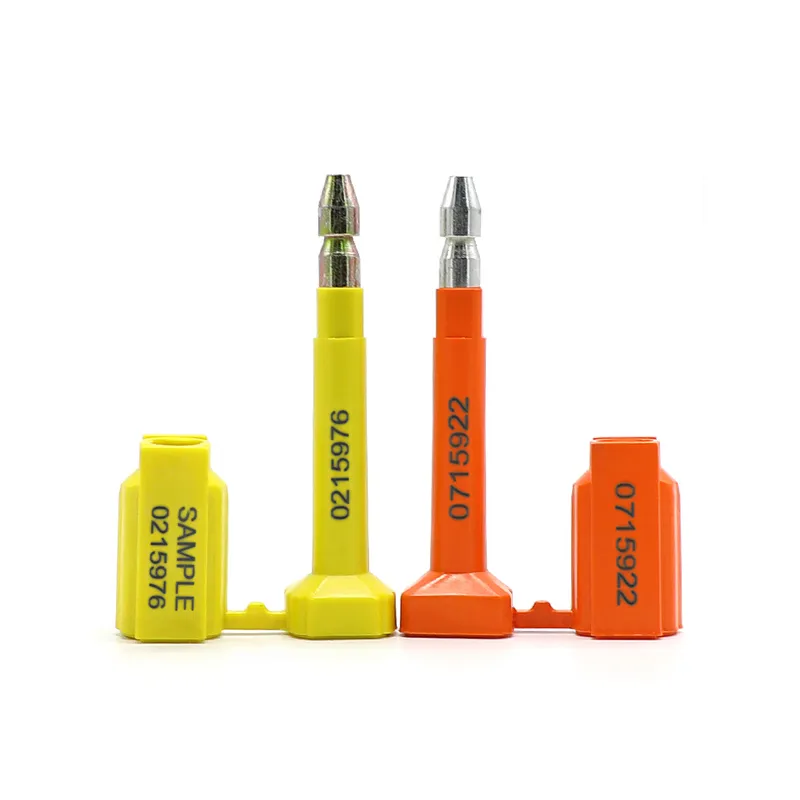
Standard marking usually means a supplier’s generic mold text, often limited to a simple “SECURITY” stamp. Custom printing requires making a new mold or engraving setup, which adds a one-time tooling cost but provides permanent branding that cannot be removed. For long-term importers, that upfront cost pays back in both brand presence and reduced substitution risk.
Serial Numbering and Traceability
Serial numbering is the single most valuable security upgrade for a wholesale order. When each seal carries a unique number, your receiving team can log it immediately and verify against the packing list. In my experience, even a simple numeric sequence has helped several logistics clients identify where in the supply chain a tampering attempt occurred, because the missing seal number pointed to a specific stop. Without numbers, you see a broken seal but have no trail to follow.
If your operation involves multi-country transit routes and high-value cargo, it is worth confirming the factory’s ability to maintain sequential numbering without gaps across large batches—reach out at [email protected].
How Does Wholesale Pricing Work for High Security Barrier Seals?
Wholesale pricing follows a predictable curve but has hidden variables. The base cost is driven by material grade, locking mechanism complexity, and order quantity. A minimum order quantity of 10,000 pieces is common, with per-unit prices dropping steeply at 50,000 and 100,000 units. However, I caution buyers against letting unit price be the only decision factor. A barrier seal manufactured with lower-grade ABS and unhardened steel locking balls might be offered at a 30 percent discount but will fail ISO 17712 high security tests and, more critically, will not survive real-world tampering attempts.
Additional cost factors include: whether the mold already exists or needs to be created, the type of printing (laser is more expensive than hot stamp but more durable), and packaging requirements such as individual barcoding and export-grade cartons. Direct factory orders eliminate intermediary markups, but you need to verify the factory is the actual producer, not a trading company that sources from multiple workshops. A simple test: ask for a video call showing your seals being produced on their line. If they cannot show you the machines running, you are likely adding a middleman cost for nothing.
What Post-Order Steps Ensure Long-Term Supplier Reliability?
The relationship doesn’t end when the container ships. You need to implement a receiving inspection protocol that mirrors the factory’s own checks. I recommend that buyers randomly pull at least 20 seals per thousand, test the lock engagement and tensile pull by hand, and verify the laser engraving matches the purchase order exactly. If you find more than one defective seal in that sample, the entire batch should be held for deeper inspection.
Beyond each shipment, maintain a supplier scorecard. Track on-time delivery, defect rate, responsiveness to questions, and willingness to provide production records. The most reliable partners I work with are the ones who share batch test data without being asked. If your current supplier treats that data as confidential or irrelevant, you may be closer to a supply chain failure than you realize.
Common Questions About Wholesale High Security Barrier Seals
Why should I choose a barrier seal instead of a bolt seal for high security?
Barrier seals offer an advantage in speed of installation and the ability to verify the locking mechanism visually without extra tools. In operations where trailers are sealed and unsealed multiple times a day, a barrier seal’s one-push lock saves measurable time. Bolt seals provide higher absolute tensile strength, but barrier seals have become the preferred choice for many truck and trailer applications because they balance strength with operational convenience. If your route includes stops where drivers must check the seal quickly, a barrier seal is the practical winner.
How can I spot a counterfeit high security barrier seal?
Counterfeits often reveal themselves in three ways. First, the ABS body feels lighter or has a glossy, cheap-looking finish instead of a matte, textured surface. Second, the locking steel balls may be nickel-plated instead of hardened steel; you can test this with a magnet—hardened steel balls will attract strongly, while lower-grade balls may not. Third, the serial numbering will show uneven spacing or shallow engraving that wears off with a fingernail scratch. Whenever I receive a production sample from a potential factory, I cut open the body to check the internal locking mechanism. If you are not equipped to perform that level of inspection, request a cut-away sample from the supplier and compare it to a known-good seal.
What is the realistic lead time for a custom wholesale order?
For a standard barrier seal with existing molds and just a logo change, production typically takes 10 to 15 days after artwork approval. If a new mold is required, add 15 to 20 days for mold fabrication and first-article approval, plus another week for color matching if custom colors are specified. Shipping by sea from a Chinese port to a major destination port adds roughly 20 to 30 days. So a new-custom order can take 60 to 75 days door to door. Planning well ahead of your security seal inventory running low avoids the pressure of accepting rush production that may skip quality steps.
Do I need ISO 17712 certification for every country?
Most customs authorities and international shipping lines accept ISO 17712 as the global benchmark, but the U.S. Customs-Trade Partnership Against Terrorism (C-TPAT) specifically requires high security seals meeting ISO 17712 for containerized cargo entering the United States. Other regions often follow the U.S. lead, even if not legally mandated. As a manufacturing matter, we produce all barrier seals to ISO 17712 high security standards regardless of destination because it is easier to maintain one production quality than to switch between compliance levels. That consistency is something you should verify with any supplier.
Can I get samples before committing to a wholesale order?
Yes, and you absolutely should. A reputable factory will send free or low-cost samples with your custom markings, typically within 3 to 5 days. I have often sent samples to buyers who then performed their own pull tests and cut-away inspections, which built the trust needed for the wholesale order. When requesting samples, ask for at least 10 pieces so you can test five and keep five for future quality reference. Compare the sample’s weight, feel, and locking action against any competitors’ samples you have. If a factory refuses to send samples or wants to charge an unreasonable fee, treat that as a signal about how they will handle larger commitments. Share your specific requirements at [email protected] or via WhatsApp at +86 13853189290, and we can arrange a sample set that reflects exactly what you would order in bulk.
If you’re interested, check out these related articles:
Cable Seal Versus Bolt Seal: Definitive Guide to Cargo Security – Junchuang Lock
Finding Trusted Cable Seal Exporters: A Strategic Procurement Guide – Junchuang Lock
Custom Livestock Ear Tags: A Strategic Guide for Farm Efficiency – Junchuang Lock
Security Seal Pricing Guide: Unveiling Factors Affecting Your Investment – Junchuang Lock
Security Seal Tensile Strength Testing: Ensuring Supply Chain Integrity – Junchuang Lock