
Truck trailer security seals fail in predictable ways. A plastic pull-tight seal that works on a warehouse door can snap when a trailer frame twists on a rough road. A cable seal without unique markings leaves no record when it is replaced along the route. After fifteen years of manufacturing and observing trailer seal failures, I treat every trailer seal as a handoff document, not a cheap tag. This guide covers the seal types that survive trailer service, the spec points that matter in procurement, and the checks that separate a dependable trailer seal from one that only looks secure. For most highway trailer loads, the practical choice is a numbered ISO 17712 high security seal with a recorded handoff at every stop.
What Seal Types Hold Up on a Truck Trailer?
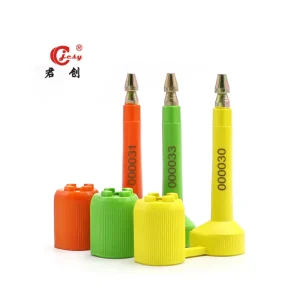
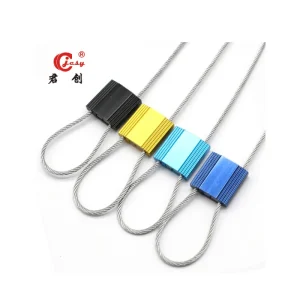
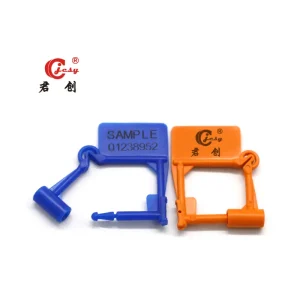
Most truck trailer security seals fall into three groups. The first group is plastic pull-tight seals. They are light, inexpensive, and easy to number, but they are indicative. A determined thief can cut the tail or break the locking jaw with pliers. The second group is cable seals. They fit adjustable hasps and tanker valve handles, and they give more tensile resistance than plastic. The third group is bolt seals. They carry the highest strength and are built for container doors and long cross-border hauls. I do not recommend a plastic seal as the only protection on a trailer carrying high-value cargo; it is an audit record, not a barrier.
| Seal type | Fit on a trailer | Best use | Typical failure mode |
|---|---|---|---|
| Plastic pull-tight | Narrow hasp holes, roll-up doors | Local delivery, empty return tracking | Tail slips, jaw splits |
| Cable seal | Adjustable hasps, tanker valves | Bulk cargo, intermodal, long-haul | Cable cut, lock insert slips |
| Bolt seal | Container door rods, wide hasps | High-value loads, cross-border | Bushing binds, pin bent |
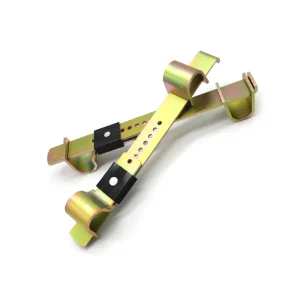
| Metal strap seal | Rail frames, high-impact doors | Heavy industrial loads | Strap creases, lock mark wears |
Why plastic seals are only the first layer on a trailer
I have seen trailers arrive with the plastic seal missing and the driver unable to say where it happened. The seal was never logged on the bill of lading, so the loss went unnoticed until the receiving dock flagged it. Plastic seals work as a first layer only when the number is printed on the paperwork and checked at every handoff. Without that record, the seal is just a piece of colored plastic on the door.
When a cable seal makes more sense than a bolt seal
Cable seals earn their place on trailers with irregular latch spacing, side doors, or tanker valves where a rigid bolt cannot pass through the closure. I have tested cable seals on dome covers and rear door hasps; the adjustable cable lets the driver pull the loop tight, which reduces flapping and false tamper marks. For container doors with standard rod locks, a bolt seal is still the stronger choice.
What Should a Trailer Seal Spec Include?
Before you ask a factory for pricing, write the spec. A trailer seal is not a generic item. The minimum fields are seal type, wire or pin diameter, locking mechanism, marking format, color, and compliance class. We produce run sizes from a few hundred for a private fleet to millions for logistics buyers, and the same fields apply. A supplier cannot quote accurately without the closure dimensions and the required print file.
What serial numbering does for trailer handoffs
Numbering changes how a seal behaves in a dispute. A number that matches the delivery note gives the receiving dock something to verify. A repeat number or no number leaves a gap. I have handled replacement orders where the customer only discovered duplicate numbers after a freight claim was denied because the load could not be tied to the seal record.
What ISO 17712 classifications mean in a spec
ISO 17712 divides seals into indicative, security, and high security classes. The high security class requires tamper resistance and strength testing beyond a simple plastic tag. If your trailer crosses borders or moves high-value cargo, put the H classification in the purchase order and ask the factory for the test certificate. A certificate is not decoration; it is the record that connects the seal batch to the standard.
If your trailers use narrow hasps, offset hinges, or mixed seal points, confirm the hasp opening and seal diameter before you finalize the spec. Send a door photo and your part number format to [email protected] and we will check the fit. A seal that does not sit cleanly in the hasp will fail the first time a driver forces it closed.
How Do You Check a Manufacturer Before a Bulk Order?
A factory can print a nice catalog and still ship mixed batches. I judge a supplier by the physical sample, not the website. Request three samples from the same batch. Cut one apart, pull one to failure, and keep one for the approval record. The cut sample shows whether the internal locking insert is seated correctly. The pulled sample shows whether the claimed tensile strength is real.
- Compare the markings against your approved artwork under magnification.
- Cut the locking end and inspect the jaw or insert.
- Pull the seal to failure and record the break point.
- Weigh and measure a sample group for consistency.
Which production records matter for repeat orders
Ask for the in-process inspection sheet, the final lot sample record, and the material batch record. If the factory cannot produce them, you are buying from a trading desk, not a manufacturer. I have had repeat orders where a material change was only caught because the batch record showed a different polypropylene source with a lower cold impact rating. The seals looked the same and failed in winter.
What Does It Cost to Get Trailer Seals Right?
Trailer seal prices move with four factors: material, marking complexity, security class, and order size. A numbered high security bolt seal costs more than a blank plastic pull-tight seal, and it should. The cost difference is in the locking mechanism, the print plate, and the test documentation. When I quote a truck trailer security seal program, I ask the buyer to price the seal against one stolen load. A $0.20 plastic seal can protect a $60,000 trailer only as a record. A $1.50 bolt seal can hold the door closed. Both are cheap compared with a missing truck.
Why the cheapest trailer seal is usually the most expensive one
Cheap seals fail in two ways. They either snap easily, or they are so poorly marked that nobody uses the record. I have seen a fleet switch to an unbranded gray plastic seal to save a fraction of a cent per unit, then lose an entire delivery claim because the receiving dock could not confirm which seal was on the trailer. The saving disappeared in one incident.
Trailer security should not depend on a driver remembering to lock a door. When you are ready to fix the seal spec, send your trailer door photos, part number format, and annual quantity to [email protected] or call or WhatsApp +86 13853189290. We will confirm the seal fit, numbering format, and lead time before you place the order.
Which Questions Do Buyers Ask About Truck Trailer Security Seals?
Do truck trailer seals need to be ISO 17712 high security?
High security ISO 17712 seals are worth specifying whenever the trailer carries high-value cargo, crosses a border, or moves through high-theft terminals. The standard sets minimum requirements for strength and tamper evidence. For local empty return runs or light parcel trailers, a numbered security or indicative seal may be enough, but only if the handoff record is disciplined. The seal class matters less than the process around it; a high security seal with no recorded inspection is still a gap. If you are not sure which class fits your lane, share the route and cargo type with us.
What is the difference between a bolt seal and a cable seal on a trailer?
Many buyers assume cable seals are always the lighter option. That is only partly true. A bolt seal has a rigid pin and bushing that locks inside a receiver, and it resists cutting better than most adjustable cable seals. A cable seal fits closures where a rigid pin cannot pass through, such as tanker valve handles or side door hasps. For standard rear container doors, bolt seals are the stronger choice. For oddly spaced latches or valve covers, cable seals work better. The decision should follow the closure, not the price.
How often should trailer seals be inspected during transit?
It depends on the lane and the number of stops. On a sealed cross-border move with no intermediate stops, the receiving dock usually performs the first meaningful check after loading. On a multi-stop route, the driver should check the seal at every pause and compare the number against the paperwork. I have seen fleets add a photo timestamp at each handoff, which turns the seal check into a simple record. At minimum, check the seal before rolling and at every transfer. A missing seal found hours later is a claim problem, not prevention.
Can trailer seals be printed with a company name and sequential numbers?
The better question is not whether marking is possible, but whether the marking survives the route. Laser marking on a metal bolt seal holds up better than ink on soft plastic. We print company names, logos, barcodes, and non-repeat serial ranges on plastic, cable, and bolt seals, but the material matters. If the seal body flexes, the print should be molded or laser-etched, not surface-inked. Request a sample with your actual barcode and check it after sun and vibration. Share your trailer door photos and annual quantity at [email protected] or +86 13853189290 and we will confirm the fit, numbering format, and delivery time.
If you’re interested, check out these related articles:
Plastic Seal Manufacturer Selection: A Strategic Procurement Guide – Junchuang Lock
Bolt Seal Quality Inspection: Safeguarding Cargo & Compliance – Junchuang Lock
Heavy Duty Cable Seal Manufacturer Guide: Global Security Standards – Junchuang Lock
Container Security Seals: Preventing Theft & Ensuring Integrity – Junchuang Lock
Cable Seal Manufacturer Selection: Strategic Vetting for Security – Junchuang Lock