
Container cargo moves through multiple custody points between factory and consignee, and every handoff is a moment when tampering can hide in plain sight. Security seals in international shipping do one job well: they force any unauthorized access to leave visible evidence. The practical question is which seal to use, what standard it must meet, and how to inspect it so the evidence is actually caught. For cross-border container freight, my default position is that an ISO 17712 high-security bolt seal with a recorded serial number at every handoff is the minimum credible baseline, not an optional upgrade.
How Do Security Seals Protect Cargo in International Shipping?
A security seal does not stop a determined thief. What it does is move the cost of tampering from silent to visible. In international shipping, a container moves through loading, customs, transshipment, and final delivery, and at each point a different party signs for the cargo. A numbered high-security bolt seal means the receiving party can compare the number on the paperwork against the number on the door before accepting the container.
The seal only works when three things line up: the serial number matches the shipping documents, the seal body shows no cuts or stretching, and the person receiving the cargo actually looks. When any one of those fails, the seal becomes a formality rather than a control. I have walked production lines where seals were marked, packed, and dispatched in correct sequence, and the real failure point was almost never the seal itself. It was a handoff where nobody paused to compare numbers.
Which Seal Type Fits Your Cargo and Route?
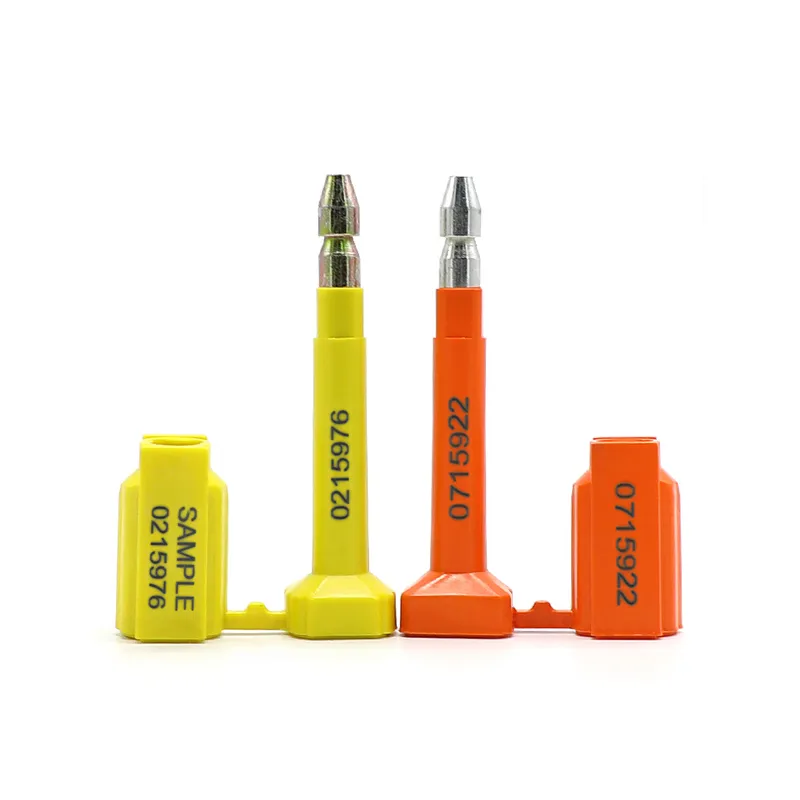
Security seal selection starts with the question of what you are trying to prove. A bolt seal proves that container doors stayed closed between two recorded inspections. A cable seal proves the same for irregular openings such as tanker valves, rail wagon doors, or underdeck boxes where a fixed-length bolt cannot fit. A plastic pull-tight seal proves custody at a lower level, useful for cartons, consolidated loads, or internal warehouse transfers.
The table below shows how I match the three main types to the operation:
| Seal type | Common application | ISO 17712 classification | Handling at destination |
|---|---|---|---|
| Bolt seal | Cross-border container doors | H high security when certified | Cut with bolt cutters; single use |
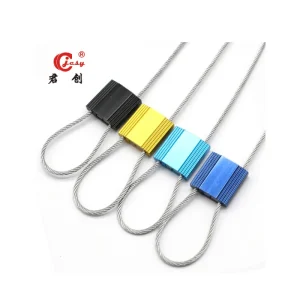
| Cable seal | Tanker valves, rail wagons, irregular openings | H or S depending on design and testing | Cut with cable cutters; single use |
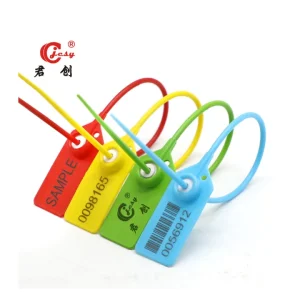
| Plastic pull-tight seal | Cartons, consolidated cargo, internal custody | I indicative | Pull tight; mostly disposable |
For international shipping under C-TPAT, the default is the ISO 17712 high-security bolt seal. I have seen importers use a cable seal on every container and pass inspection without issue, but when customs asks for evidence of a high-security seal, the bolt seal with the H classification is the document you do not want to be missing.
When does a plastic seal make sense for international freight?
Plastic seals fit two situations in international freight. The first is inside the container, where cartons or pallets are consolidated from multiple origins and you need per-unit custody. The second is on low-risk lanes where the value at stake is less than the cost of escalation. A plastic pull-tight seal breaks by hand or with side cutters, so it proves interference only if someone inspects it immediately. It does not stand up to a concealed attack the way a hardened bolt barrel does.
How does seal length and diameter affect security?
Bolt seals are fixed length, so you measure the container door hasp and order accordingly. Cable seals are adjustable, which handles odd geometry but requires you to pull the cable fully tight at application. A loose cable loop lets a thief feed the extra cable through a gap, so the adjustment step is part of the security, not a convenience.
What Does ISO 17712 Compliance Require in Practice?
ISO 17712 is the standard that tells you whether a seal is strong enough to require tools for removal and whether it shows tampering clearly. The standard groups seals into three classes: H for high security, S for security, and I for indicative. For most cross-border container movements, the security seal should be class H and should come with a certificate that names the manufacturer and the test results.
The high-security classification is not only about tensile strength. It also requires that the seal resists concealed tampering and leaves visible evidence if someone tries to open and reseal it. In our production inspections, we cut, twist, and pull samples beyond the rated threshold, then check whether the failure mode is obvious. A seal that breaks cleanly and can be reassembled is a failed design even if the material is strong.
What does C-TPAT expect from importers?
C-TPAT expects importers to use compliant high-security seals on containers bound for the United States and to maintain a written seal control policy. That policy covers who issues seals, how numbers are recorded, how seals are stored, and what happens when a seal is cut at destination. Many importers focus on buying the right seal and miss the policy step. In a C-TPAT validation, the auditor asks to see the records, not just the seals.
If your route includes U.S. customs or a C-TPAT member supply chain, it is worth confirming the seal’s ISO 17712 classification certificate before finalizing your purchase. Send your destination country and seal type to [email protected] and I will check the certificate against your route requirement.
How Do You Inspect Seals Before and After Transit?
Inspection has to happen at both ends of the trip, and the person doing it needs a record of security seal numbers to compare against. Before a container leaves, I record the seal number on the bill of lading or seal log, take a photo of the seal in place, and confirm the number embossed on the seal matches the paperwork. At arrival, the receiving team repeats the same check before the door is opened.
The physical check takes less than a minute. Look at the seal body for scratch marks around the locking mechanism, check the cable or bolt for cuts or fresh metal, and pull on the seal to confirm it is seated. The most common tampering sign in my experience is a subtle one: the numbers on the replacement seal do not match, or the marking depth is different from the factory batch.
How do you correct a seal record after a mid-route inspection?
If customs or a transshipment point cuts a seal for inspection, the new seal number has to be documented on the same record, with the name of the party who replaced it and the date. A missing number in that chain is worse than a broken seal, because it means you cannot tell when the break happened. I advise clients to keep one running seal log per container rather than notes scattered across emails.
What Should You Confirm Before Ordering Container Seals?
The most avoidable failures I see come from the ordering stage, not the shipping stage. A buyer asks for a high-security bolt seal without stating the container hasp dimensions, the marking requirement, or the destination customs regime, and the wrong length or wrong classification arrives. What follows is a rushed reshipment or a seal that cannot be inspected the way the route requires.
Before you place the order, we recommend confirming three specs: the seal type and length, the serial marking format, and the destination compliance requirement. At Shandong Junchuang Lock Industry Co., Ltd, we manufacture bolt seals, cable seals, plastic seals, meter seals, and metal strap seals under one production control system, so the marking and batch records stay consistent from order to order.
Send your part number, quantity, and destination country to [email protected] or WhatsApp +86 13853189290, and we will confirm the correct seal classification, marking, and lead time before production starts.
What Do Importers Ask About Security Seals in International Shipping?
Do customs authorities require one specific seal type for international shipping?
No. Customs authorities do not mandate one universal seal type for every shipment, but destination programs such as C-TPAT set a practical floor of an ISO 17712 high-security seal for U.S.-bound containers. The requirement arrives through the buyer’s supply chain security program rather than a customs rulebook. Before dispatch, check whether your customer’s purchase order names a seal class or a marking format. If it does not, a class H bolt seal for container doors and a class H or S cable seal for irregular openings is the safest default.
Can a security seal be reused after a shipment?
A common assumption is that a bolt seal that snaps back together is reusable. It is not. High-security seals are single use by design, because any removal method strong enough to open them destroys the locking mechanism or leaves tool marks that make the tampering visible. Reusing a cut seal destroys the custody chain, since the serial number can no longer be tied to a single journey. Treat every cut seal as spent and keep a replacement stock for inspections and split consignments.
What should we do when a seal shows damage at the destination warehouse?
It depends on when the damage is found and who still controls the cargo. If the seal is damaged at arrival, photograph it in place, note the condition on the delivery receipt, and hold the container unopened until the shipper and insurer respond. If the damage is found after the receiving team has already cut the seal and unloaded, record the seal number and the time it was cut, then reconcile the quantity against the packing list. In both cases, keep the damaged seal, because the surveyor will want to examine it for tool marks.
How many seals should we keep in stock for a regular shipping schedule?
In programs I have managed, the inventory rule has been simple: keep enough security seals for two full shipping weeks plus a buffer for inspections and damaged stock. That covers customs cuts, transshipment replacements, and the occasional marking error without stopping a load. For a high-volume importer, I also recommend storing seals in a locked cabinet with a sign-out log, because the number on the seal only matters if the issue record is complete. Share your weekly container volume and we will suggest the right stock level for your lane.
If you’re interested, check out these related articles:
Cable Seal Versus Bolt Seal: Definitive Guide to Cargo Security – Junchuang Lock
How to Choose High Security Bolt Seals: Key Criteria for Supply Chain Safety – Junchuang Lock
Plastic Seal Manufacturing Capabilities: Ensuring Global Security – Junchuang Lock
Weather Resistant Seal Selection: Mastering Environmental Durability – Junchuang Lock