
Security seals in freight transport only earn their cost when the seal type matches the door or valve it locks and the handoff process is enforced on both ends. After fifteen years on the manufacturing side, I have seen cargo losses tied less often to seal strength than to a loose closure, an unrecorded seal number, or a receiver who signs without checking the marking. Freight teams should treat the seal as a tamper evidence device, not a lock that stops entry. For container doors, an ISO 17712 high security bolt seal is usually the right default; for irregular or multi point closures, a numbered cable seal gives better coverage.
The Role of Security Seals in Freight Transport
A security seal on a truck door or container latch is a custody marker, not a barrier against a determined attacker with a grinder. Its job is to record whether the closure was opened between two points in the supply chain and to make that event visible to the next handler. That distinction changes how buyers should choose and inspect seals. A seal that breaks cleanly under attack is not necessarily a failure. A seal that remains intact while leaving slack in the hasp is.
Our plant has corrected export orders where the seal number printed on the carton label did not match the seal body. The cargo was physically untouched, but the shipment could not be accepted because the audit trail failed. In freight transport, a missing number is treated the same as a missing seal.
Matching Seal Type to Freight Risk
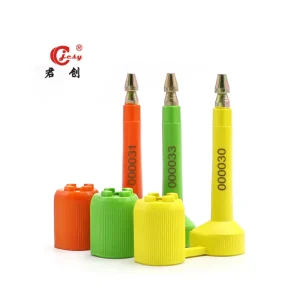
The best seal for a job depends on the closure geometry, the route exposure, and how many times custody is handed off. A standard ocean container door with a narrow locking hasp favors a bolt seal because the rigid shackle leaves little room to disguise re-entry. A tanker valve or a multi point rail hatch often favors a cable seal because the flexible body can pass through openings that a bolt cannot.
| Seal type | Best freight application | Key limitation |
|---|---|---|
| Bolt seal | Ocean container doors, high-value cargo | Needs a tight hasp to remove all slack |
| Cable seal | Tanker valves, irregular or multi point closures | Higher unit cost than fixed length options |
| Pull tight plastic seal | Short haul truck doors, distribution carts | Indicative only, low tensile strength |
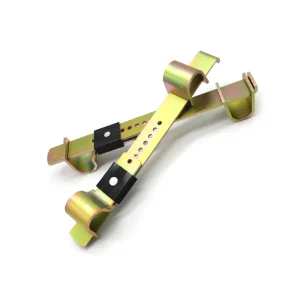
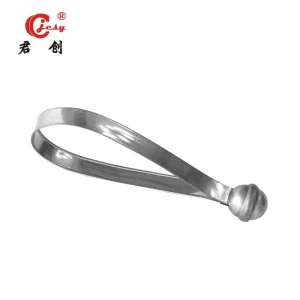
| Metal strap seal | Rail cars, drums, tote boxes | Needs a strap tool to install |
| Barrier seal | High security cross border custody transfer | Bulkier and not suited to every hasp |
What works for standard container doors?
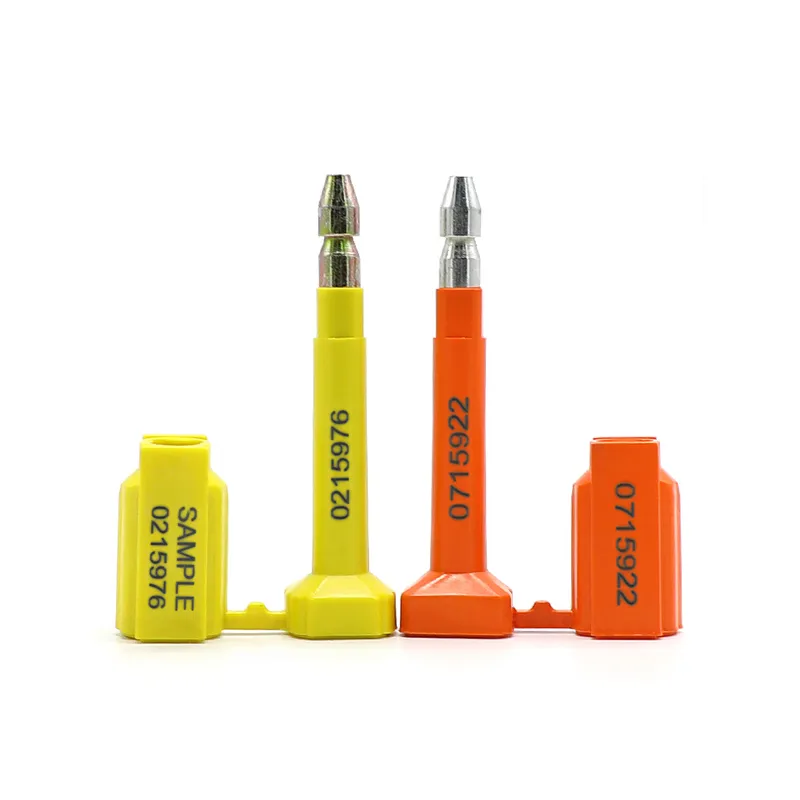
An H class bolt seal with a unique number. The locking bar should seat fully into the barrel. If there is any remaining movement after locking, the seal gives a thief space to work.
When does a cable seal make more sense?
If the closure cannot accept a rigid shackle. Cable seals also work for grouped valves or hatches where one seal must pass through several points before locking.
ISO 17712 and High Security Seal Requirements
ISO 17712:2013 sets mechanical seal requirements for freight containers and defines three classes. A high security seal carries the H marking only after the model passes independent tensile, shear, and bending tests. Security class S and indicative class I sit below that. The marking must also include the manufacturer identification and a unique serial number on the seal body, not only on the packaging. For cross border container moves, customs and carrier audit programs often look for H class seals because the test standard gives inspectors a common reference point.
What changes with H class on the dock?
The receiver has a stronger basis for rejection. If a shipment arrives with a seal that lacks the H mark or carries a repeat number, the seal no longer meets the stated security level, and the cargo should be treated as unverified until the load is checked.
If your freight lanes include ocean container moves through customs, verify that the supplier can issue an ISO 17712 test certificate for the exact seal model you are buying rather than a generic factory document. Send your seal drawing or route profile to [email protected] and we will check which H class option fits the closure.
Common Tamper Patterns in Freight Seals
Most tampering in freight does not begin with a grinder. It begins with slack. A loose hasp or a poorly seated cable gives a thief room to open the closure, remove cargo, and refit the same seal if the locking mechanism can be retracted. I have inspected returned seals where the cable looked seated but had been re-clamped after elongation. The receiver caught it only because the seal number on the manifest did not match the pull test record from the yard.
The check that catches most tamper attempts is simple: compare the seal number against the cargo document before touching the lock. Then pull the cable or shackle hard to confirm the locking chamber holds. Then look at the marking surface. A replaced seal often shows tool marks around the locking collar, a refreshed font, or a different gloss level on the plastic body. If any of those signs appear, stop unloading and start a full count before the receiver signs.
Supplier Checks for Freight Seal Programs
Price matters less than lot control and repeatability once a seal goes onto a moving asset. Ask the supplier for a production sample from current stock rather than a polished display sample. Check whether the marking stays sharp after repeated handling. Ask how the factory links seal numbers to cartons and shipping documents. Without that link, a disputed seal becomes a warehouse argument instead of a traceable record.
We batch seal numbers and pack them against the buyer’s order file before export. If a logistics provider reports a seal mismatch, our team can trace the number to the molding batch and packing date, then confirm whether the discrepancy came from the line or from the receiving side.
Choosing a freight seal supplier involves more than a unit price comparison. The real cost appears when a shipment lands with unreadable marks, soft locking, or seals that fail a carrier audit. Send your part number or a photo of your current seal to [email protected], or call +86 13853189290, and we will propose a matched freight seal program with sample approval before the first bulk order.
Common Questions About Security Seals in Freight Transport
Are bolt seals always the best choice for freight containers?
Not always. A bolt seal is the standard default for ocean container door hasps because the rigid locking bar leaves clear evidence of forced entry. If the route includes tanker valves, rail hatches, or wide hasps, a heavy duty cable seal often does the job better because it can pass through irregular openings and cinch tight. The right decision starts with the closure geometry, not the seal catalog. If there is any slack after locking, the seal cannot do its job.
How can a receiver tell if a security seal has been tampered with?
Most receivers assume a seal is fine if it looks intact. That misses the most common pattern: cut and replace. Check the seal number against the shipping document first. Then pull the cable or shackle to confirm the locking mechanism is fully seated. Then inspect the marking surface for scratches, recut numbers, or mismatched gloss. On bolt seals, probe the locking chamber with a small tool; a defeated seal often rattles or moves slightly. A number mismatch should trigger a full cargo inspection before unloading proceeds.
Does a higher price seal always improve freight security?
It depends on the failure mode. A hardened barrier seal adds value when the risk involves targeted cutting or theft of high value cargo, because the steel body and locking chamber resist attack longer. For short haul domestic routes where the main requirement is unauthorized opening detection, a numbered pull tight seal or cable seal may be enough. Paying more without matching the closure and inspection process adds cost but not protection. Price should follow risk, not brand.
What documentation should freight buyers request from a seal manufacturer?
Before requesting a quote, narrow the request to three records that matter in a freight audit: an ISO 17712 test certificate for the specific model, lot traceability records, and a pre production sample. A company level certificate that does not name the seal model is not sufficient. The test report should show the H, S, or I classification. At our plant we keep lot level packing records so any disputed seal can be traced to the molding batch. If your freight program uses several seal types, send your current seal list to [email protected] and we will confirm a substitution plan.
If you’re interested, check out these related articles:
Nylon Cable Tie Selection: A Strategic Guide for Industrial Procurement – Junchuang Lock
High Security Bolt Seals: Critical Applications for Supply Chain Integrity – Junchuang Lock
Security Seal Mistakes: Preventing Tamper, Ensuring Compliance – Junchuang Lock
Why Security Seals Ensure Unbroken Logistics Integrity – Junchuang Lock