
Security seals for pharmaceutical transport do more than secure a door. They create the first verifiable record that a shipment has not been opened between a manufacturer, a cold chain carrier, and a receiving pharmacy or hospital. After fifteen years producing industrial security seals, I have seen logistics teams select seals by strength alone and then lose hours at the receiving dock because the marking could not be read under condensation. The seal choice should follow three operating conditions: tamper evidence quality, temperature exposure, and audit traceability. Miss one of these, and a valid pharmaceutical load can still be rejected.
Security Seal Requirements for Pharmaceutical Transport
Pharmaceutical transport is not only about temperature. It is also about proof. A shipment that holds a 2°C to 8°C range but cannot show that nobody opened the door during a handoff can still fail a compliance review. The seal has to satisfy four conditions: lock securely under vibration, stay readable after condensation or ice exposure, leave clear evidence if removed, and carry a unique identifier that links to the shipping documentation.
In production, we evaluate seal bodies and locking components the same way we evaluate higher security container seals. A pull-tight plastic seal is easy to apply and works well for carton level pharmaceutical boxes, but it is not the right choice for a full truckload or an air cargo unit requiring high-security handling. The requirement is not to over-spec every shipment. It is to match the seal to the physical risk and the audit expectation.
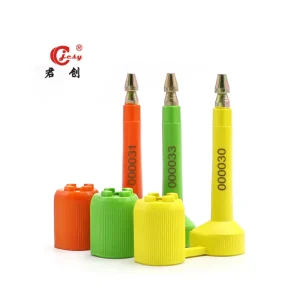
For controlled substances, many buyers specify an ISO 17712 high-security bolt seal or cable seal, because the tamper evidence has to survive deliberate attack rather than accidental opening. The physical strength of the seal matters less than the evidence it leaves behind after an attack.
Seal Types That Work for Pharma Shipments
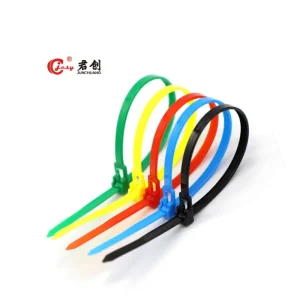
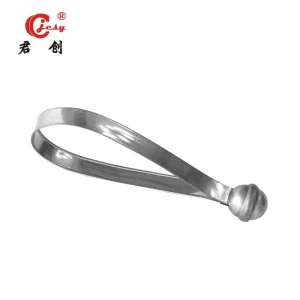
Three seal families cover most pharmaceutical transport applications. Bolt seals handle container and trailer doors where high security and serialized audit evidence matter. Cable seals work for cold chain units, irregular door configurations, and partial load openings because the cable diameter adjusts to the gap. Pull-tight plastic seals sit at carton, tote, and return kit level, where a visible break record is enough and the unit cost must stay low.
| Seal type | Best fit | Tamper evidence | Audit value |
|---|---|---|---|
| Bolt seal | Container and trailer doors | Locking body separation or cutting, serial number | ISO 17712 high-security option |
| Cable seal | Cold chain and irregular closures | Cable cut or locking body damage, adjusted length | Flexible length with serialized marking |
| Pull-tight plastic seal | Cartons and totes | Strap breakage, clear visual change | Low cost, high volume traceability |
The table should not be read as a ranking. Each seal family solves a different control point. A carton seal cannot replace a container seal, and a container seal is cumbersome and expensive when used at carton level.
Tamper Evidence and Cold Chain Protection
Cold chain tamper evidence fails in two ways. The seal can break under rough handling, or the marking can become unreadable while the seal remains mechanically intact. The second failure is the one that causes the most rejected pharmaceutical loads, because a seal with a missing or unreadable number has no audit value even if it never opened.
At our factory, we test printed and laser-marked seals after cold exposure because condensation weakens adhesion layers on printed labels. On one pharmaceutical distribution project, the receiving team rejected a batch of seals because the serial numbers were printed too shallow and blurred after a 72 hour cold store run. The seals locked correctly, but the evidence trail broke down. Since then, we specify laser marking or deep-engraved serial numbers for any pharma order that will operate below freezing or under repeated defrost cycles.
Condensation and freeze-thaw cycles also change the surface of plastic and metal bodies. A marking method that reads at room temperature may not read under frost. When a buyer shares the storage temperature and the number of door openings per trip, we can choose the marking method before a pilot run instead of after a failed inspection.
If your pharmaceutical program involves frozen or controlled substance shipments, confirm the seal’s tamper evidence survives repeated freezer cycles and condensation before finalizing your BOM. Email [email protected] with your temperature range and door or container type, and we can confirm which marking and locking method fits.
Audit and Regulatory Considerations for Pharma Seals
Pharmaceutical logistics audits rarely question whether a seal is present. They question whether the seal number on the pallet matches the seal number on the shipping manifest, who cut it at the receiving dock, and why a replacement was issued. The seal is a data carrier as much as a physical barrier.
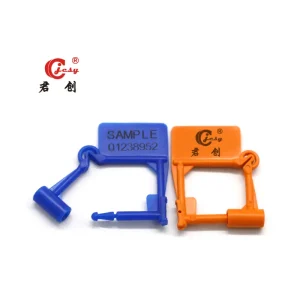
When we run production for pharmaceutical buyers, we print or laser mark serial numbers in a single sequence, and we keep the records in the same order as the packing list. That practice shortens receiving inspection because the checker can verify one number instead of searching through unnumbered stock. For cross border shipments, high-security bolt seals with ISO 17712 classification give customs and insurance reviewers a recognized barrier level to mention in their records.
Buyers should also keep a simple replacement rule: if a seal is cut or removed at any handoff, record the old number, the new number, and the reason before the shipment moves. A replacement seal without a record is often worse than a missing seal, because it creates a false sense of continuity.
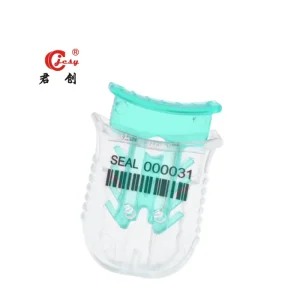
Seal Selection for Your Next Pharmaceutical Shipment
Choosing the wrong seal for pharmaceutical transport creates a problem that usually appears after the shipment has left the loading dock: a rejected pallet, a broken audit trail, or a re-inspection order. Most of these failures come from buying by price alone or from using the same seal across every temperature and security level.
Junchuang Lock manufactures serialized pull-tight seals, cable seals, and ISO 17712 high-security bolt seals for pharmaceutical logistics projects. We adjust marking, material, and locking geometry to the operating conditions instead of forcing one stock product into every route. Send your part number, quantity, and temperature range to [email protected] or call/WhatsApp +86 13853189290, and we will confirm the right seal specification before you commit to a purchase.
Common Questions About Pharmaceutical Security Seals
Do pharmaceutical shipments always need high-security bolt seals?
No. Bolt seals are not a universal requirement. Carton, tote, and return kit shipments can work with serialized pull-tight plastic seals, which leave a visible break and cost less per unit. Bolt seals belong on container doors, long haul trailer loads, controlled substance movements, and any route where deliberate attack or regulatory review is likely. The deciding factor is not whether the product is pharmaceutical but whether the seal must survive a high-security threat model. If the shipment stays within a closed distribution loop and is handled by known staff, a lower security indicative seal is often sufficient.
What happens when a cold chain seal becomes unreadable?
A blurred serial number is usually treated as a missing seal, not as a minor marking defect. In cold chain operations, condensation, ice formation, and repeated defrost cycles can lift printed labels or wash out shallow markings. When the receiving checker cannot read the number against the manifest, the shipment often goes into quarantine until a replacement seal history is documented. That is why pharmaceutical buyers should order laser-marked or deep-engraved serial numbers for seals that will sit below freezing. It costs slightly more up front and removes the most common receiving dock failure.
Can a cable seal be reused if it was not broken?
It depends on the seal design and the route requirement. Most pharmaceutical logistics buyers use disposable cable seals because the evidence trail is cleaner: one seal number goes out, one seal number comes back, and any undamaged removal still breaks the locking body. Some metal cable seals can be reassembled, but that weakens the control value unless the receiving site has a formal inspection and reassignment process. If your operation uses returnable bins or repeat route equipment, specify a reusable seal with a documented inspection step. If full tamper evidence is the priority, stay with disposable numbering.
How do I confirm a factory can produce serialized seals for my distribution network?
In our production work, we ask buyers to fix three details before serialization: the digit or barcode format, the scanning method at the warehouse, and the expected cold store exposure. After that, we produce pilot samples and mark them the same way we mark full production. This catches most problems early, such as a scanner that cannot read a laser mark under frost or a sequence that does not match the buyer’s warehouse software. Once the pilot is accepted, full runs stay on the same marking equipment and sequence control. Send your serial number format and temperature conditions to [email protected] and we can confirm the marking method before mass production.
If you’re interested, check out these related articles:
Lead Seal vs Plastic Meter Seal: Ultimate Security Comparison – Junchuang Lock
Custom Plastic Seal Manufacturing: Precision, Materials, Security – Junchuang Lock
Mastering Seal Strength: Metrics for Industrial Security – Junchuang Lock
Selecting a Security Seal Manufacturer for Supply Chain Integrity – Junchuang Lock