
Security seals for cold chain logistics cargo protect more than the trailer door. A seal has to hold up through condensation, sub-zero temperatures, and repeated handling while still giving a clear tamper record. From our production experience, the decision usually comes down to three points: choose a seal material that tolerates the temperature range, use a locking mechanism that stays intact through frost, and keep the serial number tied to the cold chain record. If the seal fails or the number cannot be read after delivery, the entire temperature-controlled trip is open to dispute.
Why Do Cold Chain Shipments Need Dedicated Security Seals?
Cold chain cargo moves through more hands than dry freight, and every handoff creates a chance for temperature abuse or theft. A refrigerated trailer may stop at cross docks, distribution centers, and final-mile vehicles before the load is accepted. Without a seal that stays intact and legible at every stop, the receiver cannot tell whether a temperature spike came from normal operation or from an unauthorized opening.
Most generic security seals are designed for ambient freight. They close a door, but they are not selected for condensation, frost, or repeated cold-room handling. A seal that works on a dry van may embrittle in a freezer, or its markings may become unreadable after the package sweats. That matters because cold chain disputes are decided on records, not intentions. If the seal number cannot be matched to the bill of lading after arrival, the shipment can be rejected even if the cargo is intact.
In our production work, we see more cold chain buyers request freezer-cycle testing on plastic seals than on any other product line. The concern is not usually the locking strength. It is whether the body will stay in one piece when a worker pulls it at minus 20 degrees Celsius.
How Do Temperature and Moisture Affect Security Seal Materials?
Low-Temperature Brittleness
Temperature changes the physical behavior of every seal material. Polypropylene, which is common in plastic security seals, keeps good stiffness at room temperature but loses impact strength as it approaches freezing. In a cold store, a seal that would flex under load at 20 degrees Celsius can snap under the same force at minus 20 degrees Celsius. The failure usually starts at the locking insert or at the strap hinge, where stress concentrates.
Condensation and Marking Legibility
Condensation creates a second problem. When a trailer moves from a frozen storage area into a warmer dock, moisture forms on the seal surface. If the seal has printed ink markings without a protective layer, that moisture can smear the serial number. Laser-marked seals and embossed metal surfaces hold up better because the marking is cut into the material rather than printed on top. Buyers should ask how the marking is applied, not just whether a sample looks clear at room temperature.
The table below summarizes how common cold chain seal materials behave.
| Seal type | Cold chain behavior | What to check before ordering |
|---|---|---|
| Polypropylene pull-tight or padlock seal | Can become brittle below roughly minus 20 degrees Celsius under impact | Low-temperature impact test at target storage temperature |
| Nylon cable tie or cable seal | Keeps more flexibility in freezing conditions than polypropylene | Marking legibility after repeated frost cycles |
| Steel bolt seal | Stable in freezing temperatures and suits high-security container doors | Zinc plating condition and locking barrel tolerance |
| Aluminum cable seal | Handles low temperatures well, but cable coating can crack if kinked | Cable kink and coating integrity after cold handling |
| Metal strap seal | Strong for cargo doors but less convenient for frequent cold-store access | Strap tension after temperature cycling |
| Plastic security lock | Clear tamper evidence, but body material must match freezer room needs | Material grade, hinge design, and marking method |
Which Security Seals Hold Up in Refrigerated and Frozen Transport?
Cold chain operations are not one single use case. A long-haul container moving frozen seafood needs a different seal than a local dairy truck making six stops. Matching the seal to the operation avoids both overbuying and weak links.
Bolt Seals for Long-Haul Cold Chain
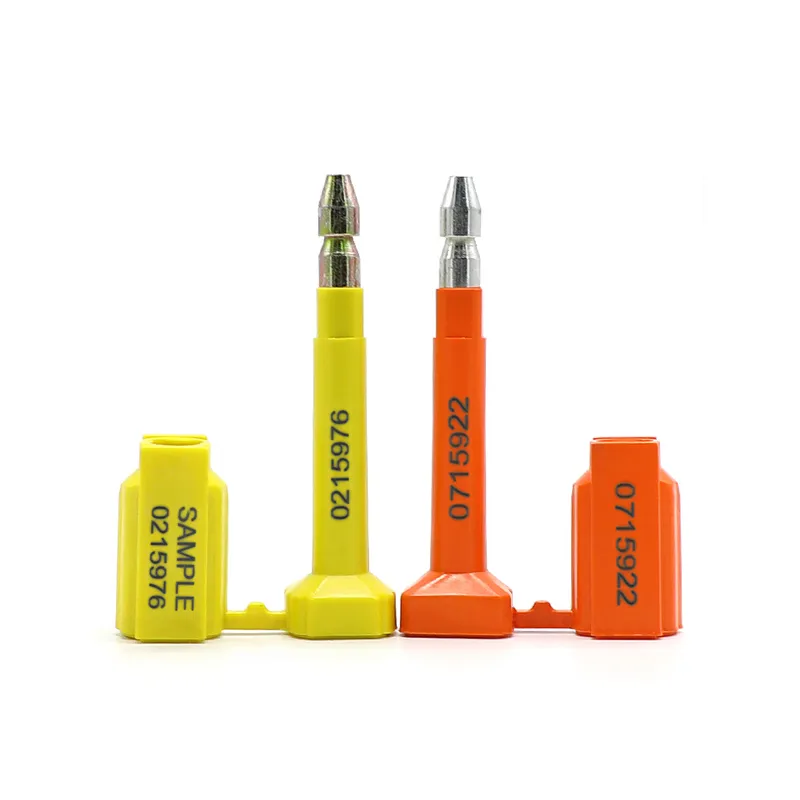
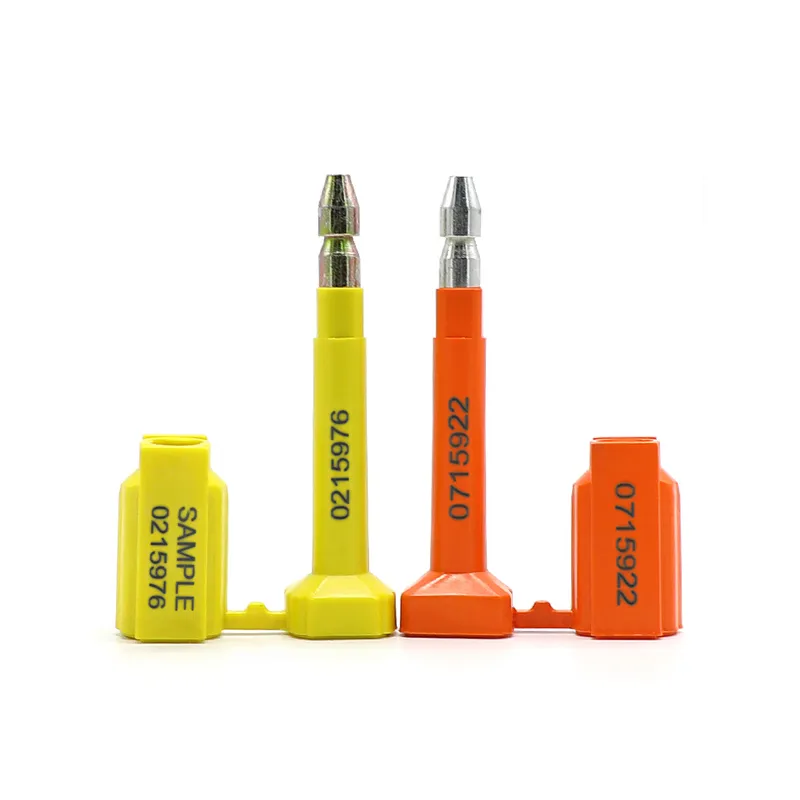
High-security bolt seals are the default for containerized cold chain freight, especially export loads. The steel barrel and bolt remain stable across the temperature range, and ISO 17712 high-security versions are designed to show clear cutting or removal attempts. The main cold chain concern is not the steel. It is the receiving process. If the receiver does not compare the bolt number to the shipping documents before cutting, the seal provides no evidence value.
Cable Seals for Frequent Access
Cable seals work where the door opens more than once. In multi-stop distribution, a receiver may need to cut the seal and reseal after partial unloading. A cable seal with sequential numbering lets the carrier issue a new seal number at each stop while keeping the chain of custody visible. We recommend laser-marked cable seals for refrigerated routes because condensation sits on the cable surface and printed ink can smudge.
Plastic Padlock Seals for Short Cold Storage Cycles
Plastic padlock seals are lighter and easier to handle in cold warehouse environments, but the material grade decides everything. A polypropylene body that works in a chilled dairy dock may not survive a blast freezer. If the application is below minus 20 degrees Celsius, the buyer should test the seal under impact conditions, not just pull strength, and specify a material that keeps impact resistance at the target temperature.
If your program involves sub-zero storage, frequent door openings, or high-humidity washdowns, confirm the seal’s operating temperature range and material certificate before finalizing your BOM. Send your temperature range, seal type, and quantity to [email protected].
How Do You Inspect and Track Cold Chain Security Seals?
Cold chain security depends on inspection discipline more than seal strength. A seal can be strong and still fail if no one reads the number at the right time.
Pre-Trip Seal Inspection
Before the door closes, confirm the seal body has no cracks, the locking mechanism engages fully, and the serial number matches the shipping documents. For refrigerated loads, check the marking under a quick frost or moisture test. If the number disappears under condensation, reject the batch before it leaves the dock.
Seal Number Verification at Handoff
The seal number should be recorded on the bill of lading, the driver’s manifest, and the receiving report. At each stop, the receiver checks the number first, then cuts. The cutting step matters. A seal cut without verification destroys the evidence trail. We tell cold chain customers to photograph the seal before cutting and keep the photograph with the delivery record.
What to Do When a Seal Shows Tampering
Tampering in cold chain can look different from dry freight. Frost can hide a cut, and condensation can make a stretched cable look normal. If the seal number does not match, the body shows compression marks, or the cable has been worked loose, stop unloading and document the condition. Then cut in the presence of the carrier and compare internal parts where possible. A tamper-evident seal should make that investigation clear rather than leaving a judgment call.
How Should You Source Security Seals for Cold Chain Operations?
Cold chain buyers often get caught between generic catalog seals and promised specifications. The result is a shipment that passes a visual check at the factory but fails after two weeks in a cold store. That delay costs more than the seal.
At Shandong Junchuang Lock Industry Co., Ltd., we treat temperature compatibility as the first design question when a customer asks about security seals for cold chain logistics. Our factory manufactures bolt seals, cable seals, plastic padlock seals, and metal strap seals, and we can match the body material, marking method, and locking design to the temperature range and door access pattern of your operation. We can also run sample testing before bulk production.
Send your temperature range, seal type, and monthly quantity to [email protected] or call/WhatsApp +86 13853189290, and we will confirm material compatibility, marking durability, and a sample plan for your cold chain program.
What Questions Do Buyers Ask About Cold Chain Security Seals?
Can the same plastic seal be used in freezer and ambient loads?
It depends on how far below freezing the load goes and how often the seal is handled. Ambient-style polypropylene seals can work for chilled loads around 0 to 5 degrees Celsius. For freezer work below minus 20 degrees Celsius, we specify a material with better low-temperature impact resistance or switch to a nylon cable seal or bolt seal. The failure mode is not always obvious at room temperature; it shows up when a worker pulls the seal in cold conditions. If the same fleet handles both chilled and frozen cargo, test the seal at the coldest end of the range before standardizing.
What makes laser marking better for cold chain seals?
Laser marking holds up better in cold chain because the number is cut into the seal surface rather than printed on top. Condensation can lift printed ink, but it cannot wash away an engraved mark. The second benefit is consistency. Laser serial numbers can be generated automatically, reducing duplication and mismatched records across large orders. For plastic seals, we recommend laser marking on the flag or body. For metal seals, we use the same principle with embossing or laser marking so the number stays readable after frost and handling.
Do we need ISO 17712 seals for refrigerated domestic loads?
ISO 17712 is not only for export or high-value cargo. The standard covers mechanical seals for containers, and its high-security classification is relevant whenever a cold chain load crosses a border or moves through multiple carriers. A domestic refrigerated route may not require a certified bolt seal, but the same design features matter: a unique number, evidence of tampering, and strength to resist casual removal. If your cold chain program serves pharmaceutical or food customers, some buyers will ask for ISO 17712 high-security seals even on domestic lanes. Confirming the requirement early avoids rejected shipments.
How many seals should a cold chain fleet keep in stock?
In programs we support, the safer stock is based on door events rather than a fixed number. A fleet that opens trailers at every stop wears through seals faster than a point-to-point carrier. As a practical buffer, keep at least two weeks of consumption plus one extra box for rejected batches, because cold chain inspections can fail a whole lot for marking issues. That buffer is cheaper than holding a loaded reefer while a replacement seal ships. Share your route profile and monthly door count, and we will confirm a stock buffer and seal type for your operation.
If you’re interested, check out these related articles:
How to Choose High Security Bolt Seals: Key Criteria for Supply Chain Safety – Junchuang Lock
Selecting Ear Tag Size and Color: A Strategic Guide for Livestock – Junchuang Lock