
Plastic padlock seals for truck security offer a practical tamper-evident solution for fleet operators, but their real-world effectiveness depends heavily on material quality and proper application. Based on over fifteen years in security seal manufacturing, I have seen that the difference between a seal that survives a cross-country haul and one that breaks under routine vibration comes down to production integrity and careful specification. This guide focuses on what durability means for plastic padlock seals on trucks, from material selection to inspection protocols, so procurement decisions are grounded in field performance rather than price alone.
What a Plastic Padlock Seal Does for Truck Security
A plastic padlock seal is a single-use locking device designed to fit through the hasp of a truck trailer door, creating a barrier that must be cut or broken to open. The seal consists of a molded plastic body with an internal locking mechanism and a flexible strap that tightens like a cable tie. Once pulled closed, it cannot be loosened without leaving visible evidence. For fleet security managers, this provides a reliable method to confirm that a trailer has remained sealed from the loading dock to the delivery point. Unlike a metal padlock, the plastic padlock seal does not require a key and is not intended to resist heavy cutting tools. Instead, it acts as a tamper-evident record. If a driver finds a broken or missing seal at the destination, it triggers an immediate investigation.
The primary value of a plastic padlock seal in trucking lies in its traceability. Each seal carries a unique serial number printed on the body, allowing logistics teams to log seal numbers against shipment manifests. When a driver arrives at a checkpoint or delivery location, the seal number is verified against the log. A mismatch or a broken seal signals a potential breach. This simple verification step adds accountability across the supply chain without requiring specialized tools or training. In long-haul routes where cargo transfers between multiple carriers, the ability to track seal integrity at each handoff reduces dispute risk and improves security.
Because plastic padlock seals are disposable, they eliminate the cost and complexity of key management. A driver can cut the seal with a standard seal cutter at the destination and discard it. For high-volume operations, this convenience translates into faster turnaround times at loading docks.
Key Durability Factors: Material, Locking Mechanism, and Environmental Resistance
The reliability of a plastic padlock seal in truck security depends on three core elements: the plastic material, the locking mechanism design, and the seal’s resistance to the environment it faces. In our factory, we test these variables systematically, but procurement managers often overlook them when comparing supplier quotes.
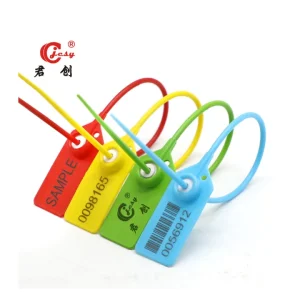
Material selection is the first line of defense. The two most common plastics for padlock seals are polypropylene and nylon. Polypropylene offers good chemical resistance and lower cost, but it can become brittle in freezing temperatures. Nylon provides higher tensile strength and better flexibility across a wider temperature range, making it more suitable for trucks operating in northern climates or desert heat. A seal made from a nylon blend will resist cracking when a trailer hits a pothole at subzero temperatures; a cheap polypropylene seal may snap.
The locking mechanism determines how securely the strap is held after tightening. A well-designed internal locking jaw uses stainless steel inserts that bite into the strap, providing a pull-out force of over 15 kilograms. Poorly manufactured seals may use only plastic teeth that can slip under sustained vibration. I have seen seals from low-cost suppliers where the locking insert was not properly seated, allowing the strap to be wiggled loose without breaking it. When evaluating a seal, pull firmly on the strap after tightening. Any backward movement indicates a weak lock.
Environmental resistance is often the most underestimated factor. UV radiation degrades plastics over time, causing discoloration and brittleness. For trucks parked outdoors for days, a seal with UV stabilizers is essential. Similarly, exposure to road salt, fuel, or cleaning chemicals can accelerate material breakdown. A quality seal should maintain its integrity after prolonged exposure to these elements.
| Material | Tensile Strength (kg) | Temperature Range (°C) | UV Resistance | Cost |
|---|---|---|---|---|
| Polypropylene (untreated) | 10-12 | -10 to 80 | Poor | Low |
| Polypropylene (UV-stabilized) | 12-15 | -15 to 90 | Moderate | Medium |
| Nylon 6/6 | 20-25 | -30 to 120 | Good | Higher |
| Nylon blend with glass fiber | 30-35 | -40 to 130 | Very Good | High |
Selecting a material that matches the truck’s operating environment is more cost-effective than replacing failed seals repeatedly.
How to Evaluate Plastic Padlock Seal Quality and Avoid Common Failure Points
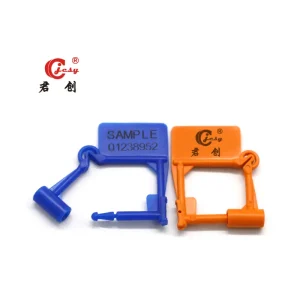
Quality evaluation begins before a seal is ever placed on a truck door. In our production line, multiple inspection checkpoints catch defects that would otherwise surface in the field. Buyers can apply similar visual and physical checks when receiving samples.
Visual Inspection Points for Mold Quality
Look at the seal body under good light. A uniform surface without flow lines, sink marks, or discoloration indicates consistent injection molding. Any thin spot in the strap near the locking head is a potential break point. The serial number should be deeply imprinted or laser-etched, not just painted on. A painted print will wear off during handling, eliminating traceability.
Testing Tensile Strength at the Field Level
A simple pull test can reveal locking integrity. After locking the seal, attach a weight or use a spring scale to measure the force needed to pull the strap from the body. While field testing is not as precise as laboratory equipment, any seal that fails below 12 kilograms of pull force is unsuitable for truck security. I have handled seals that looked perfect yet opened with a sharp tug, revealing an undersized locking spring.
Common Failure Modes and How to Spot Them
- Strap breakage at the hinge: The joint where the strap meets the body is a high-stress area. Inadequate plastic flow or sharp corners concentrate stress. A rounded, thicker profile at the base reduces this risk.
- Locking jaw slip: As mentioned, the insert can be misaligned. Pre-test seals from each batch by pulling firmly. If any slip, reject the lot.
- Stress cracking from rapid cooling: In high-humidity truck environments, internal cracks formed during cooling can widen. Soaking the seal in water for a few hours and then flexing it can reveal hidden cracks.
Addressing these failure modes during supplier qualification prevents the kind of in-service failures that lead to cargo theft investigations.
Proper Installation and Daily Inspection for Fleet Operations
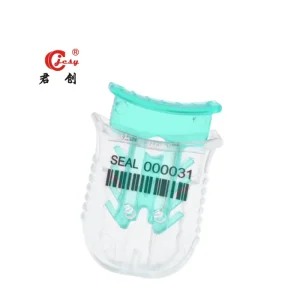
Even the best plastic padlock seal becomes useless if installed incorrectly. The following steps ensure consistent performance.
- Choose a padlock seal whose strap length fits the hasp opening without excessive slack. A strap that is too long can be looped back and cut without detection; too short and it may not engage fully.
- Thread the strap through the hasp and into the locking head in a single straight motion. Do not twist the strap, as twisting reduces engagement depth and can cause premature release.
- Pull the strap until it is snug against the hasp. Apply a second, short tug to confirm the mechanism is fully engaged. Listen for a click, which indicates the locking insert has seated.
- Record the seal number and the trailer ID in a log or digital system. Without this record, a broken seal at arrival provides no actionable information.
- At each stop or handover, the driver should visually check the seal. Confirm the strap is tight, the body is not cracked, and the serial number matches the log. If any discrepancy is found, the load should not be accepted until the seal is verified and documented.
Daily inspection should be a mandatory part of driver checklists. A quick visual scan takes seconds but can reveal damage caused by weather, contact with loading dock equipment, or attempted tampering that occurred overnight.
Procurement Considerations: Customization, Serialization, and Supplier Quality Assurance
When ordering plastic padlock seals in volume, procurement decisions go beyond price per unit. Customization and serialization options directly affect traceability and brand security.
Custom printing of company logos, barcodes, or sequential serial numbers helps integrate seals into existing fleet management systems. A barcode allows a driver to scan the seal with a smartphone, automatically logging the seal number and reducing entry errors. Sequential numbering makes it easy to track seal usage and detect gaps in inventory, which could indicate unauthorized access to blank seals.
Supplier quality assurance is just as important as the seal design itself. A manufacturer that can provide material certifications, batch test reports, and a documented quality control process reduces the risk of receiving defective stock. Requesting a sample from a manufacturer like Junchuang Lock Industrial allows you to test the seal on your own trucks under real conditions before committing to a bulk order. Without that step, you may discover a performance issue only after hundreds of seals have been deployed across your fleet.
Securing Your Fleet with the Right Plastic Padlock Seal
Plastic padlock seals are a frontline defense against cargo tampering and unauthorized access, but their effectiveness is not guaranteed by design alone. The right material, a robust locking mechanism, and a consistent inspection protocol transform a simple plastic seal into a reliable security tool. Conversely, picking the cheapest option without evaluating these factors can create hidden vulnerabilities.
If your fleet operates in demanding environments or you need to upgrade your current seal program, getting a sample that matches your actual use case is the first step toward a data-driven decision. Contact Junchuang Lock Industrial at [email protected] or call +86 13853189290 to discuss your specifications and request a sample batch for evaluation. Describing your typical routes and environmental conditions will help us recommend a seal configuration that holds up in the field.
Common Questions About Plastic Padlock Seals for Trucks
Are plastic padlock seals as secure as metal bolt seals?
Many fleet operators assume plastic padlock seals offer the same strength as metal bolt seals, but they serve a different purpose. Metal bolt seals conform to ISO 17712 high-security standards and require bolt cutters for removal. Plastic padlock seals provide tamper evidence rather than physical barrier strength. For truck applications where the goal is to detect unauthorized opening, a plastic seal is sufficient. When the cargo value or theft risk demands a barrier that resists cutting, a bolt seal is the correct choice. Using a padlock seal where a high-security seal is needed leaves a gap that a determined intruder will exploit.
How often should plastic padlock seals be inspected on trucks?
The seal should be inspected at every stop where the trailer is accessible: before departure, at intermediate handover points, and immediately upon arrival at the final destination. The driver should confirm the seal is intact and the serial number matches the manifest before releasing the cargo. If the seal is missing or shows signs of tampering, the load should be quarantined until an investigation is completed. Routine daily inspection takes less than a minute but closes the window for unnoticed breaches.
Can plastic padlock seals handle extreme cold or desert heat?
It depends on the material. Standard polypropylene seals become brittle below -10°C and risk fracturing from vibration. Nylon seals with UV stabilizers and thermal additives maintain flexibility down to -30°C and resist softening up to 120°C. When ordering for a fleet that crosses temperature extremes, specify the operating range. A seal manufacturer can provide thermal test data to confirm suitability before shipping.
What should I look for when choosing a supplier for plastic padlock seals?
Look for a supplier that offers material traceability certificates, batch quality reports, and the ability to produce custom printing and serialization in-house. A factory that operates their own injection molding and printing equipment has tighter control over lead times and quality consistency than a trading company that outsources production. Before placing a large order, request free samples and test them on your own equipment. If the supplier cannot provide samples or resists quality documentation, that is a signal to look elsewhere. Share your requirements and we will confirm the appropriate seal specifications and documentation availability at [email protected].
If you’re interested, check out these related articles:
Security Seals: How They Work to Protect Your Assets – Junchuang Lock
China Plastic Security Seal Factory: Sourcing Guide & Solutions – Junchuang Lock