
Choosing between a plastic padlock seal and a regular padlock is more than a question of strength or cost; it is a decision that shapes supply chain accountability. I have evaluated thousands of seal designs in manufacturing and logistics, and the consistent factor that separates effective cargo protection is the speed of tamper detection. A plastic padlock seal from a quality-focused factory provides immediate, unambiguous evidence of interference, while a regular padlock delays that discovery until after inspection. This article examines the real-world performance differences, material considerations, and the manufacturing details that decide whether a seal works as intended or creates a false sense of security.
How Does a Plastic Padlock Seal Work?
A plastic padlock seal is a molded, one-piece tamper-evident device. Its locking mechanism uses internal teeth or a ball-bearing retention system that grips the hasp or shackle irreversibly once pushed into the body. To open it, the seal must be physically cut, tearing the plastic in a way that cannot be hidden or restored. The visual message is instant: this closure has been compromised.
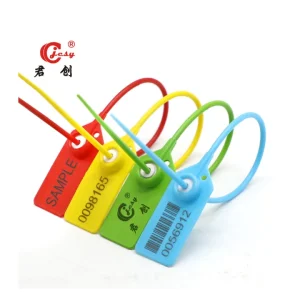
By contrast, a regular padlock relies on a key or combination dial. It can be opened, the contents accessed, and the lock reseated with no visible indication of entry, provided the thief has the key or picks the cylinder. This fundamental design gap is why logistics auditors and customs officers rely on plastic padlock seals for one way shipments. The seal does not simply block access; it records the attempt.
The locking process is friction driven. A steel spring or nylon pawl captures the hasp, and any attempt to pull it backward triggers fractures along predetermined stress points in the plastic body. In our production testing, we verify that the break pattern is consistent and visually obvious from several meters away. A seal that can be stretched open without shattering the body has failed its design purpose.
Why Is Tamper Evidence the Critical Difference?
Tamper evidence is not about stopping a determined thief with tools. In logistics, the real threat is undetected access, where goods are removed, repackaged, and the seal is replaced or cleverly reseated. A regular padlock does nothing to prevent this. A plastic padlock seal makes that act visible the moment a supervisor walks past.
I have seen shipping reports where a driver cut a regular padlock, unloaded a portion of cargo, and replaced it with an identical lock from a hardware store. The shortage was discovered only at the destination count. With a serial-numbered plastic padlock seal, the mismatch would have been spotted at the first checkpoint because the replacement seal would lack the original barcode, color code, and factory-installed numbering.
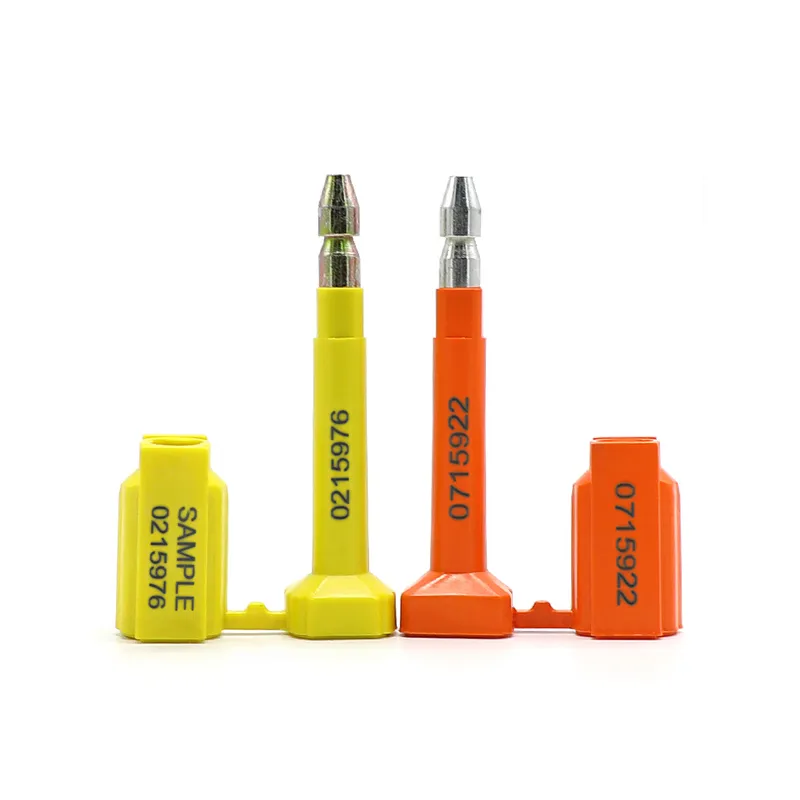
That audit trail is what separates modern security seals from simple physical barriers. A serialized plastic seal ties the seal number to the bill of lading, creating an unbroken chain of custody. Every person who handles that shipment must verify the number. A regular padlock cannot offer that level of documentation unless it is also serialized, and even then, it can be opened without destroying the number. The core strength of a plastic seal is that the act of opening it destroys the seal identity, making covert replacement impossible.
When Does a Plastic Padlock Seal Outperform a Regular Padlock?
Several operational scenarios tilt the decision decisively toward a plastic padlock seal. The table below captures the key functional contrasts.
| Feature | Plastic Padlock Seal | Regular Padlock |
|---|---|---|
| Tamper evidence | Immediate, irreversible | Not visible if relocked |
| Audit trail | Serial number, barcode | Optional engraving |
| Reusability | Single use | Multiple uses |
| Installation tool | Hand snap | Key or combination |
| Cost per unit | Low, disposable | Higher, reusable |
| Weather resistance | Must specify UV grade | Metal can corrode |
| Security against cutting | Low, but tamper recorded | Moderate, may delay |
| Regulatory acceptance | C-TPAT, ISO 17712 compliant designs | Not compliant if relockable |
For a high-value shipment moving from factory to warehouse with multiple handoffs, the plastic seal wins on audit integrity. For a stationary storage locker that is accessed daily by an authorized employee, a padlock is practical. The mismatch occurs when companies use padlocks for one way truckloads and then rely on the driver’s honesty. That trust is fragile; a seal provides hard evidence.
Cross-border freight is another case. Customs officials need to verify seal numbers visually without seizing the container. A brightly colored plastic padlock seal with a large barcode is scanned in seconds. A nondescript metal padlock forces an agent to lean in, read a tiny engraved number, and guess whether the lock is original. Those seconds multiply across thousands of containers.
What Determines Manufacturing Quality in Plastic Security Seals?
Not all plastic seals are equal. The difference between a seal that breaks cleanly and one that bends ambiguously lies in the molding process and material formulation. I have walked our injection molding floor enough times to know that tool temperature, cooling time, and regrind percentage directly affect fracture behavior.
A high-quality plastic padlock seal uses virgin polypropylene or polyamide with precise UV stabilizer ratios. Regrind material, if reused beyond controlled limits, creates weak zones that can snap unpredictably during normal handling, sometimes without leaving clear damage marks. At Junchuang, we maintain strict regrind ratios and batch-test tensile strength and impact resistance against factory specifications. That means the seal breaks when it should, not before, and the break pattern is always unmistakable.
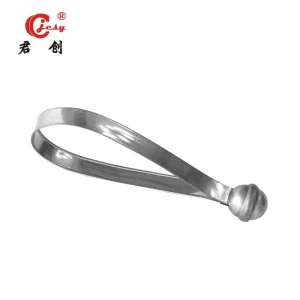
Marking quality is the other factory gatekeeper. Laser-printed serial numbers and barcodes must withstand abrasion, sunlight, and moisture for the duration of the transit. If the print fades, the audit trail is gone. Our production line verifies print adhesion after UV aging tests, ensuring that a seal arriving at port after three weeks at sea still reads cleanly under a scanner. For procurement managers, this is the detail that separates a supplier who understands logistics from one who only molds plastic shapes.
If your sealing program involves complex marking requirements, barcode symbology, or color coding across multiple shipping lanes, confirming those capabilities with the manufacturer before finalizing your purchase list prevents costly compliance gaps later. Reach out at [email protected] for a technical review.
How Do Cost and Customization Affect Your Choice?
On a unit cost basis, plastic padlock seals are often a fraction of the price of a well made padlock. That low cost enables disposable, one use security models that match the linear flow of most supply chains. A regular padlock costs more up front but can be reused hundreds of times, shifting the value analysis toward total cost of ownership.
The hidden cost lies in audit labor. When padlock integrity is uncertain, inspectors must unlock, examine, and relock each point, or photograph the padlock from multiple angles to document its condition. With a serialized plastic seal, a visual scan and number check complete the verification. Over thousands of shipments, that time savings compounds into significant operational efficiency.
Customization also tilts the field. Plastic seals can be molded in any color, with company logos, sequential numbering, and barcode formats that match internal tracking systems. Regular padlocks offer engraving, but not the full surface printing or hot-stamping possible on a flat plastic seal body. For a logistics operator that wants route coding, for instance blue seals for eastbound trucks and orange for westbound, plastic seals deliver instant visual routing at the loading dock, something a metal padlock cannot match. See our plastic padlock seal range for examples of fully customizable options that include barcode, serial number, and logo integration.
Common Questions About Plastic Padlock Seals
Are plastic padlock seals weather-resistant?
Yes, but only when manufactured with UV-stabilized compounds. Standard polypropylene degrades under prolonged sun exposure, becoming brittle. We formulate our plastic padlock seals with UV inhibitors and weather-tested additives so they maintain locking integrity and print legibility for weeks of outdoor transit. If your route includes extreme heat or salt spray, specify that requirement so the material grade can be matched.
Can a plastic padlock seal be broken by hand?
A properly molded seal cannot be opened by hand without leaving catastrophic damage. The locking insert is designed so that any pulling force exceeding the material’s yield strength causes the body to fracture along visible lines, not stretch elastically. In factory pull tests, our seals typically withstand over 100 newtons of direct pull before the fracture point, which is beyond what a person can generate without tools. The seal shatters visibly, signaling tamper.
Do plastic seals work with ISO 17712 high-security requirements?
The ISO 17712 standard classifies seals into indicative, security, and high-security grades. Plastic padlock seals fall under indicative or security grades depending on construction and tensile rating. For high-security applications, bolt or barrier seals are required. However, for most commercial cargo transport, a well made plastic security seal meets the tamper-evidence requirements of C-TPAT and customs programs, especially when integrated with a documented seal verification protocol.
How do I choose the right seal strength for my cargo?
Start with the level of access risk and the expected handling environment. For short-haul domestic trucking with regular driver check ins, a standard plastic padlock seal with 200 to 300 newtons of tensile strength is sufficient. For longer international routes or high-theft cargo, consider a barrier seal or bolt seal that withstands over 10,000 newtons. The key is not just strength but the seal type’s role: plastic seals act as evidence, not barriers. Match the seal to that function rather than trying to make it a lock. Share your lane profile and risk concerns, and we can recommend the appropriate seal family and strength rating for your operation.
If you’re interested, check out these related articles:
RFID Ear Tags for Livestock: A Strategic Management Guide – Junchuang Lock
Security Seals: Disposable vs. Reusable for Supply Chain Integrity – Junchuang Lock