
Custom metal strap seal printing turns a security device into a tool for tracking, branding, and regulatory compliance. As a manufacturer specializing in tamper-evident seals for global supply chains, we see procurement decisions often hang on whether the marking can survive the same rough conditions the seal is meant to protect. Getting the right combination of method, durability, and quality verification directly reduces cargo disputes, inspection delays, and unauthorized substitution.
Why Custom Markings Matter on Metal Strap Seals
A standard metal strap seal provides a physical lock. Adding custom printing gives that seal a clear purpose and traceable identity. Without a unique marking, a seal on a container or truck door only indicates closure; with it, the seal communicates which party applied it and what condition it was in at the time of application.
Custom markings on metal strap seals serve three functions in our experience: brand identification, logistical traceability, and tamper evidence reinforcement. When a seal carries a company’s name or logo, warehouse staff can instantly confirm the correct shipper without cross-referencing documents. Sequential serial numbers integrate with cargo manifests, enabling true point-to-point tracking from factory to final distribution center. Laser-etched or deeply stamped markings also make tampering harder to hide because any attempt to alter the metal surface disrupts the printing, leaving visible damage. This is not the same as printing on plastic seals, where heat and solvents can sometimes remove markings cleanly. On metal, the mark is as permanent as the material.
Metal strap seals are often chosen over other types for high-value cargo because the steel strap resists cutting and pulling. We find that buyers who select metal strap seals usually also want custom marking durability that matches that physical strength. A bolt seal might offer excellent locking force, but when the application requires a flexible strap for irregular door hasps or odd-sized valve handles, a metal strap seal with clear printed identification becomes the practical choice.
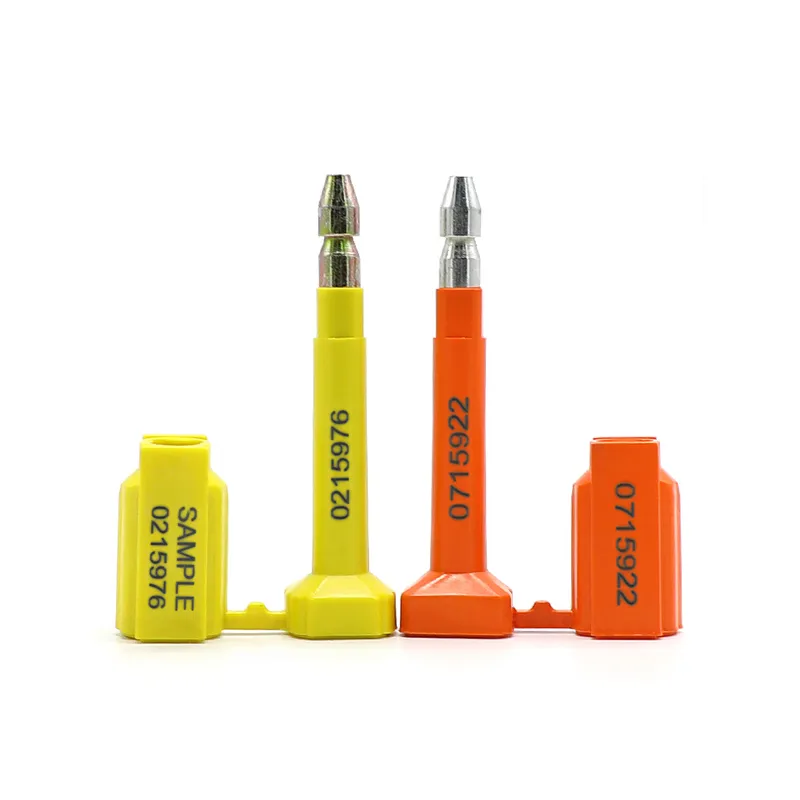
Methods for Printing on Metal Strap Seals
The metal surface limits the printing processes that work reliably in production volumes. At our facility, we evaluate each method against the required throughput, mark permanence, and cost per unit because the right choice depends heavily on order quantity and usage environment.
Hot stamping presses colored foil onto the metal under heat and pressure. The resulting mark is opaque, can be applied in various colors, and serves well for company logos or short text strings. This method performs best with simple, bold designs. The limitation is that very fine details or small barcodes can lose clarity if the stamping die is not precisely maintained, so we conduct die inspections every shift to confirm consistent transfer.
Laser engraving removes a thin layer of material to create a high-contrast mark. This method produces permanent serial numbers, barcodes, and data matrix codes that survive abrasion, salt spray, and direct sunlight. We use laser engraving for customers needing fully variable numbering sequences that change every seal without slowing production. The mark depth is shallow but permanent; once the metal surface is altered, no amount of scrubbing removes the trace. For seals destined for offshore container shipments or desert road transport, laser engraving outperforms ink-based methods consistently.
Inkjet printing offers fast, non-contact marking for batch numbers and date codes. It works at high line speeds and can print directly onto the metal strap before or after assembly. The limitation is adhesion: ink requires a clean, dry surface, and even then, long-term exposure to chemicals or constant abrasion may degrade the print faster than engraving. For seals used in dry storage and short-haul trucking, inkjet is often sufficient. We recommend it mainly for internal logistics tracking where the seal typically remains within controlled environments.
The table below compares these three methods on key procurement criteria.
| Method | Durability | Customization Speed | Cost per Mark | Best Use |
|---|---|---|---|---|
| Hot Stamping | High | Moderate | Low-medium | Logos, single-color branding |
| Laser Engraving | Very High | Fast | Medium | Serial numbers, barcodes, high-security |
| Inkjet Printing | Medium | Very Fast | Low | Batch dates, internal tracking |
Regardless of method, the underlying metal quality affects print adhesion. Steel strips with inconsistent surface finish or excessive oil residue will reject even the best printing process. Our incoming material inspection includes a surface cleanliness test before the metal strap enters the stamping and printing line, because catching a surface defect early prevents an entire order from carrying weak marks that fail later.
What Keeps Printed Marks Legible Over Time
A clear mark at the factory gate means nothing if it cannot be read at the destination port. We have seen cases where hot-stamped seals on containers traveling through tropical humidity developed corrosion around the printed area, gradually obscuring the logo. The issue was not the printing but the post-print protective treatment: without a clear lacquer seal or oil-resistant coating, moisture and condensation attack the interface between the foil and the steel.
We now specify a UV-resistant clear topcoat for all metal strap seals that will be used outdoors or in maritime environments. This layer bonds to both the printed mark and the surrounding metal, creating a single contiguous barrier. For laser-engraved markings, the topcoat fills the microscopic grooves, preventing dirt accumulation that would otherwise reduce contrast.
A second factor is strap handling. Workers in the field sometimes cinch the strap with pliers or twist it during application. If the printing sits on the section that gets gripped and deformed, the mark distorts. In our design process, we define a printing safe zone on the strap, leaving unprinted grip areas near the locking mechanism and on the tail end. This simple adjustment keeps the mark intact no matter how aggressively the seal is tightened.
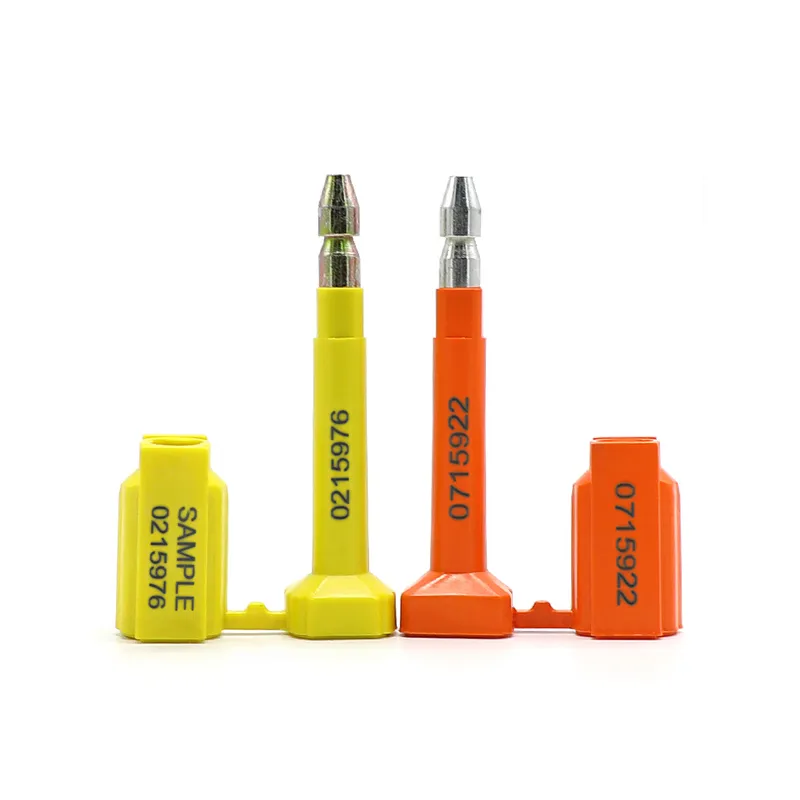
Quality Checks That Protect Your Investment
We test every custom-printed order against three criteria before release: mark adhesion, legibility after simulated transport stress, and human readability under varying light conditions. For a procurement manager, requesting these test reports upfront is a reasonable due diligence step that many buyers skip.
Adhesion testing follows the tape test method used in coatings industries: a pressure-sensitive tape is applied to the printed mark and abruptly removed. The mark must remain intact with no more than 10% edge chipping. For laser-engraved seals, the test verifies that the engraving did not create stress risers that spall under mild impact.
Simulated transport testing cycles the sealed samples through temperature extremes, vibration, and salt fog. We run these tests internally on each new customer design, and we share the results with the buyer before mass production starts. If the application involves exposure to cleaning agents or fuel spills, we incorporate those chemicals into the test protocol. This step catches marking failures that only appear after weeks of real-world conditions, not days.
We also recommend that buyers maintain a small archive of pre-shipment seal samples from each batch. These reference pieces allow independent verification if a dispute arises. It is a low-cost practice that has resolved disagreements quickly in our experience, especially when a logistics provider claims a seal was printed incorrectly.
Partnering with a Manufacturer for Custom Seal Printing
A successful custom metal strap seal order turns on communication of the end-use conditions, not just the print file. We often receive vector artwork with very fine serifs or tight color tolerances that are perfectly suited to paper but not to a curved metal strap moving through a stamping station. Our pre-production review includes a design-for-manufacturing adjustment: simplifying fonts, widening stroke gaps, and recommending solid color blocks instead of gradient fills when using hot stamping.
Order quantity influences method selection beyond just cost. Minimum order quantities for custom hot stamping dies or laser setup are economical above certain volumes; below that threshold, we sometimes recommend inkjet with a protective overcoat to keep unit costs manageable. We advise buyers to discuss their projected annual usage rather than only the first order, because tooling amortization changes the economics considerably if repeat orders are planned.
Another item that comes up regularly is marking location. Some buyers want the logo on the strap itself, others on the locking body. Metal strap seals can accommodate both, but the body surface is often smaller and may require a different marking method. For instance, a pad-printed logo on the lock body combined with a laser-engraved serial number on the strap gives dual identification at minimal added cost.
We also maintain a free sample program that lets buyers test the actual printed seal before committing to bulk production. While an online image shows the concept, holding a physical sample reveals tactile quality, color accuracy, and legibility that no photograph captures. This is especially useful when the seal must be inspected by third-party logistics partners or customs officials who have their own readability expectations.
Common Questions from Procurement Professionals
How do I confirm that the printing will not wear off during transport?
Request abrasion-resistant test reports from the manufacturer. The tape adhesion test and salt spray cycle results we described earlier give hard evidence. If a supplier cannot produce these, use the free sample program to conduct your own field trial before placing a volume order.
Can you print variable data like sequential barcodes on metal strap seals?
Yes, laser engraving handles full variable data sequences at high speed. We run serialized barcodes and QR codes on production lines daily, with in-line verification cameras that confirm every scanned code matches the database before the seal enters packaging. This ensures that the marking on the seal is identical to the one recorded in the shipping manifest.
Is hot stamping or laser engraving better for outdoor use?
Laser engraving has the edge in extreme exposure because the mark is a physical alteration of the metal rather than an applied layer. Even if the protective coating wears off, the engraved groove remains readable. Hot stamping with a quality topcoat is still very durable, but for long-term maritime or desert exposure, we steer clients toward laser engraved markings for their added safety margin.
What is the typical lead time for custom printed metal strap seals?
Standard lead times run 2-3 weeks from artwork approval to shipment for moderate order quantities. Complex multi-step marking involving both stamping and engraving can add 3-5 days. Rush orders are possible if raw stock and tooling are available, but we advise against rushing the design approval stage because a mistake caught after production starts is far costlier than an extra day in review.
Do I need a separate supplier for printing, or does the seal manufacturer handle it in-house?
A fully integrated manufacturer performs metal strap forming, stamping, and printing under one roof. This avoids the quality gaps and delays that happen when a seal maker outsources the printing step. As a buyer, verify that the factory’s quality system covers the printing process as part of its internal audit scope, not as a subcontracted afterthought. If your program involves internal tracking with barcoded seals, confirming integrated manufacturing capability early will save you from supply chain headaches later. Share your artwork specifications and volume requirements at [email protected] or call +86 13853189290, and we will confirm compatibility and sample availability.
If you’re interested, check out these related articles:
Selecting a Security Seal Manufacturer: Strategic Vetting for Supply Chain Integrity – Junchuang Lock
Ear Tags for Cattle and Sheep: Optimizing Livestock Traceability – Junchuang Lock
Selecting Ear Tag Size and Color: A Strategic Guide for Livestock – Junchuang Lock
Custom Plastic Seal Manufacturing: Precision, Materials, Security – Junchuang Lock