
Wholesale meter seals for utilities fail when procurement treats them as simple commodity parts. A seal that degrades under ultraviolet light, cracks in cold weather, or arrives with duplicated serial numbers creates a utility accountability problem long before the unit price matters. More than fifteen years on factory floors have shown me that the real specifications are tamper evidence, sequential numbering, material stability, and repeatable quality control. Utilities get stronger supply outcomes when they evaluate factory capability first, then negotiate volume pricing.
What Should Utilities Specify Before Requesting Wholesale Meter Seal Quotes?
Wholesale meter seals for utilities are only as effective as the specification sent to the factory. When a purchase order says only “meter seal, plastic, 50,000 pieces,” the supplier can quote almost anything and the utility accepts cost risk without meaning to. The most useful quote request names the meter type, mounting point, wire or strap geometry, material, marking, and required tamper evidence.
At minimum, send these details:
- Meter type: electric, gas, or water, plus the model family if available.
- Sealing point: terminal cover, meter housing, or valve connection, because the required strap length and wire diameter change with the application.
- Material: polypropylene, nylon, polycarbonate, or lead seal, with any UV or low temperature requirement.
- Marking: utility name, logo, sequential number, barcode, or QR code, including print color and position.
- Tamper evidence: whether the seal must break cleanly, stretch, or show a color change if someone tries to remove it.
- Packing and batch size: carton count, label format, and whether each carton must match a serial range.
I have seen utilities place annual orders from an old drawing while meter models had changed. The new seal did not break cleanly, and the meter shop could not tell whether a meter had been opened. A proper specification catches that before tooling starts, not after the shipment arrives.
Which Meter Seal Materials Work Best for Electric, Gas, and Water Utilities?
Material selection changes with each utility environment. Polypropylene remains the most common for indoor and mild outdoor meter applications because it balances cost, moldability, and tamper evidence. Nylon grades carry higher tensile strength and a wider temperature range, which suits cold geographic areas and gas meters with wide seasonal swings. Polycarbonate offers clarity and dimensional stability, but stress cracking can appear if the locking geometry is too tight. Lead wire and lead disc seals still serve some legacy metering programs, especially where inspectors expect a deformable seal that records tamper attempts physically.
| Material | Best utility fit | Field weakness to check | Typical marking |
|---|---|---|---|
| Polypropylene | Indoor electric meters and general tamper evidence | Embrittlement in extreme cold unless UV and cold stabilizers are specified | Pad printing or hot stamping |
| Nylon | Gas and cold climate outdoor meters | Moisture absorption can shift dimensions slightly | Laser marking works best |
| Polycarbonate | High clarity terminal covers and inspection windows | Stress cracking around locking barbs | Pad printing with controlled ink |
| Lead seal | Legacy water and gas meter programs | Regulatory and handling concerns | Embossed stamping |
For a utility that spans hot, cold, wet, and coastal service territories, the safer route is to test two resin candidates against the actual meter and sealing tool before ordering a full year of stock. A material that passes a desk review can still fail during installation because the strap is too stiff for a gloved hand or the locking chamber cracks when it is forced.
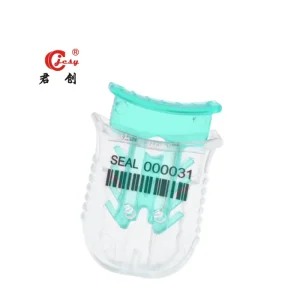
How Do Factory Quality Controls Prevent Wholesale Meter Seal Failures?
Most wholesale meter seal failures are not material failures. They are process failures: a batch of seals with missing serial numbers, repeated numbers, brittle locking arms, or a bag count that does not match the carton label. A factory that controls these risks through inspection can save a utility from meter shop delays and regulatory disputes.
At our site, the control sequence runs in this order:
- Incoming resin and wire are checked against the lot certificate for grade, melt flow, and UV stabilizer content.
- First-piece approval before mass molding confirms dimensions, print position, and locking force.
- During production, operators pull samples on a fixed schedule and check pull-out force, strap length, and serial number readability.
- Serial numbers pass through a camera check that flags duplicates, skips, and unreadable characters before packing.
- Final packing verifies carton count, serial range labels, and shipping marks.
A duplicate serial range is one of the fastest ways to lose utility trust. I have watched a whole shipment get quarantined because two boxes contained the same sequence block and the meter team could not trace which district received which seal. Since that failure, every production lot leaves with a serial range label and an inspection card packed in each carton.
If your utility program operates in a region with high ultraviolet exposure or salt air, confirm the stabilizer package and any salt spray testing before the bill of materials is final. Send your meter type and annual usage to [email protected], and we can check which material will hold up without overpaying.
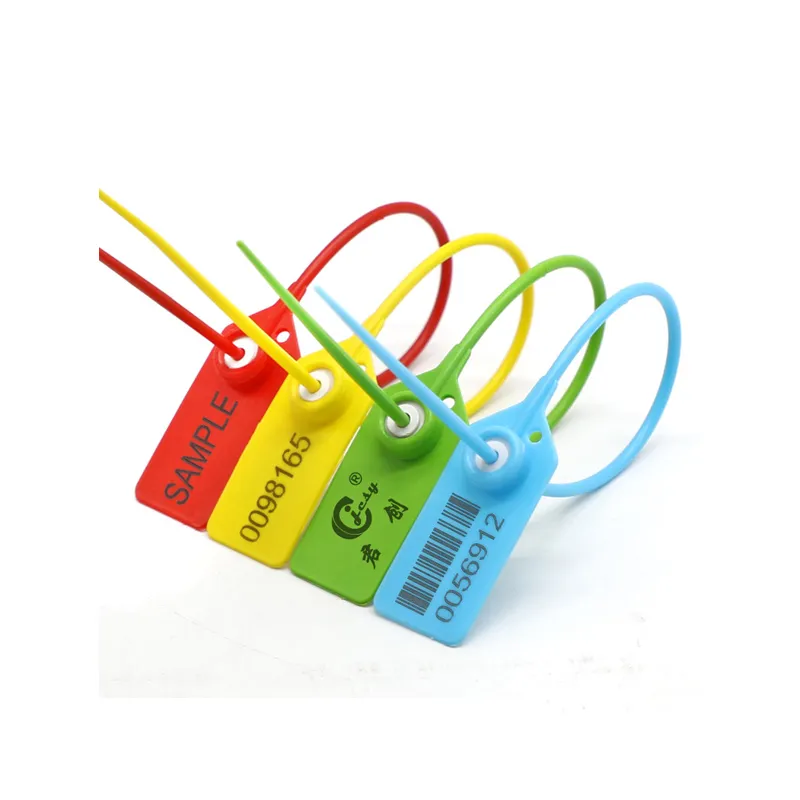
What Does Wholesale Meter Seal Pricing Actually Depend On?
Wholesale meter seal pricing moves far more with the specification than with the negotiation. The largest cost drivers are material, serialization method, and volume. A simple unprinted polypropylene seal costs less than a barcoded nylon seal with sequential numbering and a custom color, and the difference is legitimate process cost, not a supplier markup.
After material, the largest controllable cost driver is serialization. Sequential numbers, barcodes, and QR codes add printing time and inspection labor, and those costs rise when the utility requires an uninterrupted sequence across multiple cartons and delivery dates. Volume still matters, but a utility that asks for a lower price without lowering the serialization requirement is asking the supplier to absorb process cost, and the savings often come out of inspection time.
If a supplier quotes a very low price on a numbered seal, ask how the numbering is controlled. If the answer is unclear, you are probably seeing duplicated numbers or a printing process without full inspection. Paying slightly more for camera checked numbering protects the utility from audit trouble and rework.
How Can Utilities Verify a Factory Before Placing a Bulk Meter Seal Order?
Factory verification can be simpler than a full audit. We ask new buyers to approve a pre-production sample, confirm the serial number range rule, and review one batch inspection record before the production run starts. A ten minute video call to check the molding floor, the marking station, and the packing area tells you more than a polished quote page.
Before committing to a bulk order, check these items:
- Pre-production sample approved by the utility metering team.
- Serialization control method that prevents duplicates and skips.
- Material certificate and UV or cold weather documentation if the service territory requires it.
- Inspection equipment and records, including pull-out force and camera checks.
- Carton and label sample with serial range layout.
- Confirmed lead time and shipping method.
Buyers who skip qualification often discover inconsistent serialization or brittle material after the meters are installed. That is the cost of treating a custom seal like a standard part. The alternative is to run the first order as a controlled qualification lot and confirm every requirement before it ships.
If your next meter seal program involves custom marking, cold weather installation, or serialized traceability, send your drawing or part number, marking requirements, and quantity to [email protected] or WhatsApp +86 13853189290. We will confirm material, tooling, serialization, and lead time before you commit.
What Else Should Utility Buyers Ask About Wholesale Meter Seals?
What is the MOQ for custom meter seals?
MOQs depend on the seal type and the marking method. A stock seal with hot stamp marking can start at a lower quantity than a custom molded seal with laser marked sequential numbers, because the custom mold and artwork setup must be absorbed across the run. Most utility programs order annual volumes, so the MOQ is usually not the deciding factor. The better question is whether the factory can hold the same serial number sequence across multiple cartons and production dates. If your utility splits deliveries by service district, tell the supplier the sequence blocks before quoting.
Can meter seals be made with QR codes and sequential numbers?
Many buyers assume a QR code solves traceability by itself, but the sequence still needs a controlled printing and inspection step. A QR code can carry more data than a printed number, yet duplicates and unreadable codes defeat the purpose. The factory should combine the QR code with human readable sequential numbers, then run each code through a vision system to catch duplicates, skips, and low contrast. Most utility metering teams still rely on the human readable number in the field, while the QR code speeds up data entry during installation or inspection. Confirm the contrast and scannability on the actual seal surface before approving production.
Which color should utilities use for different meter types?
It depends on the purpose of the color. For quick visual identification, utilities often assign one color to electric, another to gas, and another to water, but there is no universal standard. For tamper evidence, brighter colors and contrasting marking help inspectors see damage faster. For UV resistance, avoid colors that fade quickly, because a faded seal looks like an old seal even when it is still intact. In utility programs we have supplied, the most practical approach is to keep the body color consistent for a meter class and use the marking or serial prefix to identify the district. This keeps field inventory simple without multiplying SKU counts.
How long do plastic meter seals last in outdoor utility installations?
The better question is not the exact years, but whether the material stays tamper evident for the full meter service interval. Polypropylene can last for many years when the compound includes UV and cold weather stabilizers. Without those additives, brittleness and fading can show up within one or two harsh seasons. Nylon and polycarbonate can offer longer mechanical life, but the locking geometry matters just as much as the resin. If your utility needs a minimum service life, share the installation environment and annual usage with [email protected] and we can confirm the right material and marking method for the territory.
If you’re interested, check out these related articles:
Security Seal Factory vs Trading Company: Expert Procurement Guide – Junchuang Lock
Comprehensive Meter Seal Installation Guide for Industrial Security – Junchuang Lock
Cable Tie Tensile Strength: Engineering Secure Fastening – Junchuang Lock
Bolt Seals for Containers: Enhancing Global Cargo Security – Junchuang Lock