
High security seals protect a container only when the port verification discipline matches the physical seal. Port operations rely on these seals at gate-in, customs stops, and vessel handoff, but the seal itself does not stop a determined thief. A bolt seal or barrier seal creates evidence of entry, and that evidence is useful only when terminal staff check the number, inspect the locking path, and record the result before release. I have spent fifteen years producing and reviewing seals for port and logistics buyers, and most failures I see are procedural, not mechanical.
High Security Seals Establish Container Chain of Custody at Ports
A container moving through a port changes hands several times: trucker, terminal operator, customs, vessel crew, and receiving terminal. Each handoff is a chain of custody event. High security seals act as the physical record that the container has not been opened without authorization since the previous recorded point. When the seal number matches the manifest and the locking path is intact, the next party accepts the handoff. When the number differs, the chain breaks and the terminal starts an exception review.
Low grade indicative seals can be removed and replaced without leaving obvious marks. A high security seal raises the barrier by combining unique serialization, a locking mechanism that resists manual recovery, and materials that deform or separate under force. No seal makes a container impenetrable. The purpose is to make unauthorized entry visible and difficult to hide.
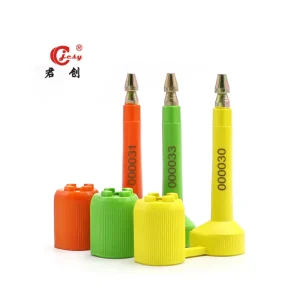
We mark both the shaft and the barrel on every bolt seal because a seal with only one marked surface invites substitution. I have seen terminals receive containers where the number matched but the marking depth was wrong because the seal came from a different batch. The gate clerk could not detect the difference. Consistent marking and batch records give terminal staff a comparison point when something looks wrong.
Port Operators Apply and Verify High Security Seals at Specific Control Points
Port operators do not always apply the original seal. The shipper or consolidator usually fits the seal at the loading point. The port’s role is to verify it at defined control points and to replace it only when an authorized party breaks it for inspection.
Where Ports Use High Security Seals
At gateway terminals, the seal is verified, not usually replaced. At container freight stations, the port may apply a fresh high security seal after consolidating less-than-container cargo, because the goods are in port custody and the handoff to the rail or ocean carrier starts a new chain of custody event. For transshipment cargo, the terminal may apply a barrier seal after inspection removal, when the container remains in the yard before reloading.
What Gate Staff Verify Before Release
At each checkpoint, three checks matter: the number, the locking path, and the seal body. The number must match the current manifest. The locking path must show no twist, cut, or pinched section. The body must show no stress marks from prying. If any check fails, terminal staff should hold the container and follow the terminal exception process.
The four checkpoints that matter most are:
- Gate-in. The receiving clerk reads the seal number against the booking, checks for prying or cutting, and photographs the locking path. If the seal is missing or the number differs, the container waits for resolution before entering the terminal.
- Customs inspection. An examining officer cuts the seal if cargo must be inspected. The terminal records the old number and applies a replacement seal with a new number, then updates the manifest before the container returns to the yard.
- Vessel load. The terminal confirms seal integrity and manifest number before loading. A container with a broken seal leaves the load sequence until the line and shipper decide whether to inspect.
- Discharge and gate-out. The receiving terminal repeats the gate check. If the seal does not match the discharge list, the container may be held for inspection or refused for pickup.
ISO 17712 Certification Separates High Security Seals from General Purpose Seals
ISO 17712 is the main mechanical seal standard for container security. It divides seals into indicative, security, and high security categories. A high security seal must pass tensile and tamper evidence tests that general purpose seals do not. Certification is not a one-time event; manufacturers should maintain documented systems for marking, traceability, and batch control, because a certificate without process control is paper.
What ISO 17712 Actually Tests
At a practical level, the standard checks whether the seal resists access attempts and whether entry leaves clear signs. Testing examines the seal after attack and requires that repair or reassembly cannot hide evidence. A bolt seal that can be unscrewed and re-threaded without damage will not pass a serious high security audit, because the recovery path defeats the evidence path.
Why High Security Rating Matters at Customs
Customs security programs accept high security seals as part of a recognized supply chain security posture. If a port applies a replacement seal, that replacement should carry the same high security rating. A lower rated replacement can trigger inspection delays, because the destination authority has no confidence that post-inspection cargo remained undisturbed. The rating difference is one of the first items an auditor checks in a seal program.
If your port route includes customs stops or transshipment, confirm whether the replacement seal procedure and documentation align with the destination authority before a shipment gets held. Send your current seal type and route to [email protected] and I can compare the rating and marking practice against ISO 17712 requirements.
Bolt Seals and Barrier Seals Serve Different Port Applications
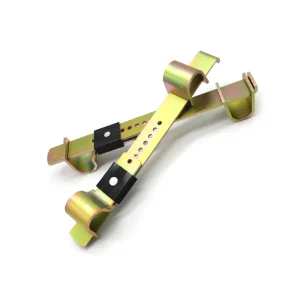
High security seals are not interchangeable. Bolt seals are the default for standard container doors because they lock the right and left handle assemblies with a rigid shaft. Barrier seals are used where a stronger physical block is required, such as high value road or rail moves and containers that sit in unsecured yards for extended periods.
| Factor | Bolt Seal | Barrier Seal |
|---|---|---|
| Locking method | Interlocking bolt and barrel | C-shaped steel barrier with fixed lock |
| Port use | ISO container doors, single latch | High value shipments, multi-door and intermodal moves |
| Tamper evidence | Rigid shaft shows cutting or prying | Lock body and barrier show cutting attempts |
| Serialization | Laser marked on shaft and barrel | Marked on barrier body and lock |
| Best when | Quick gate check and high volume | Longer high risk transit and customs stops |
Both types can carry high security ratings, but the removal and verification process differs. A bolt seal comes off with bolt cutters and takes seconds to verify at the gate. A barrier seal requires deliberate cutting and is easier to spot from a distance, but it costs more per unit and demands stronger cutting equipment. Port buyers often mix both types: bolt seals for routine container moves and barrier seals for loads with special conditions.
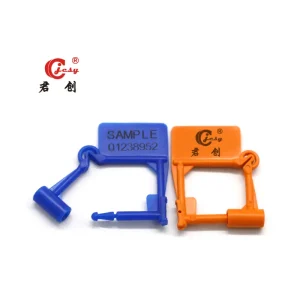
For truck trailers moving between the port and a warehouse, plastic padlock seals are sometimes used as an indicative layer below the high security bolt or barrier seal. They do not replace a high security seal, but they give the receiving team a quick visual check on the outer door.
A Seal Program Only Works When Suppliers Match Port Procedures
A common failure in port seal programs is not the seal itself. The port buys high security seals but keeps gate records on paper, or switches suppliers and inherits a different numbering scheme. The physical seal stays strong while the record trail weakens. When a shipment is delayed, the terminal cannot reconstruct which clerk verified the seal, when, and against what document. A low cost seal becomes a costly exception.
That is why we treat port customers differently from one-time buyers. We ask for the gate flow, the seal type used on each lane, and the annual consumption, because those details determine serialization rules, packaging counts, and replacement stock levels. If the port uses both bolt and barrier seals, we separate the numbering ranges so the gate clerk can identify the category at a glance.
If your port operation is reviewing high security seals, send the seal type, quantity, and operating route to [email protected] or call or WhatsApp +86 13853189290. I will review the current seal type against your procedures and confirm the ISO 17712 documentation and replacement protocols before you commit to a new order.
Port Buyers Frequently Ask These Questions About High Security Seals
Do ports require high security seals on all containers?
No, not on every container. The requirement depends on the cargo, the carrier, and the destination authority. For general containerized cargo where no security program applies, a security seal may be acceptable. But if the shipment moves under a customs security scheme or carries high value goods, the carrier or freight forwarder usually requires a high security seal. Port terminals enforce the requirement by checking the seal against manifest data, not by setting the rule themselves.
Can a port replace a seal after customs inspection?
Many shippers assume a container with a broken seal is automatically refused or must return to origin. That is not how ports work. After customs inspection, the examining party cuts the seal, records the old number, and applies a replacement seal with a new number. The new seal should carry an equivalent or higher security rating. The manifest is updated so the receiving terminal sees the reason for the number change. Without that update, the cargo will likely be held for inspection.
How do terminals know a seal has not been swapped?
It depends on the seal design and the gate check discipline. A high security seal with unique marking on both locking components makes swapping harder, because a removed and replaced seal usually shows tool marks or a marking mismatch. If the terminal photographs the seal and compares the number at gate-in and discharge, substitution becomes visible. If terminal staff only glance at the general seal type, even a good bolt seal can be defeated by a prepared copy.
How many seals should a port or shipping line keep on hand?
In the programs I have supplied, buyers keep at least two weeks of normal consumption plus a separate inspection replacement buffer, usually weighted toward the seal type used on high risk lanes. Holding bolt seals and barrier seals in the same color but different number ranges makes it easier for gate staff to spot category errors. Lead time also matters, because replacement stock must arrive before the buffer runs out. Share your route and monthly seal use with [email protected] and I can confirm a buffer recommendation for your lane.
If you’re interested, check out these related articles:
Bolt Seal Quality Inspection: Safeguarding Cargo & Compliance – Junchuang Lock
Security Seal Mistakes: Preventing Tamper, Ensuring Compliance – Junchuang Lock
ISO 17712 Standard: Securing Global Supply Chains – Junchuang Lock