
Seal solutions for logistics companies fail when they are specified after the route is already running. A lane that loses cargo rarely has one weak point; it has a seal type, strength rating, or inspection habit that does not match the trailer, container, or cross-dock operation it protects. At Junchuang we treat seal selection as a supply chain protection decision, not a commodity purchase, because tamper evidence, tensile strength, and serial numbering all affect loss claims, customs clearance, and carrier accountability. The sections below lay out what logistics buyers should specify, inspect, and audit before committing to a seal program.
Logistics Seal Solutions Start With the Cargo Flow
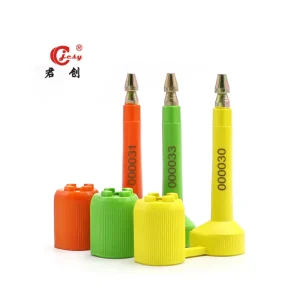
Logistics seal solutions should not begin with a catalog. The first question is where the seal will be installed and who needs to remove it. A container door on an export shipment needs a bolt seal that requires a cutter to remove. A tanker hatch or railcar latch often accepts a cable seal better than a rigid bolt seal. A cross-dock door that opens several times per shift needs a pull-tight plastic seal or padlock seal that can be replaced quickly without tooling.
| Seal type | Best logistics use | Tamper evidence level | Typical inspection point |
|---|---|---|---|
| Bolt seal | Container doors in long-haul export | High; must be cut to remove | Locking insert and serial match |
| Cable seal | Tanker hatches, rail latches, irregular lock points | High; cut or severe damage visible | Cable diameter and locking body |
| Plastic pull-tight seal | Trailer doors, distribution carts, regional freight | Medium; breakage clearly visible | Tension and serial number |
| Metal strap seal | Cargo bundling, drum closures, boxed freight | Medium to high | Strap crimp and embossing |
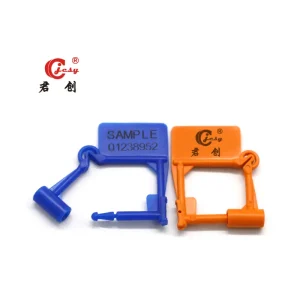
| Padlock seal | Cross-dock doors and repeat access points | Medium | Shackle integrity and marking |
One mistake I see repeatedly is assigning one seal type to an entire fleet without checking the door geometry. Some trailer handles have narrow holes that will not pass a standard bolt seal rod. Others need a longer shackle or a cable diameter that fills the latch gap. If the seal does not fit the lock point tightly, it leaves movement, and movement is how tampering becomes plausible. We ask logistics buyers to send photos of the actual door, hatch, or cart locking point before we confirm a recommendation. A dimensioned photo resolves more specification errors than a dozen product spec sheets.
Tensile Strength and Tamper Evidence Set the Security Floor
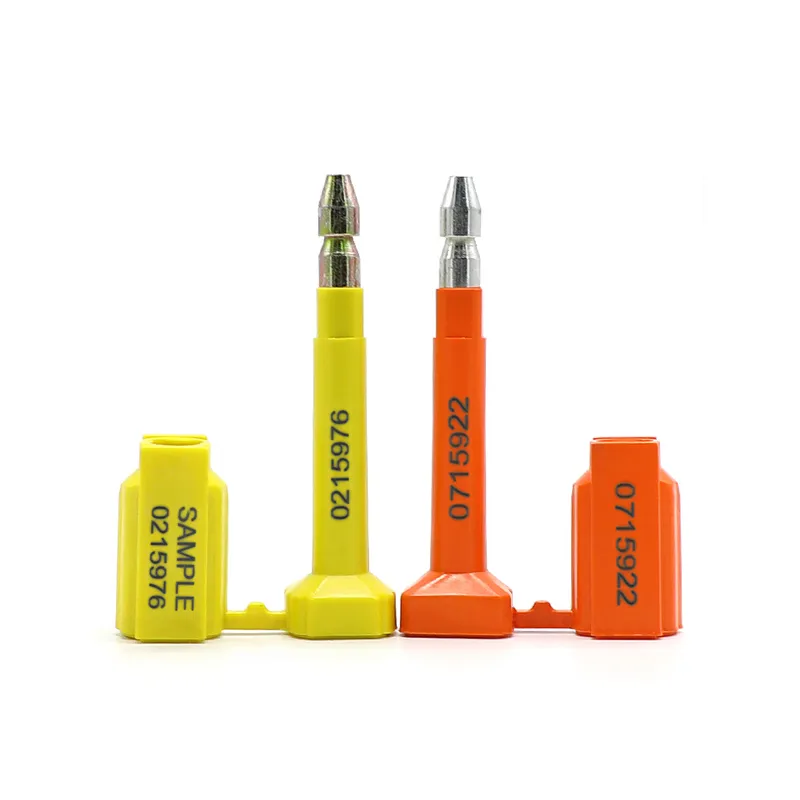
After seal type, tensile strength and tamper evidence separate a security seal from a symbolic closure. Tensile strength is the pulling force a seal can withstand before the locking mechanism fails or the body distorts enough to be removed. For container bolt seals, ISO 17712 high security certification sets a defined performance floor. The lock must hold under test load, and the seal must show clear evidence if someone attempts to open and reseat it.
How much tensile strength does a container seal need?
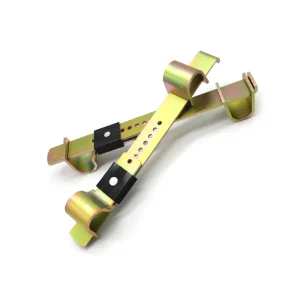
The answer depends on the closure point and the threat level of the lane. I have seen procurement specs chase one tensile figure and ignore the locking insert, which is the part that usually fails first. A bolt seal can have a strong rod and still pull apart because the insert is soft or poorly retained. We test locking insert retention on every production lot and pull samples to confirmed values before shipment. Logistics buyers should ask the supplier to name the exact failure point in the test report rather than repeat a catalog strength figure.
Tamper evidence works the same way. A seal that breaks but leaves no visible change on the body offers no proof. We inspect the locking insert, the rod serration, and the printed or laser-marked surface because any one of those points can hide an attempt to reseat the seal. If the marking rubs off or the insert shows tool marks, the seal has already lost its value.
Numbering and Inspection Keep Logistics Seal Programs Honest
Numbering and inspection keep logistics seal programs honest after the seal leaves the supplier. If the receiving team cannot match the seal number to the shipping document, the seal has no value when a loss claim starts. Each seal should carry a unique serial number, and that number should be recorded on the delivery note, the driver’s manifest, and the receiving report before the trailer is opened. Missing or repeated numbers are an immediate red flag.
What belongs in a seal inspection record?
A workable record includes four fields: seal number, seal type, the locking point location, and the condition of the seal before removal. It should also state who removed the seal and at what time. I have watched disputes collapse to “the number was not written down.” A logistics provider that keeps only the seal number has half a record. The strongest records photograph the seal before removal and store the image with the delivery document. That habit costs nothing and turns a broken seal into a claim with evidence.
Sampling on arrival also matters. We recommend pulling a small batch at receiving and checking the locking insert, the marking, and the serial sequence against the delivery note. If one seal in the batch fails the check, quarantine the lot. Logistics operations that do this for one month usually find specification problems early and stop them before they reach a loaded trailer.
If your lanes include refrigerated trailers, export customs, or high-value cargo, it is worth confirming the seal’s compliance documentation and numbering format before finalizing your specification. Send your lane details and seal type to [email protected] and we will confirm the right certification and marking.
Supplier Audits Catch Seal Failures Before Shipments Do
Seal failures in logistics usually start in the supplier’s process, not in the field. A factory that cannot show how it controls raw material, locking insert depth, marking, and pull testing will eventually ship a batch that fails under normal use. Auditing a seal supplier is not about taking a tour; it is about confirming that the process has checkpoints and that bad parts stop at those checkpoints.
What should a logistics buyer audit at a seal factory?
Ask to see the incoming raw material inspection, the locking mechanism insertion process, and the batch test records. We keep those records and show them during customer audits because a seal is a traceability product before it is a physical product. The audit should also confirm whether the factory separates approved stock from quarantined stock. If rejected parts flow back into the same bins, the rest of the quality program is paper. A buyer who visits the line for half a day learns more than a buyer who reads ten supplier questionnaires.
One point I return to in supplier audits is the difference between a sample and a production lot. A supplier can always ship a perfect sample. The pattern of the production batch is where the real performance lives.
A Seal Program Is Only as Strong as the Supplier Behind It
Most logistics companies do not discover a weak seal program until a shipment is opened at the wrong point. By then the missing cargo, the claim, and the customer conversation have already happened. The practical fix is to lock the seal specification to a supplier who carries the same inspection discipline you use in the warehouse. If you are evaluating seal solutions for logistics companies, send your seal type, quantity, numbering format, and destination to [email protected] or call +86 13853189290. We will confirm the right specification and lead time before you commit.
Common Questions About Seal Solutions for Logistics Companies
Which seal type should a logistics company start with?
Start with the door or latch point, not the catalog. Bolt seals fit container doors and intermodal loads that need high removal resistance. Cable seals handle tanker hatches and rail latches where the lock point is irregular. Plastic pull-tight seals and padlock seals serve cross-dock and distribution operations that need quick replacement. We tell buyers to send a photo of the actual lock point before ordering. That step removes more mis-specification than any comparison chart.
Do all container seals need ISO 17712 certification?
A common misreading is that every seal must be ISO 17712. Not every domestic or low-risk lane requires it. For containerized export, customs authorities and insurers often expect an ISO 17712 high security bolt seal, and the certification has real bearing on customs clearance and claims. For local distribution, a properly made numbered plastic or cable seal may be sufficient. The buyer should confirm the requirement with the carrier or insurer before spending on certification the lane does not need.
Can one seal program cover domestic and export freight?
It depends on the lanes. For domestic freight, replacement speed and clear numbering usually matter more than bolt seal strength. For export, the seal must satisfy high security requirements and survive longer moves with multiple handling points. We often see logistics companies keep two seal specifications: a high security bolt seal for containers and a pull-tight or padlock seal for regional distribution. Running one seal type across both is possible only if the high security option does not slow down daily operations.
What should a buyer do if a seal arrives with a duplicate serial number?
In programs we have supported, duplicate serial numbers stop the lot from entering service until the supplier explains the marking error. A duplicate number strips the seal of its traceability value and can invalidate a loss claim later. We record every number before packing and recheck the sequence during final inspection. If a customer reports a duplicate, we ask for the affected numbers, pull the batch records, and replace the lot rather than argue about whether the error matters. Send your numbering format and quantity to [email protected] and we will confirm how the sequence is controlled.
If you’re interested, check out these related articles:
Heavy Duty Cable Tie Applications: Industrial Fastening Solutions – Junchuang Lock
Cable Seal Manufacturer Certifications: Your Guide to Compliance – Junchuang Lock
Ear Tag Installation: Precision Techniques for Animal Identification – Junchuang Lock
Bolt Seal OEM Manufacturing Process: A Technical Deep Dive – Junchuang Lock
Cable Tie Tensile Strength: Engineering Secure Fastening – Junchuang Lock