
Container security seals are the first line of defense against cargo theft and tampering in global shipping, but a seal’s effectiveness depends entirely on how it is made and how it is applied. As a manufacturer with fifteen years of hands-on production experience, I have seen too many shipments compromised by seals that looked correct but failed under real-world conditions because of cheap materials or poor locking mechanisms. This article explains what container seals do, how to select the right type for your cargo, and why the factory that produces them is just as important as the certification printed on the packaging.
What a Container Security Seal Does for Your Shipment
A container security seal is a single-use locking device that fits through the door hasp of a shipping container. Once locked, the only way to open the container is to cut or break the seal. There is no secret; the value is in the evidence. Every seal carries a unique serial number, often with a barcode, that is recorded on shipping documents. If the seal arrives broken or with a different number, someone opened the container in transit. In intermodal logistics where a container might change hands five or six times between origin and destination, that chain of custody depends entirely on the seal’s physical integrity.
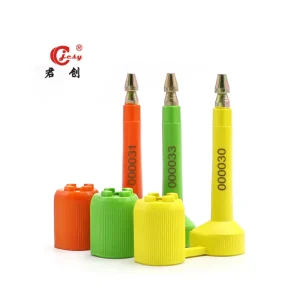
Types of Container Security Seals for Different Cargo Risks
The shipping industry uses several seal types, each designed for a specific security level and operational environment. Selecting the wrong one is not just inconvenient; it leaves cargo vulnerable.
| Seal Type | Security Level | Typical Use | Reusability |
|---|---|---|---|
| Bolt Seal | High | Ocean containers, cross-border freight | Single-use |
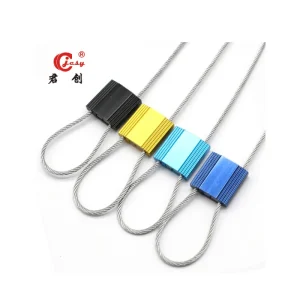
| Cable Seal | Medium-High | Tanker hatches, rail cars, irregular doors | Single-use |
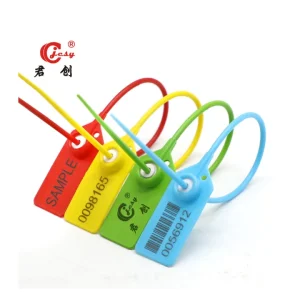
| Plastic Pull-Tight Seal | Low-Medium | Domestic trucking, distribution | Single-use |
| Metal Strap Seal | Medium | Drum closures, valve locks | Single-use |
Bolt seals meet ISO 17712 high-security requirements with a steel locking pin that snaps into a barrel, requiring a bolt cutter for removal. Cable seals offer adjustable diameters for hatches and doors that do not align perfectly. Plastic pull-tight seals provide tamper evidence for short-haul runs where cost and speed matter. We manufacture all four categories, but the most frequent mistake I observe is a logistics team ordering high-security bolt seals for every container without checking whether the door geometry actually allows reliable installation.
How to Choose the Right Container Seal for Your Shipping Route
The decision should not start with the seal. Start with the threat profile of the route. Cross-border container moves through high-theft corridors demand ISO 17712-compliant high-security bolt seals. Internal distribution runs between warehouses rarely benefit from that same cost. Three factors matter most: security level, door fit, and handling conditions.
Security level is defined by ISO 17712 and by physical tensile strength. A bolt seal rated for 18 kN of shear force cannot be removed by hand. A plastic seal rated for 200 N can. Know the difference, because the cost savings disappear the moment a seal fails. Door fit is practical. A fixed-length bolt seal requires the container doors to close flush; any gap and the seal pin cannot insert fully. Cable seals solve this problem with adjustable steel cable. Handling conditions include temperature extremes, sea spray, and rough handling. Cheap ABS plastic seals become brittle below freezing or soften in desert heat, making tamper evidence unreliable. We test our polypropylene and nylon formulations in environmental chambers specifically because a certification alone does not guarantee field performance in every climate.
Proper Installation and Inspection Steps
Even the best seal cannot protect a container if it is applied incorrectly. Installation in the field needs to be fast and repeatable, but a few seconds of attention prevent a ruined audit.
Start by closing both container doors fully and confirming the hasp plates align. Insert the seal pin through both hasp eyes before engaging the locking barrel. On bolt seals, you must hear or feel the click as the pin seats; a partially inserted bolt can be pulled free. For cable seals, pull the cable taut after locking. Any slack allows a tamperer to twist and weaken the cable. Immediately record the seal number on the bill of lading, the packing list, and the driver handoff document. Photograph the installed seal with the container number visible. When the container arrives, repeat the process in reverse: compare the seal number to the paperwork before touching it, inspect for cut marks or glue residue around the barrel, and only then break the seal. If the numbers do not match or the seal shows signs of tampering, do not accept the cargo without a joint inspection.
Manufacturing Quality That Determines Real-World Seal Reliability
A container seal’s printed certification only proves that a sample passed a lab test once. What matters is whether every seal coming off the production line meets that same standard. I have seen seals from uncertified workshops where the locking pin was a millimeter too short, making the lock hold just enough to pass a casual check but failing under a firm pull. That is a manufacturing tolerance problem, not a design flaw.
Quality control at the factory level must include tensile testing on every production batch, not just type-approval samples. Seal numbering must be sequential with no missing or duplicate numbers, because a gap in the sequence destroys the traceability the shipping line relies on. Material sourcing matters equally. We use virgin-grade polypropylene for plastic seals, not recycled regrind that weakens unpredictably. For bolt seals, the steel pin hardness and the zinc plating thickness determine whether the seal will survive weeks of salt spray on deck. These are invisible factors to a buyer comparing photographs, but they show up immediately in a field failure. Requesting test reports from the manufacturer is not being difficult; it is good procurement.
Sourcing Container Seals That Match Your Operation’s Needs
Importers and logistics providers often choose their seal supplier based on unit price alone. That approach punishes you later. A shipping container is worth thousands of dollars in cargo; a failed seal creates a liability that no per-piece discount can offset. Working directly with a manufacturer eliminates at least one link where quality information gets lost. A factory that designs and produces the seals can customize marking, barcoding, and packaging to your operational workflow. It can also provide the batch test data, material certifications, and compliance documentation that a trading company often cannot source.
When evaluating a seal supplier, ask for the ISO 17712 certificate, a sample batch with your own marking, and the production lead time consistency. If the supplier cannot explain their material grades or the specific testing protocol they use, walk away. At Junchuang Lock Industrial, we produce bolt, cable, plastic, and metal strap seals under one roof, which lets us control every step from compounding to packaging. That direct control is what gives our customers repeatable seal performance across multi-year supply agreements.
Common Questions About Container Seals in Shipping
Do customs authorities require a specific seal type?
Customs agencies do not mandate a single seal brand, but many require that seals meet ISO 17712 high-security specifications for cross-border containerized cargo. Under programs like C-TPAT, importers are expected to use seals that comply with the standard and to record seal numbers in supply chain documentation. Failing to use an appropriate seal can trigger physical inspection delays even if the cargo itself is clean. If your shipments transit multiple customs jurisdictions, confirm the specific seal standard referenced in each country’s authorized economic operator program.
Can I reuse a bolt seal or cable seal?
No. High-security bolt seals and cable seals are designed as single-use devices. Once the locking mechanism engages, it cannot be reset. Any attempt to remove and reapply the same seal leaves visible marks that defeat the tamper-evident function. We occasionally field requests for reusable seals from operations running daily internal loops, but even in those cases the loss of clear chain-of-custody evidence outweighs the small material saving. Use a fresh seal with a new serial number for every container closure.
How do I know if a seal was tampered with if it looks intact?
Visible inspection works for gross tampering, but sophisticated attempts may leave a seal physically intact while the locking mechanism has been compromised. Look for scratches around the barrel entry point that suggest a tool was inserted, check for superglue residue that could bond a cut seal back together, and compare the seal’s weight or feel against a known reference sample from the same batch. In our quality lab, we also pressure-test bolt seals to confirm locking strength, which is a procedure any major freight handler can adopt for incoming seal verification. If your program involves high-value cargo moving through multiple transshipment points, it is worth confirming a seal integrity protocol with your supplier before finalizing your procurement. Share your route and volume requirements with us at [email protected] or via WhatsApp at +86 13853189290, and we can recommend a verification workflow matched to your risk level.
If you’re interested, check out these related articles:
Seal Numbering: Enhancing Supply Chain Traceability – Junchuang Lock
Stainless Steel Cable Tie Guide: Selection for Industrial Security – Junchuang Lock
Cable Seal Versus Bolt Seal: Definitive Guide to Cargo Security – Junchuang Lock
Plastic Seal Manufacturing Capabilities: Ensuring Global Security – Junchuang Lock