
Private label security seal manufacturing gives importers a way to offer branded tamper-evident products without building their own factories, but the production process behind the label is what determines each seal’s reliability. In my fifteen years managing production at a security seal factory, I’ve seen buyers focus on price and quick samples while overlooking the production controls that prevent batch-to-batch variation, only to face inconsistent seal performance down the line.
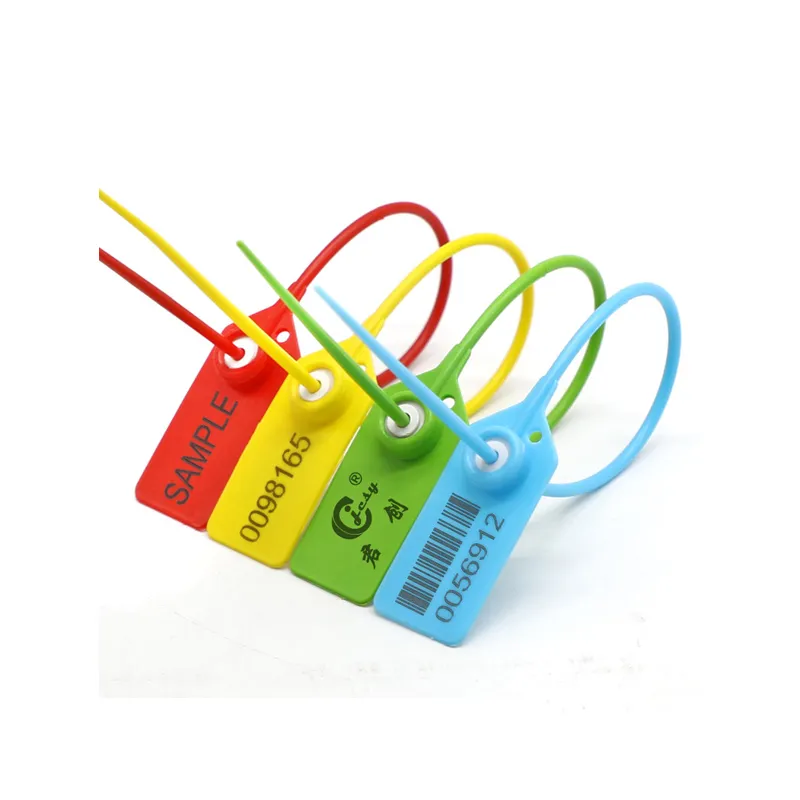
The Private Label Security Seal Manufacturing Process
The private label manufacturing process for security seals starts with design confirmation between the buyer and manufacturer. The client provides artwork or specifications for the seal body, marking text, barcode, and any unique branding. The manufacturer then selects appropriate materials—typically ABS or polypropylene for plastic seals, steel for bolt seals, or combinations for cable seals—aligned to the required security level. After tooling preparation, a pre-production sample is produced for customer approval. Once approved, mass production follows set quality control checkpoints, including material batch verification and dimensional checks. Final steps include custom packaging and export documentation.
Evaluating Private Label Security Seal Manufacturers
Not all manufacturers claiming private label capability deliver the same consistency. First, verify that the factory holds ISO 17712 certification and has third-party testing reports for their seals. Second, request a detailed description of their raw material sourcing—this directly affects product durability and tamper-evident performance. A factory tour or third-party audit can reveal whether their production flow and quality management systems match their documentation. In our facility, every incoming material batch is checked for tensile strength before it enters production. Also examine their track record with large-volume orders; a manufacturer that only handles small batches may struggle with consistency when your order scales. Communication responsiveness during the sampling phase often predicts the cooperation you’ll experience long-term.
Quality Control Protocols for Private Label Seals
Private label seal quality depends on rigorous testing at multiple stages. The three most critical tests are tensile strength, pull-out force, and tamper-evident integrity. We test samples from every production batch, confirming they meet the specified load-bearing requirements—a bolt seal must typically withstand over 10 kN of tensile force. Marking durability is equally important. Laser engraving provides permanent marking that resists abrasion, while hot stamping or screen printing may degrade under harsh shipping conditions if not properly cured. Before shipping any private label order, we perform a random sampling inspection covering dimensions, marking legibility, and locking mechanism integrity. If a buyer requests, we also provide an independent lab test report from SGS or an equivalent body.
Customization and Branding Options for Security Seals
Private labeling goes beyond imprinting a logo. The table below outlines common customization methods and their relevance to security seal performance.
| Customization Method | Durability | Best Use Case |
|---|---|---|
| Laser engraving | High | Container seals, bolt seals |
| Hot stamping | Medium | Plastic seals for single-use |
| Screen printing | Low-medium | Short-term truck seals |
| Embedded barcode/QR | High | Traceability-focused programs |
| Color coding | Medium-high | Quick visual identification |
Beyond the marking method, numbering sequences and barcode formats should be programmed into the manufacturer’s system for automated production. This prevents manual errors that lead to duplicate numbers. I’ve found that buyers who demand a pre-production sample with actual markings avoid most on-site labeling issues. Discuss your security level needs upfront with the factory to align material choice with the required tamper evidence.
If your program calls for specific marking durability or anti-counterfeit features, verify the supplier’s testing methods for those elements before committing.
Building a Sustainable Manufacturing Relationship
The long-term success of a private label security seal program depends on more than the first delivery. Agree on the planned MOQ and confirm that the manufacturer can consistently meet it without sacrificing lead times. We typically maintain safety stock of common materials to respond quickly to reorders. A reliable partner will also provide after-sales support: a quality assurance team ready to investigate any field failure and implement corrective action within a reasonable period. Expect open communication about production schedules, potential delays, and any raw material shortage that could impact your order. When both parties treat the arrangement as an ongoing partnership rather than a single transaction, the manufacturing quality and delivery stability naturally improve.
Your Next Step in Private Label Security Seal Manufacturing
A private label seal program can differentiate your brand, but inconsistent quality from an unprepared factory becomes a liability. By prioritizing production discipline and verified compliance, you reduce the risk of seal failure in the field. To discuss your specific private label security seal requirements, including custom samples and a detailed production timeline, email [email protected] or call +86 13853189290. We will provide a tangible sample and a comprehensive quotation based on your exact specifications.
Common Questions About Private Label Security Seal Sourcing
How can I keep custom markings from wearing off during transport?
The marking method carries nearly all the weight. Laser-engraved markings are permanent and resist abrasion during shipping, making them the right choice for container seals facing rough handling. Hot stamping or screen printing can work for short-term seals but may fade if not properly cured. Always request a pre-production sample subjected to a rub test before approving the method.
What information do I need to supply for a private label order?
Provide your artwork file in AI, PDF, or CDR format, the exact marking specifications including logo placement, text, barcode sequence, and color requirements. If your seals need to meet a compliance standard such as ISO 17712 or a specific tensile strength, include that documentation upfront. The clearer your initial specification, the fewer production delays you’ll experience.
Is there a minimum order quantity that makes private labeling cost-effective?
MOQs vary by factory, but producing fewer than 10,000 pieces per design typically raises the per-unit cost due to setup time. For standardized seal types with custom markings, some manufacturers can offer lower MOQs. We often work with importers starting at 5,000–10,000 pieces, adjusting costs based on the complexity of customization and packaging.
How can I verify batch quality before the entire order ships?
Request a golden sample from production, and ask the manufacturer to pull a random selection from the batch for pre-shipment inspection. You can also appoint a third-party inspector from SGS or Bureau Veritas to check dimensions, markings, and pull-out force on your behalf. A factory that refuses third-party inspection should raise a red flag.
What after-sales support should I expect from a good manufacturer?
A capable partner investigates any reported seal integrity issue, provides a corrective action report, and, when necessary, replaces defective products at no charge. They should also retain your custom molds and tooling for future orders without hidden storage fees. Share your private label requirements at [email protected] to start a partnership built on these after-sales standards.
If you’re interested, check out these related articles:
What is an Animal Ear Tag: Essential Livestock Identification Systems – Junchuang Lock
Security Seal Mistakes: Preventing Tamper, Ensuring Compliance – Junchuang Lock
Cable Tie Tensile Strength: Engineering Secure Fastening – Junchuang Lock