
Security seal wholesale pricing is often treated as a numbers game, but after fifteen years managing production at our facility, I see it differently. The price per unit directly reflects material choices, manufacturing discipline, and the supplier’s willingness to be transparent about costs. Chasing the lowest quote without understanding these factory-floor drivers usually backfires. Inconsistent quality, hidden surcharges, and missed deadlines erode your landed cost in ways a cheaper invoice cannot fix. A strategic partnership with a manufacturer who opens their cost structure to you delivers better long-term value.
What Drives Security Seal Wholesale Pricing?
The unit price of a security seal is not arbitrary. It is built layer by layer from physical inputs and process costs that any importer can learn to read.
How does raw material cost affect security seal pricing?
Raw materials often account for 40–60% of the factory cost. An ISO 17712 bolt seal uses a zinc alloy locking mechanism and a carbon steel rod, while a pull-tight plastic seal uses polypropylene or ABS. Steel rod prices tracked on the Shanghai Futures Exchange, zinc alloy ingot costs, and plastic resin indexes all feed directly into your quote. When we see a 10% rise in ABS resin over a quarter, our plastic seal pricing adjusts accordingly. Understanding these commodity dynamics gives you a reference point to judge whether a price increase is justified or just margin expansion.
What is the typical MOQ for bulk security seal orders?
Minimum order quantity is driven by setup cost, not by a desire to push inventory. Mold charges for custom plastic seal housings can run several thousand dollars, and production runs under a certain volume do not amortize that charge reasonably. For standard bolt seals, an MOQ of 1,000–2,000 pieces is common; for custom plastic seals with unique logos, 5,000–10,000 pieces is more realistic. Each order’s MOQ is negotiable when you bring a clear annual forecast, because the factory can plan steel procurement and tooling wear across a series of production runs instead of a single batch.
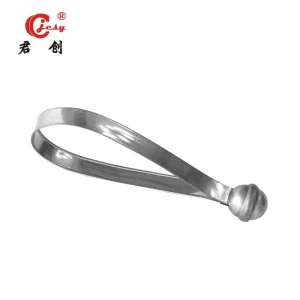
The table below illustrates how different seal types structure their cost components differently.
| Cost Component | Bolt Seal (ISO 17712) | Plastic Pull-Tight Seal | Cable Seal |
|---|---|---|---|
| Raw Material | High (zinc alloy, steel) | Low to moderate (ABS, PP) | Moderate (steel cable, aluminum body) |
| Molding / Tooling | Moderate (die stamping) | High (injection mold amortization) | Low to moderate (locking insert) |
| Certification & Testing | High (ISO 17712 lab) | Low (visual tamper check) | Moderate (tensile test) |
| Printing & Marking | Laser etching, low incremental cost | Pad printing or hot stamp, per-color charge | Laser or hot stamp |
| Assembly | Manual assembly, labor-sensitive | Automated or semi-auto | Manual threading, crimping |
Other operational factors that affect wholesale pricing include packaging requirements (individual barcode labeling adds handling steps), special ink formulas for outdoor UV resistance, and any third-party pre-shipment inspection you request. These are not profit centers for the factory; they are direct labor and material pass-throughs that you control by tightening or relaxing your specification.
Factory Direct or Trading Company: Which Gives You Better Wholesale Pricing?
A common mistake is assuming that a trading company’s lower initial quote means cheaper procurement. Trading companies survive by marking up factory prices, typically 5–15%, in exchange for logistics coordination and multi-product sourcing. If your order consolidates bolt seals, cable seals, and meter seals from a single manufacturer, you are paying that markup for consolidation you could do yourself. The factory-direct route eliminates the intermediary layer and gives you access to the engineers who control mold changes and raw material procurement.
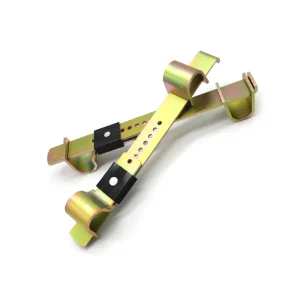
Trading companies can be useful when your order is small and fragmented across many unrelated product categories. For repeat security seal procurement, dealing directly with the manufacturer who holds the ISO 17712 certificate and the production scheduling calendar puts you in a stronger position to negotiate MOQ adjustments and lead times. If your program involves custom cable seal diameters or unusual marking requirements, confirming the exact tooling status with the factory is something a trading company cannot do in real time. Reach out at [email protected] with your drawing, and we can confirm whether existing tooling fits or new mold investment is needed.
How Can You Negotiate Better Security Seal Wholesale Pricing?
Effective negotiation with a security seal factory starts before you send a request for quotation. Bring a twelve-month consumption forecast, even a rough one, because production planning based on a steady pull-through reduces raw material holding cost and machine changeover downtime. We can then structure a pricing agreement that reflects quarterly or biannual deliveries rather than reacting to spot orders.
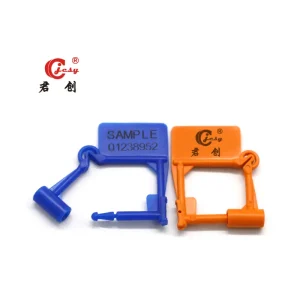
Request a pre-production sample run for any new seal design. This costs the factory real money in mold setup and operator time, and it demonstrates your seriousness as a buyer. In return, we typically apply sample costs against the first bulk order, making the sampling step a shared investment. Use the sample inspection report not only to verify quality but also to understand the actual process steps that drive the quote—seeing the locking insert assembly firsthand clarifies labor cost better than any spreadsheet.
Payment terms also affect negotiation leverage. A letter of credit at sight protects both sides but ties your cash flow. If you can shift to a 30% T/T deposit with balance against the bill of lading copy, the factory’s working capital pressure eases, and we can reflect that in a 1–2% unit price reduction. Ask your supplier to walk you through the cost breakdown for the specific seal type you are buying. If they hesitate, treat that as a signal about their transparency.
Why Does a Long-Term Partnership Stabilize Wholesale Pricing?
The best wholesale pricing outcome is not a one-time low quote. It is a predictable cost trend over three years. When a factory knows your quarterly order volumes, we can reserve production capacity, pre-order steel at favorable futures prices during market dips, and assign experienced operators to your line. Those stability factors—less scrap, fewer rush shipments, smoother raw material hedging—feed directly into a unit price that drifts downward or holds steady while spot market prices swing.
In my production planning, I have seen single-order buyers hit with steel surcharges mid-contract because there was no raw material reservation. Long-term partners receive cost-increase notices with documented raw material index changes and an offer to jointly evaluate alternative materials that maintain performance at a lower input cost. This kind of engineering-level collaboration is impossible in a transactional relationship.
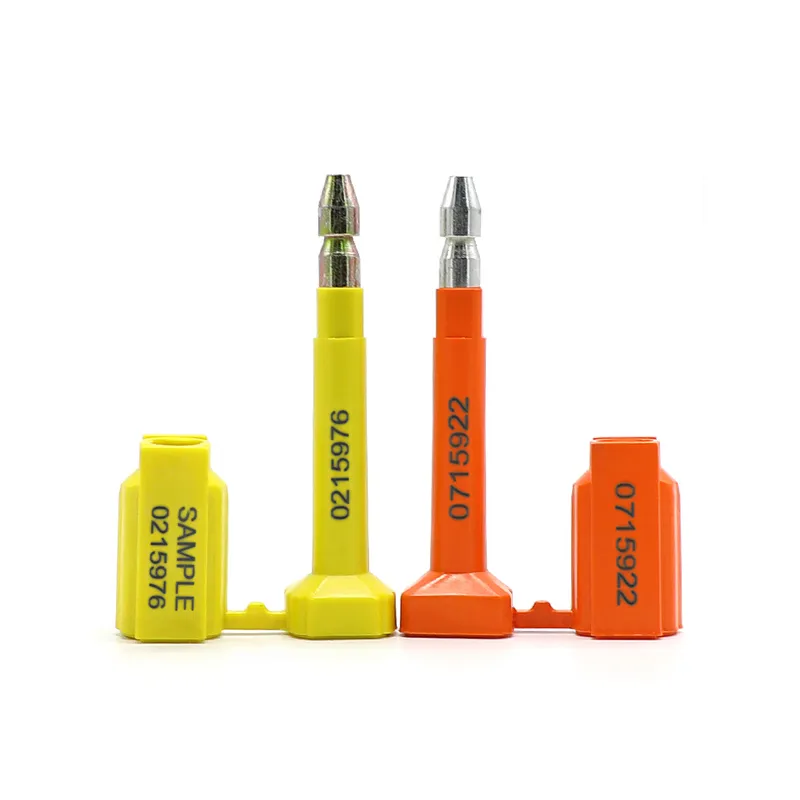
A reliable partner also absorbs certain fluctuations without passing them through. When our ABS supplier raised prices temporarily due to a resin shortage, we held the plastic seal price stable for a European logistics client with a running annual contract, absorbing the margin squeeze because the client’s steady volume offset the risk. That type of decision only makes financial sense with a multi-year relationship.
Start Your Wholesale Pricing Discussion
Negotiating security seal wholesale pricing without direct factory insight often means missing the structural cost drivers that determine your landed cost. Instead of collecting surface-level quotes, talk to the people who pour the zinc alloy and cut the steel rod.
Send your part number, target quantity, and any custom marking specifications to [email protected] or contact us at +86 13853189290. We will return a transparent breakdown of material cost, tooling status, and per-unit pricing based on your real production volume, not a generic price list.
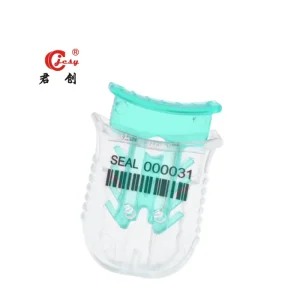
Procurement Questions About Security Seal Wholesale Pricing
Does ordering a larger quantity always guarantee a lower unit price?
Not automatically. Increasing from 5,000 to 20,000 bolt seals typically drops the per-unit cost by 10–15% because material purchasing and amortized tooling improve. Beyond 50,000 pieces, the curve flattens; labor and packaging become the dominant costs. Pinpointing the quantity at which additional volume stops generating meaningful savings requires analyzing your specific seal type. Share your target annual usage, and we can identify your cost-optimal batch size.
How does custom printing affect security seal wholesale pricing?
Each custom printing process carries a different cost profile. Laser etching on metal seal bodies has almost no incremental per-piece cost once the artwork is registered in the production cell. Pad printing on plastic seals involves per-color setup charges and print pad wear. Hot stamping onto plastic surfaces adds tooling cost and higher per-unit labor. The cost impact depends on whether your design is a one-color logo or a multi-step numbered marking with sequential barcodes.
What payment terms can affect my negotiated price?
Payment structure influences factory overhead and, by extension, wholesale pricing. A 100% T/T in advance frees the factory from credit risk and letter of credit handling charges, and we often reflect that in a small price concession. An L/C at sight adds bank fees but protects both sides. The most balanced terms we see are 30% deposit with 70% against shipping documents, which maintain factory cash flow for raw material procurement while giving the buyer shipment leverage.
Is ISO 17712 certification worth the extra cost?
Yes, but only if your cargo security requirements mandate it. An ISO 17712 bolt seal undergoes independent lab testing for tensile strength, shear resistance, and tamper evidence, which adds roughly 5–10% to the unit cost versus a non-certified seal. For containerized shipments moving through customs checkpoints, this certification often satisfies insurer requirements and avoids secondary inspection delays. If your logistics operation does not cross regulatory borders requiring high-security seals, a heavy-duty non-certified cable seal may meet your actual risk profile at a lower cost. Confirm your insurance and compliance requirements before paying the premium.
Can I get samples before placing a bulk order?
Free samples of standard seal models with no custom marking are available to help you evaluate build quality and tamper evidence. Custom samples that require mold prep or specific printing incur a charge that is credited against your first production order. If your program involves plastic seals with sequential numbering and a new housing shape, the sample cost is essentially the one-time mold amortization. Share your artwork and we will confirm the exact sample cost and timeline.
If you’re interested, check out these related articles:
Ear Tag Installation: Precision Techniques for Animal Identification – Junchuang Lock
How to Choose High Security Bolt Seals: Key Criteria for Supply Chain Safety – Junchuang Lock
Bolt Seal Use in Container Shipping: Ensuring Global Supply Chain Integrity – Junchuang Lock
Cable Seal OEM & Custom Manufacturing: Your Security Solution – Junchuang Lock
Adjustable Cable Seal Selection: Securing Global Logistics – Junchuang Lock