
Visiting a security seal factory requires more than a glance at certificates and a handshake. A thorough security seal factory tour checklist separates suppliers who control their production from those who merely assemble parts. In my fifteen years overseeing bolt seal, cable seal, and plastic seal manufacturing at Junchuang Lock, I’ve seen that the real measure of a factory isn’t its sample quality—it’s the consistency of its process controls and the depth of its raw material traceability. This article walks you through the five areas that reveal whether a manufacturer can deliver reliable, tamper-evident seals shipment after shipment.
Evaluate Security Seal Production Capabilities
Start on the shop floor. Walk the production line for bolt seals, cable seals, and plastic seals—not just the showcase area but where operators run the daily shift. Look at the injection molding machines: a well-maintained mold produces locking teeth that are sharp and uniform, which matters directly for pull-tight security. I’ve walked through factories where molds were overdue for polishing, and you could see the difference in seal integrity immediately—the teeth were shallow, reducing the seal’s grip and making tampering harder to detect.
Check the bolt seal assembly line. Are components staged in labeled bins, or are operators picking from open piles? Does the crimping station have a fixture that controls press force, or does the operator decide the pressure by feel? In a cable seal operation, ask to see a cut length sample from the current lot. A clean cable cut with no fraying shows the cutting tool is sharp and correctly gapped. Frayed ends signal worn tooling that can introduce weak points in the cable.
Finally, ask to see the shift production log. If it’s filled out by hand with batch numbers, machine settings, and operator names, you’re in a factory that values traceability from the first step. A blank or inconsistently filled log tells you that problems can disappear without record.
Inspect Raw Material Handling and Storage
Move to the raw material warehouse. Security seals begin with ABS, polypropylene, stainless steel rod, and galvanized cable—each with its own storage needs. Polypropylene pellets stored in unsealed bags absorb moisture and produce brittle molded bodies. At Junchuang, we quarantine every incoming batch until the lab confirms melt flow index and tensile strength before release. Ask the factory to show you their quarantine area and the batch acceptance log. If incoming material goes straight to production with no hold period, you have no assurance that off-spec resin won’t reach your seals.
For metal seal components, check storage conditions. Bare steel rod or cable sitting in a humid shed will carry surface oxidation into the finished product, starting corrosion before the seal ever leaves the factory. Proper factories store metal stock indoors on racks, with rust-preventive oil or sealed packaging. Also request the material certificates for the current inventory. A factory that cannot produce the mill test report for its stainless steel within a few minutes is not tracking supplier quality.
Audit Quality Control for Security Seals
Quality control is where I insist on spending the most time during any supplier audit. A factory that tests only finished seals can miss a batch of brittle material that will pass visual inspection but fail under load. You need to see in-process testing: tensile checks after molding, pull-out force testing on assembled cable seals, and tamper-evident verification after locking. Ask to observe at least one test live.
The QC lab should have calibrated equipment—a tensile tester, a salt spray chamber for corrosion resistance, and a UV exposure unit if the seals will face sunlight. I ask to see the calibration certificate date. Expired calibration means test results cannot be trusted, even if the numbers look good on a report.
The following table pairs each seal category with the tests that a competent factory performs routinely.
| Seal Type | Key QC Tests |
|---|---|
| Bolt Seal | Tensile strength, locking force verification, salt spray corrosion, tamper-evident visual check |
| Cable Seal | Cable cut resistance, locking core pull-out force, UV exposure test for outdoor-rated seals |
| Plastic Seal | Pull-tight locking integrity, body impact test, UV resistance, print adhesion under abrasion |
If your application requires ISO 17712 high-security seals, the QC lab must have a calibrated tensile tester capable of the standard’s pull test requirement. During your tour, ask to see the equipment and its latest certification. If you are planning a factory visit and want to verify which QC tests apply to your seal specification, email [email protected] before you travel, and we can walk you through the test protocols for that product line.
Review Customization and Traceability Systems
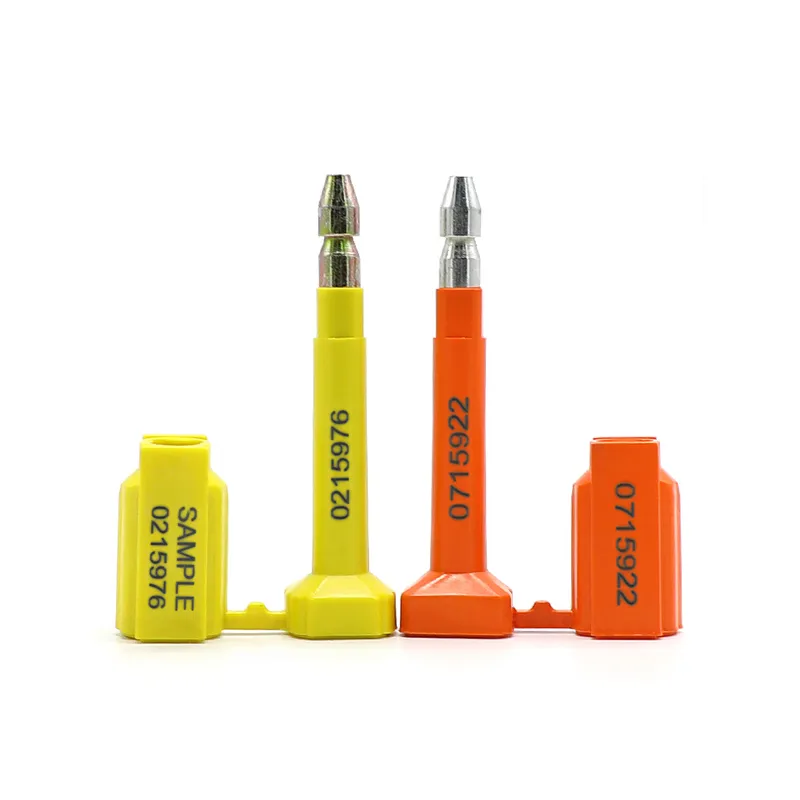
Customization is not just about printing a logo. It involves marking method, ink durability, serial number generation, and data management. Look at the engraving or printing station. Laser engraving produces a permanent mark that resists solvents and abrasion. Hot stamp printing costs less but can rub off if the foil adhesion is weak. Inspect recent production samples and rub the marking with your thumb—if it smudges, the process is not dialed in.
Traceability is the backbone of a security seal program. Each seal must be tied to a production date, shift, machine, and raw material lot. At our facility, we assign a unique batch ID to every order. During a factory tour, ask to pull up the batch ID tracking sheet for a recently shipped order. If the factory cannot produce it within a few minutes, or if the record is a spreadsheet with gaps, their traceability is likely surface-level. Also confirm they can generate a full certificate of conformance that references the specific batch IDs in your shipment, not just a generic letter.
Color and marking options should match your security protocol. A factory with automated pad-printing machines and Pantone matching capabilities can reliably reproduce your corporate colors across orders. Smaller shops may rely on hand-mixed inks, which create shade variation between batches.
Check Packaging and Shipping Procedures
Packaging is the last step where a factory can protect or destroy the value of security seals. I’ve received shipments where plastic seals were loose in a carton, and vibration during transit scratched the tamper-evident coating off half the seals. Now we double-bag every plastic seal and partition each carton. During your factory tour, walk through the packaging area unannounced—clean tables, sealed bags, and labeled cartons signal discipline. Cluttered benches and loose product point to a shop that will cut corners when an order needs to ship fast.
Look for export-grade packaging materials: double-wall cartons, inner poly bags, desiccant packs for moisture-sensitive seals, and proper cushioning between levels. If the factory ships internationally, ask to see a sample export carton. Check the labeling: shipping marks, quantity, and country of origin should be printed clearly. Also confirm that the factory uses pallet wrap and corner protectors for containerized cargo.
Finally, discuss lead time and documentation. A professional factory can tell you the current production backlog and commit to a ship date with a packing list, commercial invoice, and bill of lading. If your tour covers these five areas, you walk away with a data-driven picture of manufacturing capability, not a polished sales narrative.
After the Tour: Moving Forward with Confidence
A thorough factory tour reveals whether a manufacturer can meet your specifications consistently. The next step is to translate your audit notes into a sourcing decision. Send your part numbers, quantity requirements, and any specific certification needs to [email protected] or reach us via WhatsApp at +86 13853189290. We provide a quote, confirm lead times, and share third-party test reports tied to the exact seal models you need. A single visit backed by solid documentation builds the foundation for a supply chain you can rely on.
Common Questions About Security Seal Factory Tours
You should request ISO 17712 certificates, ISO 9001 scope, raw material specifications, and recent third-party test reports before your visit. Ask for these documents at least a week ahead. A factory that hesitates or provides expired certificates is signaling that its quality system may not be current. Also request a copy of their production floor layout so you can plan your walk-through to cover all process steps.
It depends on what you need from the samples. If you want to verify visual quality, request random samples pulled from the production line during your visit. If you need independent tensile testing, ask the factory to seal and sign the sample bags with you present, then send them to an accredited lab of your choice. Avoid taking “showroom samples” that were specially prepared, as those rarely reflect production-run consistency.
Verify the certifying body and the test standard listed on the certificate. ISO 17712 has three security levels: “I” for indicative seals, “S” for security seals, and “H” for high-security seals. Confirm the factory’s certificate matches your required level and that the testing lab is ISO 17025 accredited for mechanical tests. I’ve seen certificates where the testing covered only a generic plastic pull test, not the full ISO 17712 protocol. Ask for the detailed test report, not just the title page.
In our experience, three red flags stand out. First, reluctance to show the QC lab or raw material quarantine area—usually points to a gap those areas exist only on paper. Second, batch numbering that skips sequences or appears handwritten in multiple colors, which makes traceability unreliable. Third, operators who cannot explain basic quality checks for their station, indicating that training is weak. One of these alone may be an oversight; two or three together point to a systemic problem.
No, but skipping it introduces risk that is hard to catch by sample alone. If a physical visit is not possible, ask for a live video walkthrough of the production line, the QC lab, and the packaging area. Our team at Junchuang Lock offers virtual factory tours that cover the same five areas described in this article. Send your requirements to [email protected] and we will schedule a video session so you can verify production conditions from wherever you are.
If you’re interested, check out these related articles:
Bolt Seal Supplier Certification Checklist: Ensuring Supply Chain Integrity – Junchuang Lock
Disposable or Reusable Bolt Seals: Strategic Cargo Security – Junchuang Lock
Supply Chain Security: The Critical Role of Industrial Seals – Junchuang Lock