
Metal strap seal installation determines whether a container’s security seal actually protects cargo or creates a false sense of safety. A correctly installed metal strap seal provides unequivocal tamper evidence, but installation mistakes can go unnoticed until an audit or theft investigation reveals the failure. Over fifteen years of manufacturing security seals at Junchuang Lock Industry, we have seen how small errors in tension or alignment lead to compromised seals in the field. This article explains the correct installation procedure and points out the common pitfalls that field operators often overlook, so you can trust your seals every time.
How a Metal Strap Seal Locks and Secures Cargo
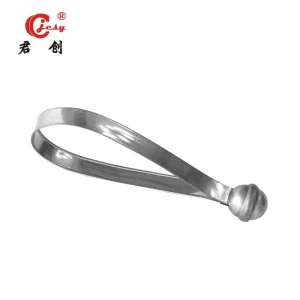
A metal strap seal consists of a locking body containing a spring-steel pawl and a flexible metal strap with pre-punched holes or notches. When you thread the strap through the hasp or locking point on the cargo door and feed it into the body, the pawl engages the strap holes sequentially as you pull tight. This creates a one-way locking action: the strap can only move inward, not backward. Any attempt to withdraw the strap forces the pawl deeper, leaving visible damage or jamming the mechanism. The seal becomes tamper-evident because removal requires cutting the strap.
The key to reliable security is that the pawl must fully seat into a hole. Partial engagement leaves the door vulnerable because the strap might be worked loose during transit without breaking the seal body. In our production quality control, we test every batch for pawl engagement depth and pull-out force. That same principle applies in the field: if the operator does not pull hard enough to hear or feel the definitive click of the pawl dropping into a hole, the seal is not secure.
Step-by-Step Installation for Reliable Tamper Evidence
Installation is quick but requires attention at each step. The procedure below applies to most metal strap seals. Always refer to the specific instructions provided with your seal batch, as designs can differ slightly.
-
Inspect the seal and strap. Before installation, examine the locking body for cracks, corrosion, or foreign material. Check the metal strap for kinks or burrs that might affect smooth feeding. A damaged seal should be discarded. At Junchuang, we inspect every seal visually before packing, but transport and storage can introduce issues. A quick pre-use check takes seconds.
-
Position the strap correctly. Thread the metal strap through the door handle, latch, or hasp in the configuration that prevents the door from opening without cutting the strap. For container twist locks or handle assemblies, ensure the strap passes through both moving parts so that any door movement puts tension on the seal.
-
Insert the strap end into the locking body. The strap has a specific side designed to engage the pawl. In most designs, the hole or notch pattern faces toward the pawl mechanism. If you insert the strap upside down, the pawl will not catch securely. If you feel no resistance when pulling, remove and flip the strap.
-
Pull the strap tight with steady force. This is where errors most often occur. Do not stop at the first light resistance. Continue pulling until you hear or feel a positive click, then pull again to confirm a second engagement point if present. The strap should be taut against the locked point. Do not jerk or use excessive force that could deform the locking body or strip the strap holes.
-
Trim excess strap if needed. After locking, leave enough tail for a visual inspection but remove any excess that could snag. Use a seal cutter or heavy-duty snips; never twist the strap until it breaks, as that can weaken the locking area. The tail should be straight and clearly visible for later checking.
What tools are needed to install a metal strap seal?
The majority of metal strap seals are designed for hand operation. No tools are required beyond your hands and a pair of cutters for trimming excess strap. Some high-security barrier-type seals may include a specialized tensioning tool to achieve consistent pull force, but those are not standard for general cargo strap seals. Junchuang includes clear installation sheets with each shipment so your teams know exactly what, if anything, is needed beyond the seal itself.
If your operation involves high-value cargo or long-haul shipments, correct installation is only one part of the equation. The seal itself must match your security level and be manufactured to consistent tolerances. Reach out to us at [email protected] to discuss your application and request samples with the right specifications.
Post-Installation Checks That Confirm Seal Integrity
A visual and physical check immediately after installation prevents most seal failures. We recommend three quick checks:
-
Pull test. Grasp the seal body and the strap tail and pull firmly in opposite directions. The strap should not move backward through the body. Any slippage indicates the pawl did not fully engage. Re-tighten or replace the seal.
-
Visual alignment check. Look at the angle where the strap enters the locking body. It should be straight, not cocked, and the pawl mechanism (if visible) should be flush with the strap. If the strap enters at an angle, tension may be uneven, risking disengagement.
-
Record the seal number. Immediately record the unique serial number on the seal for your shipping documents or log. This creates the audit trail that makes tamper evidence useful. Without documentation, you lose the ability to confirm whether a seal has been substituted.
I have seen shipments where the seal was recorded as intact at departure but could not be verified at destination because the number was never logged. The chain of custody breaks at that point. A simple habit of recording the seal number at installation closes that gap.
What happens if a seal is under-tensioned?
Under-tensioning is the most frequent cause of seal failure. If the pawl engages only partially or the strap is loose, the seal may still appear locked, but vibration during transit can cause the strap to gradually pull out or the pawl to dislodge. In some cases, a thief can slip a tool into the gap and release the pawl without breaking the seal. A seal should be taut, with no play, and able to resist a firm tug. If at any point you can move the strap backward after installation, remove and install a new seal from the start.
Installation Errors That Lead to Seal Failure
Even with a high-quality metal strap seal, user mistakes create vulnerabilities. From our manufacturing support experience, these are the errors that generate the most field complaints:
| Installation Error | Immediate Consequence | Long-Term Risk |
|---|---|---|
| Insufficient tension | Pawl does not lock fully | Strap can loosen, allowing tampering without visible damage |
| Incorrect strap orientation | Locking mechanism not engaged | Seal falls off or appears installed but provides no security |
| Using a damaged seal | Pawl may slip or jam | Failed seal discovered only at destination inspection |
| Excessive pulling force | Strap holes stripped or locking body cracked | Weakened seal that may fail under normal cargo movement |
| Not trimming excess strap correctly | Long tail catches on equipment | Strap torn out unintentionally, lost seal, false tamper alarm |
Each of these errors is avoidable with consistent training. We once received a complaint from a logistics company whose seal was found loose on arrival. After sending replacement seals and an instructional video, they discovered that their loading crew was stopping after the first click, not pulling until the secondary engagement. The problem disappeared once they adopted the “two-click” rule. Small adjustments in installation habit produce large improvements in security.
Removing and Replacing Metal Strap Seals Safely
At the destination, inspect the seal before cutting. Check the serial number against the manifest, and examine the seal body and strap for signs of tampering: deep scratches near the locking mechanism, stretched strap holes, or cracks in the body that could indicate attempted removal. If everything matches and the seal is intact, cut the strap using a seal cutter at a point away from the locking body to preserve evidence if needed later.
Metal strap seals are single-use. Once cut, the one-way locking mechanism cannot be reused. Do not attempt to re-thread a removed seal. Always replace with a new seal from your inventory. For ongoing operations, we recommend keeping a buffer stock to avoid delays. Junchuang can provide seals on a scheduled delivery basis, so you never run low.
Ensuring Consistent Cargo Protection with Junchuang Metal Strap Seals
Proper installation depends on both operator skill and seal quality. Our manufacturing process at Junchuang Lock Industrial Co., Ltd is built around consistent tolerances in the locking pawl, strap hole alignment, and material strength. We test pull-out force on every production batch to ensure the pawl engages at the intended tension.
If you are sourcing metal strap seals for a fleet or logistics operation, we offer customized printing, sequential numbering, and barcoding to match your tracking system. We can also provide installation instruction cards, video guides, and on-site training for large users. Send your part number, quantity, and delivery timeline to [email protected], or call +86 13853189290. We will respond with a quotation and, if you wish, a free sample seal for your team to test.
Questions About Metal Strap Seal Installation and Use
How do I know if a metal strap seal is installed correctly?
You should feel or hear a distinct click as the pawl drops into the locking hole, and you should not be able to pull the strap backward after that. If you can move the strap even slightly, the pawl is not fully locked. Remove the strap, re-insert it properly, and pull again until you get a positive lock. Always perform a firm tug test before recording the seal number and releasing the shipment.
Can I reuse a metal strap seal?
No. Metal strap seals are single-use tamper-evident devices. Once the strap is cut, the locking mechanism cannot be re-engaged. Any attempt to reuse a cut seal will be obvious and compromises the security of the cargo. Always use a new seal for every shipment.
What is the best way to store metal strap seals before use?
From our production experience, keep seals in their original packaging in a dry, climate-controlled environment away from direct sunlight. Prolonged UV exposure can make plastic components in some seal models brittle, and moisture can cause corrosion on the metal strap, which might weaken it or cause feeding problems during installation. Storage at normal temperatures is fine; freezing temperatures do not typically affect metal components, but plastic-bodied locks may become more brittle, so allow seals to reach room temperature before handling if they have been stored in cold conditions.
Do I need special tools to install metal strap seals?
Most standard metal strap seals require no tools beyond a pair of cutters to trim the excess tail. Hand-tightening is sufficient. However, some high-security barrier-type seals may require a dedicated tensioning tool to achieve a calibrated pull force. The seal’s product sheet will specify if a tool is needed. Junchuang provides this information with every shipment, and we are happy to clarify if you are uncertain.
How can I verify seal integrity after rough transport?
At the receiving point, examine the seal body and strap for dents, abrasion, or misalignment that may have occurred during rough handling. The strap should still be taut, with no backward movement possible. If the strap is loose or you see any gap between the locking body and the strap, document it and inspect the cargo before accepting. Consistent inspection after transport helps identify not just seal issues but also potential handling problems. If your seals frequently show transport damage, we can work with you to select a heavier-duty seal or adjust installation practices. Share your requirements with us at [email protected] and we will confirm the best seal for your route.
If you’re interested, check out these related articles:
Security Seal Factory vs Trading Company: Expert Procurement Guide – Junchuang Lock
Security Seals: How They Work to Protect Your Assets – Junchuang Lock