
Verifying a barrier seal supplier’s certifications is a critical step to prevent cargo theft, customs delays, and supply chain vulnerabilities. While many buyers request ISO 17712 certificates, certification documents alone do not guarantee genuine product compliance. As a manufacturing specialist with over fifteen years producing high-security seals, I have seen counterfeit certificates and expired lab reports all too often. This guide outlines a practical verification checklist—from document authentication to factory-floor indicators—so you can confidently qualify barrier seal suppliers and protect your supply chain.
Understand Essential Barrier Seal Certifications
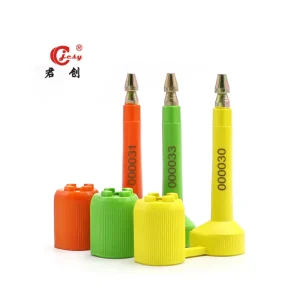
A high-security barrier seal must meet specific international standards to be accepted for cross-border shipments and supply chain security programs. The most critical certification is ISO 17712, which classifies seals into three levels: “I” for indicative, “S” for security, and “H” for high security. Barrier seals fall under the “H” category and require third-party testing for tensile strength, shear strength, and tamper evidence. C-TPAT (Customs-Trade Partnership Against Terrorism) mandates the use of ISO 17712 compliant high-security seals for containerized cargo entering the United States. Other recognized standards include ASTM F832 for seal classification and performance, and certification programs from classification societies such as ABS or DNV for marine applications.
A legitimate supplier will hold these certifications directly from accredited testing bodies. The table below summarizes the key certifications and what they validate.
| Certification | Issuing Body Type | What It Validates | Validity Period |
|---|---|---|---|
| ISO 17712 (H) | ILAC-accredited lab | Tamper evidence, tensile strength, durability | Typically 3 years (subject to periodic audit) |
| C-TPAT compliance | Customs authority (US CBP) | Supply chain security practices | Annual validation recommended |
| ISO 9001 | IAF-accredited certifier | Quality management system | 3 years with annual surveillance |
| ABS / DNV type approval | Classification society | Marine and offshore suitability | 5 years with annual audits |
| ASTM F832 | Independent lab | Performance classification | As per test date |
Possessing these certificates demonstrates a baseline commitment to quality, but each document must be authenticated before you commit to an order.
Authenticate Supplier Certification Documents
The most common mistake importers make is accepting a PDF certificate without verifying its authenticity. I have seen cases where a supplier’s ISO 17712 certificate had a valid format but the issuing laboratory had been closed for two years. Every certificate provides a unique identification number. Contact the issuing body directly through the contact details listed on their official website (not the supplier’s copy) and confirm the certificate number, scope, and validity dates. Also check the accreditation status of the laboratory. For ISO 17712, the lab must be accredited by an ILAC signatory; you can verify this on the accreditor’s public register.
If the supplier claims C-TPAT certification, request their SVI number and validate it through the portal provided by U.S. Customs and Border Protection. A supplier that delays or provides only partial documentation should raise immediate concern. At our factory, we maintain a digital record of every active certification, and we regularly share these directly with clients so they can perform their own verification. That transparency is the first indicator of a trustworthy partner.
Once documents pass initial checks, the next level of verification moves to the factory floor, where genuine compliance is proven through process control and material traceability.
Conduct Factory-Level Compliance Checks
This is where most supplier qualification efforts fall short. A barrier seal’s security depends on the steel pin, the zinc alloy lock body, and the assembly precision. A factory can hold an ISO 17712 certificate but still ship products that fail tensile tests because raw material quality has drifted. When evaluating a manufacturer—whether through an in-person audit or remote assessment—focus on three areas.
First, material traceability. Every batch of steel rod used for barrier seal pins should come with a heat number and a mill test certificate showing chemical composition and mechanical properties. We retain these records for ten years and tie each batch to the final product serial number. If a supplier cannot provide traceability beyond a general “stainless steel” label, the risk of inconsistent strength is real.
Second, in-house testing capability. A dedicated tensile testing machine on the production floor is a practical sign that quality is checked before shipment, not just on paper. I have seen on-site tests reveal that a seal deformed before reaching its rated load, even though the certificate said otherwise. Request that the supplier perform a pull test on a sample from your potential order lot and share the real-time reading.
Third, production consistency. The die-casting molds for the lock body and the stamping tools for the metal casing wear over time. Ask the factory how often molds are replaced or refurbished, and whether they perform first-article inspection for each production run. A factory that documents these checks is one that understands that security is built in stages, not declared once.
These checks take more effort than emailing a certificate copy, but they are the difference between a compliant seal and a liability.
If your program involves high-value or cross-border cargo, it is worth confirming the traceability documentation before finalizing your supplier list—reach out at [email protected] to discuss what our batch-level traceability looks like.
Spot Red Flags in Barrier Seal Certification
Even with careful verification, certain patterns should trigger immediate escalation. Red flags I have encountered in over a decade of manufacturing include certificates issued by bodies that are not signatories to the IAF MLA (Multilateral Recognition Arrangement), making the accreditation questionable outside the supplier’s home country. Another is a certificate that has been digitally altered, often visible as mismatched fonts, stretched logos, or incorrect issuing body contact information. A third is a supplier who can produce a certificate but refuses to allow a third-party inspection or provide a blind sample for independent testing.
Other warning signs: a certification date that is recent but the factory has no prior history of holding that standard, or an unwillingness to share the full audit report, not just the certificate. A factory genuinely operating under a recognized quality system will have corrective action records, internal audit logs, and equipment calibration certificates. If these are missing, the certification may be a paper exercise rather than a practice.
Your instinct is valuable here. A supplier that hesitates to discuss how they maintain certification through annual surveillance audits is one to approach with caution.
Build a Verified Barrier Seal Supply Chain
Verifying certifications is not a one-time task. Suppliers’ certifications expire, testing lab accreditations change, and manufacturing processes can degrade without active management. Establish a system for re-verifying key documents annually. For ongoing shipments, include periodic random sampling and third-party testing as part of your purchase agreement, especially for high-volume or high-security contracts.
A reliable manufacturer will support this without resistance. We have long-term clients who audit our facility every two years and test sample batches before each major shipment. That partnership model, built on transparency, ensures that certification compliance is maintained year after year rather than checked once and forgotten.
Ultimately, the most valuable certification is a supplier’s consistent performance over time. Documentation opens the door; factory-level proof and sustained reliability close the deal.
Verifying a barrier seal supplier’s certifications protects cargo, satisfies customs requirements, and reduces supply chain risk. If you are evaluating suppliers and need help confirming certification authenticity or require a batch with full traceability documentation, send your part number and quantity to [email protected] or call +86 13853189290.
Common Questions About Barrier Seal Supplier Certification
Is ISO 9001 enough for a barrier seal supplier?
ISO 9001 certifies a quality management system, not the product’s physical security performance. A barrier seal manufacturer must also hold product-specific certifications such as ISO 17712 for high-security seals. A supplier with only ISO 9001 cannot prove their seals meet required tamper-evidence or tensile strength standards. Request the product certificate before accepting the management system certificate as sufficient.
How can I verify a certificate without flying to China?
You can verify most certificates remotely. Contact the issuing laboratory or certification body directly using the contact details from their official website. Provide the certificate number and ask them to confirm validity, scope, and accreditation status. Many bodies offer online certificate verification portals. If the supplier resists this step, that is a strong signal to pause the order.
What is the typical lead time for barrier seals with certified documentation?
Standard certified barrier seals from an established manufacturer usually ship within 7 to 15 business days after order confirmation, depending on customization requirements. Complex markings or large volumes may extend this. A factory with consistent production processes and active certifications can provide a reliable lead time estimate early in the discussion.
Can I obtain a sample before placing a bulk order?
Yes, a credible barrier seal supplier will provide samples for your own inspection and third-party testing. We regularly ship sample sets to prospective buyers so they can evaluate material quality, marking clarity, and locking mechanism function before committing to a larger order. If a supplier refuses to provide a sample, consider alternative partners. Share your requirements including any testing standards you need verified, and we’ll confirm sample availability.
If you’re interested, check out these related articles:
Electronic vs Visual Ear Tags: Optimal Livestock Identification – Junchuang Lock
How to Choose High Security Bolt Seals: Key Criteria for Supply Chain Safety – Junchuang Lock
ISO 17712 Bolt Seals: Essential Buying Guide for Security – Junchuang Lock