
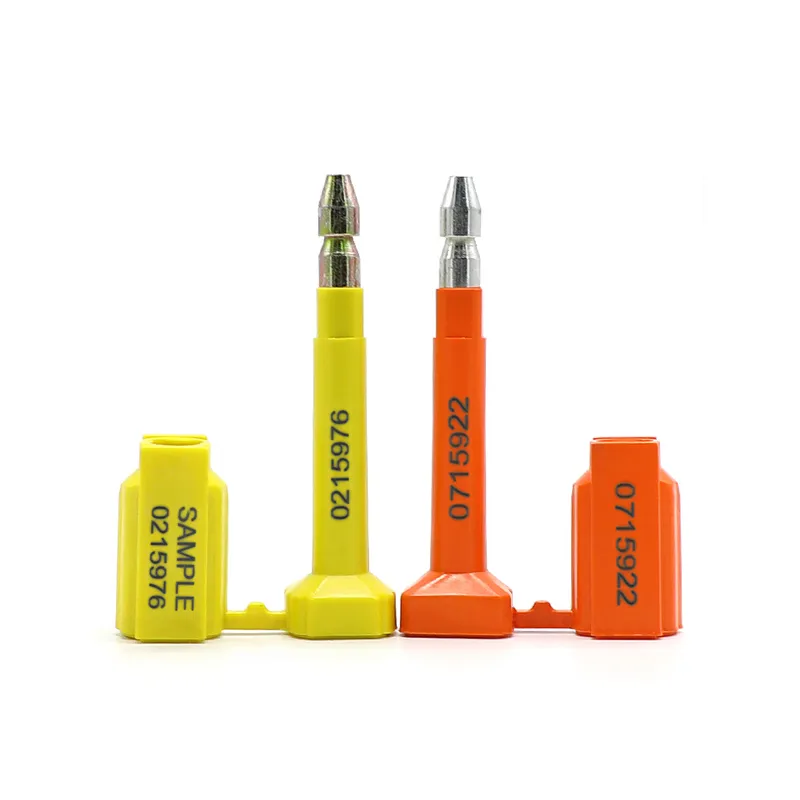
Buying barrier seals in bulk means balancing security requirements against supply chain realities. Too many procurement teams learn after the order arrives that certificates don’t match product quality, or that minimum order quantities hide a supplier’s inability to deliver on time. A barrier seal purchase starts with factory verification, not catalog comparisons. After fifteen years producing security seals for global shipping, cross-border cargo, and domestic distribution, I’ve seen the same pattern repeat: what separates a reliable barrier seal order from a costly mistake is not price per unit. It is whether the manufacturer operates a consistent quality system you can audit.
How to Identify a Reliable Barrier Seal Manufacturer
The difference between a factory and a trading company is the difference between ordering from the people who mold the steel and buying from a catalog that changes hands twice before it reaches you. For bulk barrier seal orders, that gap becomes a risk multiplier. A factory that runs its own tooling can control tolerances, trace raw material batches, and respond when a shipment deadline tightens. A trading company passes your questions along and hopes the factory answers before you get impatient.
Start by verifying production capability. Ask for a list of barrier seal molds and tonnage capacities. A manufacturer with in-house injection and stamping ability can guarantee dimensional consistency across thousands of units. Next, request batch test records. Look for tensile strength data from the same lot that would ship to you, not a type-approval certificate from three years ago. If the supplier hesitates to share current test results, consider that a hard stop.
Factory visits are not always practical, but a video call with quality control staff on the shop floor is. We have walked international buyers through our production line remotely, showing them the testing jigs and the marking stations that will handle their order. That level of openness is what a trading company cannot offer. In the security seal industry, the factories that are easiest to inspect are usually the ones doing the best work. Sourcing from China’s security seal industry requires putting production transparency above a polished quote sheet.
What Certifications a Barrier Seal Supplier Must Have
ISO 17712 is the baseline, but the way a supplier holds that certification matters more than the certificate itself. ISO 17712 defines three security levels for seals: indicative, security, and high security. Barrier seals fall into the high security category, tested to a minimum tensile strength and designed to show clear tampering. Certification confirms that an independent lab has verified the design against those requirements. It does not confirm that every production run matches the tested sample.
A responsible manufacturer supplements ISO 17712 with in-house tensile testing on each batch and, when the contract calls for it, third-party lot inspection before shipment. Ask for test frequency. If the factory tests one sample per thousand units, that is a sample. If it tests per mold cavity per shift, that is a system. The latter is what you need for a bulk order where customs clearance or insurance compliance is on the line.
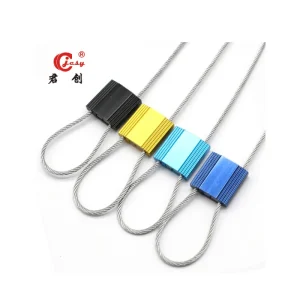
Beyond tensile strength, barrier seal certification should address tamper evidence mechanisms. A high security seal must not be defeatable by hand tools without leaving visible marks. That means the locking chamber, the strap or bolt, and the housing material all matter. Polypropylene bodies with steel locking inserts behave differently than all-steel construction. Matching the seal design to the threat environment is a technical decision, not a catalog checkbox.
If your cargo crosses international borders, verifying active ISO 17712 certification should be part of your supplier qualification process. Confirm test dates and certificate scope, not just a logo on a letterhead. Email [email protected] to request recent test reports and discuss your specific security requirements.
Cost and Pricing: What You Pay for in Bulk Orders
Barrier seal pricing per unit is not a measure of competitiveness until you know what the quote includes and what it leaves out. Material cost is the largest single factor. Steel bodies cost more than reinforced plastic, but weight affects freight charges, so landed cost can shift in unexpected ways. A steel barrier seal shipped by sea may have a lower total per-unit cost than a lightweight plastic seal air-freighted under time pressure.
Customization drives cost in layers. Laser marking adds a fixed setup charge per design and a small per-unit increment. Hot stamping is cheaper at very high volumes but less durable in wet or abrasive environments. Sequential numbering, whether barcoded or alphanumeric, requires production line integration that adds time, not just material. If you need both company logos and unique serial numbers, factor lead time into the unit price calculation and do not accept a quote that separates them without explaining why.
| Cost Factor | Price Impact | Notes |
|---|---|---|
| Material (steel vs polypropylene) | 15–30% difference | Steel raises unit weight and freight |
| Custom marking method | $0.02–$0.08 per unit | Laser more durable; stamping cheaper at volume |
| Sequential numbering | $0.01–$0.03 per unit | Requires line setup; cost drops per 10K units |
| Order quantity | MOQ-driven discount thresholds | Below MOQ, per-unit cost rises sharply |
| Freight (sea vs air) | Can shift total by 10–20% | Consolidate shipments when lead time allows |
Minimum order quantities are negotiable when the factory sees a long-term pattern. Bringing repeat orders or a multi-product program strengthens your position more than haggling over the first shipment. Factories value consistency, and a buyer who can confirm quarterly volumes often gets the same price at half the MOQ of a one-time spot buyer.
Customizing Barrier Seals: Marking, Numbering, and Material
Customizing barrier seals is where procurement starts solving a security problem instead of just buying a part number. Standard seals solve a general problem. A seal with your company name, a sequential number, and a barcode that links to your tracking system solves your specific one. That jump in utility depends on how early the customization discussion happens with the manufacturer.
The production process for custom seals begins with artwork approval, not with a mold. For laser marking, we generate a digital proof that shows placement, font, and sizing on the seal body. Once approved, that file becomes the master for your entire order. Changes later in the run cost time, and time is the variable that disrupts container loading schedules. For barcode and serial number sequences, the manufacturer must validate that the marking system can maintain legibility at production speed across thousands of units. A sample from a first article run is the only way to confirm that, and any factory that skips this step is gambling with your cargo paperwork.
Material selection for barrier seals also carries customization options. Polypropylene bodies can be color coded to match security levels or regional requirements. Steel seals can be zinc-plated, painted, or left unfinished. Each choice affects outdoor durability and tamper visibility. Aligning material with the seal’s expected service life prevents over-engineering costs on one end and field failures on the other.
Managing Bulk Orders: Production, Shipment, and Lead Times
A bulk barrier seal order does not end when the purchase order is signed. It ends when the seals are mounted on containers and the unique numbers are logged in a tracking database. The gap between those two points is where shipping delays, rushed quality checks, and communication breakdowns live. Managing them starts with a production timeline tied to real capacity, not a sales promise.
From mold preparation through assembly, testing, marking, and packing, a standard barrier seal batch can take two to four weeks in a factory running multiple product lines. If your order includes tooling changes or a first-run custom design, add a week for mold trial and marking calibration. The timeline is not always flexible, but it is always predictable when the factory uses production planning software rather than a whiteboard. Ask for a weekly status update with photographs from the line, not a percentage-complete number that can be stretched.
Shipping logistics deserve attention early because freight costs compound per unit when packaging is inefficient. Barrier seals are dense in small packages, but air freight charges by volumetric weight can still surprise a buyer who assumed sea freight rates. Palletizing and carton dimensions should be confirmed before the final invoice, not after. Where possible, pair a new bulk order with existing container loads to reduce per-unit transport cost.
Next Step: Securing Your Barrier Seal Supply
Ordering barrier seals in bulk puts a lot of trust in a single component. That trust is easier to extend when you have seen the production line, handled the samples, and tested a few units before committing the full run. Buyers who skip those steps sometimes save a week of lead time and pay for it with a container held at customs because a seal number was illegible. The right approach is not complicated. Specify your security and marking requirements clearly. Confirm that the factory’s quality system tests every production batch, not just the type-approval sample. Start with a smaller trial order before scaling.
Shandong Junchuang Lock Industry produces barrier seals with ISO 17712 testing, in-house tensile verification, and full customization support for marking, numbering, and material. For pricing and current lead times, send your part number and quantity to [email protected], or reach our team directly by mobile or WhatsApp at +86 13853189290.
Questions Buyers Ask About Bulk Barrier Seal Orders
How do I know a barrier seal is really ISO 17712 high security?
The seal should carry the manufacturer’s mark and a unique number that links to a test report from an accredited lab. Ask for the certificate number and the testing standard applied, then confirm it covers the specific product and production lot you are buying. Certification that covers only a design prototype does not guarantee current production quality, so request batch-level test data as part of your supplier qualification.
Can I order a mix of barrier seal types in one shipment?
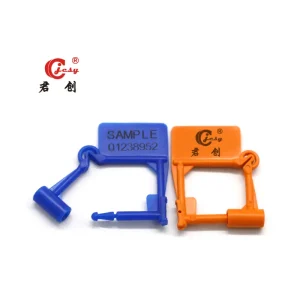
Yes, most factories with broad production capability can combine barrier seals with padlock seals or cable seals in the same container, which spreads freight costs and simplifies customs documentation. However, mixed orders require careful production planning because different seal types run on separate lines. Discuss the product mix before finalizing quantities to avoid lead time surprises.
What is the main reason bulk barrier seal orders fail inspection?
In our experience, the most common cause is inconsistent marking quality. When a laser engraver is not calibrated for a new mold, serial numbers can become faint or misaligned after a few thousand cycles. This is invisible on a first-article sample but shows up at volume. Factories that run full-batch marking calibration and provide photos from mid-production avoid this entirely.
Should I buy from a factory or a trading company?
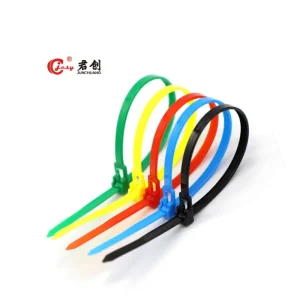
Factories that design, mold, and assemble their own barrier seals give you direct accountability when quality or timing issues arise. Trading companies serve a useful role in aggregating products, but for high-volume orders where consistency and traceability matter, direct factory engagement reduces communication layers and makes technical verification possible. The cost difference is often negligible once freight and customization are factored in.
If your program requires a specific tensile strength, a unique marking format, or a delivery schedule tied to vessel dates, confirm those details with the production team before finalizing your BOM. Share your requirements at [email protected] and we will confirm compatibility and a realistic timeline.
If you’re interested, check out these related articles:
China Security Seal Manufacturers: Strategic Selection Guide – Junchuang Lock
Custom Plastic Seal Manufacturing: Precision, Materials, Security – Junchuang Lock
What is an Animal Ear Tag: Essential Livestock Identification Systems – Junchuang Lock
Selecting a Security Seal Manufacturer for Supply Chain Integrity – Junchuang Lock
Cable Tie Tensile Strength: Engineering Secure Fastening – Junchuang Lock