
Custom metal strap seals are a practical choice for securing cargo containers, trailer doors, and high-value shipments where tamper evidence is not just a requirement but a logistics obligation. In more than fifteen years of manufacturing industrial seals, I have seen too many procurement decisions made on unit price alone, only to uncover inconsistent dimensions, weak locking mechanisms, or missing certifications after the first shipment arrives. The truth is, a custom metal strap seal project succeeds or fails long before the first container is sealed. It depends on how clearly you define your requirements, how deeply you evaluate the factory, and whether the manufacturer treats your program as a one-time deal or a long-term partnership. I will walk you through what real custom manufacturing looks like, the production and quality checks that separate capable factories from order-takers, and the questions that protect your supply chain before you commit.
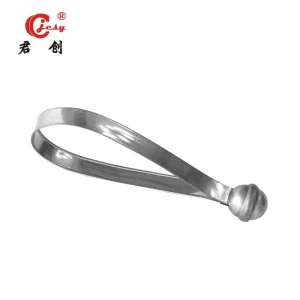
Defining Your Custom Metal Strap Seal Requirements
Every custom metal strap seal begins with a set of technical specifications. The strap width, thickness, and overall length are the most obvious dimensions, but the details that affect real-world performance often get less attention. We ask our customers to specify the exact locking head mechanism, whether a fixed-length or adjustable design, the strap material composition (zinc-plated steel, stainless steel, or high-carbon steel for extra cutting resistance), and the required pulling force or tensile strength. In our factory, even a half-millimeter deviation in strap width can cause the seal to jam in automated application tools, so we insist on precise engineering drawings or at minimum a dimensioned sketch before producing tooling.
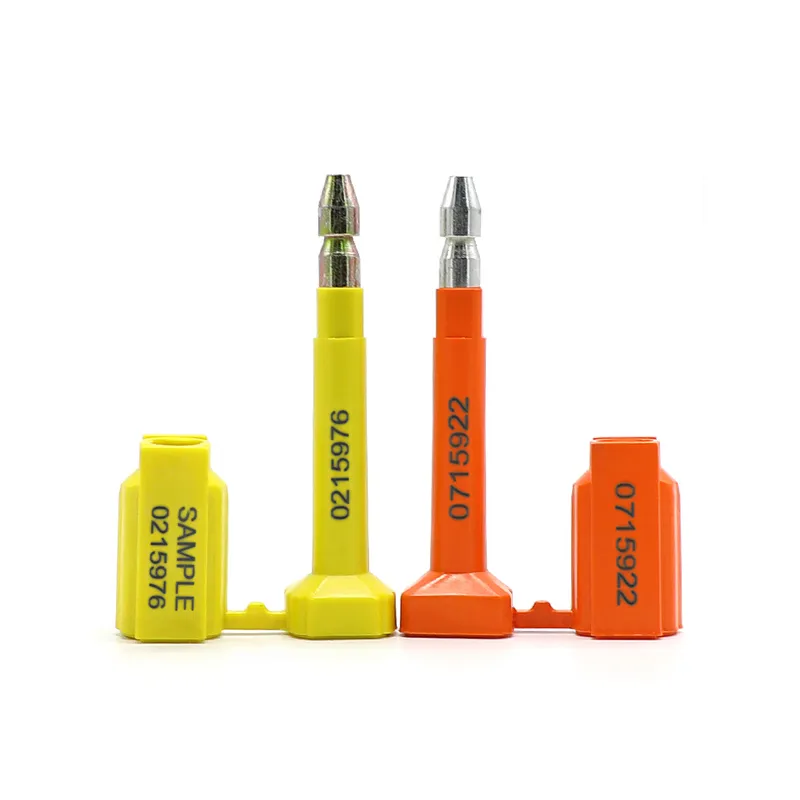
Marking is another area where vague instructions lead to rework. A metal strap seal can carry laser-engraved serial numbers, hot-stamped logos, barcodes, or even QR codes for automated scanning in logistics systems. If your downstream operation uses handheld scanners, we recommend specifying the barcode symbology and minimum contrast ratio upfront. This prevents a situation where seals arrive perfectly functional but unreadable by your equipment.
How to Evaluate a Manufacturer’s Production Capability
When I conduct a factory audit for a prospective buyer, I do not start with the sales office. I start at the stamping workshop. A manufacturer that controls in-house die production and maintains its own stamping presses can react to design changes and scale orders without relying on third-party workshops. That speed matters in an industry where port schedules do not wait.
Key Certifications That Indicate Manufacturing Competence
Beyond ISO 9001 for quality management, a metal strap seal factory should demonstrate compliance with ISO 17712 for high-security seals if your shipments cross international borders. But a certificate alone is not enough. I recommend asking for the latest test reports: pull strength tests conducted on production-run samples, salt spray corrosion resistance results, and dimensional inspection sheets for the specific strap model you intend to buy. In our plant, we maintain batch-level test records that trace each seal lot back to the raw material coil number, which becomes critical if a field failure ever needs root cause analysis.
Why In-House Production Capacity Matters
Outsourced stamping or plating processes introduce quality variability that a factory cannot fully control. During production of a heavy-gauge metal strap seal, if the zinc plating thickness drifts below 8 microns, the seal may show rust spots within weeks in a marine environment. A factory that handles cutting, stamping, surface treatment, and assembly under one roof can catch that drift during in-process checks, not just during final inspection. When a buyer visits our facility, I show them the in-line thickness gauges and the daily plating bath analysis logs, not just the finished product.
The Custom Manufacturing Process: From Tooling to Batch Production
Once specifications are approved, the factory begins tooling development. For a custom metal strap seal with unique dimensions or a new locking head geometry, we fabricate a progressive stamping die. This stage typically requires ten to fifteen working days, followed by a first-article sample run. The sample set is not just for customer approval; it is the factory’s own verification that the tooling can maintain tolerances across a full production shift. I always recommend that buyers test the sample seals physically with their own application tools, whether a manual crimper or a pneumatic tensioner, before authorizing mass production.
After sample approval, the batch production lead time depends on order quantity and current production line loading. For a standard custom order of ten thousand pieces with laser marking, we schedule two to three weeks for stamping, plating, marking, and final inspection. Rush orders are possible if tooling already exists, but first-time custom builds require patience. Skipping the sample stage to shorten lead time almost always results in corrective tooling changes later.
Quality Control Measures That Protect Your Shipments
A metal strap seal is worthless if it cannot survive the trip from factory floor to overseas port and still function as designed. Our outgoing inspection protocol includes three non-negotiable checks. First, tensile strength testing on a random sample from each batch: the seal must withstand at least the rated load without deformation of the locking insert. Second, tamper resistance verification: we attempt to disengage the locked strap with common hand tools and confirm that any forced entry leaves visible and permanent deformation. Third, dimensional audit using calibrated gauges to ensure the strap length and width match the purchase order exactly.
If your cargo travels through high-humidity regions, I suggest specifying an accelerated salt spray test beyond the standard ISO 9227 neutral salt spray. We have seen imported seals that passed indoor inspection but failed after one rainy season on deck because the plating was porous. A small addendum to the quality agreement can prevent that kind of field failure.
Questions to Ask Before Placing a Custom Order
Before you transfer a deposit, the following questions will reveal whether the manufacturer is set up for custom work or just reselling standard stock.
- What is the minimum order quantity for custom dimensions? Most factories require at least 1,000 to 3,000 pieces for a new tooling build, but trial orders as low as 500 pieces are sometimes negotiable if the strap profile is close to an existing design.
- What tooling charges apply, and are they refundable against future volume? Not every factory discloses that the tooling charge might be waived if you commit to a multi-batch contract.
- Can you provide a pre-production sample with full dimensional and test reports before I commit to the main order? A factory that refuses samples or asks for full payment upfront should be evaluated twice.
- What are your lead times for first-time custom orders versus repeat orders? Once tooling is established, repeat orders should ship within ten to fifteen working days.
- How do you handle a defect claim? A clear process with photographic evidence requirements and credit note policy protects both parties.
Building a Partnership That Goes Beyond One Order
The most efficient supply relationships I have built started with a small trial order and grew into regular quarterly shipments because the buyer trusted that the quality would be identical every time. Consistency in metal strap seal manufacturing comes from disciplined production planning: using the same steel coil supplier, maintaining the same stamping die, and running the same inspection checklist on every batch. When you find a manufacturer that controls those variables, it is worth investing in a long-term agreement that locks in pricing and production capacity.
Our factory has been producing security seals for export markets for years, and we prioritize direct communication between the production manager and the buyer’s quality team. That eliminates the information lag that causes shipment delays. We treat every custom project as a joint effort because your seal failure is our reputation failure.
Start Your Custom Metal Strap Seal Order with a Trusted Manufacturer
Inconsistent quality, missed delivery dates, and seals that fail inspection at the destination port all trace back to one root cause: a factory that was not thoroughly vetted before the order was placed. The cost of a container delay or a rejected shipment far exceeds any savings from the cheapest quote.
When you are ready to move from supplier research to a concrete production plan, send your strap specifications, desired marking format, and order quantity to [email protected]. You can also reach our team directly at +86 13853189290. We will respond with a feasibility assessment, tooling timeline, and sample schedule within one business day. A short call or email today gives you a real manufacturing partner, not just another order number.
Common Questions About Custom Metal Strap Seals
What is the typical minimum order quantity for custom metal strap seals?
For a new custom design requiring dedicated tooling, the minimum starts around 1,000 to 3,000 pieces depending on the complexity. If the strap dimensions are close to an existing tool, we can sometimes accommodate smaller trial runs of 500 pieces. The tooling investment is the main driver, so combining a custom strap project with other standard seal orders can make smaller quantities more practical.
How long does custom tooling and sampling take from start to finish?
From final drawing approval, our tooling department typically needs ten to fifteen working days to fabricate the progressive die. After the die is tested internally, we produce a sample batch within five to seven working days and ship it with full dimensional and strength test reports. The total time from order confirmation to sample in hand is usually three to four weeks, depending on design complexity and plant loading.
Can I request a free sample before committing to a bulk order?
Yes. We provide sample metal strap seals with your requested specifications at no charge; the customer covers the courier freight. A pre-production sample is the single most effective way to confirm that the seal works with your application tools and meets your visual marking standards before full production begins. We ship samples within a week after internal quality approval.
What marking methods work best on metal strap seals?
Laser engraving offers the highest durability and sharpest barcode contrast for automated scanning. Hot stamping is also common for logos and alphanumeric serial numbers, while embossing can add a tactile verification layer. For operations that need both visual and machine-readable identification, we recommend laser marking with a barcode and a separate human-readable serial number in a single operation.
Are custom metal strap seals compliant with international cargo security standards?
They can be, if the manufacturer follows ISO 17712 testing requirements for high-security seals. This includes proof of tensile strength, tamper evidence, and resistance to manipulation. A compliant metal strap seal must show clear evidence of tampering once locked. If your supply chain requires ISO 17712 certification, confirm that the test reports are for the specific custom design, not just a generic data sheet. If your program needs a documented compliance package, share your requirements and we will confirm certification availability before any tooling commitment.
If you’re interested, check out these related articles:
Security Seal Color Coding: Enhancing Supply Chain Integrity – Junchuang Lock
Bolt Seal Use in Container Shipping: Ensuring Global Supply Chain Integrity – Junchuang Lock
Ear Tag Use in Farm Management: Boosting Livestock Efficiency – Junchuang Lock
Custom Livestock Ear Tags: A Strategic Guide for Farm Efficiency – Junchuang Lock
China Bolt Seal Factory Direct Purchase Maximizing Supply Chain Security – Junchuang Lock