
When a shipment of metal strap seals fails at the port because the locking mechanism does not engage consistently, the cost is not just the rejected batch. It is the container sitting unsealed, the customs delay, and the phone call you never wanted to make to your client. Verifying a metal seal supplier’s quality before you commit to an order is the difference between supply chain security and an expensive lesson. Over fifteen years of manufacturing security seals, I have seen the same pattern repeat: buyers who invest in supplier verification receive predictable quality. Those who rely on catalog photos and price lists receive surprises. This article covers the specific quality checks, factory audit steps, and documentation requirements that separate reliable metal seal manufacturers from the rest, based on what actually happens on a production floor.
What Verifying a Metal Seal Supplier Actually Means
Supplier verification is deeper than requesting an ISO certificate. It starts with confirming that the manufacturer produces what they claim under controlled conditions, and it ends with documented traceability that holds up under your customer’s audit.
Metal seals, including strap seals and bolt seals, serve a single function: they must prove tampering. A seal that can be opened and reclosed without visible evidence is worse than no seal at all because it creates false confidence. The verification process therefore focuses on three layers: material integrity, assembly consistency, and tamper evidence reliability.
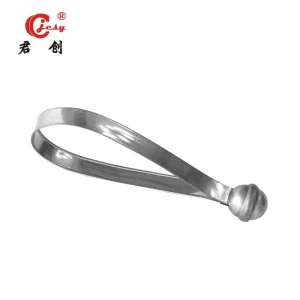
Most metal seals use cold-rolled steel strip or galvanized steel as the strap body, with a die-cast zinc alloy or brass locking housing. The quality of each material batch determines whether the seal will perform consistently across thousands of units. I have rejected incoming steel coils that met the thickness specification on paper but showed micro-cracking under bending stress. A supplier who cannot show you incoming material inspection records is operating blind, and that blindness eventually reaches your shipment.
Physical Quality Checks That Reveal Manufacturing Standards
You can learn a great deal about a metal seal supplier by examining samples systematically. The checks below are the same ones we perform on every production batch before release.
Strap surface and edge condition. The steel strap should be free of burrs, sharp edges, or visible rust. Run your thumb along both edges. A rough edge means the stamping die needs maintenance, and it also means the galvanized coating may already be compromised at the cut line. Over time, that exposed edge becomes a corrosion point, especially in maritime environments.
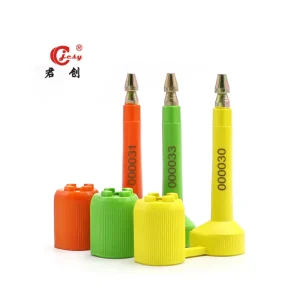
Locking housing fit. Insert the strap tip into the housing and pull back. The internal locking spring or ball-bearing mechanism should engage with an audible click and hold against moderate hand force. If the strap slides out without releasing the locking tab, the housing tolerances are too loose. This is the single most common failure mode I encounter in low-cost metal seals.
Tamper evidence clarity. Bend the sealed unit at the housing entry point with controlled force. The housing body should show visible deformation or the locking mechanism should fracture in a way that cannot be concealed. A housing that flexes and returns to its original shape without marking has failed the most basic tamper evidence requirement.
| Quality Check | What to Look For | Common Failure |
|---|---|---|
| Strap surface | Smooth edges, no burrs, even coating | Rough cut edges, rust spots |
| Locking engagement | Audible click, holds against pull-back | Strap slides out without release |
| Tamper evidence | Visible deformation or fracture | Housing flexes without marking |
| Marking durability | Laser or stamp remains legible after bend | Print rubs off or fades |
If your application involves bolt seals for container security, the same principles apply but the inspection focuses on the shear strength of the locking pin and the barrel-to-pin tolerance. A bolt seal with pin-to-barrel clearance above 0.3 mm can be manipulated with thin tools, defeating the high-security rating.
What a Factory Audit Tells You About a Metal Seal Supplier
You can inspect samples from your desk. You can only verify consistent quality on the factory floor. When I conduct supplier evaluations or host procurement teams at our own facility, the production floor reveals what a certificate never will.
Walk the stamping area first. Listen to the press rhythm. An irregular stroke pattern means the machine is compensating for tool wear, and that variability transfers directly to strap dimensions. Ask the operator to show you the last hour of quality check records. If the records do not exist or are completed in advance, the quality system exists on paper only.
Check the assembly line for in-process inspection points. In metal seal production, the critical control points are the strap insertion test, the pull-force verification, and the visual inspection for coating defects. Each station should have a go/no-go gauge specific to the seal model, and the operator should be able to explain the rejection criteria without hesitation.
If your procurement involves high volumes or safety-critical cargo, verifying the supplier’s traceability system before ordering is essential. Share your part number and quantity at [email protected], and we can confirm material traceability documentation availability for your specific requirements.
Raw material storage tells you about the supplier’s quality culture. Steel coils stored directly on concrete absorb moisture and develop edge corrosion. Proper storage uses raised racks with ventilation spacing. Look at the oldest coil in inventory, not the newest. The condition of that coil predicts the condition of your seals after six months in a humid supply chain.
Certifications and Traceability Documents to Request
The documents you request should match the risk level of your application. For general cargo, basic compliance may suffice. For cross-border shipments subject to customs inspection, the documentation burden increases.
ISO 17712 compliance. The international standard for mechanical seals defines three security levels: indicative, security, and high security. A supplier claiming high-security compliance should provide test reports from an accredited third-party laboratory, not just a self-declaration. The test covers tensile strength, shear resistance, bend resistance, and tamper evidence evaluation. Request the full test report, not the summary.
Material certifications. For the steel strap and locking housing, request mill certificates that identify the heat number, chemical composition, and mechanical properties. These certificates allow you to trace a seal failure back to a specific material batch, which matters when you are managing claims with your own customer.
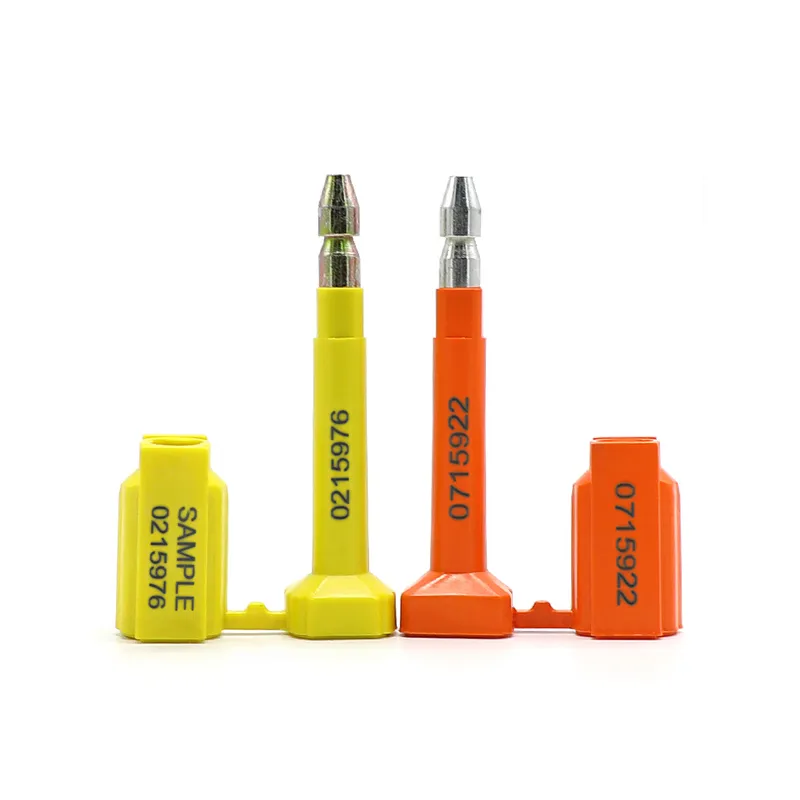
Production batch records. Each shipment should include a batch inspection report that correlates seal serial numbers with production dates, shift records, and quality test results. This is the document that proves your supplier had control over the process when your specific seals were made.
Spotting Red Flags Before You Place an Order
Some warning signs are visible before you spend anything on samples or travel. Over years of working with global buyers, certain patterns consistently predict supplier problems.
Unwillingness to provide detailed specifications. If a supplier responds to a technical question with “no problem, we can do it” without providing dimensional tolerances, material grades, or process details, they are either hiding their limitations or do not understand their own production capabilities. Neither is acceptable.
Sample quality that significantly exceeds production quality. It is common for a supplier to hand-select samples for evaluation. The test is whether they can produce the same quality at scale. Request that your samples be drawn randomly from a production run, not prepared separately. If the supplier refuses, they have told you something about their consistency.
Pricing that undercuts the material cost. A metal seal contains steel, zinc alloy or brass, and a finishing treatment. When the quoted price is below the raw material cost at market rates, either the materials are substandard or the supplier plans to recover margin through corner-cutting after the first order. Calculate the material weight and check current steel and zinc prices. If the math does not work, walk away.
No documented complaint handling process. Every manufacturer produces defects occasionally. The question is what happens next. Ask how the supplier documents, investigates, and closes quality complaints. A supplier who cannot describe their corrective action process in detail has no mechanism for improvement, and your next order will carry the same risks as the last.
Common Questions About Metal Seal Supplier Verification
Are factory audit results reliable if the supplier knows I am coming?
An announced audit still reveals valuable information. The production floor cannot hide tool wear, material storage conditions, or housekeeping standards on short notice. The key is comparing what you observe against the production records. If the records show perfect quality for months but the tooling shows visible wear, the records are not trustworthy. Unannounced audits provide an extra layer of confidence but are not always practical for international buyers.
How many samples should I test before approving a supplier?
For a new metal seal supplier, test at least 50 units drawn from different positions within a production batch. Twenty-five units should undergo destructive testing: pull-force to failure, bend cycling, and tamper evidence evaluation. The remaining twenty-five should be installed under field-like conditions and monitored for coating integrity and locking consistency. A sample size of five or ten units will not catch intermittent defects that appear in one out of every forty units.
What is the difference between ISO 17712 indicative and high-security seals?
Indicative seals resist accidental opening and show tamper evidence but can be defeated with basic hand tools. High-security seals must pass a defined set of physical tests including tensile strength and shear resistance, and they must require bolt cutters or equivalent tools for removal. The standard also requires that the seal cannot be disassembled and reassembled without leaving clear evidence. For containerized cargo crossing international borders, high-security classification is typically the minimum requirement.
Can one supplier reliably produce multiple metal seal types?
A well-equipped metal seal manufacturer with in-house stamping, die-casting, and finishing capability can produce strap seals, bolt seals, and cable seals under one quality system. The risk arises when a supplier subcontracts one product type to a different factory without disclosing it. During your audit, confirm that the production lines for each seal type are under the same roof and share the same quality management system. If you see a product line that looks dormant or underutilized, ask directly whether that product type is outsourced. Sharing your specific requirements helps us confirm compliance documentation availability before you commit to an order. Reach us at [email protected] or call +86 13853189290.
If you’re interested, check out these related articles:
Heavy Duty Cable Seal Selection Guide for Industrial Security – Junchuang Lock
Selecting Ear Tag Size and Color: A Strategic Guide for Livestock – Junchuang Lock