
In fifteen years of manufacturing security seals, I have seen one mistake ruin a logistics program faster than almost anything else: the printing flaking off a plastic seal. It looks fine sitting on a desk. It survives a warehouse inspection. Then a container crosses the ocean, hits a dust storm on a flatbed truck, or gets handled by three different customs teams, and suddenly the serial number is unreadable. The seal is still there. The cargo is technically “secure.” But traceability is gone. At that point the seal is just a piece of plastic blocking a door. The company information, the barcode, the audit trail — all the work that went into ordering a custom seal — is wasted because the printing was treated as decoration instead of a security feature.
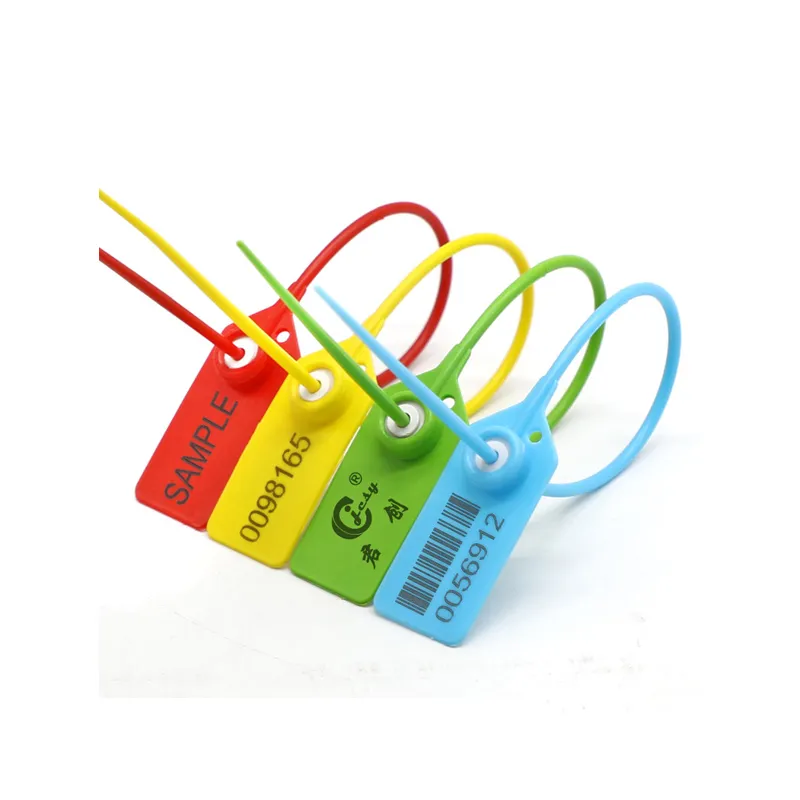
Custom plastic seal printing is not just about putting a logo on a tag. It is about making sure that logo and those numbers survive the same conditions the seal itself is rated for. A pull-tight plastic seal rated for truck security should have printing that lasts as long as the polypropylene body holds. If one degrades before the other, the seal fails its traceability function. That imbalance is what separates a genuine security tool from a cheap imitation.
What Printing Methods Can Survive Logistics Handling
Every printing method on plastic seals has strengths and weaknesses. The right choice depends on where the seal travels and what information it must carry.
| Method | Durability | Resolution | Best For |
|---|---|---|---|
| Screen Printing | High | Moderate | Logos, large text, solid colors |
| Thermal Transfer | Medium-High | High | Barcodes, small serial numbers |
| Laser Engraving | Permanent | High | Unalterable marks, high-security branding |
Screen printing lays ink on the surface. It stands up to abrasion when a UV-cured epoxy ink is used, which bonds to the plastic rather than sitting on top of it. We recommend this for company branding and large text on polypropylene pull-tight seals because the ink layer thickness provides a physical barrier against scuffing.
Thermal transfer fuses a resin ribbon onto the plastic under heat and pressure. The resolution is sharp enough for tight barcodes and seven-digit serial numbers on small seal bodies. The limitation is ribbon compatibility: every plastic grade requires a matched ribbon chemistry. A polypropylene seal printed with a polyethylene ribbon will look fine initially but rub off under friction. We test every batch for ribbon-to-material bond before releasing production.
Laser engraving physically alters the plastic surface. The mark is permanent — it does not rub off because there is nothing to rub. The tradeoff is that only certain plastics (typically ABS or specific polycarbonate blends) produce a clear, high-contrast mark. On standard polypropylene, laser marks can be faint. This method is best for high-security applications where tampering with the printed information itself is a risk vector.
Why Serialization Requires More Than Just Printing Numbers
Printing a serial number on a seal creates a traceable link between the cargo and its documentation. What trips up many first-time buyers is that the serial number alone is not traceability. It is only traceable if the manufacturer delivers a clean database.
We typically provide serial numbers in one of three formats: sequential numeric, sequential alphanumeric, or fully randomized strings. Sequential numbering is straightforward. Randomized strings require pre-generation systems that prevent accidental duplication — something that matters when you are ordering 500,000 seals across multiple shipments. I have seen orders where a factory reused a random number block across two production batches because their database did not flag the conflict. The buyer discovered the duplication during a customs audit, not from the supplier’s quality check.
What should a buyer ask for? Confirm that the supplier provides the serial list in your required digital format — .csv, .xlsx, or direct API upload — before production begins. Verify that the file contains only unique values. Confirm the character set. A zero that looks like the letter O on a small seal body creates field inspection confusion. We strip ambiguous characters from serial ranges unless the buyer specifically requests them for their own numbering system.
How Plastic Material Affects Printing Adhesion
The most common cause of printing failure on plastic seals is not a bad printer. It is a mismatch between the ink chemistry and the plastic base material. Polypropylene is the standard material for pull-tight seals because it is tough, flexible, and cheap. It also has a low surface energy, which means ink and adhesives want to bead up instead of spread out and bond.
The solution is a pretreatment step: corona treatment or plasma treatment that raises the surface energy of the plastic just before printing. Without this step, even the best epoxy ink will sit on top of the polypropylene and eventually delaminate under mechanical stress. At our production line, we corona-treat the seal body in-line immediately ahead of the printing station. The window between treatment and printing is a few seconds. This is not a step a trading company can specify or verify. It is part of the manufacturing process itself.
Polyethylene seals are softer and more flexible, used mostly for low-security applications like meter boxes. They accept thermal transfer printing better than polypropylene because their surface energy is naturally higher. ABS plastic seals — rigid and used for padlock-style models — take laser engraving with high contrast. An informed buyer who knows their operating environment can specify the material-printing combination that avoids field failure. The wrong combination, ordered on price alone, almost always results in unreadable seals within six months.
Three Artwork Mistakes That Delay Production
The fastest way to slow down a custom seal order is to submit artwork that cannot be produced without revision. These three errors come up repeatedly.
First, using photographs or photographic gradients in the design. Screen printing and thermal transfer on small seal faces cannot reproduce photographic detail. A 15mm by 30mm seal body is not a billboard. Complex gradients turn into muddy blobs. Vector artwork — solid shapes, clear outlines, defined text — produces the sharpest result.
Second, setting text sizes too small to remain legible after printing. We recommend no line thinner than 0.5mm for screen printing and 0.3mm for thermal transfer. Below those thresholds, ink spread and dot gain fill in the characters. A serial number that measures 2mm tall on a PDF will be effectively invisible on a curved seal surface after printing.
Third, submitting artwork without color specifications. “Red” is not a standard color. We request Pantone numbers or a physical color swatch to match. Ink colors shift under different factory lighting conditions. A non-Pantone red printed under fluorescent light looks entirely different under natural daylight. If your security protocol relies on color coding — red seals for high-value cargo, blue for general freight — you need exact color matching from batch to batch.
Quality Control Checks That Protect Your Brand on the Seal
A printed seal represents your company’s name on a cargo container door. If the printing fails, the security failure also becomes a quiet brand failure. Every customs officer, freight handler, and recipient who sees a seal with peeling printing makes an unconscious judgment about the shipper’s attention to detail.
The basic adhesion tests are straightforward. The 3M tape test applies standard adhesive tape to the printed area and pulls it off sharply. If the ink lifts, the bond is insufficient. An alcohol rub test simulates cleaning and handling conditions. A fingernail scratch test checks for mechanical durability. These tests take seconds per sample and should be performed on a statistical sample from every production batch.
We also test for UV resistance using accelerated weathering chambers. If a seal will sit on an outdoor meter box for two years, the printing must withstand ultraviolet degradation. Without UV-stabilized inks, reds fade to pink and blacks turn grey within months. This matters for utility companies and cold-chain logistics providers who use seals in exposed environments.
What the Production Timeline Actually Looks Like
A realistic timeline for custom printed plastic seals runs two to four weeks from artwork approval to shipment. The artwork stage itself often takes the longest. Expect two to three days for artwork review and feedback. If revisions are needed, add another round of review. Once artwork is signed off, plate or screen production takes three to five days. Production of the seals — molding, treatment, printing, inspection — runs five to ten days depending on order volume. Shipping adds time based on destination and method.
The single biggest factor in hitting a deadline is submitting print-ready artwork on the first attempt. Vector files, specified colors, and confirmed text sizes eliminate the back-and-forth that pushes delivery past the required date.
Questions to Ask Before Ordering Custom Plastic Seals
Does the printing method match the seal’s environment?
Start with the worst conditions the seal will face, not the ideal warehouse shelf. A seal that sits in a temperature-controlled office can accept a wider range of printing options. A seal on a container crossing the South China Sea in August faces salt spray, humidity, and rough mechanical handling. Screen printing with epoxy ink holds up in that environment. Thermal transfer on untreated polyethylene does not. Tell the manufacturer your real operating conditions, not just your labeling requirement.
Why does my barcode sometimes fail to scan after a few months?
Barcode failure on plastic seals almost always traces back to contrast loss. The white spaces between the black bars fade or the black ink lightens, and the scanner can no longer distinguish the pattern. This happens when the substrate yellows under UV exposure, when the black ink chemically breaks down, or when surface abrasion smears the bar edges. The preventive measure is using pigmented inks with strong UV stabilizers and selecting a resin ribbon specifically engineered for outdoor durability — not a general-purpose ribbon.
Can I print variable data like QR codes on curved seal surfaces?
Yes, but with geometry limitations. Curved surfaces distort the printed image. A QR code that scans perfectly on a flat print proof may fail on a cylindrical seal body because the curvature changes the angle of reflectance. We recommend keeping QR codes on flat seal surfaces — the flag section of a pull-tight seal, not the cylindrical shaft. If the code must go on a curved area, the width should not exceed 60% of the surface arc to keep the distortion within scanner tolerance. Test scans on physical samples, not just digital proofs.
What if I need the same serial number on two different seal types for one shipment?
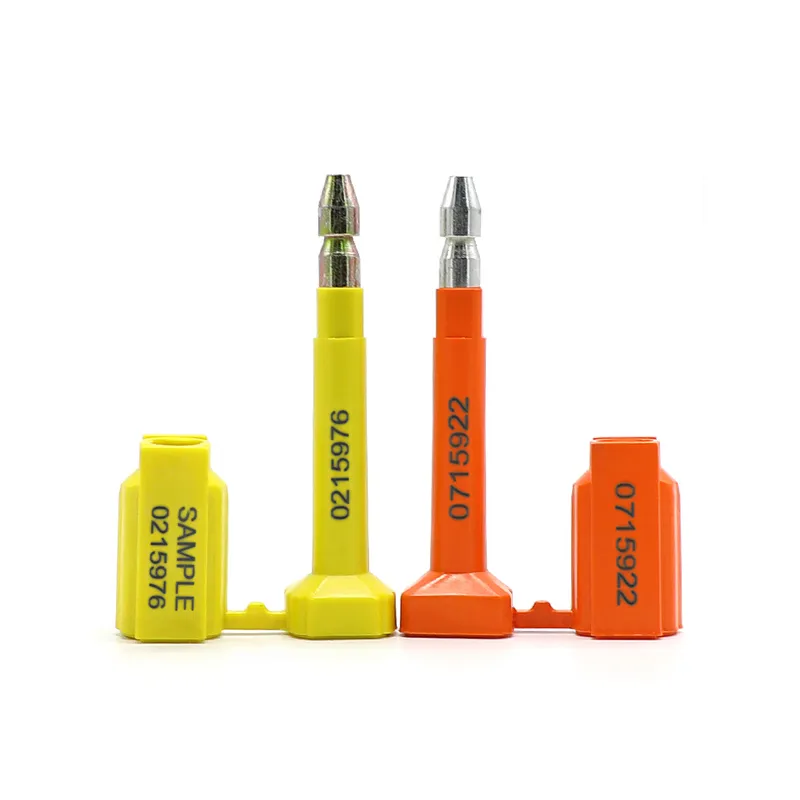
This is common in multi-zone cargo where one container uses a bolt seal and a secondary door uses a plastic seal. Provided both seal types come from the same production run, we can mirror serialization across different models. The requirement is that the numbering range is reserved and applied through a single coordinated production batch — not split weeks apart, which introduces sequencing errors. Confirm with the supplier that their production scheduling system supports cross-model serialization without resetting counters. For programs involving a bolt seal on the container and a plastic seal on the inner cargo door, sharing traceability between both seal types eliminates a major reconciliation headache during customs clearance. Send both part numbers and your numbering requirement to [email protected] or reach out on WhatsApp at +86 13853189290 with your target delivery window and we will confirm the production schedule.
If you’re interested, check out these related articles:
Cable Seal Manufacturer Selection: Strategic Vetting for Security – Junchuang Lock
How to Identify Tampered Security Seals: A Professional Guide – Junchuang Lock
Plastic Seal Manufacturer Selection: A Strategic Procurement Guide – Junchuang Lock
Bolt Seal Quality Inspection: Safeguarding Cargo & Compliance – Junchuang Lock
Wholesale Plastic Seals for Trucking: Secure Your Fleet – Junchuang Lock