
Custom cable seal printing turns a standard security seal into a traceable asset that identifies your company and streamlines logistics. But achieving durable, legible results demands more than submitting a logo file. The key to success lies more in artwork preparation and specification clarity than in the printing method itself. Buyers who send well-prepared vector files and a clear serialization plan receive faster samples and better prints. Drawing on fifteen years of production experience, this guide covers how to choose the right printing method, prepare artwork that prints cleanly, and verify quality before bulk orders.
Understanding Your Cable Seal Printing Options
The first decision is which printing method suits your seal material and usage environment. Cable seals are typically made from nylon-coated steel, polypropylene, or all-metal construction, and each material bonds differently with printing inks and foils.
| Method | Best For | Durability | Material Compatibility | Cost |
|---|---|---|---|---|
| Hot Stamping | Logos, text with metallic finish | Excellent, UV-resistant | Nylon, metal | Moderate |
| Pad Printing | Fine details, multi-color graphics | Very good | Most plastics, metal | Low to Moderate |
| Laser Engraving | Permanent marks, high precision | Permanent | Metal, some plastics | Higher |
| Inkjet Printing | Variable data, barcodes, numbering | Moderate with UV ink | Various, dependent on coating | Low |
Hot stamping is our recommendation for outdoor cable seals. The foil bonds to the nylon surface at the molecular level, creating a mark that resists fading for years. Laser engraving removes surface material to create a permanent indentation that cannot be wiped or scraped off. Pad printing works well for fine logos and allows multiple colors, though it may require a longer setup. Inkjet is mainly useful for serial numbers and barcodes that change frequently, but only if paired with UV-resistant ink.
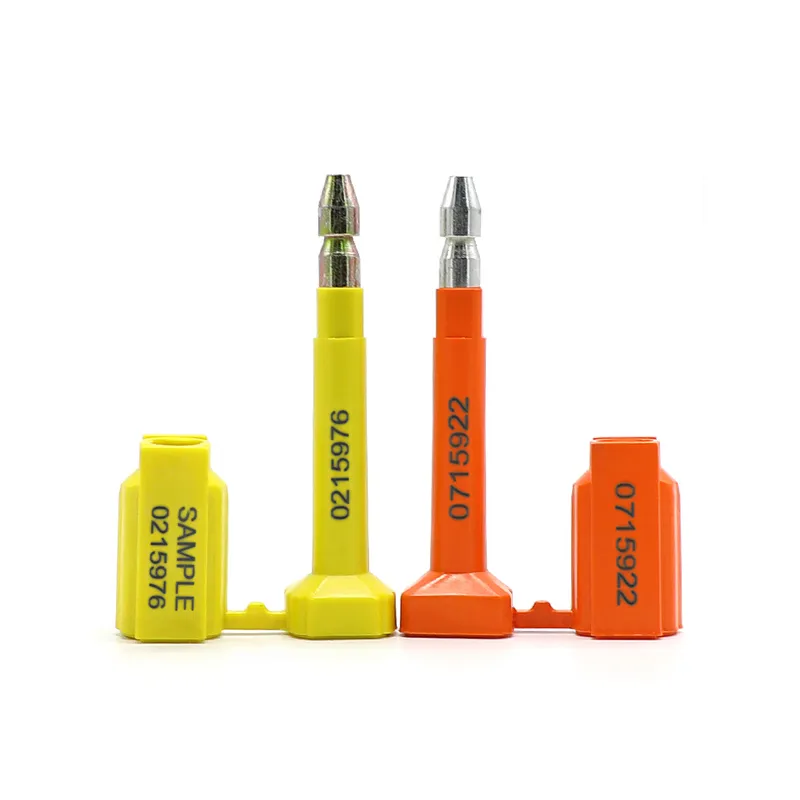
Which Printing Method Works Best for Outdoor Cable Seals?
Hot stamping and laser engraving outperform other methods in outdoor conditions. Hot stamped foil does not absorb moisture, and laser engraved marks are physically recessed into the material. For seals that will face heavy rain, direct sunlight, or salt spray, these two methods preserve legibility far longer than inkjet or standard pad printing.
Preparing Artwork and Specifications Correctly
Artwork quality determines print quality. I have received orders with low-resolution JPEG logos that printed as jagged edges, forcing us to request a vector file and delay production by over a week. That experience is why we ask all buyers to send vector artwork from the start.
Vector files define images as mathematical paths rather than pixels. This allows the art to scale to any size without losing sharpness. Raster files like JPEG or PNG are resolution-dependent and produce blurred prints when enlarged beyond their original size. Text inside artwork must be converted to outlines so fonts do not change when the file opens on a different computer. Acceptable file types include .ai, .eps, .cdr, and PDF with embedded vectors.
Why Do Vector Files Produce Better Cable Seal Prints?
Vectors maintain sharp edges at any size. A logo that is one inch wide in the artwork can be scaled to half an inch on a cable seal and still print clearly, because the path lines remain exact. Raster files at the same scaling produce visible pixelation. For production, we need vector art to make the printing plates or to program the laser engraving machine at the correct resolution for the physical part.
How to Format Serial Numbers and Barcodes for Cable Seals
Specify a starting number, an increment, and any prefix or suffix. For example, “SC-0001 to SC-5000” tells the manufacturer exactly how the numbering should run. If you need barcodes, provide the type and the data string. Barcodes require sufficient quiet zones on the printed area. For small diameter cables, we may recommend a QR code that can be read even if partially compressed.
If your labeling program involves variable data printing across multiple seal sizes and cable diameters, confirm the barcode size compatibility with your manufacturer before ordering large quantities. Reach out to us at [email protected] and we will verify readability on your chosen cable diameter.
Ordering Custom Printed Cable Seals from a Manufacturer
The typical ordering path begins with an inquiry containing your seal type, cable diameter, quantity, printing method, and artwork concept. At Junchuang, we review the artwork for printability within one business day and flag any issues such as lines too thin for pad printing or text too small for hot stamping. If adjustments are needed, we return marked-up artwork with recommendations.
Once artwork is approved, we produce a pre-production sample. This sample represents exactly what the production run will look like. It takes 3 to 5 working days for sample preparation. After you approve the sample, bulk production lead time is usually 10 to 25 working days, depending on order size and method complexity. Most custom printed cable seal orders have a minimum order quantity between 500 and 5000 pieces, varying by method and material.
To start, send your specifications and artwork to [email protected]. We will confirm printability and provide a sample timeline without charge for the first consultation.
What Is the Typical Lead Time for Custom Printed Cable Seals?
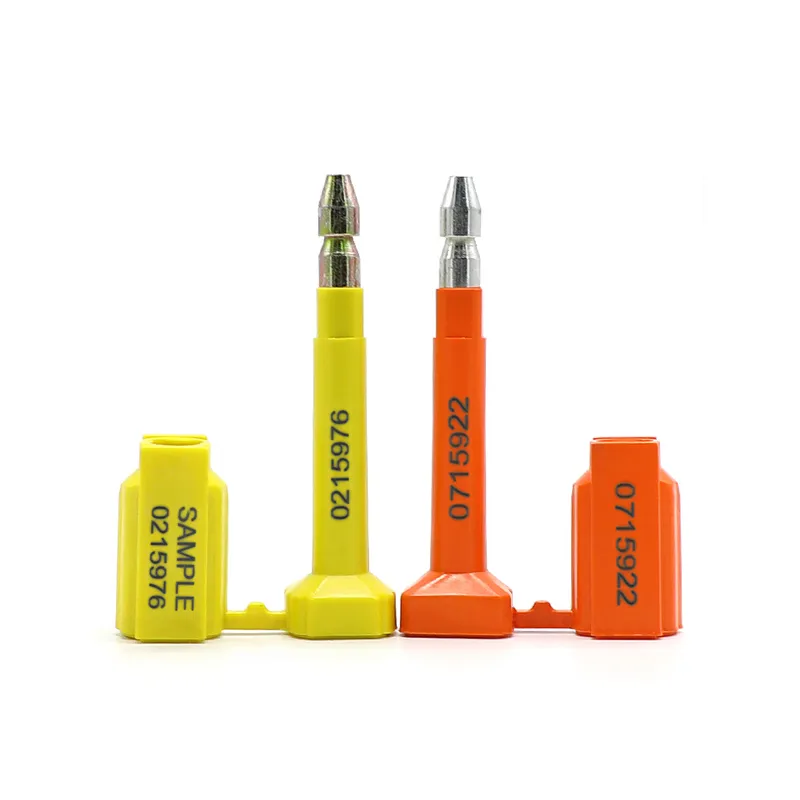
Sample preparation takes 3 to 5 days after artwork approval. Bulk production takes 10 to 25 days after sample approval, plus shipping time. Total lead time from inquiry to delivery typically ranges from 3 to 5 weeks. Complex serialization or multi-color printing adds a few days.
Verifying Print Quality and Durability
Before releasing a bulk order, we inspect prints for alignment, clarity, and adhesion. On the buyer side, there are practical checks worth running on the sample.
First, check the visual clarity under normal warehouse and outdoor lighting. The print should be legible at typical reading distance. Second, perform a simple adhesion test: apply and remove a piece of standard office tape on the print. If ink lifts, the bond is insufficient. Third, if the seal will face solvents, cleaning agents, or extreme temperatures, test the sample under those actual conditions. One customer approved a sample visually, but the print wiped off when they used an alcohol-based cleaner common in their operation. We now ask all buyers about their cleaning and exposure conditions before production.
Getting Your Custom Cable Seal Printing Project Started
Buyers who send incomplete artwork or skip the sample test often face delays and rework. The most reliable path is to prepare vector files, specify your serialization format, and request a pre-production sample for field testing. At Junchuang, we review artwork the day it arrives and walk you through each step.
Send your artwork, quantity, and serialization plan to [email protected] or reach us on WhatsApp at +86 13853189290. We will confirm the printing method, provide a sample timeline, and answer any material compatibility questions before you commit.
Common Questions About Custom Cable Seal Printing
Can I Print Multiple Colors on a Cable Seal?
Yes, pad printing allows multiple colors, but each additional color increases cost and may require a separate pass or plate. For two or three colors, pad printing works well. For complex full-color graphics, consider whether hot stamping a metallic logo combined with a single-color pad print might serve your purpose more cost-effectively.
How Durable Is the Printing? Will It Last in Rain and Sun?
Many buyers assume all printing methods fade at the same rate outdoors, but hot stamping and laser engraving offer far better UV resistance than standard inkjet. Hot stamped foil bonds permanently to nylon and resists moisture. Laser engraved marks are recessed and cannot be wiped off. Inkjet printing requires UV-cured ink to survive prolonged outdoor exposure.
What If My Order Needs Small Text or Fine Details?
In our production, pad printing handles fine lines and small text better than hot stamping, which can blur details below approximately 6 point font on textured surfaces. Laser engraving achieves extremely fine resolution on metal seals. If your design includes small text, we recommend pad printing or laser engraving and suggest avoiding decorative fonts that lose legibility at small sizes.
How Do I Know the Printing Will Not Rub Off?
The answer depends on your operational environment. We recommend requesting a pre-production sample and testing it with the chemicals, cleaning agents, and conditions your seals will face. If the print passes your tape test and withstands your cleaning procedures on the sample, the production batch will perform consistently. If your application involves chemical exposure or harsh weather, sharing your requirements with us at [email protected] helps us recommend the most durable printing option.
If you’re interested, check out these related articles:
Preserving Security Seal Integrity: A Storage Best Practices Guide – Junchuang Lock
Container Security Seals: Preventing Theft & Ensuring Integrity – Junchuang Lock