
Cable seals serve as the primary tamper evidence mechanism for container doors, valve access points, and cargo compartments where bolt seals cannot physically fit or where flexible routing is required. The distinction matters because selecting the wrong seal type for a specific closure point creates security gaps that inspection teams catch and cargo thieves exploit. Most procurement guides treat cable seals as a generic category, but the practical reality involves matching cable diameter, lock body construction, and tensile rating to the specific threat profile and physical constraints of each application. From my experience managing production lines for logistics security products, the failures I see most often trace back to specification mismatches rather than seal quality itself.
Why Cable Seals Fit Container Applications That Bolt Seals Cannot
Bolt seals work well on standard container door hasps where the fixed length and rigid construction match the hardware geometry. Cable seals solve a different problem. Container ventilation points, side access panels, tanker valves, and intermodal equipment often present closure points with irregular spacing, offset alignment, or limited clearance. A cable seal threads through these openings where a rigid bolt seal simply will not fit.
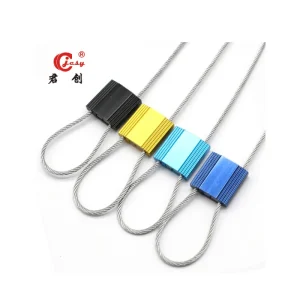
The flexibility advantage extends beyond physical fit. When securing multiple closure points on a single container, cable seals allow consistent serial number sequencing across all access points without the inventory complexity of stocking multiple bolt seal lengths. Tanker trucks with multiple valve access points benefit particularly from this approach. We have supplied cable seals to chemical transport operators who secure six to eight valves per vehicle, all with consecutive serial numbers that simplify inspection documentation.
| Application | Why Cable Seals Work | Bolt Seal Limitation |
|---|---|---|
| Container vents | Threads through small openings | Too rigid for vent hardware |
| Tanker valves | Wraps around valve handles | Fixed length mismatch |
| Side access panels | Adjusts to panel gap variations | Cannot accommodate offset hasps |
| Rail car hatches | Routes through irregular hardware | Clearance insufficient |
The ISO 17712 standard recognizes cable seals as a distinct category with specific tensile and security requirements. High security cable seals meeting this standard must withstand defined attack resistance tests, not just tensile pull. This matters for container applications because the standard was written specifically for freight container security, meaning compliant cable seals have been validated against the actual threat environment.
How Cable Diameter and Tensile Strength Determine Application Suitability
Cable diameter directly correlates with tensile strength, but the relationship is not linear and varies significantly by cable construction. A 3.5mm galvanized steel cable typically provides tensile strength in the 250 to 350 kilogram range. Moving to 5mm diameter pushes this into the 800 to 1200 kilogram range depending on strand count and wire grade. The practical implication is that cable diameter selection must start with the threat assessment, not the physical opening size.
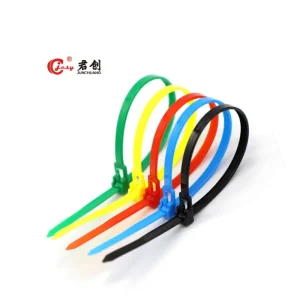
For standard container door applications where the primary concern is tamper evidence rather than forced entry prevention, a 3.5mm cable provides adequate security while remaining cost effective for high volume use. Chemical transport, pharmaceutical logistics, and high value cargo applications typically warrant 5mm or larger cables where the additional tensile strength deters opportunistic tampering and provides longer attack resistance time.
The lock body construction matters as much as the cable itself. Zinc alloy lock bodies offer corrosion resistance suitable for maritime environments. Steel lock bodies provide higher crush resistance but require surface treatment for salt exposure. Aluminum lock bodies reduce weight for air freight applications where every gram affects shipping costs. I have seen procurement teams focus entirely on cable specifications while overlooking lock body material, then face premature failures in harsh operating environments.
If your cargo profile includes temperature sensitive goods or maritime routing, confirming the specific corrosion resistance rating of the lock body is worth discussing before finalizing your specification.
What Lock Mechanism Types Mean for Security and Inspection Efficiency
Cable seal lock mechanisms fall into three primary categories: crimp style, click lock, and spin lock. Each serves different operational requirements, and the choice affects both security level and inspection workflow.
Crimp style mechanisms require a sealing tool to compress the lock body around the cable. This provides the highest security because the seal cannot be removed and reapplied without visible damage to the crimp pattern. The tradeoff is slower application time and the need for sealing tools at every loading point. High security applications and regulatory compliance scenarios typically justify this approach.
Click lock mechanisms allow tool free application. The cable inserts into the lock body and a spring loaded mechanism engages automatically. Removal requires cutting. This balances security with operational speed, making it the most common choice for commercial logistics where seal application happens at high frequency. The security level depends heavily on the lock body construction quality, as poorly designed click mechanisms can be defeated with minimal evidence.
Spin lock mechanisms use a rotating collar that tightens around the cable. These provide adjustable tension and can accommodate a wider range of closure point sizes with a single seal model. The security consideration is that the rotation mechanism must be designed to prevent reverse operation without visible damage.
| Mechanism | Application Speed | Security Level | Tool Required |
|---|---|---|---|
| Crimp | Slowest | Highest | Yes |
| Click lock | Fastest | Medium to high | No |
| Spin lock | Medium | Medium | No |
The inspection side of this equation often gets overlooked. Customs and security personnel need to verify seal integrity quickly. Crimp seals show tampering through distorted crimp patterns. Click lock seals show tampering through scratches around the lock body or cable fraying at the entry point. Training inspection teams on what to look for varies by mechanism type, so standardizing on one mechanism across your operation simplifies compliance verification.
How Serial Number and Marking Options Affect Traceability
Every cable seal used in commercial logistics requires unique identification. The minimum standard is sequential serial numbering, but the marking method and additional customization options significantly affect traceability value.
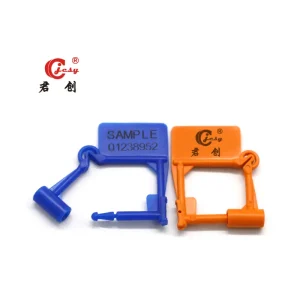
Laser engraving provides permanent marking that resists environmental degradation. The serial number remains legible after exposure to chemicals, UV radiation, and physical abrasion. Hot stamping offers a lower cost alternative but may fade under harsh conditions. For applications where seals remain in place for extended periods or face chemical exposure, laser engraving justifies the cost premium.
Barcode and QR code integration transforms cable seals from passive tamper evidence into active tracking components. Scanning a seal at each custody transfer point creates an auditable chain of possession without manual data entry. The practical limitation is that barcode quality must survive the operating environment. We produce seals with recessed barcode areas that protect the code surface from abrasion during handling.
Custom logo printing serves both security and brand identification purposes. A seal bearing your company logo provides immediate visual verification that the correct seal type was used. It also complicates counterfeiting because reproducing both the seal construction and the custom printing requires more sophisticated capability than generic seal substitution.
Color coding adds another verification layer. Assigning specific colors to specific routes, cargo types, or security levels allows visual screening before serial number verification. A red seal on a route that should have blue seals triggers immediate investigation without requiring electronic scanning.
What Quality Verification Steps Protect Against Seal Failures
Seal failures in the field create security gaps and compliance problems that cost far more than the seals themselves. Quality verification before deployment prevents these failures.
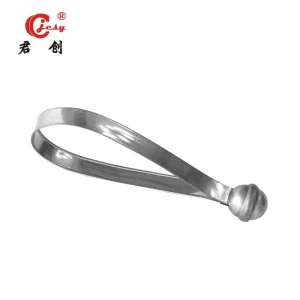
Tensile testing confirms that seals meet their rated strength. A reputable manufacturer tests samples from each production batch and can provide test certificates. The test method matters: static pull testing measures ultimate breaking strength, while cyclic loading tests reveal fatigue resistance for applications where seals experience repeated stress during transport vibration.
Lock mechanism function testing verifies that every seal in a batch operates correctly. This means confirming that the cable inserts smoothly, the lock engages fully, and the mechanism cannot be released without destruction. We perform 100% function testing on high security seals because a single defective seal in a batch creates a security gap.
Material certification traces the steel, zinc, or aluminum used in seal construction back to the mill source. This matters for regulatory compliance in some industries and provides accountability if material defects cause failures. Requesting material certificates from your supplier establishes baseline quality expectations.
Environmental testing validates performance under the conditions your seals will actually face. Salt spray testing for maritime applications, temperature cycling for cold chain logistics, and UV exposure testing for outdoor storage all reveal weaknesses that standard testing misses. If your application involves extreme conditions, asking whether the seal model has been validated for those specific conditions prevents field failures.
| Test Type | What It Reveals | When Required |
|---|---|---|
| Tensile pull | Breaking strength | All applications |
| Function test | Lock mechanism reliability | High security applications |
| Salt spray | Corrosion resistance | Maritime routing |
| Temperature cycle | Material stability | Cold chain logistics |
Matching Cable Seal Specifications to Your Container Security Requirements
The selection process starts with documenting your specific requirements across four dimensions: physical constraints, security level, operational workflow, and compliance obligations.
Physical constraints include the closure point geometry, available clearance, and environmental exposure. Measure the actual hardware where seals will be applied. A 5mm cable seal requires a minimum opening size that some older container hardware may not provide.
Security level depends on cargo value, threat environment, and regulatory requirements. ISO 17712 high security certification is mandatory for C-TPAT compliance and many customs trusted trader programs. Indicative seals suffice for internal inventory control where tamper evidence matters more than attack resistance.
Operational workflow determines whether application speed or security verification takes priority. High volume operations benefit from click lock mechanisms and color coding that speeds visual verification. Lower volume, higher security applications justify crimp seals and barcode scanning despite slower processing.
Compliance obligations vary by industry, trade lane, and cargo type. Pharmaceutical logistics, chemical transport, and food safety applications each have specific seal requirements that may exceed general container security standards. Confirming that your seal specification meets all applicable requirements before ordering prevents compliance gaps.
If your container security program involves multiple cargo types or trade lanes with different requirements, discussing your full specification matrix with a manufacturer who produces the complete range of cable seal types simplifies procurement and ensures consistent quality across your operation. Send your requirements to [email protected] or call +86 13853189290 to confirm which specifications match your application.
Common Questions About Cable Seals in Container Security
What is the difference between indicative and high security cable seals?
Indicative cable seals provide tamper evidence through visible destruction when removed, but they are not designed to resist determined attack. High security cable seals meet ISO 17712 requirements for both tamper evidence and attack resistance, meaning they must withstand specific force levels and attack methods for defined time periods. The choice depends on whether your primary need is detecting unauthorized access or delaying it. Regulatory programs like C-TPAT require high security seals for container shipments, making the distinction a compliance matter rather than just a security preference.
How do I verify that a cable seal meets ISO 17712 certification?
ISO 17712 certification applies to the seal manufacturer’s quality management system and specific seal models, not to individual seals. Request the manufacturer’s ISO 17712 certificate and confirm that the specific model you are purchasing is listed on the certificate scope. The certificate should be issued by an accredited certification body. Some manufacturers claim ISO 17712 compliance without actual certification, so verifying the certificate authenticity through the issuing body provides additional assurance. If you need documentation for customs or regulatory purposes, confirming certificate validity before ordering prevents delays.
Can cable seals be reused after inspection?
No. Cable seals are single use devices by design. The security value depends on the seal being intact from application to final removal. Any seal that has been cut for inspection must be replaced with a new seal bearing a new serial number. The removed seal serial number and the replacement seal serial number should both be documented to maintain chain of custody records. Attempting to reuse seals or using seals that appear to have been previously opened creates security gaps and compliance violations.
What cable diameter should I specify for standard container applications?
For standard dry container door applications with typical cargo values, 3.5mm to 4mm cable diameter provides adequate security while keeping costs reasonable for high volume use. High value cargo, hazardous materials, or applications requiring ISO 17712 high security certification typically warrant 5mm or larger cables. The decision should also consider the physical hardware where seals will be applied, as some older container fittings may not accommodate larger diameter cables. Share your specific application details and we can confirm the appropriate diameter for your requirements.
How long can cable seals remain in place before degradation affects security?
Quality cable seals with appropriate corrosion protection maintain integrity for extended periods under normal conditions. Galvanized steel cables and zinc alloy lock bodies typically perform well for twelve months or longer in standard logistics environments. Maritime exposure, chemical environments, or extreme temperatures accelerate degradation. If your application involves extended seal duration or harsh conditions, specifying enhanced corrosion protection and establishing inspection intervals based on your specific environment prevents security gaps from material degradation.
If you’re interested, check out these related articles:
Heavy Duty Cable Tie Applications: Industrial Fastening Solutions – Junchuang Lock
Security Seal Pricing Guide: Unveiling Factors Affecting Your Investment – Junchuang Lock
Finding Reliable Bolt Seal Exporters: A Strategic Procurement Guide – Junchuang Lock
How to Choose High Security Bolt Seals: Key Criteria for Supply Chain Safety – Junchuang Lock