
A metal strap seal secures a cargo door or hatch with a tamper-evident steel band that must be cut to remove, and the difference between a seal that holds and one that fails under stress comes down to manufacturing precision most buyers never see. As someone who has managed metal seal production runs for over fifteen years, I have watched too many procurement teams select suppliers based on price and sample photos alone, only to receive seals with inconsistent strap thickness, poor locking mechanisms, or steel that rusts before the shipment reaches its destination. This article explains what actually determines metal strap seal quality from the production side — the material grades, the locking mechanism design, and the factory-floor checks that separate a reliable seal from a liability — so you can evaluate wholesale metal strap seals with the same criteria a manufacturer uses to judge its own output.
What Determines Metal Strap Seal Strength and Tamper Evidence
The security a metal strap seal provides rests on two physical properties: the tensile strength of the steel strap itself and the hold integrity of the locking mechanism. Most procurement specifications I see focus almost entirely on the strap, but the locking chamber is where field failures most often begin.
Metal strap seals use cold-rolled steel strip, typically galvanized or stainless, formed into a flat band with a locking head at one end. The strap thickness matters directly — seals used on container doors and rail cargo hatches commonly run between 0.6 mm and 1.0 mm in strap thickness. Thinner straps bend and tear under moderate tension. Thicker straps resist cutting but require a locking mechanism engineered to grip them completely.
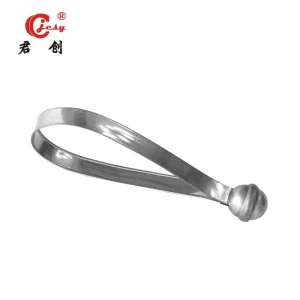
The locking mechanism inside the seal body uses a spring-loaded jaw or a crimp-lock design. The jaw type bites into the strap when pulled, and any attempt to slide the strap backward causes the jaw to dig deeper. This is why a properly locked metal strap seal cannot be reopened without destroying the strap — the jaw holds tighter under tension. The crimp-lock design, by contrast, uses a mechanical deformation to trap the strap permanently. Both designs work, but the jaw type tends to perform more consistently across temperature ranges because it compensates for metal expansion and contraction.
For tamper evidence, the seal must leave unambiguous physical destruction when removed. A well-manufactured metal strap seal, once pulled tight, cannot be loosened. The only way to open it is to cut the strap or break the lock body, and both actions produce visible damage that inspection personnel can identify immediately. The serial number printed on each seal during manufacturing adds a second layer of tamper evidence — replacing a cut seal with an identical-looking one fails if the serial numbers do not match the shipping manifest.
Manufacturing Quality Factors Most Buyers Overlook
When I walk through a production run of metal strap seals on our factory floor, three quality checkpoints occupy most of my attention, and these are the same points a buyer should use to assess any supplier.
The steel strip stock is the foundation. Galvanized steel provides good rust resistance for general cargo use, but for ocean freight where salt spray and humidity are constant, stainless steel strap seals hold up far better. I have seen galvanized seals begin to show surface rust within four weeks of ocean transit if the zinc coating is applied unevenly or too thinly. A buyer evaluating samples should ask for the steel grade certification and, if possible, request a salt spray test report — a standard 48-hour or 72-hour test tells you more about real-world performance than a product photo ever will.
| Quality Factor | What to Check | Red Flags |
|---|---|---|
| Strap thickness | 0.6–1.0 mm for cargo use | Inconsistent thickness along the strap length |
| Steel material | Galvanized or stainless; ask for grade cert | No material traceability documentation |
| Locking mechanism | Jaw-type or crimp-lock; test pull resistance | Mechanism slips under moderate hand tension |
| Surface finish | Uniform coating, no burrs or sharp edges | Rust spots on new samples, rough edges |
| Serial numbering | Clear, permanent, matches manifest format | Numbers rub off or are inconsistent across samples |
The locking mechanism assembly is where manufacturing shortcuts show up fastest. In a jaw-type seal, the jaw surfaces must be hardened — if they are left soft, repeated tension cycling during transit can round them off, causing the seal to loosen. I require Rockwell hardness testing on jaw components as a routine in-line check, because a soft jaw looks identical to a hardened one in a photograph but behaves completely differently in the field.
The third factor is the forming and assembly precision. The strap must align squarely with the locking chamber. A strap that enters the lock body at even a slight angle will not seat properly, which means the jaw engages only partially. Under vibration during transit, a partially engaged seal can work itself loose. On our production line, we use go/no-go gauges to check lock body dimensions against the strap width specification — this is a simple but non-negotiable check that any competent manufacturer performs regularly.
How to Evaluate a Metal Strap Seal Supplier Before a Wholesale Order
If you are importing metal strap seals in bulk, the supplier evaluation process should go beyond price comparison. I recommend a four-point assessment that mirrors what I would look for if I were buying seals from another factory.
First, confirm the supplier’s production lot traceability. Every batch of steel strip that enters the factory should be logged with a material certificate. Every production lot of finished seals should be traceable back to the steel lot and the production date. This is not paperwork for its own sake — if a quality issue arises on a shipment, traceability tells you whether the problem is limited to one batch or affects multiple orders. Ask for a sample lot traceability record. If the supplier cannot produce one, their quality system has a gap.
Second, request sample seals and test them yourself. I do not mean looking at them — I mean pulling them. Lock a sample seal, pull the strap with both hands until it breaks or slips. Observe where it fails. A seal that fails at the strap with the lock intact is performing as designed — the strap is the intended failure point. A seal where the locking mechanism gives way before the strap breaks is a manufacturing defect. Do this test on at least five samples from different positions in the production run.
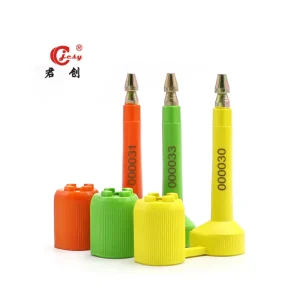
Third, evaluate the marking quality. Serial numbers, barcodes, and any custom printing on the seal body or strap must be permanent. I use a simple abrasion test — rub the printed area firmly with a fingertip for ten seconds. If the marking smudges or fades, it will not survive transit. Laser marking generally performs better than ink printing for metal surfaces, though properly cured ink systems work acceptably on galvanized steel.
Fourth, discuss the supplier’s inline inspection process. During a production run, how often do they pull samples for dimensional checks? What do they measure? A manufacturer that checks strap thickness and lock body dimensions once per shift is operating at a basic level. One that checks every hour and records the measurements in a control chart has the kind of discipline that produces consistent quality across thousands of seals. These are straightforward questions, and a factory that takes quality seriously will answer them without hesitation.
Where Metal Strap Seals Fit Among Cargo Security Options
Metal strap seals occupy a specific position in the range of cargo security seals — strong, visible, and suited to applications where bolt seals are overbuilt and plastic seals are too weak.
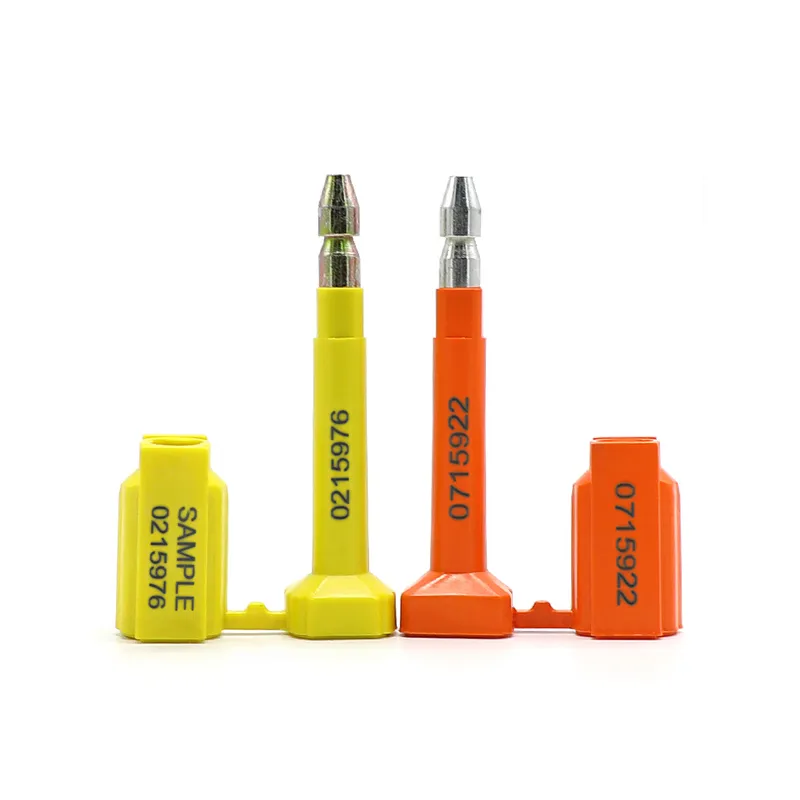
Bolt seals provide the highest level of security for container doors and are typically ISO 17712 certified for high-security applications. They require a bolt cutter to remove. Metal strap seals do not meet ISO 17712 high-security classification, but they offer a practical middle ground: faster to apply than a bolt seal, more tamper-resistant than a plastic pull-tight seal, and significantly less expensive per unit than bolt seals. For domestic trucking, rail cargo, and bonded warehouse doors, metal strap seals are a common and appropriate choice.
Cable seals offer adjustable length and high tensile strength, making them suitable for irregularly shaped closures — tanker hatches, valve handles, and oddly positioned door hasps. Metal strap seals, by contrast, work best on flat closure points with a staple or hasp that accommodates the strap width. The strap cannot loop around large-diameter objects the way a cable seal can, so application design matters when choosing between them.
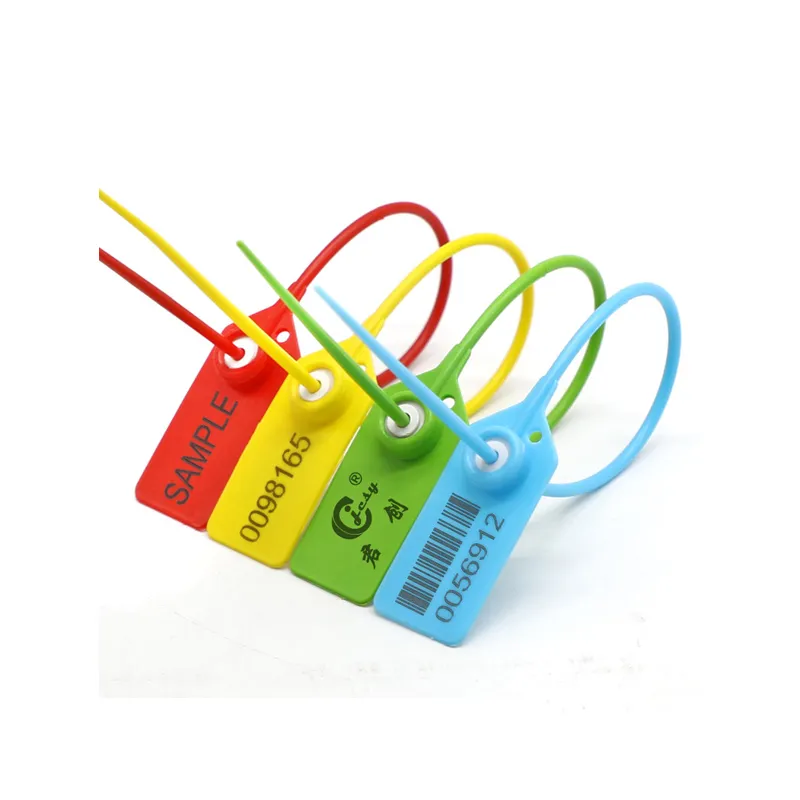
Plastic seals and plastic padlock seals, while economical and widely used, provide lower physical strength. Their tamper evidence relies on the visible breakage of plastic components, which is effective but less robust than the cut-required removal of a metal strap seal. For cargo valued above a certain threshold, or for routes with known theft risk, the step up to a metal strap seal is worth the incremental cost.
Avoiding Common Problems When Buying Metal Strap Seals in Bulk
Several recurring issues surface in wholesale metal strap seal orders, and most of them are preventable at the specification stage rather than the inspection stage.
The first problem is strap length mismatch. A seal that is too short cannot reach around the closure point. One that is too long leaves excess strap that must be coiled or tied off, creating a handling nuisance. I recommend measuring the actual hasp-to-hasp distance on the cargo doors or hatches you need to seal, then adding 30 to 40 percent to account for the locking path and tail length. Do not estimate — measure. A discrepancy of even two centimeters across thousands of seals wastes time at every loading point.
The second problem is corrosion arriving before the seals are even used. If seals are shipped by sea without adequate packaging, condensation inside the shipping container can start rust on galvanized steel before the consignee opens the box. Vacuum-sealed packaging with desiccant packs costs marginally more and prevents this problem entirely. Specify it in your purchase order, because most factories default to bulk packaging unless instructed otherwise.
The third issue is marking legibility degradation over time. Serial numbers printed with low-grade ink on steel that will sit in outdoor storage can become unreadable within months. I always confirm marking durability with the abrasion test mentioned earlier, and for outdoor or long-duration cargo applications, I specify laser marking on stainless steel seals. The cost difference is small relative to the administrative headache of unreadable seal numbers during a customs inspection.
Supplier communication clarity matters just as much as product quality. When a buyer sends an inquiry with a clear strap length, steel grade preference, quantity, and packaging requirement, the factory can quote accurately and deliver predictably. When the specification is vague, the factory guesses, and the guess is sometimes wrong. Be precise about what you need — this is the single most effective thing you can do to avoid wholesale order problems.
Practical Questions About Metal Strap Seal Sourcing
Do metal strap seals work for ocean container shipments?
They work, but with an important distinction. Metal strap seals are recognized as barrier seals for general cargo security, but for international container shipments where customs authorities require ISO 17712 high-security certification, bolt seals are the mandatory standard. Metal strap seals are better suited to secondary closures — warehouse doors, domestic trucking, rail cargo — where the security requirement is strong but the regulatory framework does not demand certified high-security seals. If your containers cross international borders, confirm whether your destination port accepts metal strap seals or requires bolt seals before ordering.
What strap thickness should I choose for truck cargo?
For typical truck trailer doors and roll-up door hasps, a strap thickness between 0.6 mm and 0.8 mm provides adequate cutting resistance while remaining easy to apply by hand. I have supplied 0.8 mm straps to logistics fleets for years, and they hold through long-haul vibration without loosening. For heavy cargo or routes through high-theft areas, moving up to 1.0 mm adds noticeable cut resistance. The tradeoff is that thicker straps require more hand force to pull tight, which can slow down drivers at loading docks. Match the thickness to the threat level, not to the maximum available.
How do I know if a supplier’s quality control is genuine?
Ask for documented inspection records from a recent production run — not a certificate on the wall, but the actual measurement worksheets from an in-process quality check. A factory that can produce these records on request has a functioning quality system. A factory that deflects or offers only a final inspection certificate is operating a paper-based quality program that may not reflect what happens on the production floor. This single request tells you more about manufacturing discipline than any supplier visit without documentation review.
Can I get custom printing on metal strap seals?
Most manufacturers can apply custom serial numbers, company logos, and barcodes to metal strap seals. The printing method affects durability. Laser marking on stainless steel produces a permanent mark that will not degrade. Ink printing on galvanized steel can work well if the ink system is properly specified for metal adhesion and outdoor exposure, but it requires verification through an abrasion test on actual samples. If your seals will sit in outdoor storage for extended periods before use, invest in laser marking or confirm ink durability with your supplier before committing to a large order. Share your marking requirements and expected storage conditions when you reach out, and I can confirm what approach will hold up best for your application. Reach me at [email protected] or by phone at +86 13853189290.
If you’re interested, check out these related articles:
Metal vs Plastic Cable Ties: Selecting the Right Industrial Fastener – Junchuang Lock
Bulk Cable Seal Purchase Guide: Strategic Procurement & Security – Junchuang Lock
Ear Tag Installation: Precision Techniques for Animal Identification – Junchuang Lock
Cable Seal Technology: Understanding Its Function and Security – Junchuang Lock